

Key Takeaways
- Reduced Oxygen Packaging Hazards: Vacuum sealing acts as a preservation aid rather than a standalone sterilization method. Failure in seal integrity creates conditions for anaerobic bacterial growth, specifically Clostridium botulinum, necessitating a technical risk assessment of storage temperatures and leak duration.
- High-Barrier Material Performance: The PET/AL/PE composite structure provides the technical standard for preventing oxidation and microbial risks. This multi-layer barrier ensures oxygen exclusion and moisture proofing, which are essential for maintaining the safety of seafood and sensitive industrial food products.
- Puncture Resistance and Thickness: Utilizing heavy-duty 4mil PE or 3.5 Mil PA/NY materials reduces the risk of leaks during commercial processing. Higher material thickness improves mechanical puncture resistance, preventing the vacuum seal failures that lead to food spoilage and safety compromises.
- Integrity-Based Quality Control: Post-failure safety evaluations must be based on a technical decision matrix including air leakage rate and sterilization history. Assessing whether a product underwent retort or high-temp processing before sealing allows managers to determine specific biological risk levels after a seal is compromised.
Introduction
When vacuum seal integrity fails in a commercial food processing line, the immediate concern shifts from a logistics issue to a breach in safety protocols. A compromised seal does more than just end shelf life extension; it alters the microbial landscape of the product, often without visible signs of spoilage. In the context of Reduced Oxygen Packaging (ROP) safety, an undetected leak can create an environment where anaerobic bacterial growth is no longer the only threat, as the introduction of oxygen re-initiates aerobic degradation and mold formation.
The technical risk is high for sensitive industrial food products where Clostridium botulinum risk must be managed through both oxygen exclusion and strict temperature controls. High-barrier materials like PET/AL/PE or heavy-duty 4mil PE are designed to prevent these failures, but when mechanical punctures occur, the air leakage rate determines the severity of the biological hazard. Technical assessments of these failures must account for whether the product underwent vacuum packaging sterilization or retort processing prior to the breach, as these factors dictate the speed at which pathogens multiply.
This analysis helps quality control managers and procurement professionals judge the safety of compromised batches by balancing leak duration against sterilization history. By establishing a clear decision matrix for vacuum packaging food safety, organizations can differentiate between minor packaging defects and high-risk contamination events that require immediate disposal.
The Biological Mechanics of Vacuum Packaging Food Safety
Vacuum packaging, technically categorized under Reduced Oxygen Packaging (ROP), is a specialized preservation method designed to extend the shelf life of perishable goods by modifying the atmospheric environment within a sealed container. However, in the context of industrial food safety, it is critical to recognize that vacuum sealing is a preservation strategy rather than a sterilization process. While the removal of oxygen (O2) suppresses the growth of aerobic spoilage microorganisms, it simultaneously creates a specialized ecological niche that can favor certain anaerobic pathogens if safety barriers are compromised.
Understanding the Anaerobic Hazard: The Clostridium botulinum Risk
The primary concern in vacuum packaging food safety is the management of anaerobic bacteria, most notably Clostridium botulinum. This pathogen is dangerous because it can grow and produce toxins in the absence of oxygen without altering the appearance, odor, or taste of the food product. In non-acidic foods with high water activity (aw), the exclusion of O2 removes the competitive pressure from aerobic bacteria, which would normally sour or rot the food, alerting the consumer to spoilage.
When a vacuum seal fails, the controlled anaerobic environment is disrupted. Atmospheric ingress introduces O2, which allows aerobic bacteria to begin proliferating again. However, the risk assessment is not a simple binary switch. If the leakage rate is low, a “micro-aerophilic” environment may persist, which is often more hazardous than a complete seal failure. In such environments, both anaerobic pathogens and aerobic spoilage organisms may coexist. The safety window—the period during which the food remains safe after a seal breach—is dependent on the initial microbial load and the presence of secondary hurdles like temperature control and pH levels.
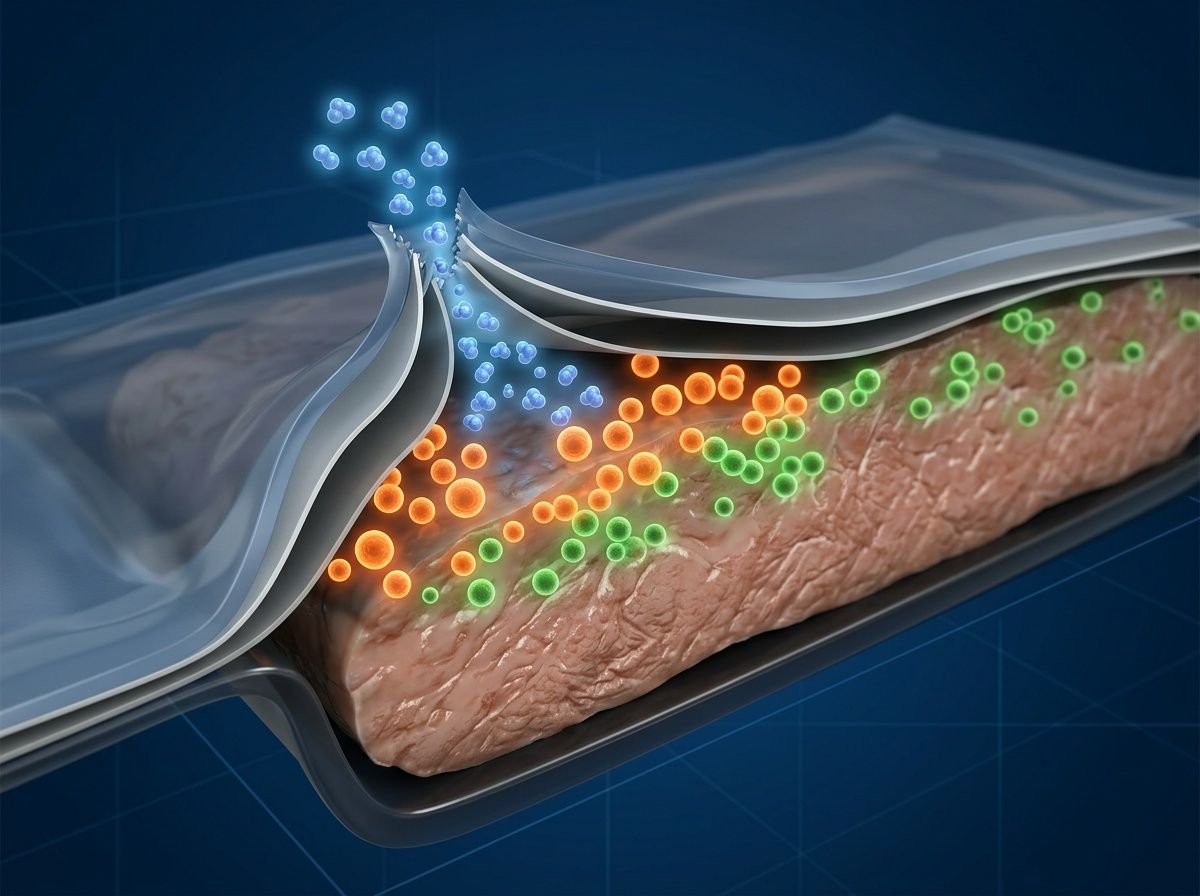
The Preservation-Sterilization Paradox in ROP
Treating vacuum packaging as a substitute for sterilization is a common misconception. In industrial applications, vacuum sealing is used to retard oxidation and inhibit common molds and yeasts. True sterilization, such as retort processing or high-pressure processing (HPP), involves the total destruction of viable microorganisms. Vacuum packaging is a preservation aid that works in tandem with these processes.
For example, a product that has undergone vacuum packaging sterilization via retort is far more resilient to a subsequent seal failure than a fresh vacuum-packed product. The paradox lies in the fact that the environment intended to keep food safe (low oxygen) is the preferred environment for certain lethal foodborne toxins. Therefore, the integrity of the barrier material and the precision of the sealing process are the primary factors standing between a stable product and a significant biological risk. The efficacy of the vacuum is also linked to the water activity (aw) of the product; higher moisture content facilitates faster bacterial mobility and nutrient diffusion, necessitating rigorous seal integrity protocols.
Analyzing Failure Modes in Vacuum Seal Integrity
The failure of a vacuum seal is typically the result of mechanical, thermal, or material stresses. Understanding the specific failure modes is essential for Quality Control (QC) managers to perform accurate risk assessments and determine whether a batch of product remains within safety parameters after a detected leak.
Mechanics of Capillary Leaks and Channel Failures
Seal failure often manifests as channel leaks or capillary leaks. Channel leaks occur during the heat-sealing phase when small wrinkles, folds, or contaminants—such as fat, moisture, or protein fibers—get trapped between the sealing bars. This creates a microscopic tunnel that allows for the slow ingress of atmospheric air. Unlike a macro-puncture, a channel leak may not cause the immediate collapse of the vacuum, making it difficult to detect during the initial packaging stage.
To mitigate these risks, industrial processors utilize professional PA/NY vacuum sealer roll materials. These composites, often featuring a 3.5 Mil thickness, provide specific melt-flow characteristics. During the sealing cycle, the inner sealant layer must reach a viscosity that allows it to flow around contaminants and seal potential channels. The Polyamide (PA/Nylon) outer layer provides the thermal resistance required to withstand the heat of the sealing bars. Failure to balance these material properties leads to seal creep, where the seal gradually pulls apart under internal tension or external pressure.
Quantifying the Air Leakage Rate and Biological Response
The rate at which air enters a compromised package (the air leakage rate) dictates the biological response of the food. In B2B logistics, a slow leak is often more problematic than a fast leak. A fast leak results in immediate package distention, which is caught by inspection systems. A slow leak allows for a gradual transition of the internal atmosphere.
As O2 levels rise toward atmospheric levels, the microbial population undergoes a shift. Initially, facultative anaerobes and surviving aerobes increase their metabolic rate. This transition is accompanied by a change in the internal pressure (Pint) relative to the external pressure (Pext). If the leak persists, the bacterial total plate count (TPC) can reach levels that constitute a safety hazard even before visible spoilage is present. The time-to-toxin relationship is a critical variable; for certain high-risk proteins, the window between seal failure and pathogen proliferation can be short at room temperature.
Table 1: Leakage Impact Matrix
| Leak Severity | Mechanism of Ingress | Impact on Fresh Protein | Impact on Processed/Retort Food |
|---|---|---|---|
| Micro-Capillary (<5 microns) | Molecular diffusion | Negligible in short term; slow oxidation over weeks. | Minimal risk if stored in cold chain. |
| Channel Leak (10-50 microns) | Continuous slow flow | Aerobic growth begins within 24-48 hours. | Gradual loss of fresh flavor; low pathogen risk. |
| Macro-Puncture (>100 microns) | Rapid atmospheric equalization | Rapid spoilage; significant risk within 12-24 hours. | High risk of cross-contamination; oxidation within hours. |
| Thermal Seal Creep | Structural failure | Complete atmosphere loss; immediate microbial shift. | Potential for total batch loss if occurring during transport. |
Material Science of High-Barrier Protection and Oxygen Exclusion
In vacuum packaging food safety, the choice of material is a critical decision in the procurement process. The effectiveness of oxygen exclusion is a direct result of the Oxygen Transmission Rate (OTR) of the polymer or composite. For high-stakes industrial applications, multi-layer high-barrier materials are necessary.
The Technical Superiority of PET/AL/PE for Sensitive Seafood
For products sensitive to oxidation, such as seafood or high-fat proteins, standard plastic films are often insufficient. The high-barrier aluminum vacuum bag represents a high-performance standard for protection in this category. These bags utilize a composite structure where Aluminum (AL) foil serves as the core barrier. Unlike plastic polymers, aluminum foil has an OTR that is effectively zero.
The PET/AL/PE structure is engineered for specific roles: the PET (Polyethylene Terephthalate) outer layer provides tensile strength; the AL foil provides the total gas and light barrier; and the PE (Polyethylene) inner layer provides the sealability. This combination is essential for long-haul B2B logistics where temperature fluctuations can increase the permeability of standard plastic films. By ensuring a near-total barrier, the aluminum vacuum bag prevents micro-oxidation that leads to rancidity in fish oils and the development of off-flavors.

Gas Barrier Synergy: PA/NY vs. EVOH in ROP Safety
When aluminum is not required, the industry relies on Polyamide (PA/Nylon) and Ethylene Vinyl Alcohol (EVOH). Polyamide is a primary material in the vacuum packaging industry due to its gas barrier properties and mechanical toughness. In a typical PA/PE laminated film, the PA layer serves as the primary shield against O2 ingress.
However, Nylon is hygroscopic, meaning it can absorb moisture, which can degrade its O2 barrier performance. High-quality professional PA/NY vacuum sealer roll products are designed with specific layer ratios to protect the Nylon from moisture. For products requiring high barriers without foil, EVOH is often used between PE layers. EVOH provides significant OTR performance but is sensitive to moisture. Selecting a bag requires matching functional barrier requirements to storage conditions.
Evaluating Puncture Resistance and Mechanical Durability
A significant percentage of vacuum packaging safety failures are due to physical damage sustained during handling or storage. In an industrial environment, packaging must withstand automated conveyor belts, abrasive contact, and internal stresses from the food product.
Industrial-Grade Thickness as a Safety Factor
The thickness of the vacuum bag is the primary defense against mechanical failure. For products with sharp edges—such as bone-in meats or hard cheeses—standard films are often inadequate. The industry standard for heavy-duty applications is the heavy-duty puncture-resistant vacuum bag with a 4mil thickness.
Thicker films provide a buffer against localized stress concentrations. Furthermore, 4mil PE/PA structures offer superior resistance to pinholing, which occurs when film is repeatedly flexed during transport. By increasing thickness, the flex-crack resistance is enhanced, ensuring vacuum integrity remains intact until the product reaches the end-user.
Mechanical Stress and the Logistics Chain Risk
The logistics chain introduces stresses such as impact during the stacking of pallets. If a vacuum bag has headspace or if the film is loose, the product can shift, leading to friction and punctures.
To address this, vacuum skin packaging film (VSP) technology is used for high-value proteins. Unlike traditional bags, VSP film is vacuum-drawn over the product, acting as a second skin. This eliminates movement and reduces friction-induced micro-punctures. VSP films typically have superior draw characteristics, maintaining consistent barrier thickness across irregular shapes.

Technical Risk Assessment Matrix for Compromised Vacuum Seals
When a vacuum seal breach is identified, the decision to discard or release the product must be based on a scientific risk assessment. This framework allows QC managers to mitigate risk while minimizing waste.
Pre-Sealing Sterilization as a Risk Mitigator
The most significant factor in evaluating a seal failure is the sterilization history of the product. If the food was vacuum-packed and then subjected to a retort or in-package pasteurization process, the initial microbial load is minimal. In this scenario, a subsequent seal failure introduces environmental contaminants, but the immediate risk of Clostridium botulinum toxin is lower.
If the product is raw, the seal failure is a critical event. The assessment must then pivot to leak duration. A minor and immediate leak—detected within minutes—poses a different level of risk than a package found loose in a warehouse after several days of storage.
The Decision Matrix: Leak Duration vs. Storage Temperature
The synergy between packaging integrity and the cold chain is a final line of defense. If a vacuum seal fails but the product remains below 4 degrees Celsius, the growth rate of most pathogens is retarded. Conversely, a seal failure combined with storage above 4C is a high-risk scenario that often necessitates disposal.
Table 2: B2B QC Decision Matrix for Seal Failure
| Factor | Scenario A: Low Risk | Scenario B: Moderate Risk | Scenario C: High Risk |
|---|---|---|---|
| Sterilization History | Post-seal Retort/HPP | Surface Pasteurized | Raw / Non-processed |
| Leak Duration | < 2 Hours (Immediate) | 2 – 12 Hours | > 12 Hours / Unknown |
| Storage Temp | Stable < 4C | Fluctuating 4C – 7C | Ambient / > 7C |
| Material Grade | High-Barrier (AL/PA) | Standard PA/PE | Low-Barrier Monolayer |
| Action | Re-seal or Fast-track | Lab Testing / Accelerated Sale | Immediate Disposal |
This matrix provides a structured approach. A Scenario A event involving an industrial vacuum packaging category product that was retort-processed can often be salvaged by immediate re-packaging. A Scenario C event involves a failure of safety hurdles and requires disposal to protect brand reputation and consumer health.
Implementation Strategies for Industrial Quality Control
Transitioning to a robust safety protocol requires a strategic approach to procurement and operational SOPs. Vacuum packaging safety is a continuous process of material verification and mechanical monitoring.
Procurement Criteria for High-Risk Food Categories
Safety-oriented implementation begins with aligning material specifications with product risk profiles. Procurement teams should adopt models that account for potential costs of recalls and spoilage.
For high-risk protein exports, the use of heavy-duty puncture-resistant vacuum bag materials acts as an insurance policy. The cost of a 4mil film is minor compared to the loss of a 20-ton shipment due to leaks. Retail-ready fresh meats benefit from vacuum skin packaging film, which prevents meat juice migration and provides a high-quality visual appeal. The selection process should involve testing OTR and puncture resistance under simulated logistics conditions.
Operational Protocols for Post-Seal Monitoring
Operational SOPs must ensure materials are used correctly. High-speed vacuum chambers may not allow enough time for complete air extraction, or sealing bars may be set to temperatures that lead to thinning of the seal.
Key operational strategies:
- Extraction Verification: Implementing checks immediately after the vacuum cycle to identify packages where the vacuum has not reached required negative pressure.
- Automated Leak Detection: Integrating water-bath leak testers or gas sensors to identify slow leakers invisible to the eye.
- Material Thickness Audits: Verifying that delivered industrial vacuum packaging category products meet specified mil thickness.
- Temperature Documentation: Maintaining a digital log of the cold chain from sealing to delivery is essential for risk assessment.
By integrating material science principles and technical assessment frameworks, industrial food processors can move to a science-based quality control system. This approach ensures vacuum packaging food safety and builds a resilient supply chain.
Conclusion
Vacuum packaging serves as a technical preservation aid rather than a sterilization process, requiring a rigorous anaerobic environment to suppress aerobic spoilage while managing the risks associated with anaerobic pathogens. The selection of high-barrier materials, such as aluminum composites or 4mil puncture-resistant films, determines the efficacy of the oxygen exclusion strategy and the stability of the industrial logistics chain. For procurement managers, understanding the trade-offs between material thickness and gas permeability is essential for mitigating biological hazards and preventing batch loss. Aligning package specifications with a product’s microbial profile ensures that the barrier remains a functional safeguard against atmospheric ingress. To discuss barrier requirements for specific product lines, consult the technical team.


0 Comments