
Key Takeaways
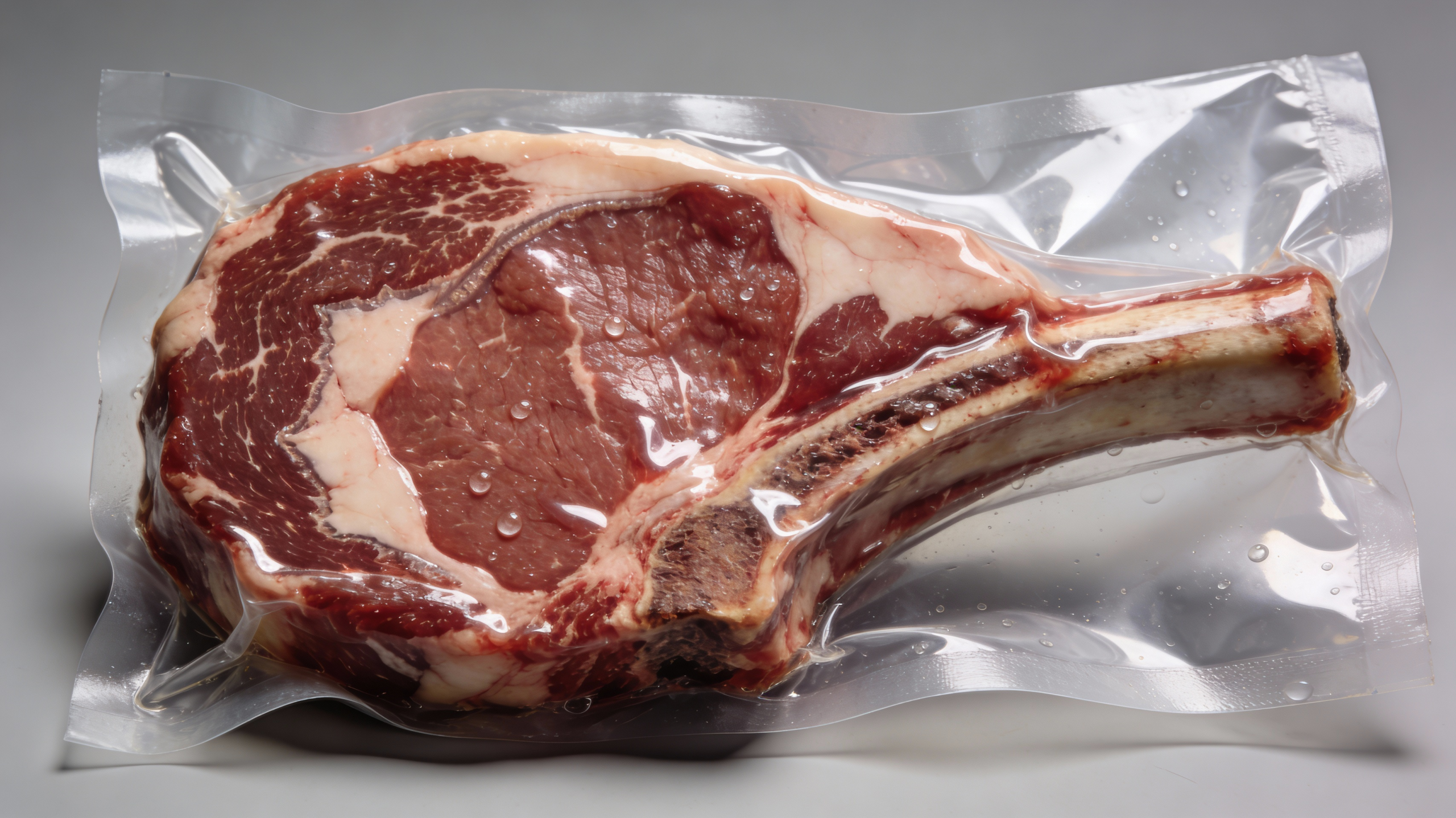
- Superior Puncture Resistance: High-toughness BOPA vacuum bag materials prevent punctures from bone-in meat, effectively eliminating the risk of vacuum loss and subsequent food spoilage.
- Supply Chain Risk Mitigation: Investing in high-performance BOPA vacuum bag technology hedges against logistics failures, reducing the total cost of ownership by preventing product waste.
- Enhanced Product Visibility: Advanced co-extruded film technology significantly reduces internal condensation, maintaining superior clarity for fresh proteins even under demanding cold chain conditions.
- Optimized Structural Integrity: Utilizing multi-layer co-extruded structures ensures that heavy-duty bone-in meat packaging remains intact during the physical stresses of long-distance transport and handling.
Read on to master these packaging strategies.
Introduction
For meat processors and cold chain logistics managers, the “leaker” is a significant profit drain. When packaging fails during transit due to the sharp edges of bone-in cuts or the physical rigors of the supply chain, the result is immediate: oxidation, moisture loss, and costly product returns. In the competitive fresh protein sector, standard packaging is no longer sufficient to handle the mechanical stresses of modern distribution, where a single puncture can compromise an entire shipment’s integrity.
Our recent technical demonstration highlights exactly how high-performance materials withstand these “violent logistics” scenarios. As shown in the video, where we subject materials to 3mm bone spikes, the superior puncture resistance of a specialized BOPA vacuum bag acts as a critical defense layer. Unlike standard poly-pouch alternatives, advanced co-extruded film technology provides a toughness premium that absorbs impact and prevents catastrophic vacuum loss, effectively turning your packaging into a strategic hedge against waste.
This article explores the material science that makes nylon-based structures the industry standard for bone-in meat packaging. We will break down how multi-layer co-extruded film technology optimizes structural integrity and reduces internal condensation, ensuring that your products maintain both their freshness and their visual appeal on the retail shelf. Read on to learn how investing in superior material toughness can stabilize your supply chain and reduce the total cost of ownership for your production line.
In my 15 years on the factory floor at Yun Sealoong, I’ve seen procurement managers make the same mistake a thousand times. They look at a spreadsheet, see a 15% price difference between a standard PA/PE bag and a BOPA-reinforced structure, and choose the cheaper option to hit a quarterly KPI. Three weeks later, I get the phone call. It’s always the same story: a container of bone-in ribeye or heavy-duty ham has arrived at a distribution center in Europe or the US, and 4% of the bags are “leakers.”
A 4% failure rate might sound small on paper. In reality, it is a catastrophe. In the high-stakes world of flexible food packaging, one punctured bag doesn’t just lose one unit of product. The leaking juices, rich in proteins and sugars, coat the surrounding bags. Within days, bacterial blooms turn the entire pallet into a biohazard. The smell of spoiled meat permeates the warehouse, and the entire shipment is rejected. The “savings” from that cheaper bag have just vanished, replaced by a $50,000 loss in inventory and a damaged reputation with the retailer.
This isn’t about plastic. It’s about physics. Specifically, it’s about how we engineer a molecular shield to survive “Violent Logistics.” If you are shipping protein with exposed bone or sharp edges, you aren’t just looking for a bag; you are looking for a risk-hedging tool.
1. The Physics of Failure: Why 3mm Bone Spikes are Surgical Killers of Standard Bags
To understand why a bag fails, you have to look at the geometry of the threat. In a standard vacuum packaging solutions setup, the film is under constant tension. When you vacuum-seal a piece of bone-in meat, the film is pulled tight against the product. If there is a 3mm bone fragment—common in machine-cut ribs or shanks—it acts as a concentrated point-load.
In physics, pressure is force divided by area ($P = F/A$). When that area is a tiny, jagged bone tip, the pressure exerted on the film is immense, even if the absolute force is low. During transit, every bump in the road and every shift in the shipping container adds kinetic energy to that bone tip. Technical analysis reveals that the film must stretch and deform to absorb this point-load stress without rupturing. Most standard films simply don’t have the molecular elasticity to handle this. They reach their yield point, and the bone tip “surgically” slices through the polymer chain.
I remember a client based in Europe who was shipping frozen lamb shanks. They were using a heavy 150-micron PA/PE bag, thinking thickness would solve the problem. It didn’t. Thickness without toughness is just more material to tear. The bags were brittle at cold chain temperatures. We ran a failure analysis and found that the vibrations from the ocean freight were causing “micro-fretting”—the bone was essentially sawing through the bag over 20 days at sea.
The solution wasn’t a thicker bag; it was a smarter molecular structure. We switched them to high-performance puncture resistant vacuum bags for bone-in meat. The secret wasn’t the gauge; it was the BOPA (Biaxially Oriented Polyamide) layer. Unlike cast nylon, BOPA is stretched in two directions during manufacturing, creating a mesh-like resilience.
When a bone tip hits a BOPA-reinforced bag, the energy is distributed across the oriented polymer chains, preventing the point of contact from reaching the breaking threshold.

This is why we focus on BOPA for “Violent Logistics.” If your supply chain involves manual handling, long-haul trucking, or sharp-edged proteins, cast films are a high-risk gamble.
2. Molecular Architecture: How Biaxial Orientation Creates a Kinetic Shield
At the Yun Sealoong production line, the difference between Cast Nylon (PA) and Biaxially Oriented Nylon (BOPA) is immediate. Cast nylon is extruded and cooled—sufficient for soft cheeses or sliced deli meats. But BOPA goes through a “tenter frame” process, where we stretch the extruded film both longitudinally and transversely.
Think of it like a piece of dough. If you just roll it out, the gluten strands are random. If you pull it and stretch it, those strands align, creating a much stronger texture. At a molecular level, BOPA is a highly ordered grid. This orientation gives the film its “snap-back” quality and its exceptional puncture resistance.
Let’s look at the numbers based on laboratory needle penetration tests:
| Material Structure | Puncture Resistance (N) | Tensile Strength (MPa) | Dart Drop Impact (g) |
|---|---|---|---|
| Standard PE (100 mic) | 8.2 | 25 | 180 |
| Standard PA/PE (100 mic) | 14.5 | 45 | 420 |
| BOPA/PE (100 mic) | 28.4 | 110 | 950 |
| Co-ex BOPA/mPE (120 mic) | 35.1 | 135 | 1,200 |
Pro Tip: Notice the Tensile Strength jump. BOPA is more than double the strength of standard PA/PE. In practical terms, when a pallet is dropped during handling, the BOPA bag deforms and recovers, whereas the standard bag may develop a “tunneling” leak at the corner seal.
However, BOPA is not without technical trade-offs. BOPA is hygroscopic, meaning it absorbs moisture from the air before lamination. If a factory doesn’t maintain strict humidity control, the BOPA film will swell, leading to curling and poor seal registration. Wrinkles at the corner of BOPA bags are a sign of poor environmental control during lamination, compromising seal integrity.
We often recommend a structure that incorporates mPE (Metallocene Polyethylene) as the inner sealing layer. While the BOPA provides the shield, the mPE provides the seal. mPE has a much narrower molecular weight distribution, allowing it to seal at a lower temperature with much higher “hot tack” strength. This is critical when packing at high speeds or in cold, damp environments. If you are assessing which structure fits your machinery, you can Ask my engineering team for a TCO audit to match the chemistry to your product’s specific requirements.
3. The Condensation Killer: Solving the Visual Integrity Challenge
There is a second type of failure: the failure of “Visual Integrity.” Even the toughest bag fails if the customer cannot clearly see the bone-in ribeye through a fog of internal condensation. In the retail sector, foggy meat appears unappealing and aged.
This fogging is caused by a thermal bridge. When cold meat is packed and moves through various temperature zones, moisture inside the bag condenses on the inner surface.
Our BOPA-based functional bags are engineered to tackle this. By using specific co-extrusion techniques, we can achieve a 45% reduction in internal condensation compared to standard vacuum pouches. This is achieved through surface energy management, where we manipulate the surface tension of the inner layer so that moisture spreads into a microscopic, transparent film rather than forming droplets.
This has two massive benefits:
- Visual Clarity: The product maintains a fresh, “wet-aged” appearance.
- Bacterial Inhibition: Large droplets of water can become breeding grounds for psychrotrophic bacteria. Managing that moisture extends the “color window” of the meat.
High-performance BOPA structures ensure that clarity remains sharp throughout the shelf life. For retail-ready bone-in products, we suggest our extra large smooth vacuum pouches, which offer superior clarity and surface gloss.
4. Engineering the “Violent Logistics” Defense: Multi-Layer Co-extrusion Strategies
“Violent Logistics” refers to the reality of the global supply chain: static electricity in winter making films brittle, delamination from inferior adhesives, or “tunneling” effects from poor tension control.
To defend against this, we utilize multi-layer co-extrusion. For bone-in meat, a 5-mil (125 micron) BOPA/PE structure is the industry gold standard. We use a symmetrical or asymmetrical “sandwich” of materials. The outer BOPA layer handles external abrasion and punctures, while the inner PE or mPE layer handles the seal. Between them, we use polymeric “tie layers” to bond the nylon and polyethylene. High-quality tie layers prevent the bag from “delaminating” under vacuum stress, which would otherwise create oxygen pockets and lead to spoilage.
Seal integrity at low temperatures is critical. Most bags seal effectively at room temperature, but their performance at -18°C varies significantly.
| Material Structure | Seal Strength at 25°C (N/15mm) | Seal Strength at -18°C (N/15mm) | Failure Mode at -18°C |
|---|---|---|---|
| Standard PA/PE (80 mic) | 45.5 | 18.2 | Brittle Fracture |
| BOPA/mPE (100 mic) | 52.1 | 48.4 | Ductile Yield |
| Heavy Duty BOPA/mPE (150 mic) | 68.8 | 62.5 | None |
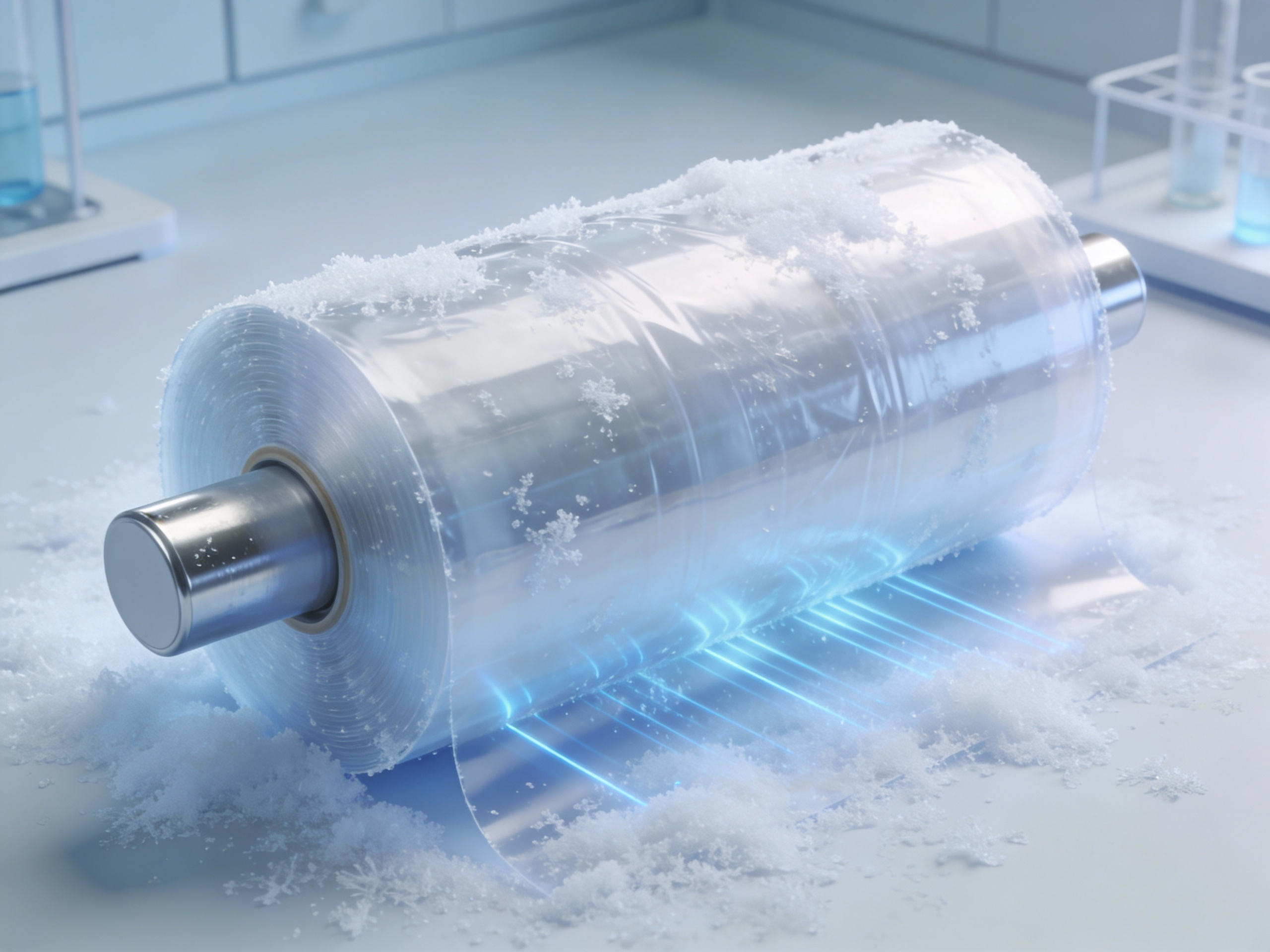
Standard PA/PE loses over 60% of its seal strength in the freezer, making the plastic brittle. Our BOPA/mPE structures, specifically our heavy duty vacuum rolls, maintain nearly 90% of their strength because the metallocene molecules remain flexible in sub-zero conditions.
For irregular geometries—like a whole lamb shoulder or a jagged rack of ribs—you need a bag that can “flow” into crevices without thinning at the corners. This “Deep Draw” capability requires a specific balance of BOPA and high-alpha olefin PE.
5. The Economic ROI: Total Cost of Ownership (TCO)
Procurement pressure often drives a focus on price per 1,000 bags, but this is a flawed metric for a meat program. The Total Cost of Ownership (TCO) provides a more accurate picture of profitability.
Consider a shipment of 1,000 cases of bone-in ham, each worth $200. Total shipment value: $200,000.
Scenario A: Standard Bag
- Bag Cost: $0.15 each
- Leaker Rate: 3% (Typical for standard PA/PE with bone-in products)
- Direct Product Loss: $6,000
- Labor for Sorting/Repacking: $1,200
- Retailer Penalties: $2,000
- Total Effective Cost of Packaging: $9,350
Scenario B: BOPA “Tough” Bag
- Bag Cost: $0.18 each (20% higher unit price)
- Leaker Rate: 0.2% (The Yun Sealoong standard)
- Direct Product Loss: $400
- Labor for Sorting/Repacking: $150
- Retailer Penalties: $0
- Total Effective Cost of Packaging: $730
The higher-spec bag saves $8,620 on a single shipment. In the meat industry, the cost of packaging is negligible compared to the cost of the protein it protects. This ROI extends to specialized applications as well. For Sous Vide or high-temperature processing, our commercial grade retort pouches are required, as the BOPA structure handles thermal expansion without bursting or delaminating at 121°C.
If your current “leaker” rate is higher than 0.5%, there is a significant opportunity for cost recovery. Bags should be viewed not as a commodity, but as the final line of defense for your product’s value.
Conclusion
In the high-stakes world of protein logistics, packaging is a critical risk-hedging tool. The minor savings on standard PA/PE bags often lead to substantial inventory loss due to higher leaker rates. At Yun Sealoong, we engineer our BOPA-reinforced vacuum structures to act as a molecular shield, providing the elasticity needed to survive 3mm bone spikes and the “Violent Logistics” of global trade. With 15 years of factory-floor expertise and precision-controlled manufacturing, we ensure your seals remain flexible and your product stays crystal clear.
Ready to eliminate leakers and protect your margins? Contact our engineering team today for a Total Cost of Ownership (TCO) audit or to request a custom sample kit of our puncture-resistant BOPA/mPE structures tailored to your specific bone-in meat application.


0 Comments