
Key Takeaways
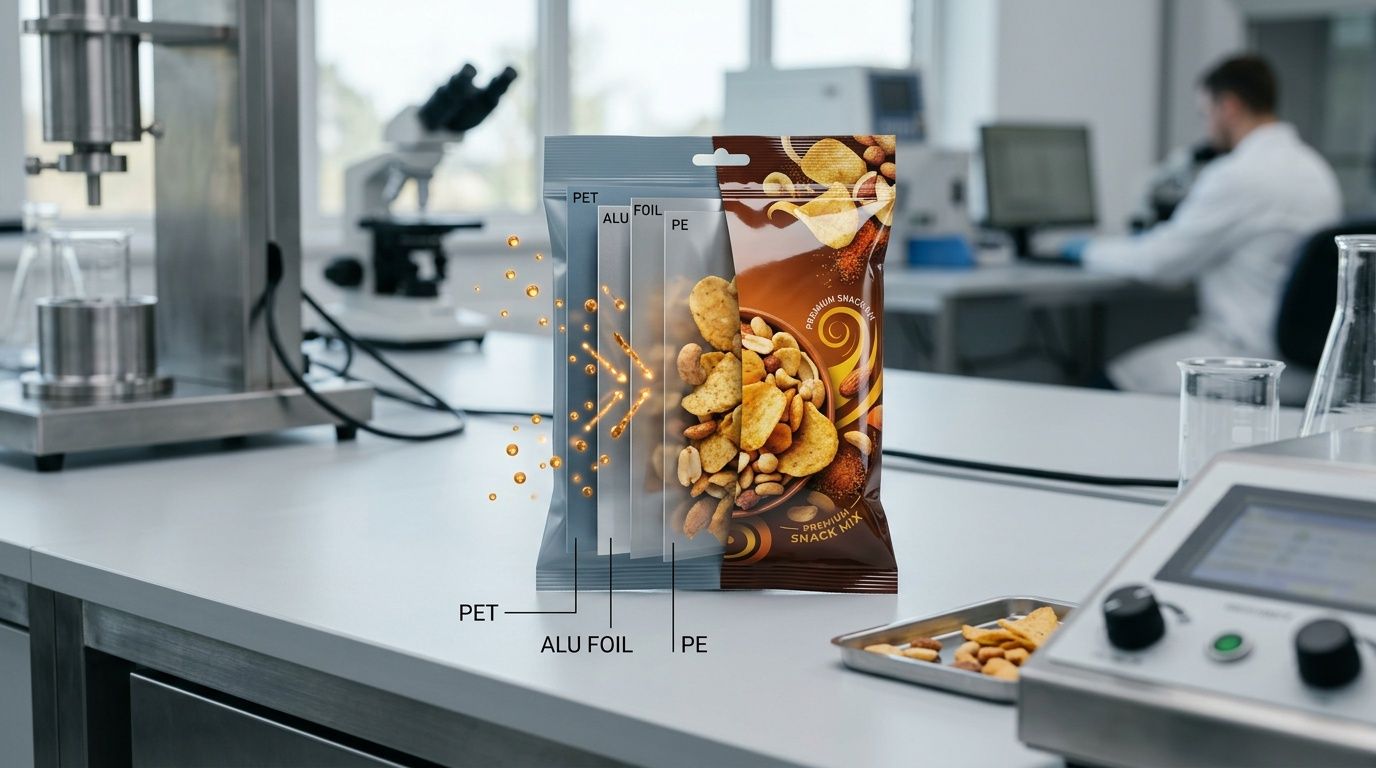
- High-Barrier Multi-layer Laminates: Material structures such as PET/AL/PE and PET/PA/AL/CPP provide significant oxygen and moisture resistance to ensure aroma retention and oil resistance, extending the shelf life of savory snacks and sensitive food products.
- Transparent PET/CPP Material Strategies: Combining PET and CPP films creates a balance between visual marketing and barrier protection, allowing brands to showcase product quality in impulse-buy categories like nuts and candies while maintaining essential food safety.
- Moisture-Proof BOPP/AL/PE Structures: Utilizing BOPP/AL/PE laminates facilitates high-definition gravure printing for brand recognition and provides a robust moisture barrier that reduces product leakage rates and maintains snack freshness throughout the supply chain.
- Hybrid Kraft Paper Lamination: Integrating BOPP, Kraft paper, and aluminum foil offers a packaging alternative that combines a minimalist aesthetic with the technical barrier performance necessary to protect snacks from light and humidity.
Introduction
The accelerated oxidation of savory fats and the loss of volatile aromas are primary causes of premature spoilage in the snack industry, often resulting in high return rates and diminished brand trust. Procurement managers and packaging engineers must manage the technical tension between providing robust protection against environmental factors and creating a package that captures consumer attention on a retail shelf.
Solving these shelf-life challenges requires a precise selection of snack packaging materials engineered for specific barrier properties. For instance, a multi-layer laminate structure utilizing PET/Aluminum Foil/PE provides the necessary oxygen and moisture resistance for sensitive products, while oil resistant packaging is essential for fried or spicy items to prevent material degradation. Alternatively, integrating PET and CPP film allows for transparent sections that utilize visual marketing without compromising food safe packaging materials standards. Determining which material combinations—from moisture-proof BOPP laminates to hybrid kraft paper structures—align with product chemical profiles and distribution requirements ensures that custom printed snack bags maintain integrity throughout the entire supply chain.
Strategic Engineering of Flexible Food Packaging
In the modern fast-moving consumer goods (FMCG) landscape, the snack industry has transitioned from a focus on flavor profiles to a sophisticated engineering challenge. For procurement managers and packaging engineers, selecting the right flexible food packaging is a central pillar of product viability. The snack category is uniquely demanding; it often involves high-fat content, sensitive aromatic compounds, and varying degrees of physical fragility. Packaging failure—whether a microscopic pinhole or a drop in the aroma retention rate—can lead to brand damage and significant financial losses due to returned goods and shortened shelf cycles.
Engineering a snack package requires a multi-disciplinary approach that balances barrier performance, material science, and visual marketing. The goal is to create a micro-environment that remains stable despite external fluctuations in temperature, humidity, and light exposure. This technical analysis examines the complexities of multi-layer laminate structures and the strategic trade-offs required to maintain a competitive edge.
Environmental Degradation Factors and the Role of Snack Packaging Materials
To engineer an effective packaging solution, the environmental factors that degrade snack quality must be identified. For savory and fried snacks, the primary catalysts for degradation are lipid oxidation, moisture ingress, and ultraviolet (UV) light. Traditional mono-layer plastics are insufficient for high-performance applications because they lack the comprehensive barrier properties needed to manage all three factors simultaneously.
Chemical Sensitivity of Savory Snacks to Oxygen and Light
Lipid oxidation is a critical chemical challenge for fried snacks, such as potato chips, extruded puffs, and roasted nuts. When the unsaturated fats in these products are exposed to oxygen (O2), they undergo a free-radical chain reaction that results in the formation of hydroperoxides, which subsequently break down into aldehydes and ketones. These secondary metabolites are responsible for the off-flavors that render a product unsellable.
The rate of oxidation is significantly accelerated by exposure to light, particularly in the UV spectrum. Light acts as a catalyst for photo-oxidation, meaning that transparent packaging presents a higher risk for high-fat snacks. In professional material selection, an opaque layer, often achieved through aluminum foil or metallization, is used to block light transmission. The barrier must achieve a high Oxygen Transmission Rate (OTR) of less than 1.0 cc/m2/24hr for premium products to ensure that internal oxygen levels remain below the threshold required to initiate significant rancidity.
Managing Water Activity Through Vapor Barriers
The crispness of a snack is a physical property directly related to its water activity (aw). Most snacks are manufactured with a low moisture content, creating high osmotic pressure difference between the internal product and the external atmosphere. Without a robust moisture barrier, water vapor (H2O) will migrate into the package, leading to a loss of texture and potentially facilitating microbial growth.
Engineers measure performance via the Moisture Vapor Transmission Rate (MVTR). For hygroscopic snacks, the packaging material must maintain an MVTR near zero. The synergy of multi-layer laminates is evident here. While a single layer of Polyethylene (PE) might provide basic moisture protection, it is relatively permeable to oxygen and gases. By laminating PE with a high-barrier substrate like PET or Aluminum, manufacturers achieve a hermetic seal that manages both OTR and MVTR. Boundary conditions for these materials are tested at high humidity to simulate tropical or coastal logistics environments, ensuring the product remains crisp.
Engineering Multi-Layer Laminate Structures for Shelf Life Extension
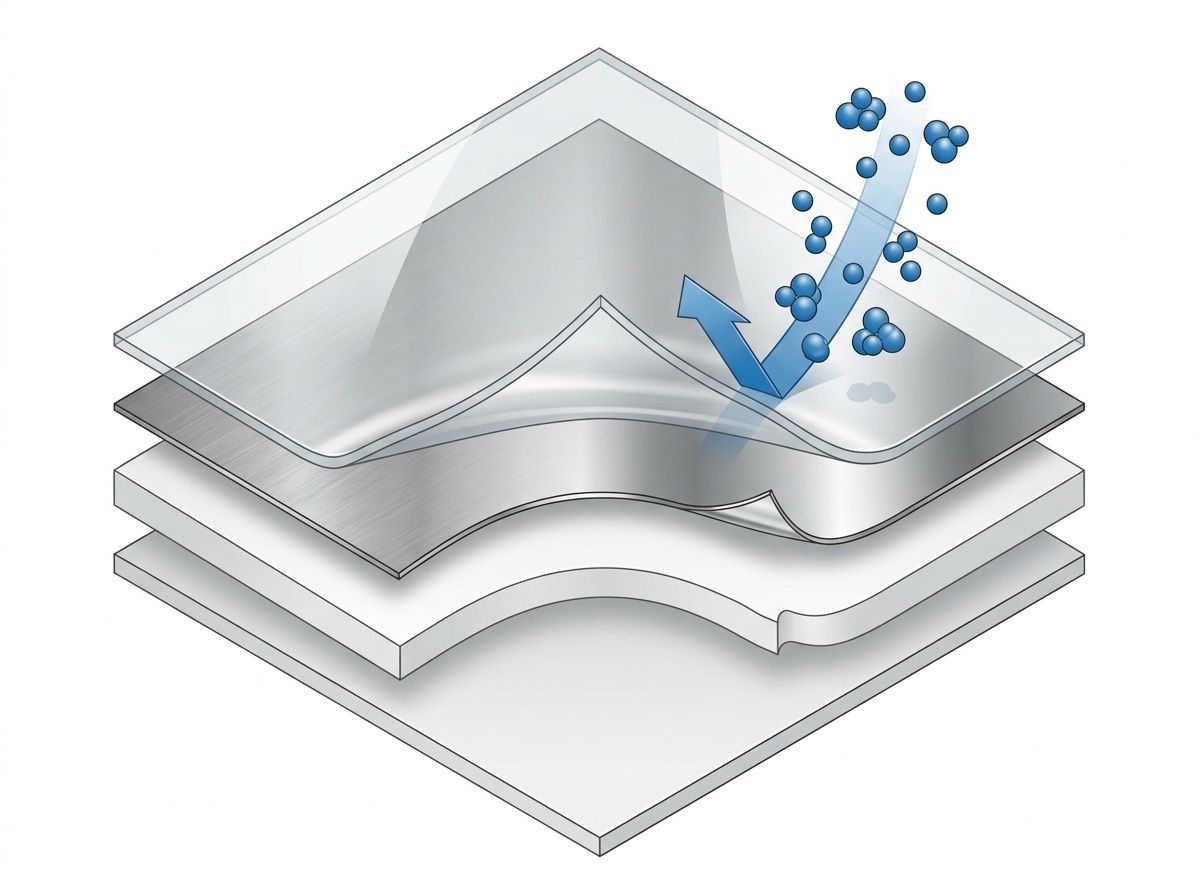
The industry standard for high-performance snack packaging is the multi-layer laminate structure. Each layer is chosen for a functional contribution: the outer layer for printability and heat resistance, the middle layer for barrier properties, and the inner layer for heat-sealing and food contact safety.
A common configuration is the high-barrier multi-layer laminate pouch utilizing PET/AL/PE or PET/PA/AL/CPP. These combinations provide the protection required for sensitive savory snacks that demand high aroma retention and long-term stability.
The Role of Aluminum Foil as a Primary Barrier
Aluminum Foil (AL) remains the primary benchmark for high-barrier applications. Unlike metallized films (VMPET), which consist of a thin layer of aluminum atoms vacuum-deposited onto a plastic film, aluminum foil is a solid metal sheet. It offers essentially zero permeability to oxygen, moisture, and light.
However, the use of aluminum foil introduces specific trade-offs. It is susceptible to “flex-cracking,” where repeated bending of the material creates microscopic pinholes. In a logistics chain where bags are frequently handled, these pinholes can compromise the barrier. To mitigate this, engineers sandwich the aluminum foil between layers of Polyamide (PA/Nylon) or Polyethylene (PE) to provide cushioning and structural support. This ensures that the barrier remains intact even under mechanical stress. While AL-based structures have a higher initial cost than metallized counterparts, the ROI is realized through reduced product waste and the ability to expand into distant geographical markets.
PA (Nylon) and PET for Structural and Aroma Integrity
Polyamide (PA), commonly known as Nylon, is integrated into snack packaging for its puncture resistance and gas barrier properties. For snacks with sharp edges—such as pretzels, dried pasta snacks, or certain types of hard candies—a standard PET/PE structure might fail during transit, leading to a high leakage rate. Adding a PA layer provides the toughness needed to resist internal punctures.
PET (Polyethylene Tetrathalate) serves as the standard outer substrate because it is dimensionally stable and has a high melting point. This allows for high-speed gravure printing without material distortion. PET also contributes to the aroma retention rate. Essential oils and volatile flavor compounds can permeate through standard sealing resins. PET’s molecular structure is dense enough to secure these aromas, ensuring the sensory experience is maintained. This is vital for snacks with complex seasonings like barbecue, truffle, or chili flavors.
Balancing Transparency and Protection in Material Selection
Visual marketing is a significant factor in the snack industry. Consumers often evaluate product color and texture before purchasing. This demand has led to the use of transparent PET/CPP snack pouch designs. However, transparency requires a technical compromise.
PET/CPP Laminates for Impulse-Buy Categories
The PET/CPP (Cast Polypropylene) structure is standard for nuts, seeds, and candies. CPP is preferred as a sealing layer over PE in these applications because it offers superior clarity and a higher gloss factor, enhancing the visual appeal. Technically, CPP also provides better heat-seal strength and heat resistance, allowing for faster production speeds on automated packaging lines.
The trade-off is the lack of light protection. Transparent films allow UV and visible light to penetrate the package, which can cause color fading or trigger oxidative rancidity. To solve this, engineers apply UV-inhibitors to the film or use window designs. A window design involves a high-barrier, opaque laminate for the majority of the bag, with a specific area left transparent. This allows consumers to see the product while minimizing the total area exposed to light.
Strategic Window Placement and Barrier Compromise
When designing a snack bag with a window, the interface between the opaque and transparent sections is a critical point. In some cases, the window is achieved by de-metallization, a process that removes the aluminum layer in specific shapes. While this maintains structural integrity, the de-metallized area becomes a high-permeability zone.
Evaluation is necessary to determine if the specific snack can survive this barrier compromise. For stable items like salt-coated pretzels or hard candies, a large window is acceptable. For oil-rich cashews or walnuts, the window should be minimized or placed to reduce light exposure during display. The choice between a full clear bag and a window bag impacts the OTR/MVTR calculations for the entire package.
Oil Resistant Packaging Strategies for Savory and Spicy Snacks
A common failure mode in snack packaging is delamination caused by lipid migration. This occurs when oils or spices penetrate the inner sealing layer and attack the adhesive bond between the laminate layers. This results in a greasy exterior and can lead to the physical collapse of the bag’s structure.
Preventing Lipid Migration and Delamination
To combat this, oil-resistant sealing layers are specified. Standard Low-Density Polyethylene (LDPE) has a molecular structure that oils can penetrate over time. For spicy or high-oil snacks, Linear Low-Density Polyethylene (LLDPE) or specialized Cast Polypropylene (CPP) resins are used. These materials have higher density and chemical resistance, acting as a functional barrier against lipids.
For snacks coated in chili oil or highly acidic seasonings, the adhesive used in the lamination process must be solvent-free and rated for chemical resistance. If the wrong adhesive is used, oil will migrate through the PE layer and dissolve the bond with the PET or AL layer, causing the bag to peel apart. This is a critical consideration for sourcing in markets where spicy snack trends are dominant.

Sealing Integrity in the Presence of Contaminants
A secondary challenge is achieving a hermetic seal. During the high-speed filling process of a Vertical Form Fill Seal (VFFS) machine, oil droplets or spice dust can contaminate the seal area. If the sealing material does not have high hot tack or the ability to seal through contamination, the result is a weak seal.
Engineers use ionomer resins or metallocene-catalyzed LLDPE to solve this. These materials are designed to melt through contaminants, ensuring a solid molecular bond. This reduces the product leakage rate and ensures that the internal modified atmosphere is maintained throughout the supply chain.
| Material Layer | Oil Resistance | Heat Seal Strength | Clarity | Best Use Case |
|---|---|---|---|---|
| LDPE | Moderate | Good | Low | General dry snacks |
| LLDPE | High | Excellent | Moderate | Oily/heavy snacks |
| CPP | High | Superior | High | Nuts, premium look |
| Ionomers | Extreme | High (Hot Tack) | High | Fine powders/oils |
Hybrid Kraft Paper Lamination for Premium Appeal
The shift toward natural aesthetics has popularized the kraft paper laminated snack bag. These structures offer a tactile feel that suggests artisanal quality. However, Kraft paper alone has zero barrier properties against moisture or oxygen. To be viable, it must be part of a hybrid multi-layer structure.
Integrating Natural Fibers with Functional Barriers
The typical structure for a paper snack bag is BOPP/Kraft/AL/PE. The Kraft paper is an aesthetic middle layer. The outer BOPP provides moisture protection for the paper, preventing it from becoming soggy, while the internal Aluminum Foil and PE layers provide the actual barrier and sealing functionality.
This hybrid approach allows brands to meet demand for eco-friendly aesthetics without sacrificing shelf-life performance. The trade-off is the thickness and stiffness of the material. Paper-based laminates are more rigid than pure plastic films, which helps stand-up pouches maintain their shape on a shelf.
High-Definition Gravure Printing on Specialty Substrates
Printing on Kraft paper requires a different technical approach than printing on PET. Because paper is porous, ink absorption varies. Gravure printing allows for consistent color application on textured surfaces. When branding custom printed snack bags, the natural texture of the paper is often used to enhance the brand’s identity. Using matte finishes on the outer plastic layer creates a package that looks and feels like paper but performs like a high-tech industrial film.

Implementation Matrix: Selecting Materials Based on Supply Chain Stress
The final stage of material selection involves testing the package against supply chain realities. A bag must be subjected to the vibrations of transport, pressure changes in air freight, and retail handling.
Reducing Product Leakage and Puncture Rates
For nitrogen-flushed snacks, the bag acts like a pressurized vessel. If the material lacks sufficient burst strength, the seals may fail during transport, especially at different altitudes. A moisture-proof BOPP/AL/PE bag is often the solution. The BOPP provides high tensile strength, while the AL/PE combination ensures gas remains trapped to cushion fragile contents.
Puncture resistance is equally vital. Procurement managers must consider whether the snacks have sharp points. Extruded snacks or dried vegetable chips can pierce thin films. In these cases, increasing the micron thickness of the PE layer or adding a Nylon (PA) layer is a necessary investment to prevent product leakage.
Machinability and Coefficient of Friction (COF)
On the production floor, machinability is determined by the Coefficient of Friction (COF). If the film has a low COF, it may slide off center in the VFFS machine. If it has a high COF, it may not move smoothly through the forming collar, causing jams. Engineers specify the COF for both internal and external layers to ensure stable tracking and high-speed production.
| Snack Category | Recommended Structure | Key Feature | Critical Requirement |
|---|---|---|---|
| Nuts & Seeds | PET/VMPET/PE | Visibility/Barrier | MVTR (Moisture) |
| Potato Chips | BOPP/VMPET/CPP | Burst Strength | OTR (Oxygen/Rancidity) |
| Spicy Fried Snacks | PET/AL/LLDPE | Oil Resistance | Chemical Stability |
| Dried Fruit | Kraft/AL/PE | Natural Appeal | Moisture/Aroma Retention |
| Candies | PET/CPP | High Clarity | Sealing Speed/Gloss |
Conclusion
The engineering of snack packaging requires a precise technical balance between chemical barrier performance and structural integrity. For high-fat savory snacks, maintaining an oxygen transmission rate below 1.0 cc/m2/24hr through multi-layer laminates like PET/AL/PE is essential to prevent lipid oxidation. Conversely, transparent PET/CPP structures prioritize visual impact while requiring strategic trade-offs regarding light protection. For procurement and production managers, these material specifications directly influence shelf-life stability, leakage rates, and high-speed machinability. Aligning laminate properties with specific lipid profiles and supply chain stresses ensures both brand protection and operational profitability. To discuss barrier requirements for specific product lines, consult the engineering team.


0 Comments