
Key Takeaways
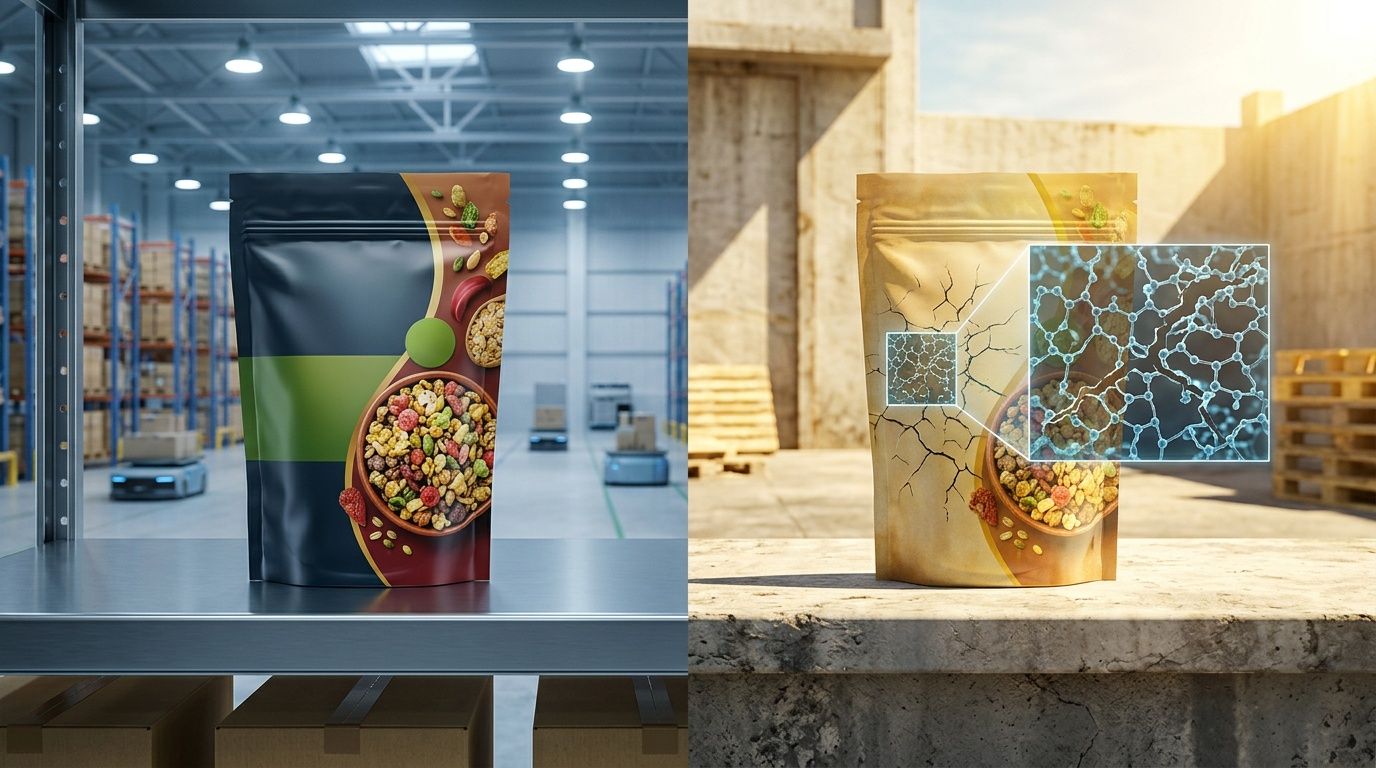
- Finite Barrier Life: Flexible packaging materials possess a specific expiration date beyond which barrier properties degrade, leading to food spoilage even when the food product remains within its own intended shelf life.
- UV-Induced Degradation: Improper storage and UV exposure trigger photo-oxidative aging, which significantly compromises the Oxygen Transmission Rate and moisture barrier stability of standard laminates such as PET/PE structures.
- Laminate Structure Resilience: Multi-layer foils including PET/AL/CPP and PET/PA/AL/CPP composites provide critical resistance against environmental stressors, ensuring high-barrier performance is maintained throughout the material’s lifecycle compared to simpler film structures.
- Performance Quantification: Utilizing accelerated aging tests allows procurement managers to quantify the long-term reliability of barrier materials, shifting the focus from unit price to verified supply chain compliance and long-term product safety.
Introduction
Food manufacturers often focus exclusively on the expiration date of products while overlooking the finite shelf life of flexible packaging materials. When a laminate structure passes its peak performance window, barrier property degradation occurs, compromising the internal atmosphere of the package before the food product is scheduled to expire. This technical oversight leads to unexpected moisture barrier loss or a significant rise in the oxygen transmission rate (OTR), resulting in premature oxidation, staleness, or bacterial contamination that damages brand reputation.
Environmental variables during transit and warehousing, particularly UV exposure, trigger photo-oxidative aging in standard films. For common structures like a PET/PE laminate, shelf life is not static; it is dependent on packaging storage conditions. Exposure to light and fluctuating temperatures can weaken the molecular bonds of the polymer, turning a high-performance barrier into a porous membrane. Utilizing an accelerated aging test for packaging allows procurement teams to move beyond speculative dates and quantify how long a specific material can withstand environmental stressors.
The technical criteria evaluated here impact the flexible film expiration date. These factors determine whether current laminate specifications are sufficient for the intended supply chain duration and identify when UV resistance in flexible packaging becomes a mandatory requirement.
Technical Drivers of Barrier Property Degradation in Flexible Laminates
The fundamental misunderstanding in the industrial packaging sector is the assumption that flexible films act as static, unchanging barriers. In reality, a packaging material is a dynamic chemical system that possesses a finite peak performance window. Beyond this window, the polymer structures providing resistance against oxygen and moisture begin to degrade. This degradation is a molecular-level failure that transforms a high-barrier laminate into a semi-permeable or porous membrane. Understanding the technical drivers of this degradation—specifically photo-oxidation, chain scission, and the loss of molecular density—is critical for quality assurance and procurement.
Photo-Oxidative Aging and UV Resistance in Flexible Packaging
Photo-oxidative aging is an aggressive catalyst for the degradation of flexible packaging materials. When films, particularly those containing polyethylene (PE) or polypropylene (PP), are exposed to ultraviolet (UV) radiation, a series of complex chemical reactions is initiated. UV photons carry enough energy to break the covalent bonds within the polymer backbone. This process, known as homolytic chain scission, results in the formation of free radicals. These radicals are highly reactive and, in the presence of atmospheric oxygen, trigger a self-propagating oxidation cycle.
As the polymer chains break, the average molecular weight of the film decreases. This leads to a reduction in mechanical properties, such as tensile strength and elongation at break, but more importantly, it impacts barrier integrity. The polymer matrix, which was once a dense, crystalline structure designed to block O2 (oxygen) molecules, becomes increasingly amorphous and fragmented.
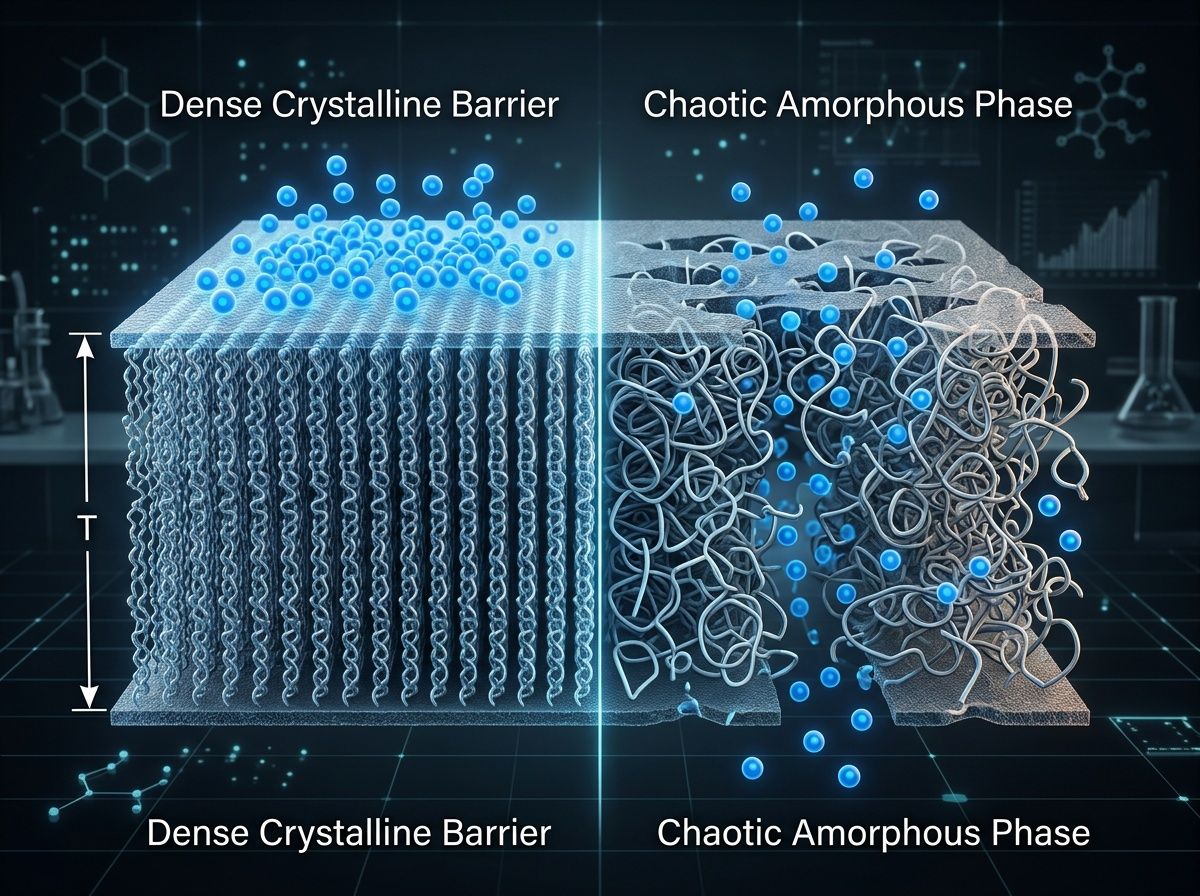
In these degraded regions, the free volume between polymer chains increases, creating microscopic pathways that allow for a significant increase in the Oxygen Transmission Rate (OTR).
In professional flexible-food-packaging applications, UV resistance is a core requirement. Standard transparent films without UV stabilizers are particularly vulnerable. Even indoor environments present risks; fluorescent lighting and proximity to warehouse windows can provide sufficient UV exposure over a 6-to-12-month period to compromise barrier properties. The typical failure mode observed in UV-damaged films is a brittling effect, where the film loses flexibility and develops microscopic surface cracks that serve as entry points for moisture and air.
The Mechanism of Moisture Barrier Loss and Micro-porosity
While UV exposure drives chemical degradation, thermal stress and humidity fluctuations drive physical-mechanical degradation, specifically affecting the Water Vapor Transmission Rate (WVTR). The moisture barrier in a flexible laminate is primarily maintained by the hydrophobic nature of the polyolefin layers and the density of the crystalline regions within the film. However, polymers are inherently semi-permeable. As a material ages, or as it is subjected to repeated thermal cycling, the structural arrangement of these polymer chains shifts.
A critical factor in moisture barrier loss is the development of micro-porosity. This occurs when the plasticizers within the film migrate to the surface or when the bond between the laminate layers starts to weaken—a process known as delamination. When the adhesive layer between a PET outer layer and a PE inner layer fails, small air gaps form.
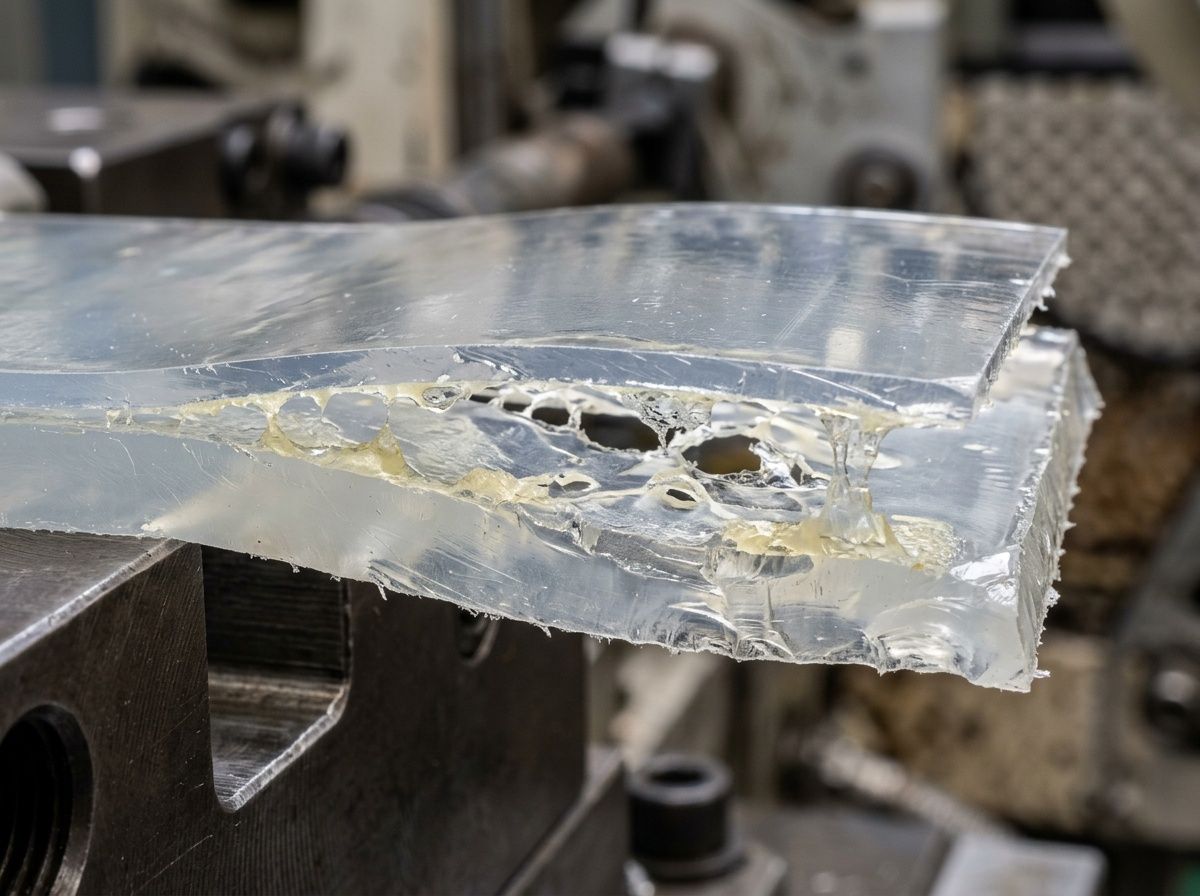
These gaps allow moisture molecules to pool and diffuse through the layers at a much faster rate than through a solid, well-bonded laminate.
The flexible film expiration date is the theoretical point where these micro-cracks and increased free volumes reach a threshold where original WVTR specifications are no longer met. For moisture-sensitive products like powdered chemicals, dehydrated foods, or pharmaceutical ingredients, even a minor rise in WVTR can lead to clumping, loss of potency, or microbial growth. Procurement teams must recognize that a bag appearing intact may actually be leaking moisture at the molecular level due to the loss of original barrier density.
Defining the PET/PE Laminate Shelf Life and Performance Window
The PET/PE (Polyethylene Terephthalate / Polyethylene) laminate is standard in the flexible packaging industry due to clarity and cost-effectiveness. However, its widespread use often leads to neglect regarding its shelf life. A standard PET/PE moisture-proof stand-up pouch is designed to provide a specific barrier profile, but that profile is time-dependent. The shelf life of the packaging material itself is often shorter than the shelf life of the food it protects, especially if storage conditions are suboptimal.
Sensitivity of PET/PE to Environmental Variables
The vulnerability of the PET/PE structure lies in the differing thermal and chemical stabilities of its two primary components. PET is an effective oxygen barrier and provides structural rigidity, but it is susceptible to hydrolytic degradation if stored in high-humidity environments for extended periods. PE is the primary moisture barrier and heat-seal layer, but it is highly sensitive to temperature. As temperatures approach the glass transition point or the softening point of the specific PE grade, the polymer chains gain mobility, allowing O2 and H2O molecules to bypass the barrier more easily.
Furthermore, the interface between the PET and PE layers is a potential point of failure. The lamination process relies on adhesives with a finite lifespan. Over time, chemical interactions between the packaged product—such as essential oils, acids, or fats—and the packaging material can migrate through the PE layer and attack the adhesive bond, reducing peel strength. Once layers separate, the path gas molecules must take to permeate the film is shortened, leading to a sudden spike in OTR and WVTR.
Performance Decay Curves: When the Barrier Meets the Food Expiration
The peak performance window of a PET/PE laminate is typically defined as the period during which the material maintains at least 90% of its original barrier and mechanical specifications. In ideal storage conditions (20°C, 50% relative humidity), this window might extend to 18 or 24 months. However, in real-world supply chains, the window is often narrower.
A critical risk is the intersection of expiration. This occurs when the packaging material reaches its performance limit while the food product inside remains within its stated expiry date. If a snack food is packaged in a bag that has been in a warehouse for 12 months, the film may have undergone enough photo-oxidation to increase its OTR by 30%. The food will spoil faster than predicted because testing was performed on fresh packaging. This underscores the need for strict inventory rotation of packaging materials, treating them as a perishable raw material.
Quantifying Reliability Through Accelerated Aging Test for Packaging
To mitigate the risks of premature packaging failure, the industry utilizes accelerated aging tests. These protocols allow for the prediction of the long-term behavior of a laminate. Instead of waiting years to see if a high-performance PET/PA/AL/CPP composite pouch maintains its barrier, lab technicians use thermal and environmental stress to simulate the passage of time.
Simulating Long-term Storage via Thermal and UV Stress
Accelerated aging is based on the Arrhenius Equation, which relates the rate of a chemical reaction to temperature. The industry uses the Q10 factor, stating that the rate of chemical degradation doubles for every 10-degree Celsius increase in temperature. By subjecting a film to 50°C or 60°C in a controlled chamber, it is possible to simulate months of ambient-temperature aging in weeks.
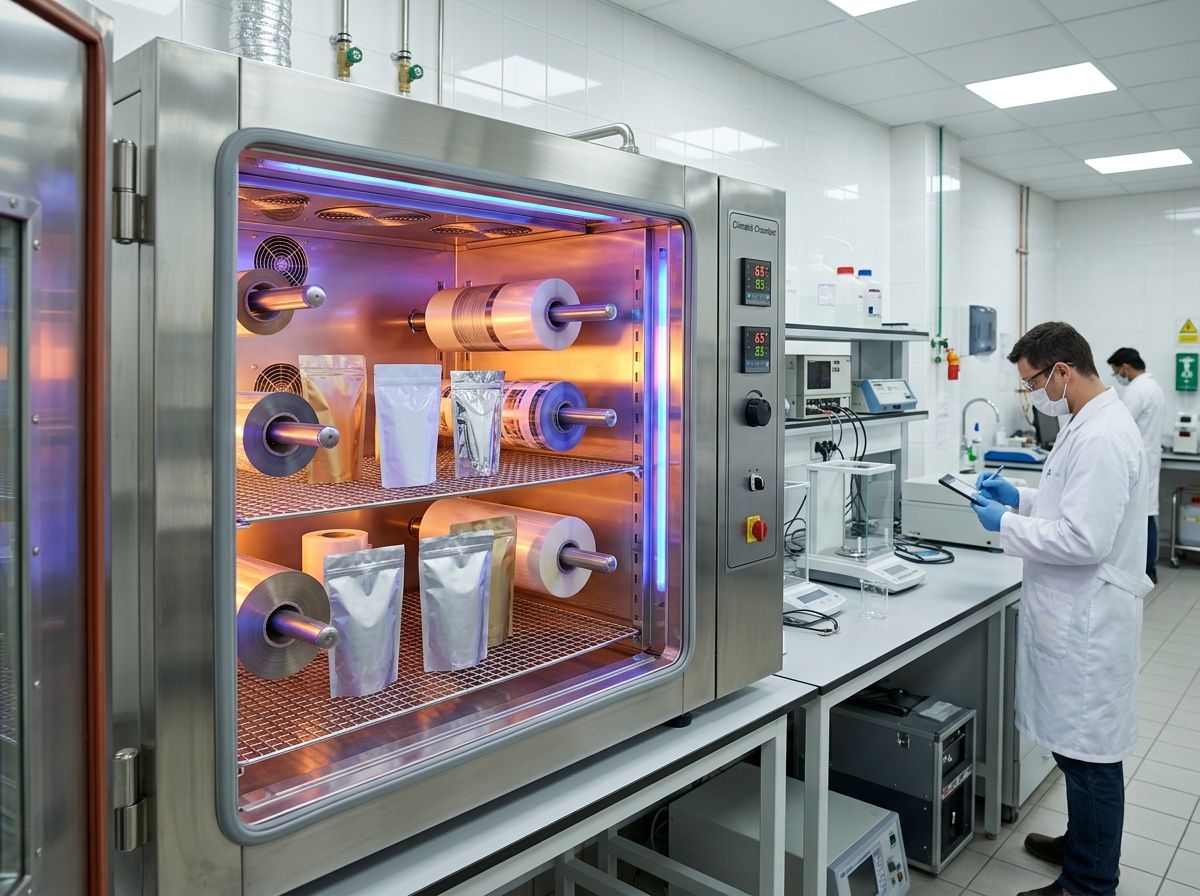
A comprehensive accelerated aging test for packaging also includes UV exposure cycles. Specialized weather-o-meters use xenon arc lamps to replicate the spectrum of sunlight, including UV-A and UV-B rays. By alternating between high-intensity light exposure and high-humidity dark cycles, the test mimics grueling real-world storage conditions to identify the failure point—when OTR or WVTR exceeds the maximum allowable limit.
Interpreting OTR and WVTR Data for Supply Chain Compliance
Evaluating lab reports requires looking beyond a pass/fail result. Technical procurement should analyze the degradation curve. If a laminate shows a stable OTR for the first four weeks of accelerated testing followed by an exponential increase, this indicates a threshold failure mode, likely due to delamination or the consumption of anti-oxidant additives.
Table 1: Real-time Aging vs. Accelerated Aging (Simulated 24-Month Shelf Life)
| Test Temperature | Acceleration Factor (Q10=2) | Required Test Duration (Days) | Simulated Equivalent (Months) |
|---|---|---|---|
| 25C (Ambient) | 1.0 | 730 | 24 |
| 35C | 2.0 | 365 | 24 |
| 45C | 4.0 | 182 | 24 |
| 55C | 8.0 | 91 | 24 |
| 65C | 16.0 | 45 | 24 |
Note: These calculations are simplified. Actual testing protocols (like ASTM F1980) require specific humidity controls and consideration of the polymer glass transition temperature (Tg).
This data supports supply chain compliance. By establishing a baseline of how a material ages, companies can set use-by dates for packaging inventory, ensuring materials are used within their peak performance window for long-distance export.
Impact of Packaging Storage Conditions on Barrier Integrity
The environment in which packaging materials are stored before filling is as important as the environment the finished product faces. Improper warehousing is a leading cause of stealth degradation, where the material appears functional during filling but fails in the market.
The Role of UV Exposure in the Warehouse and Retail Environment
UV light is a primary driver of photo-oxidative aging. In B2B environments, packaging materials are often stored in warehouses with high-bay windows or unshielded lighting. Over months, the outer layers of a pallet of film can absorb significant UV radiation. This exposure is cumulative; even if the film is moved to a dark retail shelf, the chemical damage has already been initiated.
The retail environment is also a factor. High-intensity LED or fluorescent lighting in supermarkets can accelerate the degradation of the packaging. For products with high sensitivity to light or oxygen, films with UV-blocking additives or opaque structures are a technical necessity. UV resistance is often achieved by adding HALS (Hindered Amine Light Stabilizers) to the polymer mix to neutralize the oxidative process.
Managing Thermal Fluctuations in Global Supply Chains
Global logistics involve thermal volatility. A shipping container in a tropical port can reach internal temperatures exceeding 60°C. These spikes can push polymers toward their softening point, increasing the rate of moisture barrier loss. Thermal cycles also create mechanical stress on the seals and the lamination bond through expansion and contraction.
To maintain barrier integrity, packaging storage conditions should be climate-controlled. If climate control is not feasible, the packaging structure must be engineered to survive predicted thermal excursions. This may involve moving from a standard PET/PE structure to a robust triplex or quadruplex structure including a metal foil layer, which is resistant to thermal-induced permeability changes.
Structural Selection: Comparing Shelf Life of Flexible Packaging Materials
When the goal is barrier stability over 18-36 months, the choice of material structure is the most important decision. The performance gap between a basic film and a complex multi-layer laminate is significant when considering material aging.
Foil-Based Resilience: PET/AL/CPP and PET/PA/AL/CPP Performance
For the highest protection, aluminum foil (AL) is the benchmark. Unlike plastic films, aluminum foil is a functional absolute barrier, providing 100% protection against UV light and near-zero OTR and WVTR, provided the foil layer remains intact. In a triple-layer foil-lined high-barrier pouch, the AL layer is shielded by an outer PET layer and an inner CPP (Cast Polypropylene) or PE layer.
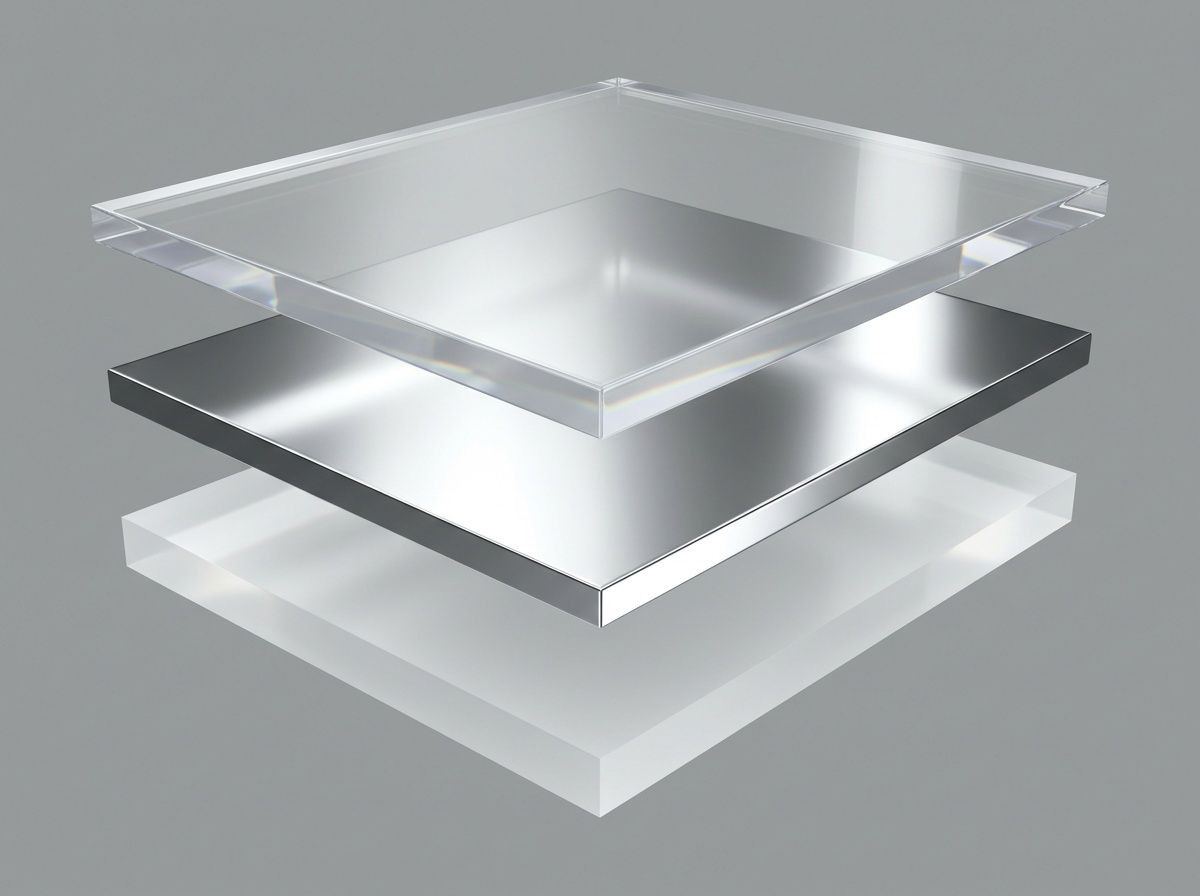
The addition of a PA (Polyamide/Nylon) layer, as in PET/PA/AL/CPP structures, increases security. PA provides exceptional puncture and flex-crack resistance. This is vital because the primary failure mode of foil-based packaging is the formation of pinholes caused by rough handling. By reinforcing the foil with PA, the laminate maintains its absolute barrier throughout high-speed filling and transport. These structures do not age in the same way plastic-only films do.
Mitigating Moisture Barrier Loss with High-Barrier Metallic Layers
A middle ground between standard PET/PE and foil laminates is the use of metallized films, such as VMPET (Vacuum Metallized PET). In these materials, a microscopic layer of aluminum is deposited onto the PET film. This improves the OTR and WVTR compared to transparent PET and provides UV reflection, slowing photo-oxidative aging.
The metallic layer in VMPET is thin and can crack if the film is stretched or folded. While it offers a better shelf life than non-metallized films, it does not offer the absolute barrier of solid foil. For products extremely sensitive to oxidation, such as specialized medical powders, the solid foil layer is a necessary investment for freshness.
Table 2: Laminate Structure Performance & Stability Matrix
| Material Structure | UV Resistance | OTR Stability (24 Months) | Puncture Resistance | Typical Application |
|---|---|---|---|---|
| PET/PE | Low | Poor (Degrades) | Moderate | Short-term snacks, dry goods |
| PET/VMPET/PE | High | Moderate | Moderate | Coffee, tea, processed foods |
| PET/AL/CPP | Absolute | Excellent (Stable) | Moderate | Retort food, high-value powder |
| PET/PA/AL/CPP | Absolute | Excellent (Stable) | High | Industrial chemicals, medical |
Strategic Procurement and Total Cost of Ownership (TCO) Analysis
Managing packaging shelf life requires shifting procurement from price per unit to a Total Cost of Ownership (TCO) model. In a TCO model, the cost of packaging includes the risk of failure, product returns, and damage to brand reputation.
Moving Beyond Unit Price to Barrier Reliability Metrics
A low-cost PET/PE bag may appear to be a saving, but a 5% failure rate due to premature barrier degradation makes the real cost higher. Failure costs include product loss, return logistics, quality claims, and lost opportunity costs from customers switching to competitors.
Strategic procurement involves demanding technical validation. Instead of accepting generic spec sheets, buyers should request OTR/WVTR data after accelerated aging and details on UV stabilizers and resin grades. Specifying these metrics in the supply contract ensures a reliable supply chain, particularly for the global flexible-food-packaging market.
Ensuring Brand Reputation through Verified Material Lifecycle
The packaging is the primary barrier between the product and the environment. If the packaging expires before the product, the brand reputation suffers. Consumers generally do not distinguish between food manufacturing defects and packaging barrier failures.
Partnering with manufacturers who prioritize the performance window of materials builds a reputation for quality. This involves using materials within their peak effectiveness period and adopting a first-in, first-out (FIFO) approach to inventory. In a competitive B2B landscape, guaranteeing factory-fresh condition for 24 months—supported by aging data—is a significant market differentiator.
Conclusion
The technical integrity of flexible laminates is a time-dependent variable governed by molecular degradation and environmental exposure. Factors such as photo-oxidative aging and thermal stress compromise Oxygen Transmission Rates and moisture barriers, often before the contained product reaches its own expiration. For procurement and quality assurance teams, prioritizing total cost of ownership over unit price necessitates a rigorous evaluation of material shelf life and warehouse storage conditions. Adopting robust structures like PET/PA/AL/CPP or metallized films can mitigate performance decay across volatile global supply chains. To discuss specific barrier requirements or review accelerated aging data for specific product lines, contact the engineering team.


0 Comments