

Key Takeaways
- Permeation Benchmarks Dictate Substrate Selection: Controlling oxygen transmission rates and moisture vapor transmission rates through multi-layer composite films and aluminum foil laminates prevents oxidative spoilage and moisture ingress, establishing the primary physical defense for shelf-stable foods.
- Thermal Stability Preserves Retort Packaging Integrity: High-barrier laminate structures engineered for high-temperature sterilization endure thermal processing stress without delamination, safeguarding package containment and minimizing migration risks across thermal and cold chain logistics.
- Hermetic Seal Quality Prevents Microbial Ingress: Differentiating heat-seal integrity from general tensile strength ensures reliable fusion at package closures, preventing microscopic channel leaks that cause atmospheric loss and microbial contamination.
- Mechanical Puncture Resistance Protects Barrier Layers: Specifying multi-layer films with high puncture and tear resistance protects aluminum and polymer barrier layers from micro-fractures during automated form-fill-seal conversion and rough transit handling.
Introduction
Premature lipid oxidation, moisture gain, and seal failures remain persistent causes of product spoilage and unexpected inventory losses across the commercial food supply chain. While engineering teams frequently look to high barrier food packaging materials to protect product stability, laboratory-rated barrier performance does not always translate directly to survival under industrial thermal processing and distribution stresses.
Securing extended shelf life requires balancing critical oxygen transmission rate (OTR) and moisture vapor transmission rate (MVTR) thresholds against mechanical and thermal processing demands. Selecting between EVOH coextrusions, multi-layer food grade composite films, and aluminum foil laminates involves managing vulnerabilities that standard technical data sheets rarely emphasize—such as seal-layer integrity under heat sterilization, flex-cracking during automated transit, and micro-channel formation at closures.
A robust packaging specification must verify barrier properties under operational conditions rather than isolated ambient states. Benchmarking permeation limits, retort thermal resilience, hermetic heat seal strength, and physical puncture resistance provides packaging engineers and procurement teams with a clear framework to validate substrate durability and maintain product safety from packing line to consumption.
Permeation Benchmarks: Evaluating Gas and Moisture Transmission in High Barrier Food Packaging Materials
Evaluating gas and moisture transmission rates is the foundational engineering discipline in preserving shelf-stable, refrigerated, and modified atmosphere food products. In industrial food packaging, degradation pathways such as oxidative rancidity, microbial proliferation, vitamin degradation, enzymatic browning, and moisture-induced textural collapse are directly governed by the mass transfer rate of ambient gases across the polymeric barrier interface. Specifying multi-layer flexible food packaging structures requires moving past generalized material designations and analyzing the exact transport mechanisms of oxygen, water vapor, and inert headspace gases under dynamic logistical conditions. A material configuration that functions adequately in a climate-controlled distribution network can fail when exposed to elevated relative humidity and temperature variations encountered during transcontinental transit or tropical retail storage.
Gas Permeation Mechanisms and Operational OTR/MVTR Thresholds
Gas permeation through flexible packaging materials follows a classical three-stage sorption-diffusion-desorption mechanism governed by Fickian transport principles. First, permeant gas molecules dissolve into the upstream polymer surface driven by the partial pressure gradient between the exterior atmosphere and the package interior. Second, dissolved molecules diffuse across the solid polymer matrix by traversing the transient free volume gaps created by thermally induced segmental motions of the polymer chains. Finally, the penetrant desorbs from the downstream surface into the food container headspace. In homogeneous polymer films, the permeation rate is a function of the material solubility coefficient and diffusion coefficient. However, in high-barrier composite webs combining polar polymers, non-polar polyolefins, vacuum-deposited metal oxides, or solid metal foils, permeation kinetics become highly anisotropic. Transport is restricted to tortuous pathways around crystalline lamellae, microscopic pinholes, or interstitial micro-defects within inorganic barrier layers.
A critical engineering vulnerability in barrier qualification is the divergence between standard laboratory testing conditions and real-world operational environments. Oxygen transmission rate (OTR) is routinely benchmarked at 23 deg C and 0% relative humidity (RH) according to standardized protocols. However, real-world storage frequently subjects packages to 38 deg C and 90% RH. This ambient divergence creates significant performance shifts in moisture-sensitive barrier materials. For instance, polar polymers that exhibit high gas-blocking capabilities in dry states undergo plasticization as absorbed water molecules disrupt intermolecular hydrogen bonding, expanding free volume and accelerating oxygen diffusion rates. Conversely, non-polar polyolefins maintain steady moisture vapor transmission rate (MVTR) profiles across varying humidities but offer minimal resistance to oxygen ingress.
Engineering the optimal barrier threshold requires correlating package transmission kinetics with product-specific degradation thresholds. High-fat food matrices containing polyunsaturated fatty acids undergo rapid free-radical auto-oxidation when exposed to trace oxygen. This leads to the generation of volatile secondary oxidation products, notably hexanal and lipid hydroperoxides, causing off-flavors and rancid odors even at oxygen concentrations below 0.5% in the package headspace. For these applications, an OTR threshold below 0.1 cm3/(m2·24h·0.1MPa) is required. Conversely, highly hygroscopic dry food formulations—such as spray-dried dairy powders, infant formulas, and dehydrated culinary seasonings—are acutely sensitive to water activity (aw) shifts. For these products, crossing the critical glass transition moisture threshold causes powder caking, particle agglomeration, and nutrient degradation, demanding an MVTR target lower than 0.5 g/(m2·24h) to maintain product viability across extended distribution lifecycles.

Substrate Comparison: EVOH Coextrusions vs. Aluminum Foil Laminates
Selecting between ethylene vinyl alcohol (EVOH) coextrusions and solid aluminum foil laminates represents a fundamental choice between optical clarity, flexural fatigue resistance, and absolute gas barrier capability. EVOH is a semi-crystalline copolymer composed of ethylene and vinyl alcohol units. Its gas barrier properties derive from the high density of polar hydroxyl (-OH) groups along the polymer backbone, which generate strong intra- and intermolecular hydrogen bonds that minimize free volume within the amorphous domains. The ethylene content typically ranges from 27 to 48 mol%. Lower ethylene fractions maximize gas barrier properties by increasing hydroxyl density, while higher ethylene fractions enhance melt processability, flexural elasticity, and moisture resistance at the expense of baseline barrier performance.
The primary operational constraint of EVOH is its sensitivity to ambient moisture. When exposed to relative humidity levels exceeding 75%, water molecules plasticize the EVOH matrix, causing an exponential increase in oxygen permeability. To prevent barrier collapse in high-moisture environments or during aqueous retorted processing, packaging engineers encapsulate the EVOH core within protective polyolefin skins. A typical coextruded architecture—such as PE/Tie/EVOH/Tie/PE or PP/Tie/EVOH/Tie/PP—uses non-polar outer layers to repel ambient water vapor, shielding the internal EVOH core from moisture-induced barrier degradation. Tie-layer adhesives, typically maleic anhydride-grafted polyolefins, bridge the interfacial polarity difference between the hydrophobic polyolefin skins and the hydrophilic EVOH core, preventing interlayer delamination under mechanical stress.
Solid aluminum foil laminates, by contrast, offer a true physical barrier to gases, water vapor, and ultraviolet or visible light. At standard operational thicknesses ranging from 6.35 to 9 microns, pinhole-free aluminum foil achieves near-zero OTR (<0.01 cm3/(m2·24h·0.1MPa)) and near-zero MVTR (<0.01 g/(m2·24h)). Gas transmission across intact foil is practically immeasurable by standard coulometric sensors. However, aluminum foil is an inelastic crystalline metal web. It is susceptible to flexural fatigue cracking and micro-pinhole formation when subjected to continuous cyclic deformation, drop impacts, or deep vacuum draw-down stresses. For ultra-sensitive food applications requiring shelf stability under vacuum, an aluminum foil vacuum barrier pouch utilizes an engineered multi-layer laminate stack—such as PET/Alu/BOPA/CPP—where exterior biaxially oriented polyethylene terephthalate (PET) provides thermal and dimensional stability, biaxially oriented polyamide (BOPA/Nylon) acts as a high-tenacity puncture and flex-crack buffer, and interior cast polypropylene (CPP) delivers a hermetic seal.
Where partial optical clarity or intermediate barrier performance is acceptable, metallized films such as vacuum-metallized PET (VMPET) or plasma-deposited aluminum oxide (AlOx) and silicon oxide (SiOx) coatings offer intermediate performance. Metallized substrates achieve OTR values between 0.5 and 2.0 cm3/(m2·24h·0.1MPa) and MVTR values between 0.5 and 1.5 g/(m2·24h). While they lack the zero-permeation profile of solid foil, they provide higher flex-crack resistance and reduce total laminate mass, presenting an alternative for dry snacks, baked goods, and roasted coffee applications.

Thermal Resilience: Retort Sterilization and Cold Chain Integrity in High-Barrier Structures
Thermal resilience dictates the structural and barrier survivability of high-barrier food packaging materials when subjected to aggressive processing and storage temperatures. Commercial packaging materials must endure temperature extremes ranging from high-pressure retort sterilization at 121 deg C to 135 deg C down to cryogenic blast-freezing and subzero cold chain distribution at -18 deg C to -40 deg C. Thermal exposure causes rapid changes in polymer free volume, crystalline phase distributions, interlayer thermal expansion gradients, and adhesive shear modulus. If the material architecture is misaligned with the intended thermal profile, the package will suffer from delamination, barrier embrittlement, matrix micro-cracking, seal creep, or chemical migration from adhesives and print layers into the food matrix.
High-Temperature Retort Dynamics and Delamination Defense
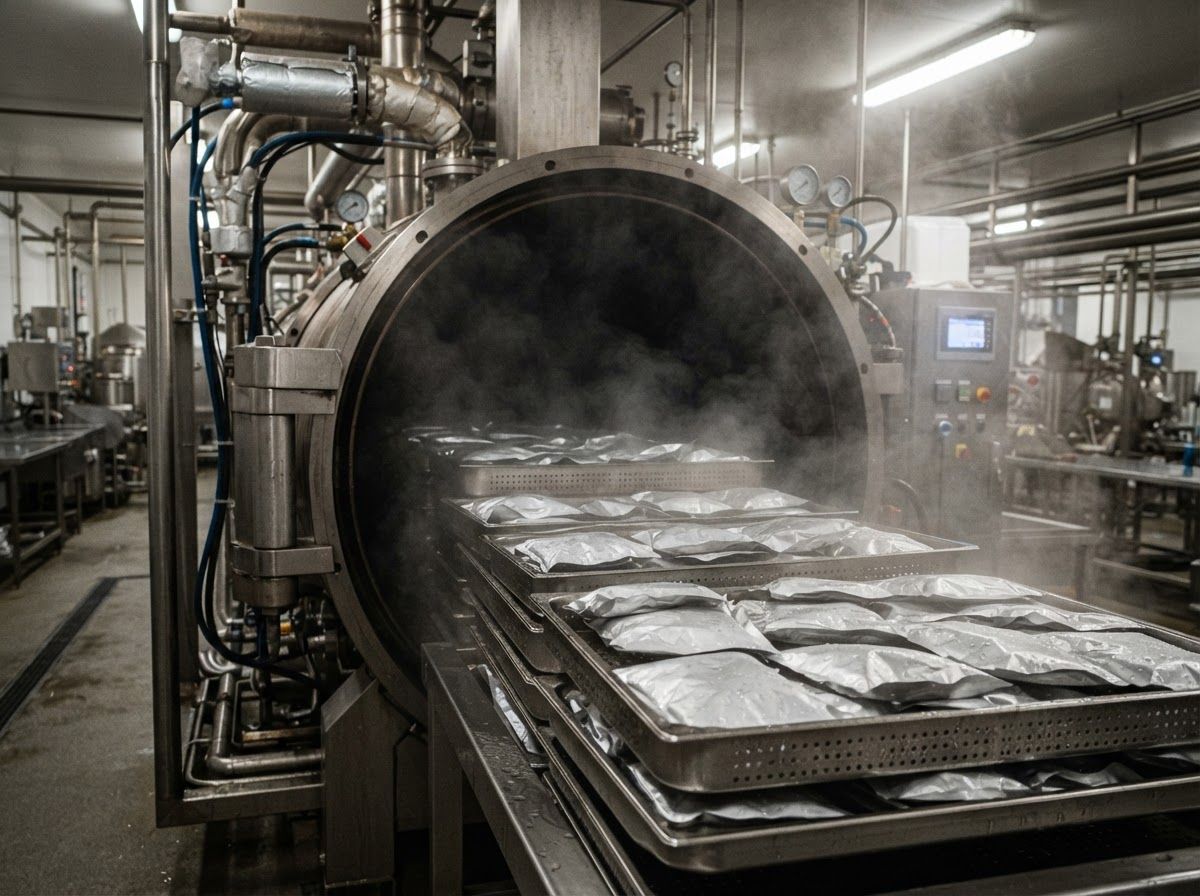
High-temperature retort processing is a thermal sterilization method utilized for shelf-stable wet foods, ready-to-eat meals, and wet pet food formulations. The packaging structure must survive three distinct thermal and pressure phases within the retort autoclave: the initial come-up phase, the isothermal sterilization holding stage (typically 121.1 deg C for standard sterilization or up to 135 deg C for rapid processing), and the rapid water spray or air-overpressure cooling phase. Throughout this thermal cycle, the food product expands, generating internal vapor pressure (Pint) that opposes the vessel overpressure (Pext). The packaging material must withstand these dynamic multi-axial differential stresses without seam rupture, layer blistering, or mechanical stretching.
The primary failure mode during retort sterilization is interlayer delamination driven by differential thermal expansion coefficients among constituent plies. In a multi-layer retort aluminum barrier pouch composed of PET/Adhesive/Alu/Adhesive/BOPA/Adhesive/R-CPP, each layer responds differently to thermal inputs. PET exhibits low thermal expansion and high dimensional stability; aluminum foil has a rigid metallic crystal matrix with zero plastic elongation under retort temperatures; BOPA expands and absorbs moisture dynamically; and cast polypropylene (CPP) softens near its melting point. These mismatched expansion coefficients generate high interfacial shear stresses across the adhesive boundaries.
To counter these interfacial shear forces, packaging engineers utilize two-component cross-linked polyurethane (PU) solvent-based or solventless retort adhesives. These adhesives form dense three-dimensional thermoset networks via isocyanate-hydroxyl chemical curing, retaining bond strength (>4.5 N/15mm) even when plasticized by steam and boiling condensate. Concurrently, the interior heat-seal layer must be formulated with retort-grade cast polypropylene (R-CPP). Unlike standard random copolymer CPP, R-CPP is engineered with high-isotacticity block copolymers or impact-modified polypropylene blends with crystalline melting temperatures exceeding 160 deg C. This prevents core seal thinning under clamping pressure, resists chemical plasticization caused by fatty food oils, maintains low global and specific chemical migration limits under standard regulatory food simulant testing (such as 10% ethanol, 3% acetic acid, and rectified olive oil at elevated temperatures), and prevents volatile organic compound extraction into the foodstuff.
Cold Chain Subzero Toughness and Cryogenic Barrier Preservation
Subzero logistics and frozen food storage present the opposite mechanical challenge: cryogenic embrittlement and barrier micro-fracturing. As the ambient temperature falls below the glass transition temperature (Tg) of a polymer, the molecular chains lose their long-range segmental mobility, transitioning from a ductile, energy-absorbing state to a rigid, glassy state. Standard biaxially oriented polypropylene (BOPP, Tg approximately 0 deg C) and standard polyethylene terephthalate (BOPET, Tg approximately 75 deg C) become brittle in subzero commercial environments (-18 deg C to -30 deg C), making them vulnerable to impact shattering when dropped or subjected to mechanical shock during transport.
Oriented polyamide (BOPA/Nylon 6) exhibits low-temperature toughness due to its flexible aliphatic segments, maintaining impact dissipation capabilities down to -60 deg C despite having a dry Tg around 50 deg C. In commercial frozen applications, ambient moisture plasticizes the nylon matrix, depressing its effective Tg and boosting its dynamic puncture resistance and dart-drop impact toughness. Laminating BOPA to metallocene-catalyzed linear low-density polyethylene (mLLDPE) sealant films produces a composite web capable of absorbing dynamic drops and sorting impacts without cracking.
A secondary failure mechanism in subzero supply chains occurs during freeze-thaw condensation cycles. When frozen packages transition through uncontrolled loading docks, moisture condenses on the outer package surface. This condensate can penetrate micro-fissures in external protective lacquers or diffuse into hydrophilic barrier layers. If the package is subsequently re-frozen, the volumetric expansion of freezing water within the laminate micro-voids induces localized mechanical stresses that fracture vacuum-deposited inorganic coatings (such as AlOx or SiOx) and initiate blister-like delamination. Modifying the sealant and core structures with moisture-impermeable layers and utilizing elastic, hydrolytically stable polyurethane tie systems prevents this interfacial moisture accumulation, preserving structural cohesion throughout fluctuating cold-chain distribution cycles.

Hermetic Seal Integrity: Engineering Micro-Leak Defenses Beyond Bulk Tensile Strength
A packaging structure is only as protective as the integrity of its perimeter closure. In industrial food packaging operations, there is a common failure to distinguish between macroscopic tensile seal strength and microscopic hermetic seal integrity. High mechanical peel force, measured as peak load resistance during destructive tensile separation, does not guarantee the absence of sub-micron channel leaks, capillary micro-voids, or localized seal thinning. Hermetic seal integrity requires the formation of a continuous, defect-free, homogeneous weld interface that prevents the physical bypass of atmospheric gases, moisture vapor, and microbial contaminants.
Differentiating Hermetic Weld Fusion from Bulk Mechanical Strength
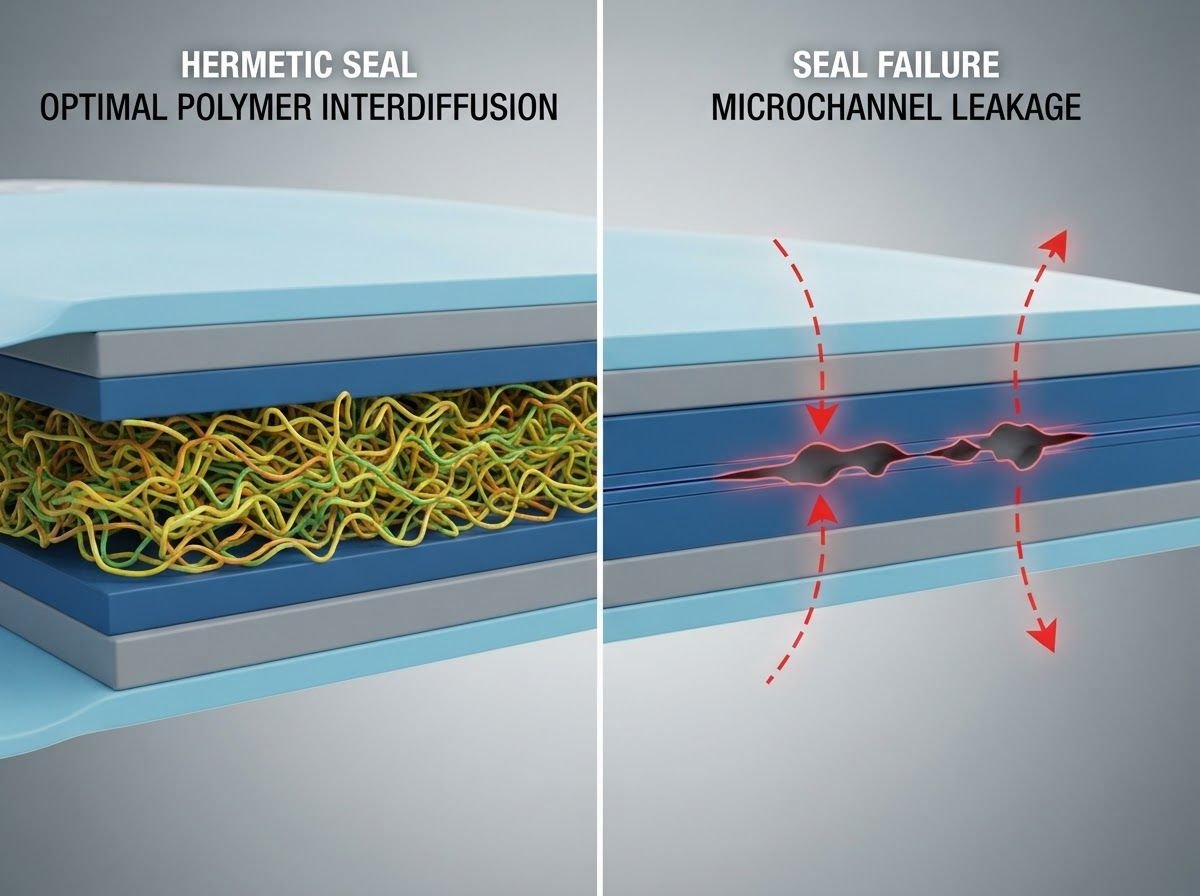
The physics of true hermetic weld formation requires three sequential physical phenomena: intimate surface contact under pressure, macromolecular interdiffusion across the polymer-polymer interface, and subsequent recrystallization during cooling to create an entangled chain network across the boundary. When two opposing thermoplastic sealant webs are brought together under heat and compressive force, the crystalline regions melt, and amorphous chains gain thermodynamic mobility to diffuse across the interface. If the interface temperature exceeds the peak melting temperature of the sealant and sufficient dwell time is provided, the original boundary is eliminated, resulting in a cohesive weld where the seal interface strength matches the tensile strength of the bulk parent film.
Micro-channel leaks occur when process variations or mechanical defects interrupt this molecular fusion process. Common causes include:
- Localized temperature drops along the sealing jaws caused by failed heater cartridges or poor thermocouple placement.
- Misaligned, worn, or non-parallel sealing jaws that create uneven pressure distributions across the seal width.
- Seal contamination where dry food particulates, viscous liquids, or fat splatters deposit on the sealing flange prior to jaw closure.
- Premature package release before the molten polymer has cooled below its crystallization point, allowing internal headspace pressure to open microscopic channels.
The food safety consequences of micro-channel leaks are severe. While macro-ruptures are readily identifiable on automated packing lines, sub-micron channels (ranging from 0.1 to 10 microns in diameter) are invisible to standard visual inspection systems. These micro-channels permit convective gas exchange, bypassing high-barrier laminate webs entirely and accelerating food spoilage.
Furthermore, capillary action through micro-channels can draw liquid media and suspended microorganisms—including spoilage organisms such as Pseudomonas species and resilient spore-formers like Bacillus cereus or Clostridium botulinum—into the sterile package cavity without macroscopic package collapse or visible seal failure. True barrier assurance requires verifying both mechanical peel strength and continuous hermetic seal integrity across the entire package perimeter.
Optimizing the Seal Processing Window and Hot Tack Performance
Securing consistent hermetic seals on high-speed automated packaging machinery requires precise control over the three core heat-sealing parameters: seal temperature, compressive jaw pressure, and dwell time. These three variables define the operational sealing window. A narrow sealing window increases packaging scrap rates and raises the risk of micro-leaks, as minor line-speed fluctuations, ambient temperature changes, or film gauge variations can push process conditions outside safe operating limits.
Optimizing continuous form-fill-seal (FFS) lines requires specifying advanced sealant resins that provide low seal initiation temperatures (SIT) combined with high hot tack strength. Hot tack refers to the cohesive strength of the molten seal polymer immediately after the sealing jaws open, prior to cooling and crystallization. On vertical form-fill-seal (VFFS) machinery, heavy food charges (such as frozen poultry, dry pet food, or bulk grains) drop directly into the newly formed pouch tube while the bottom cross-seal is still molten. If the sealant resin lacks sufficient hot tack strength, the mechanical drop impact will peel open the molten seam, causing seal failure or creating capillary leak channels.
Standard conventional low-density polyethylene (LDPE) and traditional Ziegler-Natta catalyzed LLDPE provide moderate hot tack over a narrow temperature range. In contrast, metallocene-catalyzed LLDPE (mLLDPE) and ionomer resins (such as ethylene-methacrylic acid copolymers neutralized with zinc or sodium ions) provide improved sealing performance:
- Narrow Molecular Weight Distribution: mLLDPE melts uniformly within a narrow temperature band, delivering rapid seal initiation at lower temperatures and high hot tack strength across a wide processing window.
- Ionic Cross-Linking: Ionomer resins feature reversible ionic cross-links that maintain melt strength at elevated temperatures, providing high hot tack and the ability to seal through liquid, powder, and fat contamination. The ionic bonds temporarily dissociate under heat and pressure to allow chain flow around contaminant particles, then reform upon cooling to lock the particle into a solid, hermetic matrix.
- Automated Conversion Stability: Specifying high-performance laminated barrier rollstock film with optimized mLLDPE or ionomer sealant layers ensures rapid web tracking, consistent friction coefficients, and wide sealing windows across high-speed packaging machinery.
Mechanical Durability: Puncture Resistance and Flex-Crack Prevention in Barrier Films
A packaging structure’s theoretical barrier properties are compromised if the material fractures during processing, bulk casing, transport vibration, or shelf handling. Mechanical durability in high-barrier food packaging represents the structural capacity to resist dynamic point-load punctures, flexural fatigue cracking, tear propagation, and impact stresses. Because inorganic barrier layers (such as aluminum foil, vacuum-deposited aluminum, or ceramic coatings) are brittle, preserving barrier integrity depends on how effectively adjacent polymeric carrier plies absorb, distribute, and dissipate dynamic mechanical energy.
Flex-Crack Vulnerabilities and Pinhole Formation in Inorganic Barrier Layers
Flex-cracking is a progressive failure mechanism caused by repeated cyclic bending, folding, and twisting of flexible barrier films during automated pouch forming, vacuum extraction, case packing, and over-the-road transport vibration. In standard industrial testing, flex fatigue resistance is evaluated using the Gelbo Flex tester (ASTM F392), which subjects film specimens to repetitive twisting and crushing motions over defined cycle counts.
In thin-gauge aluminum foil (typically 6.35 to 9 microns thick) and thin vacuum-deposited coatings (AlOx/SiOx layers measuring 10 to 50 nanometers thick), cyclic strain concentration rapidly generates micro-fissures along crystalline grain boundaries and defect sites. Once initiated, these micro-fissures propagate through the thickness of the inorganic layer under continuous cyclic stress, generating macroscopic pinholes. Although the surrounding elastomeric polymer layers (such as outer PET or inner PE) may remain structurally intact without leaking liquid, the barrier continuity of the inorganic layer is compromised. A single 20-micron pinhole in an aluminum foil core can increase the local oxygen transmission rate from near-zero (<0.01) to well over 15 cm3/(m2·24h·0.1MPa), causing rapid, localized food oxidation and premature shelf-life failure.
Packaging engineers counter flex-crack fatigue by sandwiching brittle barrier plies between ductile, energy-absorbing carrier substrates. An effective polymer for mitigating flexural fatigue is biaxially oriented polyamide (BOPA/Nylon). BOPA possesses a high tensile modulus, high elongation at break, and dynamic shear absorption. When laminated directly to aluminum foil or metallized substrates, BOPA acts as a mechanical stress-dissipation buffer. During cyclic bending, the ductile nylon substrate deforms elastically and plastically, absorbing the localized bending moments and preventing stress concentration within the brittle barrier core. This sandwich configuration (such as PET/Adhesive/Alu/Adhesive/BOPA/Adhesive/PE) significantly delays the onset of pinhole formation, ensuring that barrier integrity is preserved through logistical distribution.

Point-Load Puncture Resistance for Irregular and Sharp-Profile Food Formats
Packaging rigid, sharp-edged, or irregularly shaped food products—such as bone-in primal meat cuts, dried seafood, dehydrated crustacean products, hard pasta shapes, and extruded pet treats—subjects the packaging film to high localized point-load stresses. When these packages are vacuumized, the flexible web is drawn tightly over sharp product projections. Atmospheric pressure forces the film against sharp points with continuous mechanical load, which is compounded by dynamic shock impacts and vibration during transit.
Point-load puncture failure occurs via two distinct mechanical modes: slow-rate penetration and dynamic high-speed impact rupture.
- Slow-Rate Penetration Resistance: Evaluated via probe penetration tests (ASTM F1306), this measures the force, energy, and elongation required for a standardized hemispherical or sharp probe to pierce the flexible membrane. High slow-rate puncture resistance requires a material that undergoes extensive plastic deformation, strain-hardening, and energy dissipation before yielding.
- Dynamic High-Speed Puncture: Occurs during drop impacts or rapid vacuum drawdown, where the polymer chains have insufficient time to relax and dissipate energy, leading to localized brittle shear fracture.
Standard biaxially oriented polyester (BOPET) films offer high tensile strength and stiffness but have relatively low elongation at break, making them susceptible to puncture initiation by sharp edges. Conversely, unoriented cast polyethylene films exhibit high elongation but low tensile puncture resistance, allowing sharp points to push through under moderate loads.
To maximize puncture toughness, packaging structures incorporate multi-layer coextruded blown films with heavy nylon (PA6, PA66) and EVOH cores, or multi-layer laminates utilizing heavy-gauge BOPA plies. Biaxially oriented nylon provides balanced multi-axial tensile strength and high yield stress, forcing the sharp puncturing point to distribute its load over a wide surface area. Furthermore, pairing BOPA with metallocene-catalyzed plastomers or heavy-gauge ethylene-vinyl acetate (EVA) inner sealant layers provides an elastic cushion that conforms around sharp product contours without pinholing, preventing puncture failures in bone-in meats and rigid dry food products.
Comparative Selection Matrix: Structuring High Barrier Food Packaging Materials for Commercial Processing
Designing a commercial packaging specification requires balancing gas and moisture barrier efficiency, thermal tolerance, mechanical durability, optical clarity, line machinability, and material cost. No single barrier film is optimal for every food category. Over-engineering a laminate by specifying heavy aluminum foil structures for short-shelf-life products introduces unnecessary material cost and eliminates product visibility. Conversely, under-engineering a structure with transparent polyolefins for oxygen-sensitive formulations results in oxidative spoilage, product recalls, and brand damage.
Multi-Layer Barrier Architecture Comparison Matrix
The following engineering decision matrix compares four primary high-barrier packaging architectures across material parameters, operational barriers, and primary commercial food applications:
| Laminate Structure | OTR Barrier Level [cm3/(m2·24h·0.1MPa)] | MVTR Barrier Level [g/(m2·24h)] | Thermal Resistance Range | Puncture Resistance | Optical Transparency | Primary Food Application |
|---|---|---|---|---|---|---|
| PET / AL / PA / CPP | Near-Zero (<0.1) | Near-Zero (<0.1) | Retort (Up to 135 deg C) | Superior (Multi-layer reinforced) | Opaque | Ready-to-eat meals, meat products, pet food |
| PET / EVOH / PE | Ultra-Low (0.2 – 1.5) | Low (1.0 – 3.0) | Standard Hot-Fill (Up to 85 deg C) | Moderate to High | High Clarity (Transparent) | Oxygen-sensitive sauces, fresh pasta, sliced cheese |
| BOPP / VMPET / LLDPE | Low (0.5 – 2.0) | Ultra-Low (0.2 – 0.8) | Ambient Fill (Up to 60 deg C) | Moderate | Metallized (Reflective) | Snack foods, powdered dairy, roasted coffee |
| BOPA / LLDPE | Moderate (15 – 35) | Moderate (3.0 – 6.0) | Freeze to Boil (-30 deg C to 100 deg C) | Exceptional (Puncture-dominant) | High Clarity (Transparent) | Bone-in fresh meats, frozen seafood, bulk vacuum packs |
Engineering material selection is guided by the food matrix’s primary degradation mechanism. For shelf-stable, ambient-stored ready-to-eat meals requiring complete microbial sterilization and long shelf stability without refrigeration, the four-layer PET/AL/PA/CPP architecture remains the global industrial benchmark. In this structure, each ply serves a distinct mechanical and physical role: exterior PET accepts reverse printing and provides thermal resistance during sealing; aluminum foil blocks light, gas, and moisture; intermediate BOPA provides flex-crack and puncture buffering; and internal R-CPP provides high-integrity, contaminant-tolerant hermetic seals capable of surviving high-pressure autoclave environments.
When consumer demand requires transparent packaging to showcase product freshness—such as for fresh pasta, cured deli meats, or artisanal sauces—the PET/EVOH/PE architecture is preferred. The EVOH core provides the necessary oxygen barrier to prevent lipid oxidation and discoloration, while the adjacent polyethylene layers shield the moisture-sensitive EVOH from humidity degradation. However, because EVOH does not block light, photo-oxidation must be addressed through product formulation (e.g., natural antioxidants) or secondary outer packaging if the product contains light-sensitive pigments or fats.
Engineering Trade-Offs: Gas Barrier, Optical Clarity, and Line Machinability
Translating a laboratory-qualified barrier structure into commercial production introduces engineering trade-offs between physical barrier properties, optical clarity, and packaging machine efficiency:
- Optical Clarity vs. Photoprotection: Clear packaging allows inspection of product texture, fill level, and color. However, transparent barrier materials (such as EVOH, AlOx-PET, and SiOx-PET) permit full transmission of visible light and partial transmission of ultraviolet wavelengths. Light exposure accelerates photo-sensitized lipid oxidation, riboflavin degradation in dairy goods, and myoglobin discoloration in cured meats. Specifying opaque aluminum foil or reflective metallized substrates eliminates photo-oxidation completely, but sacrifices product visibility. Packaging engineers must determine whether the product’s primary spoilage pathway is light-driven or gas-driven before finalizing substrate selection.
- Film Stiffness vs. Formability: High-barrier laminates containing thick PET or aluminum foil plies exhibit high flexural modulus and stiffness. While stiffness is beneficial for stand-up pouch stability on retail shelves, it increases the resistance of the web on continuous form-fill-seal (FFS) machinery. Rigid films require higher forming collar tension, generate higher drag forces, and are prone to creasing or tracking misalignment around forming shoulders. Conversely, flexible, high-polyolefin coextrusions track smoothly over mechanical rollers but can stretch under web tension, distorting print registration and compromising cross-seal alignment.
- Coefficient of Friction (COF) and Machinability: Automated high-speed horizontal and vertical FFS lines require precise control over the film’s kinetic and static coefficient of friction (ASTM D1894). The outside-to-outside (face-to-face) COF and outside-to-metal COF should typically fall within a window of 0.20 to 0.35. A COF below 0.18 causes web slippage, erratic film tracking, telescoping roll stock, and unstable pouch stacking. A COF above 0.40 causes film stuttering over forming plows, excessive tension spikes, material stretching, and line jams. Packaging engineers must carefully manage slip and anti-block additives in the sealant and surface layers, balancing additive migration so that it optimizes line speed without impairing seal weld fusion or adhesive bond strength.
- Heat Transfer and Thermal Shrinkage: Multi-layer laminates with thick outer barrier layers have lower overall thermal conductivity. As line speeds increase, the contact time between sealing jaws and film decreases, requiring higher jaw temperatures to deliver the requisite melt energy to the internal sealant interface. However, excessive external heat can cause thermal shrinkage, optical distortion, and burn-through in the outer carrier ply. Selecting carrier webs with high melting differentials relative to the sealant layer (such as BOPET melting at >250 deg C paired with mLLDPE melting at ~110-125 deg C) is essential to preserve wide thermal operating windows on high-speed equipment.
Quality Assurance and Empirical Verification Protocols for High-Barrier Substrates
Ensuring packaging quality requires quality assurance (QA) frameworks and empirical laboratory verification protocols. Because micro-defects, variable lamination bond strength, and trace solvent retention are undetectable by visual inspection alone, manufacturers and food converters must enforce standardized testing protocols to qualify film lots before filling operations commence.
Empirical Laboratory Standards for Barrier and Seal Integrity Testing
Validating barrier materials relies on standardized laboratory procedures defined by international standards organizations such as ASTM, ISO, and DIN:
- Oxygen Transmission Rate Verification (ASTM D3985 / ISO 15105-2): Evaluated using the isostatic coulometric sensor method. A flat film specimen is clamped inside a dual-chamber diffusion cell. High-purity nitrogen carrier gas purges the downstream chamber, while pure oxygen gas flows continuously through the upstream chamber at a controlled temperature (e.g., 23 deg C) and relative humidity (e.g., 0% or 90% RH). Oxygen molecules permeating through the film matrix into the nitrogen carrier stream are transported to a coulometric sensor, which generates an electrical current proportional to the mass flow rate of oxygen per unit area per day: cm3/(m2·24h·0.1MPa).
- Moisture Vapor Transmission Rate Testing (ASTM F1249 / ISO 15106-2): Conducted using a modulated infrared sensor system. The test barrier separates a dry nitrogen stream from a water vapor-saturated chamber at 38 deg C and 90% RH. Water molecules diffusing across the test specimen enter the dry nitrogen carrier and flow into an optical infrared detection cell, which continuously measures the dynamic water vapor transmission rate in g/(m2·24h).
- Destructive Seal Strength Testing (ASTM F88): Quantifies the mechanical peel resistance of the heat seal. A 15mm-wide test strip cut perpendicular to the seal line is clamped in a tensile testing machine and separated at a constant crosshead speed (typically 200 to 300 mm/min). The test records the maximum force (peak load in N/15mm) required to separate or break the seal.
- Internal Pressurization Burst and Creep Testing (ASTM F1140 / ASTM F2054): Evaluates the total structural integrity of a sealed pouch. The closed pouch is internally pressurized with air through an inflation probe until burst failure occurs, or held at a constant sub-burst pressure to measure seal creep resistance over time. Restraining plates are used to ensure uniform stress distribution across the perimeter seals.
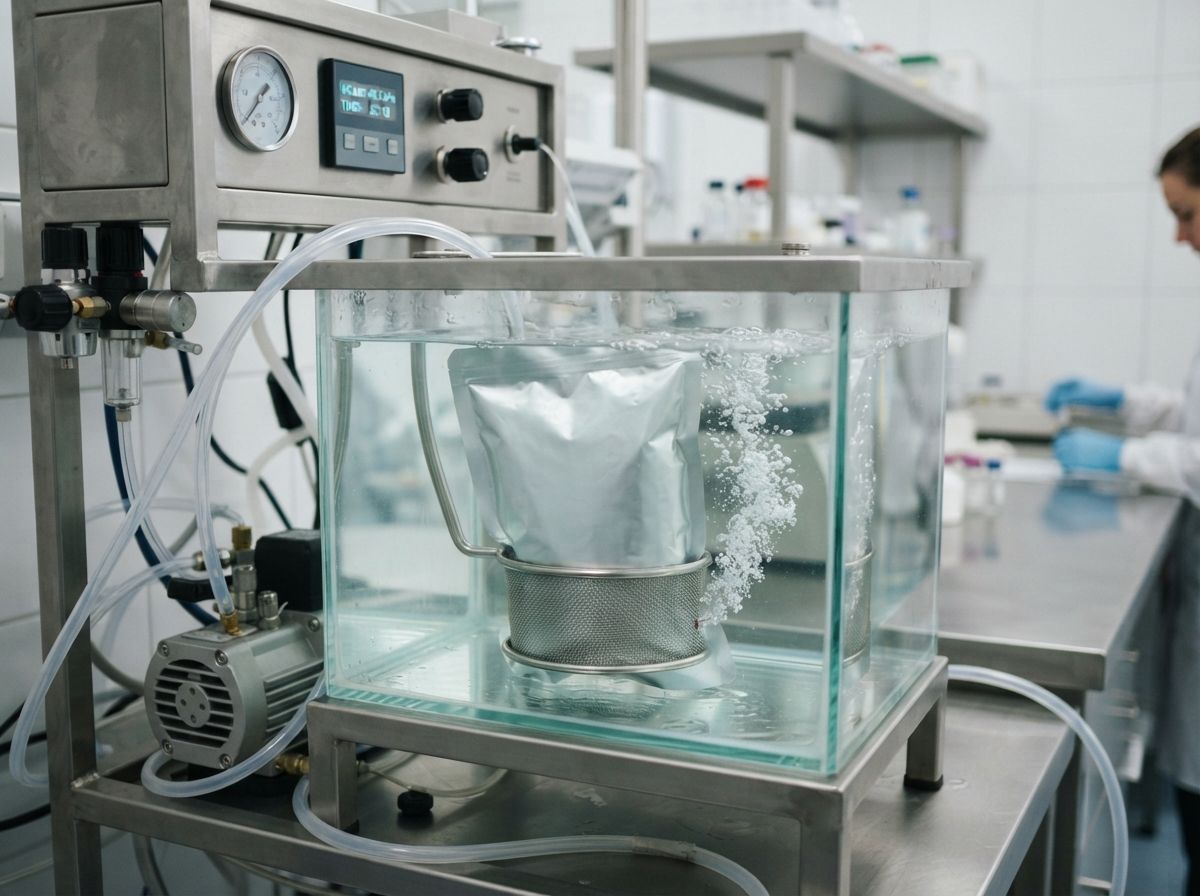
- Sub-Micron Channel Leak Detection (ASTM F1929 and ASTM F2096): Because mechanical tensile tests do not detect capillary micro-leaks, non-destructive and visual dye tests are required. ASTM F1929 utilizes dye penetrant solutions (such as methylene blue or rhodamine B in an aqueous surfactant carrier) injected along the seal edge to visually trace channel defects down to 10-50 microns within seconds. ASTM F2096 (the water bubble emission test) submerges an internally pressurized pouch under vacuum-assisted water heads to detect active bubble streams originating from pinholes, cracks, or seal micro-channels.
Factory Inbound Verification and Rollstock Qualification Checklist
To prevent non-conforming packaging materials from entering commercial packaging lines, inbound quality control (IQC) teams should execute an empirical 5-point verification checklist on every delivered rollstock and pre-formed pouch lot:
- Certificate of Analysis (CoA) Permeation and Gauge Verification: Verify that supplier lot CoA metrics match the specified OTR and MVTR requirements under defined operating temperatures and relative humidities, rather than standard dry ambient conditions alone. Measure film gauge thickness across the web width using high-precision digital micrometers to confirm thickness uniformity within +/-3% of the nominal specification.
- Optical Density and Metallization Uniformity Audit: For vacuum-metallized substrates (VMPET, VMCPP), verify visual light transmission using an optical transmission densitometer. Confirm that the optical density (OD) falls strictly within the target range (typically 2.0 to 2.8 OD). For solid aluminum foil plies, perform light-table pinhole density inspections over a 1 m2 sample area to verify that pinhole counts meet agreed specification limits (e.g., zero pinholes for >9 micron foil).
- Gas Chromatography (GC) Residual Solvent Testing: Perform headspace gas chromatography testing (ASTM F1884) on cured laminate rollstock. Quantify total residual solvent concentrations originating from printing inks and lamination adhesives (e.g., ethyl acetate, ethanol, isopropanol, MEK). Total retained solvents must remain strictly below 5.0 mg/m2, with individual critical solvents below targeted organoleptic taint thresholds, to prevent chemical migration and foreign odor transfer into delicate food matrices.
- Dynamic and Static Coefficient of Friction (COF) Verification: Test the incoming film surface according to ASTM D1894 on an automated friction table. Verify that the kinetic COF of the sealant side to metal and the print side to metal conforms to the operational machinability window (typically 0.22 to 0.32). Confirm the absence of slip additive blooming or phase-separation waxes that can interfere with optical clarity or downstream seal fusion.
- Pilot Sealing Window and Hot Tack Challenge Trial: Mount sample rollstock onto a laboratory gradient heat-sealer or offline pilot packaging line. Challenge the material across a broad temperature matrix (from lower seal initiation temperature up to material thermal distortion limits) under constant dwell and pressure parameters. Verify that acceptable seal strength (>25 N/15mm for standard laminates, >40 N/15mm for retort laminates) is maintained across a minimum processing window of +/-15 deg C without edge thinning, core delamination, or burn-through defects.
Conclusion
Selecting optimal high-barrier food packaging requires balancing gas permeation thresholds, thermal resilience across retort and cold logistics, hermetic seal integrity, and mechanical puncture resistance against product-specific degradation pathways. Aligning multi-layer architectures—from solid aluminum foil laminates to moisture-shielded EVOH coextrusions—with real-world distribution stresses prevents flex-cracking, micro-channel leaks, and thermal delamination while preserving high-speed line machinability. Implementing rigorous inbound verification protocols for coefficient of friction, bond strength, and transmission rates eliminates processing scrap and protects product shelf stability. To review technical barrier specifications or permeation test data for specific packaging lines, consult technical packaging specialists.


0 Comments