

Key Takeaways
- Anti-compression technology eliminates transport damage: Implementing gas-flushed pillow packaging with 30kg pressure resistance reduces product breakage rates from 12% to 0.1%, transforming the package into a loss control tool that protects fragile bakery items during long-distance logistics.
- Multi-layer aluminized structures protect product integrity: Utilizing BOPP, AL, and PE laminated films prevents moisture-induced softening, which mitigates a potential 25% drop in repeat purchase rates by maintaining the original crispness and texture of sensitive bakery products.
- Technical packaging implementations drive operational savings: Documented results from walnut cake production show that switching to side-gusseted aluminum foil laminated bags can lead to a 30% reduction in total costs by optimizing supply chain efficiency and reducing product waste.
- VMPET and AL layers ensure shelf stability: The integration of metallized VMPET or pure aluminum foil layers provides the oxygen and moisture barrier required to extend shelf life and maintain visual appeal, specifically protecting snacks against oxidation and environmental humidity.
Introduction
Fragile bakery products often suffer from a hidden logistics tax, where high breakage rates and moisture ingress compromise product integrity before the item reaches the consumer. When transport damage levels reach 12% or moisture-induced softening leads to a 25% drop in repeat purchase rates, the failure often stems not from the product itself but rather the inability of the primary packaging to withstand physical and environmental stressors.
Standard flexible packaging for biscuits frequently lacks the structural rigidity required for multi-layer stacking and long-distance transport. Integrating gas flushed packaging for bakery items that can withstand up to 30kg of pressure allows manufacturers to convert protective layers into a loss-control mechanism. By utilizing an aluminized composite film structure, typically incorporating BOPP, AL, and PE layers, manufacturers can establish the necessary oxygen barrier food packaging performance to prevent oxidation and crispness loss. In specific bakery supply chain solutions, such as those implemented for walnut cake production, switching to side-gusseted moisture barrier bakery bags has demonstrated the potential to reduce product waste and associated display costs by 30% while reducing damage rates to 0.1%.
This analysis provides the technical framework to help procurement managers and packaging engineers evaluate the correlation between material lamination and logistics survivability. It clarifies how to judge whether specific high barrier bakery packaging configurations and puncture resistant food bags can meet the pressure and barrier requirements necessary to eliminate transport loss while maintaining extended shelf life packaging standards.
The Industrial Cost of Fragility in High Barrier Bakery Packaging
In the global bakery supply chain, the transition from production floor to retail shelf involves mechanical and environmental hazards. For many industrial bakeries, a damage rate of 12% is often viewed as an unavoidable logistics tax—a cost of doing business that encompasses crushed biscuits, broken pastries, and compromised structural integrity. However, this high loss rate is not a fixed variable but a symptom of inadequate primary packaging. When fragile baked goods are stacked in secondary cartons and subjected to the vibrations and static loads of long-haul transport, the lack of internal structural support within the individual bag leads to systemic failure.
The Physics of Mechanical Failure in Bakery Supply Chains
The primary cause of the 12% damage rate observed in traditional flexible-food-packaging is the lack of compressive resistance. In a typical palletizing scenario, cartons at the bottom of a stack may support hundreds of kilograms of weight. If the individual primary packages—the bags—do not provide a physical cushion, that entire load is transferred directly to the product.

For delicate items like walnut cakes or shortbread, this results in immediate crushing.
Furthermore, the mechanical failure is often exacerbated by vibration during transit. Without a pressurized environment within the bag, the contents are free to move. This internal movement leads to abrasion, where the surface of the biscuit rubs against the inner laminate or other pieces of product. This not only causes physical breakage but also generates fines—the small crumbs that accumulate at the bottom of the bag, which negatively impact the consumer’s perception of quality. By engineering the package to withstand a static load of 30kg, the pressure is diverted from the product to the air cushion, neutralizing the most common causes of physical degradation.
Quantifying the Impact of Moisture Ingress
Beyond physical breakage, the degradation of texture through moisture migration poses a significant threat to customer retention. Crispness is a critical organoleptic property of baked goods. When a high-barrier seal fails or the material itself has a high Water Vapor Transmission Rate (WVTR), moisture from the external environment penetrates the package. This leads to softening or staling, where the crisp lattice of the biscuit absorbs H2O and loses its structural snap.
The commercial consequences are measurable. Industrial data suggests that a loss of product crispness correlates with a 25% drop in repeat purchase rates. Consumers who open a bag of softened biscuits rarely complain to the manufacturer; they often switch to a competitor. This silent churn is a direct result of barrier failure. High-barrier bakery packaging acts as a risk mitigation tool, ensuring that the moisture levels inside the bag remain within the critical crispness window regardless of external humidity fluctuations. When the barrier is maintained, the promise of freshness is upheld, protecting the long-term value of the customer base.
Mechanics of Anti-Compression: Implementing Gas Flushed Packaging
The shift from 12% breakage to 0.1% is achieved through the integration of gas flushing—specifically Modified Atmosphere Packaging (MAP)—combined with high-strength sealing technology. This process, often referred to as gas-filled anti-compression, transforms a soft film bag into a rigid, pressurized pillow. This pillow acts as a shock absorber, capable of supporting significant external force.
The 30kg Pressure Threshold: Engineering the Protective Cushion
To achieve the 30kg pressure resistance mentioned in technical benchmarks, the packaging must maintain a precise internal pressure equilibrium. During the automatic pillow packing process, atmospheric air is evacuated and replaced with an inert gas, typically N2 (Nitrogen).
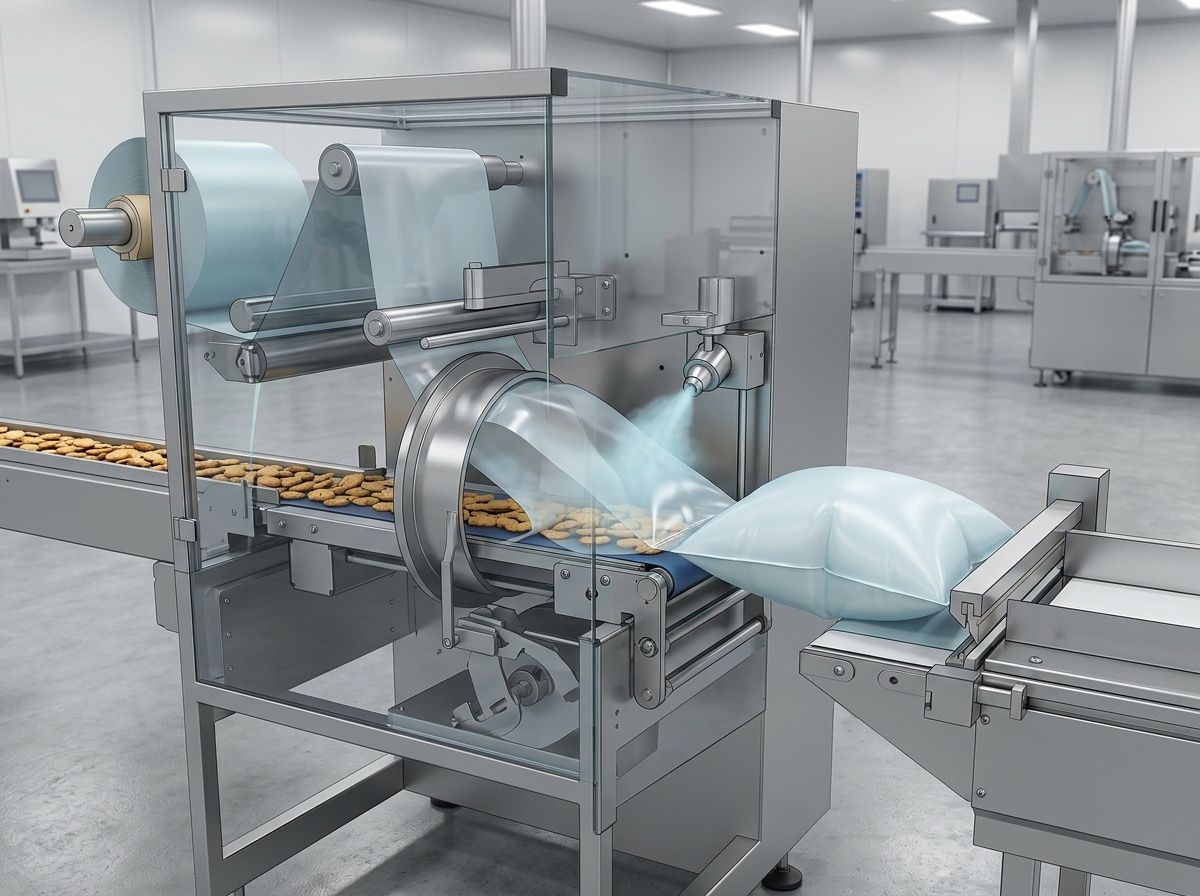
This gas serves two purposes: it displaces O2 (Oxygen) to prevent oxidation, and it provides the volume necessary to create internal tension against the film walls.
For a package to resist 30kg of force, the seal integrity must be absolute. The back-seal and end-seals of the bag become the primary structural components. If the seal strength is insufficient, the internal pressure will cause the bag to burst at the seams when a load is applied. Therefore, high-performance roll stock for automatic pillow packing must be engineered with a specialized sealant layer that offers a wide heat-seal window and high hot tack strength. This ensures that the gas cushion remains intact even under the weight of multiple layers of product in a warehouse setting. The result is a reduction in damage that significantly reduces the crush factor in the last mile of delivery.
Optimizing Gas Composition for Product Longevity
While the physical protection provided by the gas cushion is vital for reducing breakage to 0.1%, the chemical composition of the gas is equally important for shelf life. Using high-purity N2 prevents the oxidation of fats and oils, which are prevalent in bakery products like walnut cakes. Oxidation leads to rancidity and off-flavors, which can occur before the product is physically expired.
By implementing gas flushed packaging for bakery, manufacturers can fine-tune the internal atmosphere. For products with high moisture content, a blend involving CO2 (Carbon Dioxide) may be used to inhibit mold growth. However, for dry biscuits where physical protection is the priority, pure N2 is favored for its stability. The interaction between the gas cushion and the high-barrier film creates a protective environment for the product. The gas provides the body to resist the 30kg pressure, while the multi-layer film ensures that this protective gas does not leak out and that external O2 and H2O do not leak in.
Material Engineering: Barrier Integrity of Aluminized Composite Film
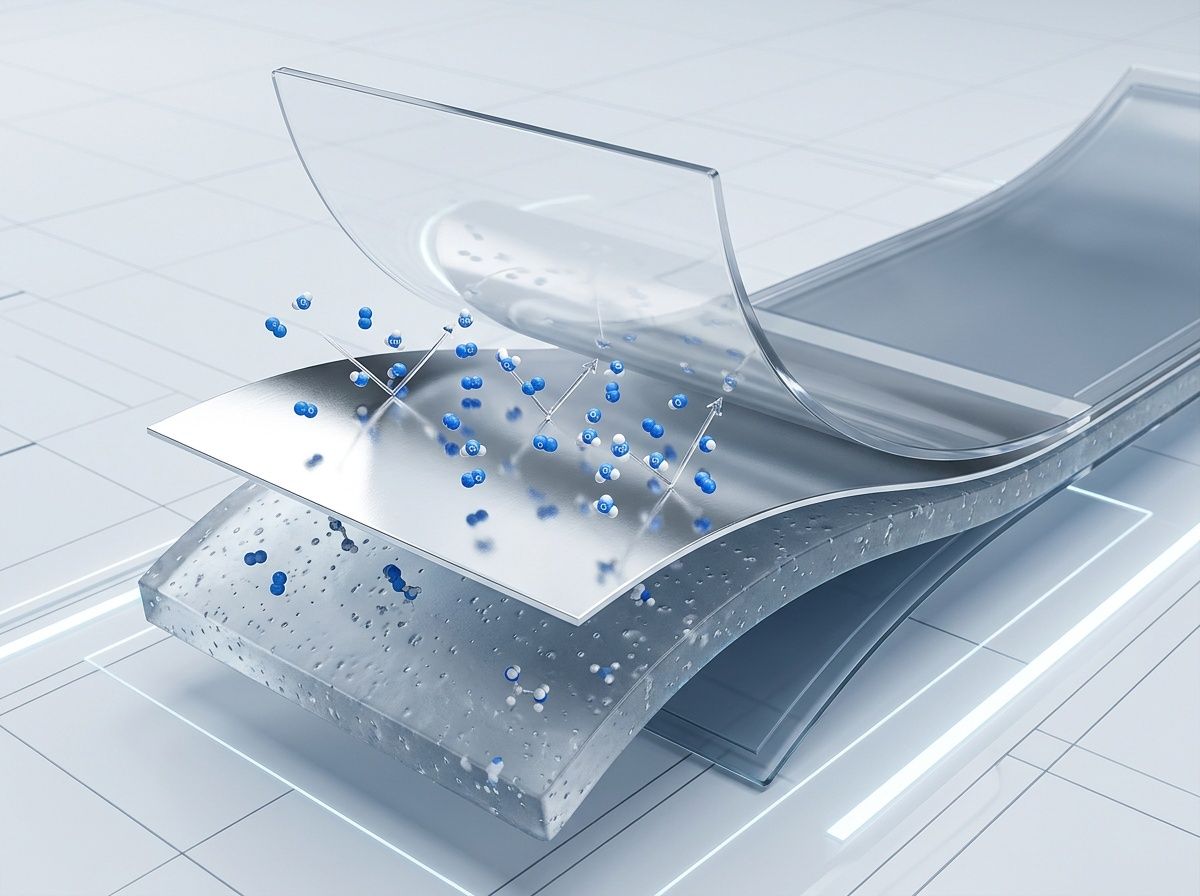
The core of high-barrier bakery packaging lies in its composite structure. A single layer of plastic is rarely sufficient to provide the necessary protection against moisture and oxygen. Instead, a multi-layer lamination process is employed, typically involving BOPP (Biaxially Oriented Polypropylene), a barrier layer (Aluminum foil or VMPET), and a sealant layer (PE or CPP).
Comparative Analysis: Pure Aluminum Foil vs. Metallized VMPET
Choosing the right barrier layer involves evaluating cost, visibility, and performance. Pure Aluminum foil (AL) offers a near-perfect barrier, with OTR (Oxygen Transmission Rate) and WVTR values that are practically zero. This is a standard for long-term shelf stability. In contrast, VMPET (Vacuum Metallized Polyester) involves depositing a thin layer of aluminum atoms onto a PET film. While VMPET provides barrier properties, it is not as absolute as pure foil.
| Feature | BOPP/AL/PE Structure | BOPP/VMPET/PE Structure |
|---|---|---|
| Moisture Barrier | Excellent (Near Zero) | Good |
| Oxygen Barrier | Excellent (Near Zero) | Good/Standard |
| Puncture Resistance | High | Standard |
| Flex Crack Resistance | Moderate | High |
| Application | Long-haul/High humidity | High turnover/Retail focus |
For protection in challenging environments, a high-barrier AL foil structure is recommended. The aluminum layer acts as a physical wall, reflecting light and preventing the penetration of even the smallest gas molecules. For requirements that balance aesthetics and cost-efficiency, VMPET-based packaging offers a metallic finish while providing sufficient protection for standard retail cycles. The choice depends on the specific moisture sensitivity of the bakery item and the expected duration of the supply chain.
Puncture Resistance: Protecting the Barrier Layer
A common failure mode in bakery packaging is the micro-puncture. Many biscuits and crackers have sharp edges or hard inclusions that can pierce thin films from the inside during the vibration of transport. Once the barrier is pierced, the gas cushion escapes, the anti-compression protection is lost, and the barrier integrity is compromised.
To prevent this, the sealant layer (usually Polyethylene or PE) must be thick enough to absorb the impact of these sharp edges. Furthermore, the lamination bond strength between the layers must be high enough to prevent delamination when the bag is under pressure. Engineering puncture resistant food bags involves selecting the correct density of PE and ensuring that the lamination adhesive is compatible with any oils or fats present in the product. This internal reinforcement allows the package to maintain its 30kg resistance and its 0.1% damage rate throughout the logistics journey.
Structural Selection: Side-Gusseted and Stand-Up Formats
The physical shape of the packaging is as important as the material composition. The geometry of the bag dictates how it occupies space in a carton and how it presents itself on a retail shelf. For industrial bakery applications, two formats are primary: the side-gusseted bag and the stand-up pouch (SUP).
The Side-Gusset Advantage in Bulk Bakery Logistics
Side-gusseted bags are a standard format for the high-volume bakery industry. By folding the sides of the bag inward, the package creates a square or rectangular footprint when filled. This is critical for cube utilization—the ability to pack bags into a shipping carton with minimal wasted space. When combined with gas-filled anti-compression technology, side-gusseted bags can be stacked tightly without the risk of bursting.
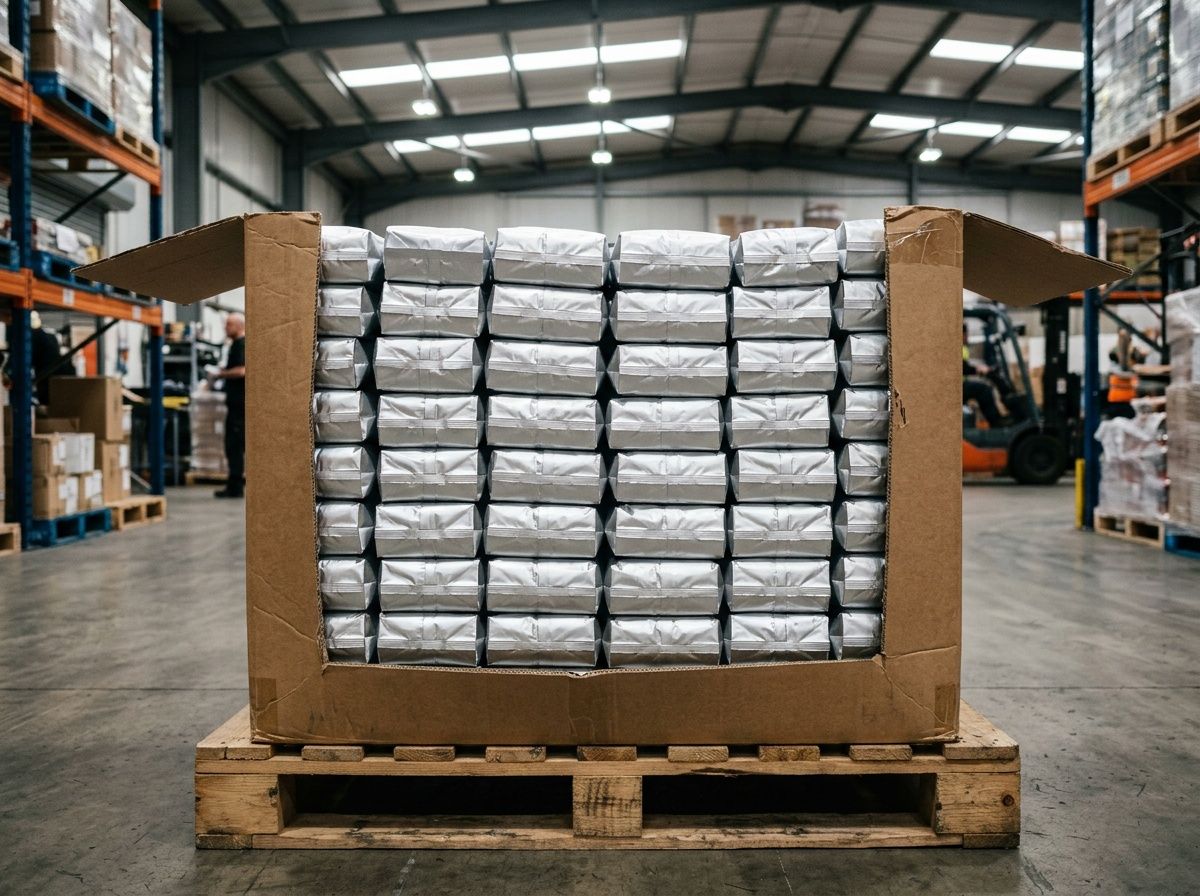
In walnut cake production, switching to side-gusseted industrial food bags allows for a higher density of product per pallet. Because the bags are more stable and the internal gas cushion protects the cakes, manufacturers can stack cartons higher than they could with non-pressurized packaging. The back-seal design of the gusseted bag also provides a vertical spine that adds to the overall compressive strength of the unit. This structural efficiency is a key driver in the 30% reduction in display and logistics costs seen in optimized bakery operations.
Enhancing Retail Visibility with Moisture Barrier Bakery Bags
While side-gusseted bags excel in logistics, the Stand-Up Pouch (SUP) is used for retail shelf presence. The bottom gusset allows the bag to stand vertically, providing a large area for product information. For premium bakery products, the SUP format combined with high-barrier laminates provides a perception of quality.
The transition to SUP formats requires technical management of the moisture barrier. The bottom seal of an SUP is more complex than a standard pillow bag, and any weakness in the K-seal or Doypack seal area can become a point of ingress for oxygen. Manufacturing techniques ensure that even with the added complexity of a stand-up base, the package maintains its 30kg pressure resistance. This ensures that the product remains intact and fresh on the shelf, maintaining the 0.1% damage rate even in high-touch retail environments.
Economic Impact: Reducing TCO through Loss-Control Packaging
The primary hurdle in adopting high-barrier, anti-compression packaging is the perception of material cost. A multi-layer aluminized film with gas flushing capability is more expensive per unit than a simple monolayer bag. However, a Total Cost of Ownership (TCO) analysis reveals that high-performance packaging is a cost-effective solution for industrial-scale operations.
The ROI of Transitioning from 12% to 0.1% Damage
The ROI calculation must include the hidden costs of the 12% damage rate. These costs include the loss of raw materials, energy wasted in production, the cost of shipping air when bags are full of broken product, and the administrative burden of handling returns and credits.
| Metric | Standard Low-Cost Packaging | High-Barrier Anti-Compression |
|---|---|---|
| Initial Damage Rate | 12.0% | 0.1% |
| Product Loss (per 10k units) | 1,200 units | 10 units |
| Consumer Repurchase Drop | 25% due to softening | 0% (Freshness maintained) |
| Supply Chain Efficiency | Low (fragility limits stacking) | High (30kg resistance) |
| Total Net Benefit | Baseline | 30% Total Cost Reduction |
By reducing the damage rate from 12% to 0.1%, a manufacturer reclaims nearly 12% of total production volume without increasing labor or raw material inputs. This reclaimed volume often covers the price difference of the premium packaging. Furthermore, the 30% reduction in display costs stems from the fact that retailers spend less time culling damaged goods from the shelves and more time selling intact products.
Case Study Framework: 30% Savings in Walnut Cake Production
A typical walnut cake factory provides an example of these economics. Initially using standard films, the factory faced high returns due to breakage and moisture softening. By upgrading to a gas-flushed, side-gusseted aluminized structure, the factory realized savings in three areas. First, the direct reduction in unsellable returns. Second, the ability to palletize 20% more product per truck because the bags could withstand the weight of higher stacks. Third, an increase in supermarket sales velocity because the product appeared fuller and of higher quality. This holistic view of packaging as a profit center is what distinguishes successful bakery operations.
Technical Implementation and Quality Assurance for High-Speed Lines
Implementing high-barrier anti-compression technology requires calibration of the packaging machinery and a robust Quality Assurance (QA) protocol. For automatic pillow packing machines, the introduction of gas flushing and heavier laminates introduces variables in heat sealing and film tension.
Managing Heat Seal Integrity in Multi-layer Composites
High-barrier films, particularly those with an AL foil or thick VMPET layer, have a higher thermal mass than simple plastic films. This means they require more heat and a specific dwell time to achieve a hermetic seal. To compensate, packaging engineers select films with a low-initiation temperature sealant layer.
The sealant layer must also exhibit high caulkability—the ability of the molten plastic to flow into the wrinkles and folds of the gussets and the back-seal. If the sealant does not fill these gaps, the nitrogen will leak out, and the package will lose its 30kg pressure resistance. Regular monitoring of the heat seal temperature and the pressure of the sealing jaws is essential to maintaining the 0.1% damage rate target. Furthermore, the Coefficient of Friction (COF) of the film must be controlled to ensure that it moves smoothly through the forming collars of the packing machine without snagging or stretching, which could thin the barrier layer.
QA Benchmarks for Oxygen Barrier Food Packaging
To ensure that the anti-compression and barrier properties function as intended, a multi-stage QA process is necessary. This begins with burst testing, where random samples are subjected to increasing pressure to determine the failure point. For a bag rated at 30kg resistance, the burst point should be higher to provide a safety margin.
Additionally, residual oxygen testing is performed using a needle probe to measure the O2 levels inside the gas-flushed bag. In a high-barrier setup, the O2 level should remain below 1-2% throughout the product shelf life. Finally, leak detection in a vacuum chamber can identify micro-leaks that lead to product softening. By combining these technical rigors with high-performance materials, industrial bakeries can transform packaging into a tool for waste reduction and product protection.
Conclusion
High-barrier bakery packaging, integrated with gas-flushed anti-compression technology, transforms primary containers into essential loss-control tools. By maintaining a 30kg pressure threshold and utilizing multi-layer aluminized composite structures, industrial operations can reduce product breakage from 12% to 0.1% while eliminating moisture-induced staling. For procurement managers, this technical implementation serves as a strategic method to lower the total cost of ownership and protect product value against repeat purchase drops. Prioritizing seal integrity and precise gas composition ensures structural protection and organoleptic quality across complex supply chains. To discuss specific barrier requirements for a product line, reach out to the engineering team.


0 Comments