

Key Takeaways
- Delamination represents a functional failure: Beyond cosmetic defects, interlayer separation compromises oxygen and moisture barrier integrity, which directly threatens food safety and leads to significant commercial risk regarding brand reputation and product shelf life.
- Thermal stress necessitates high-performance bonding: Multi-layer structures containing PET, aluminum foil, and RCPP must withstand 121°C retort conditions, where inadequate adhesive weight or poor temperature control during lamination results in layer separation.
- Peel strength metrics validate material compatibility: Utilizing N/15mm testing provides a quantitative benchmark for adhesive-ink-substrate interactions, allowing quality managers to identify potential bonding failures before products enter the high-temperature sterilization phase.
- Inner layer characteristics influence structural integrity: The selection of heat-sealable cast polypropylene (CPP) requires precise adhesive matching to ensure the inner layer remains bonded to barrier foils, preventing moisture ingress and maintaining the physical strength of the pouch.
Introduction
Flexible packaging delamination is frequently misidentified as a minor surface blemish, yet it represents a fundamental functional failure that compromises barrier layer integrity. When multi-layer film separation occurs, the pouch loses its essential ability to block oxygen and moisture, directly threatening product shelf life and risking commercial recalls. This risk is particularly acute in high-performance structures where the bond must survive 121°C thermal stress, such as in retort pouch delamination prevention.
Structural integrity depends on the precise synergy between material compatibility and adhesive selection. Technical failures often stem from inadequate adhesive weight or lamination process failures that remain hidden until the product undergoes high-temperature sterilization or encounters harsh storage environments characterized by high humidity and UV exposure. To mitigate these risks, quality managers rely on quantitative validation rather than visual inspection alone. Utilizing peel strength testing provides a repeatable benchmark of bond strength in N/15mm, allowing for the early detection of weak interlayer adhesion between plastic films, printing inks, and barrier foils.
This technical overview evaluates whether existing lamination protocols and material pairings are sufficient to withstand the mechanical and thermal demands of the supply chain. It provides a framework for diagnosing the root causes of bond failure and selecting materials that maintain the physical strength of the pouch under stress.
Functional Failure and the Mechanics of Flexible Packaging Delamination
In the landscape of high-performance materials, flexible packaging delamination represents more than just a cosmetic flaw or a superficial imperfection. Within the technical framework of material science, delamination is defined as a systemic functional failure of the package’s structural integrity. This phenomenon occurs when the bond between two or more substrate layers—typically a combination of plastic films, aluminum foils, and paper—loses its cohesive or adhesive strength, leading to physical separation. For quality assurance departments and packaging engineers, treating delamination as a minor defect is a critical oversight; it is the breakdown of the “molecular bridge” that ensures the package acts as a unified barrier against the external environment.
The structural reliability of modern flexible food packaging relies on a “chain of strength.” This chain begins at the outer layer, usually PET or BOPA (Nylon) for mechanical protection and printability, passes through an intermediate barrier layer like Aluminum foil (AL) or EVOH, and ends at the inner sealant layer, often PE or CPP. These layers are held together by sophisticated adhesive systems. When delamination occurs, the package transitions from a high-performance barrier system to a series of independent, disconnected films. This transformation causes an immediate loss of protective properties.
The Breakdown of Interlayer Adhesion
The physics of interlayer adhesion is governed by a combination of mechanical interlocking and chemical bonding. At the interface of two substrates, the adhesive must wet the surface completely to create secondary bonding forces, such as Van der Waals forces, or primary chemical bonds, such as covalent links in the case of polyurethane adhesives. Delamination is essentially the reversal of these bonding processes. When external stresses—thermal, chemical, or mechanical—exceed the bond energy of these molecular links, the layers begin to drift apart.
In a multi-layer structure, the adhesive acts as the primary load-bearing component that distributes stress across the entire laminate. If the adhesive layer is compromised, the stress becomes localized. This is particularly problematic in vacuum-sealed or modified atmosphere packaging (MAP), where internal pressure differentials constantly pull at the layers. Once a microscopic separation begins, it creates a “peel front” that can propagate across the entire surface area of the pouch.
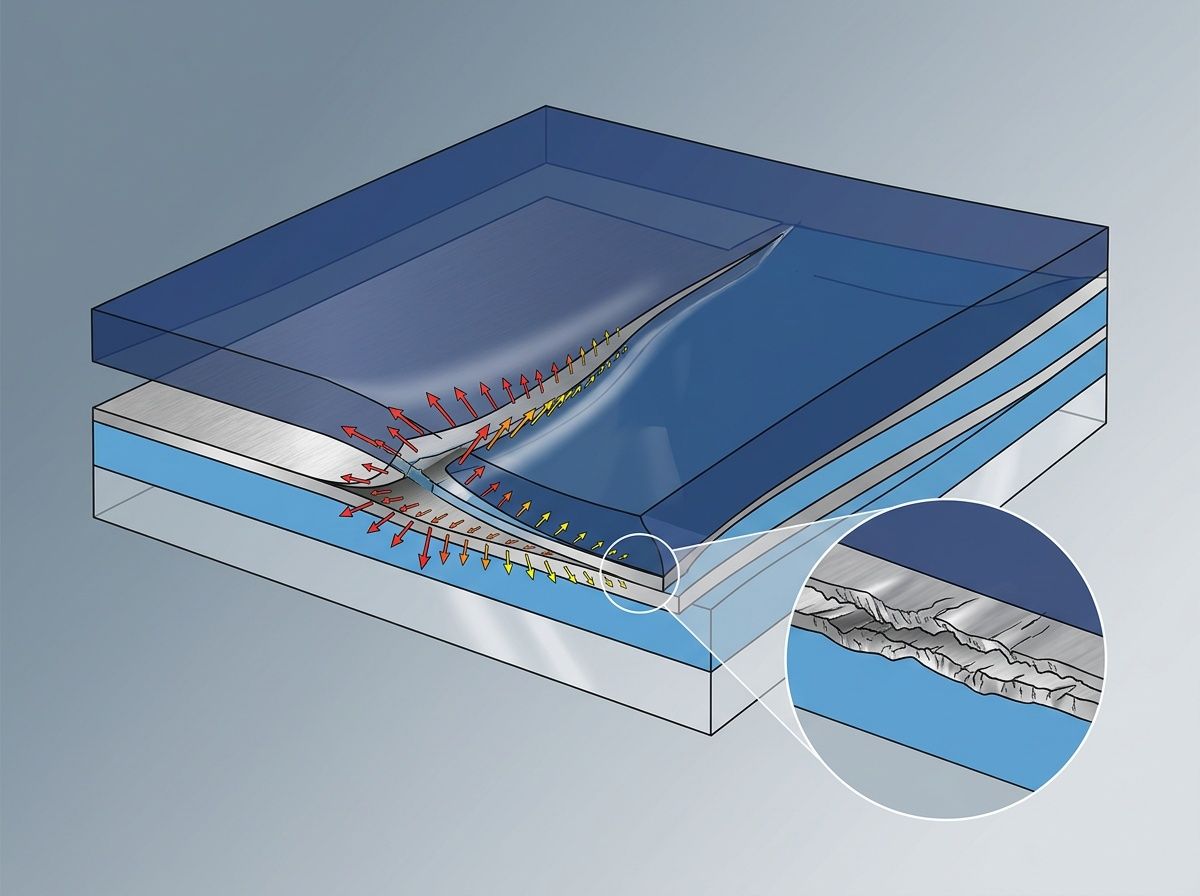
This breakdown often starts at stress concentrators such as seal edges, gusset folds, or areas with heavy ink coverage, where the adhesive has to compete with ink resins for surface contact.
Barrier Layer Integrity and Food Safety Risks
The most severe consequence of delamination is the compromise of the barrier integrity. High-barrier structures are designed to maintain specific Oxygen Transmission Rates (OTR) and Water Vapor Transmission Rates (WVTR). For example, in a PET/AL/PE structure, the aluminum foil provides a near-perfect barrier. However, if the PET or PE layers delaminate from the foil, microscopic gaps are formed. These gaps, even if they are only a few microns wide, act as atmospheric channels.
Oxygen (O2) and moisture (H2O) molecules can permeate through these delaminated “pockets,” bypassing the barrier layer entirely through lateral diffusion. For products sensitive to oxidation, such as lipid-rich nuts or infant formula, this leads to rapid rancidity. For shelf-stable items, moisture ingress can alter the water activity (aw) of the food, potentially triggering the growth of aerobic bacteria or molds that were supposed to be inhibited by the packaging’s vacuum or gas flush. From a commercial standpoint, this is a food safety hazard that can lead to large-scale product recalls and legal liability.
Material Compatibility: The Interaction of Adhesives, Inks, and Substrates
Achieving a robust bond in flexible packaging is a complex chemical balancing act. Delamination is frequently the result of “chemical incompatibility,” where the various components of the laminate—the film substrates, the printing inks, and the adhesives—work against each other. To prevent failure, a technical understanding of the “Ink-Adhesive-Substrate” triangle is required, where each vertex must be chemically compatible with the other two under the specific conditions of the product’s lifecycle.
Ink-Adhesive Interactions and Peel Failures
A common cause of delamination is the interaction between printing inks and the laminating adhesive. In a typical surface-printed laminate, the adhesive is applied directly over the ink. If the ink resin is not compatible with the adhesive chemistry, the adhesive may fail to “wet” the ink surface, or it may partially dissolve the ink, leading to “ink bleeding.”
More critically, the solvents used in the printing process—such as ethyl acetate or alcohols—must be evaporated before lamination. If there is significant solvent retention in the ink layer, these residual molecules can migrate into the adhesive layer during the curing process. In polyurethane adhesive systems, these residual solvents can react with the isocyanate hardener, preventing the adhesive from reaching its full cross-linked density. This results in a soft, tacky adhesive layer that has very low peel strength, often manifesting as delamination in the printed areas while the unprinted areas remain securely bonded.

Substrate Surface Treatment and Dyne Level Requirements
Substrate selection plays a key role in bonding success. Non-polar films, such as polyethylene (PE) and polypropylene (PP), have naturally low surface energy, which makes them resistant to wetting by adhesives. To overcome this, these films must undergo surface treatment, most commonly Corona treatment, to increase their surface energy.
When using a heat-sealable cast polypropylene film, it is essential that the treated side maintains a surface energy of at least 38 to 42 dynes/cm at the time of lamination. If the film has been stored for too long or in poor conditions, the effect of the Corona treatment can decay, leading to a drop in surface energy. When the dyne level falls below the critical threshold, the adhesive cannot spread evenly across the film surface, resulting in poor wet-out and eventual delamination. Engineers must also be wary of slip agents in the film formulation. These fatty acid amides migrate to the surface to reduce friction but can also create a weak boundary layer that prevents the adhesive from reaching the polymer backbone of the substrate.
Critical Parameters in Flexible Packaging Delamination Prevention during Lamination
Improper control of lamination parameters can induce latent defects that only manifest as delamination weeks later in the supply chain. Controlling the “Big Four” variables—Adhesive Weight, Nip Pressure, Temperature Profile, and Curing Conditions—is the foundation of delamination prevention.
Adhesive Weight and Coating Uniformity
Adhesive coat weight, measured in grams per square meter (GSM), is a primary determinant of bond strength. In structures involving smooth plastic films, a coat weight of 1.5 to 2.5 GSM might be sufficient. However, when laminating to aluminum foil, which has a microscopic surface roughness and potential pinholes, a higher coat weight (typically 3.0 to 4.5 GSM) is required to ensure that all “valleys” on the foil surface are filled.
Insufficient adhesive weight leads to voids where no bonding occurs, providing a starting point for delamination. Conversely, excessive adhesive weight can lead to tunneling, where the adhesive layer is so thick that it remains fluid longer, allowing the layers to slide and form wrinkles as the film tension relaxes. Monitoring coating uniformity across the web width is equally vital; a lean edge with low coat weight is often where edge-delamination begins.
Table 1: Recommended Adhesive Weights for Typical Laminates
| Laminate Structure | Application Type | Target Adhesive GSM (Dry) | Critical Failure Mode to Watch |
|---|---|---|---|
| PET / PE | General Purpose (Snacks) | 1.8 – 2.2 | Inadequate initial tack |
| PET / AL / PE | High Barrier (Coffee/Powders) | 3.0 – 3.5 | Foil-side delamination |
| PET / AL / CPP | Retort (121C Sterilization) | 4.0 – 5.0 | Thermal shear failure |
| BOPA / PE | Vacuum Packaging (Meats) | 2.5 – 3.0 | Moisture-induced tunneling |
Thermal Dynamics and Pressure Synchronization
The lamination process involves passing the two substrates through a nip created by a heated steel roller and a rubber pressure roller. The temperature of the nip roller must be high enough to soften the adhesive, typically ranging from 60°C to 90°C. If the temperature is too low, the adhesive’s viscosity remains too high, preventing intimate contact between the layers.
Pressure synchronization is the second half of this equation. The nip pressure must be uniform across the entire roller to eliminate micro-bubbles. These micro-bubbles are tiny pockets of air trapped between the layers. Under the heat of storage or the pressure of a retort chamber, these bubbles expand, acting as wedges that force the layers apart. Furthermore, the drying tunnel temperature gradient in solvent-based lamination must be managed. If the first zone is too hot, a skin can form on the adhesive surface, trapping solvents underneath and causing gas bubbling delamination later.
High-Temperature Resilience: Maintaining Bond Strength in 121C Retort Processes
The retort process, where the container is subjected to temperatures of 121°C under high-pressure steam for up to 90 minutes, is a rigorous test for any flexible package. Maintaining interlayer adhesion during and after retort requires specialized material engineering and an understanding of thermal expansion coefficients.
Retort Pouch Delamination: The Impact of Thermal Expansion
The primary driver of delamination in retort applications is differential thermal expansion. Plastic films and aluminum foil expand at significantly different rates when heated to 121°C.

As the temperature rises, the plastic layers want to stretch more than the aluminum layer, creating shear stress at the adhesive interface.
In a multi-layer retort stand-up pouch, the adhesive must be flexible enough to absorb this shear stress without fracturing, yet strong enough to maintain the bond. If the adhesive reaches its glass transition temperature (Tg) and becomes too fluid at 121°C, it loses its ability to hold the layers together, resulting in creeping delamination. This is why retort-grade adhesives are typically based on high-performance aliphatic isocyanates that provide superior cross-linking density and thermal stability.
Engineering for 121C Retort-Safe Structures
To mitigate the risks of high-temperature failure, engineers often incorporate a buffer layer. Biaxially Oriented Polyamide (BOPA/Nylon) is frequently used between the PET outer layer and the Aluminum foil. BOPA has excellent dimensional stability and acts as a mechanical shock absorber, distributing the thermal expansion stresses more evenly across the laminate.
The choice of the inner sealant layer is equally critical. Using Retort food packaging pouches specifically designed for these conditions ensures that the inner RCPP (Retort Cast Polypropylene) has been formulated with heat-stabilizers. These stabilizers prevent the polymer chains from degrading during the sterilization cycle. If a standard CPP were used instead of RCPP, the film might undergo dimensional shrinkage, pulling away from the foil layer and causing immediate delamination. Furthermore, the adhesive must be acid-resistant if the food contents include vinegar, fats, or oils, as these substances can migrate through the RCPP layer at high temperatures and attack the adhesive bond.
Quantifying Performance: Peel Strength Testing and Quality Benchmarks
The industry standard for measuring the bond between layers is the Peel Strength Test, usually conducted according to ASTM F904. This test provides a numerical value, typically expressed in Newtons per 15mm (N/15mm), representing the force required to separate the layers.
Standardized Peel Strength Testing Protocols
The testing procedure involves cutting a 15mm wide strip of the laminate. The two layers are separated at one end to allow them to be clamped into the jaws of a tensile tester. The machine then pulls the layers apart at a constant speed (typically 200mm/min or 300mm/min) while a load cell records the force.
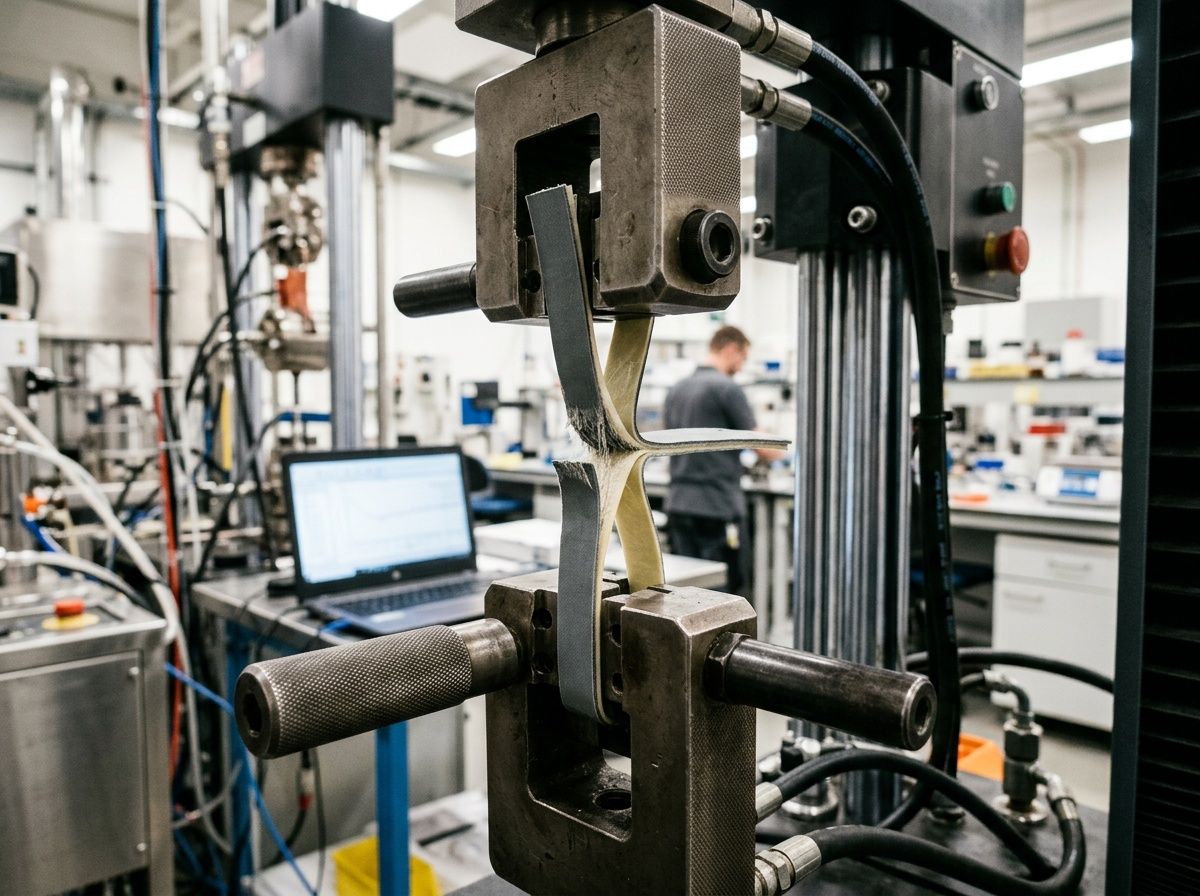
Identification of the failure mode is critical:
- Adhesive Failure: The adhesive stays entirely on one substrate. This indicates a failure of the bond at the interface, often due to low surface energy or contamination.
- Cohesive Failure: The adhesive layer itself splits. This suggests the adhesive did not reach full strength or was compromised by solvent retention.
- Substrate Break: The film itself tears before the layers can be separated. This is the ideal result, indicating that the bond strength is higher than the mechanical strength of the material.
Environmental Stress Crack Resistance (ESCR) and Accelerated Aging
Peel strength should be tested after the 48-72 hour curing period and after a simulated retort cycle or accelerated aging. Environmental Stress Crack Resistance (ESCR) testing is important for products containing surfactants or oils. These chemicals can migrate through the sealant layer and act as plasticizers for the adhesive, softening the bond over time. A pouch that shows a strong 4.0 N/15mm peel strength initially might drop to 1.0 N/15mm after exposure to oily contents.
Table 2: Minimum Peel Strength Benchmarks (N/15mm)
| Application | Required Bond (Initial) | Required Bond (Post-Curing) | Required Bond (Post-Retort) |
|---|---|---|---|
| Lightweight Snacks (BOPP/BOPP) | > 1.2 | > 1.5 | N/A |
| Liquid Pouch (PET/PE) | > 2.0 | > 2.5 | N/A |
| High-Barrier Foil (PET/AL/PE) | > 2.5 | > 3.5 | N/A |
| Retort Pouch (PET/AL/PA/RCPP) | > 3.0 | > 4.5 | > 3.5 |
Strategic Procurement: Minimizing TCO through Material Synergy
From a procurement perspective, a single batch of delaminated pouches can lead to product losses that far outweigh savings achieved by using lower-grade adhesives or thinner films.
Validating Supplier Lamination Protocols
When vetting a packaging supplier, technical rigor is a priority. Key considerations include:
- The specific adhesive system used for the application (e.g., Aliphatic vs. Aromatic).
- The target coat weight and the real-time monitoring methods on the lamination line.
- Whether the supplier provides a Certificate of Analysis (COA) including actual peel strength data for each production lot.
- Humidity and temperature controls in the curing room.
A supplier that cannot provide specific data on curing protocols or surface treatment monitoring is a high-risk partner. High-quality converters typically use automated systems to measure dyne levels and infrared sensors to monitor adhesive thickness.
The Trade-off: Solvent-less vs. Dry Lamination
There is an industry shift toward solvent-less lamination due to lower energy consumption and lack of solvent costs. However, solvent-less lamination typically results in lower initial tack compared to traditional dry lamination. For simple snack food structures, solvent-less is effective. For complex retort pouches or structures with very heavy ink coverage, dry lamination is often the safer choice as it allows for higher coat weights and provides a more robust mechanical key into the substrates.
Final Technical Synthesis
Preventing delamination is a challenge that bridges chemical engineering, thermodynamics, and industrial process control. By ensuring material compatibility, maintaining control over lamination parameters—especially during the 121°C retort phase—and utilizing quantitative peel strength testing, manufacturers can reduce the risk of interlayer separation. Strategic procurement involves moving toward technical specifications, focusing on defined surface energy targets, verified adhesive coat weights, and proven thermal resilience to protect the safety of the product and the reputation of the brand.
Conclusion
Flexible packaging delamination is a systemic structural failure that compromises barrier integrity and poses food safety risks. Ensuring reliability requires chemical synchronization between inks and adhesives, maintaining substrate surface energy, and controlling lamination parameters like adhesive weight and thermal gradients. Prioritizing technical specifications over initial cost is essential to mitigate the high total cost of ownership associated with bond failures. Quantitative validation through standardized peel strength testing ensures multi-layer structures can withstand high-temperature processing. To discuss barrier requirements for a specific product line, contact the technical team.


0 Comments