
Key Takeaways
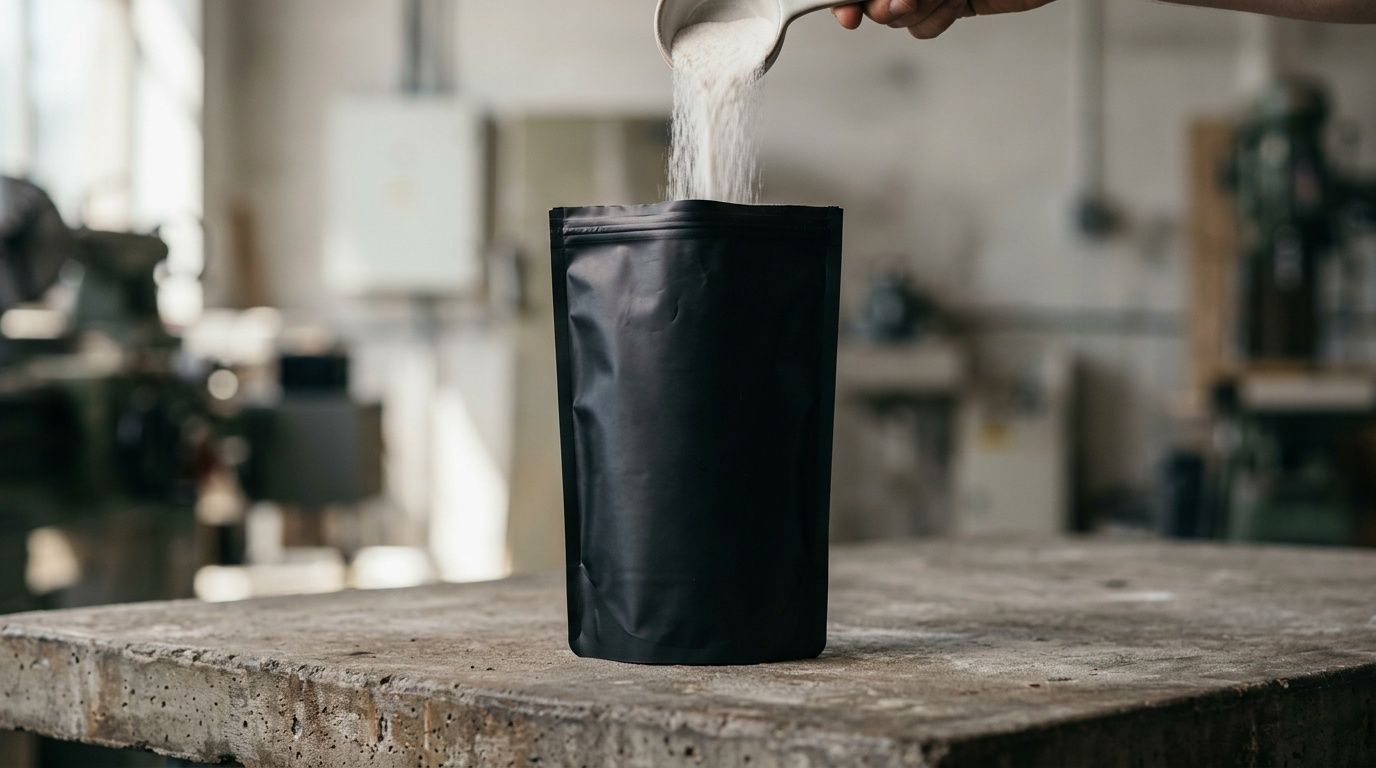
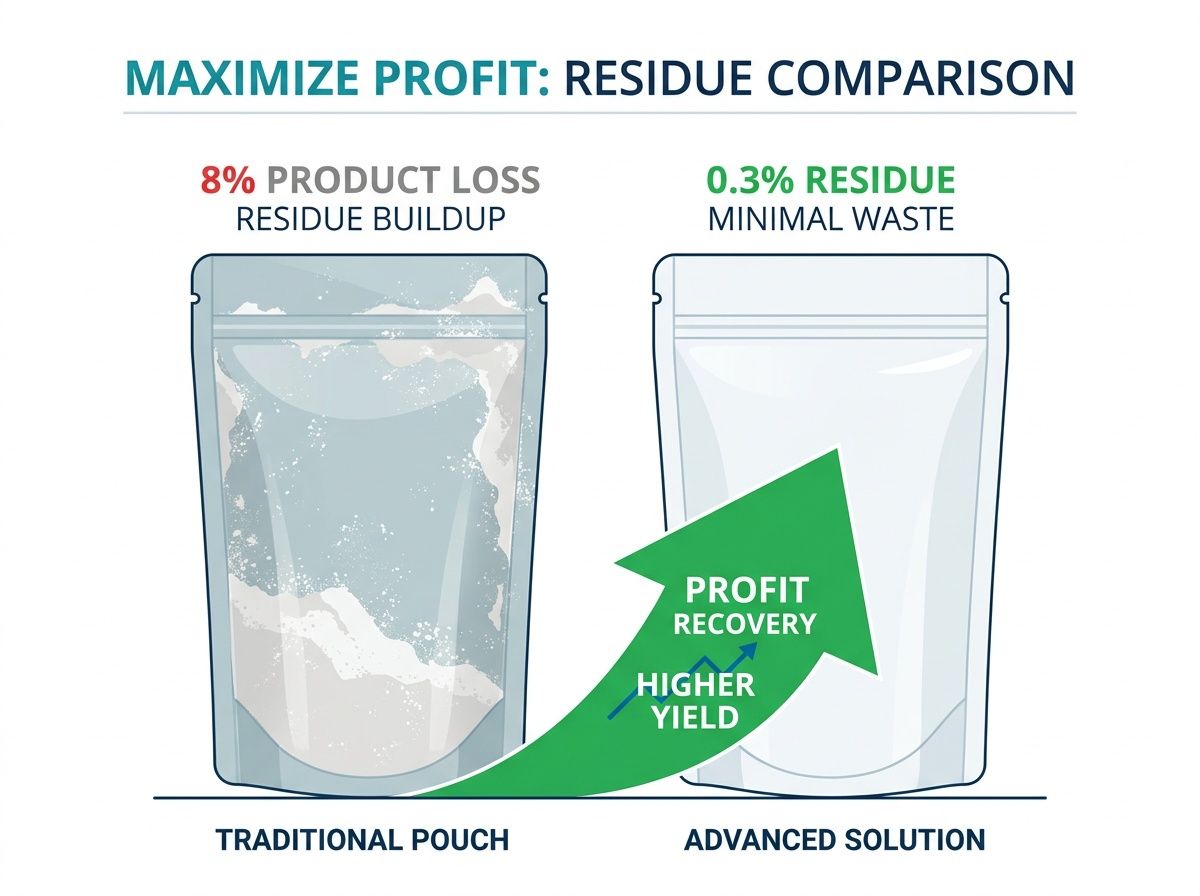
- Recover Hidden Profit Margins: High-performance anti-static packaging for powders reduces material residue from 8% to 0.3%, directly reclaiming lost revenue caused by industrial wall-cling.
- Technical Precision in Dissipation: Achieving 106 Ω surface resistance allows for sub-0.2-second static dissipation, preventing powder clumping and ensuring consistent flow during high-speed discharge.
- Enhanced Operational Efficiency: Integrating static dissipative packaging film into your supply chain reduces production downtime and simplifies the cleaning requirements of automated filling lines.
- Protect Product Integrity: Maintaining probiotic packaging stability through advanced static control prevents micro-particle loss, ensuring dosage accuracy and consistency in pharmaceutical and food applications.
Read on to discover how to optimize your industrial powder yield.
Introduction
For industrial powder manufacturers, static electricity is more than a physical nuisance—it is a direct drain on the bottom line. Traditional films often generate a significant charge that causes up to 8% of high-value materials to cling to the packaging walls, leading to substantial raw material waste and consumer complaints regarding inaccurate dosages. This hidden wall-cling tax forces companies to overfill pouches just to meet label claims, eroding margins in an increasingly competitive global market.
As demonstrated in our comparative testing video, the difference between standard materials and specialized anti-static packaging for powders is quantifiable. By maintaining a precise surface resistance 106 Ω, the advanced film allows for static dissipation in less than 0.2 seconds. This ensures that fine particles flow freely during high-speed discharge rather than adhering to the film surface, effectively reducing residue from 8% to a negligible 0.3%.
This technical guide explores how transitioning to a static dissipative packaging film can dramatically improve your operational efficiency in filling and protect probiotic packaging stability. By focusing on static cling elimination and providing effective powder clumping solutions, manufacturers can reclaim lost revenue and reduce production downtime. Read on to discover how optimizing your material science can transform your packaging from a cost center into a primary driver of industrial profit.
Imagine a probiotic production line running a standard Vertical Form Fill Seal (VFFS) setup at 100 bags per minute. Each sachet is supposed to contain 10 grams of a high-potency blend priced at $500/kg. You look at the film as it moves through the forming shoulder, and you see it: a fine, hazy “ghosting” of powder clinging to the inside of the web. It looks like a minor nuisance. It isn’t.
Our engineering team recently audited a facility where the residue measured 7.7% per sachet. That is 0.77 grams of active ingredient stuck to the plastic, never reaching the consumer. In a single hour of production, that line processes 60kg of powder. A 7.7% loss equates to 4.62kg of wasted product every sixty minutes. At $500/kg, you are watching $2,310 vanish into the trash every hour. Over an 8-hour shift, that is $18,480. In a business week, you’ve lost nearly $100,000 to a physical phenomenon most procurement managers ignore.
This is the “Wall-Cling Tax.” It is an invisible, silent drain on EBITDA that results directly from choosing “food-grade” packaging that lacks professional electrostatic control. Physics does not care about your marketing budget or the “clean” look of your pouch; it only cares about the surface resistivity of your polymer.
The Invisible Tax: Quantifying the 7.7% Profit Erosion in Powder Processing
When we talk about yield in powder packaging, most factory managers focus on machine uptime. They overlook the “Yield Gap”—the delta between what is dosed by the auger filler and what actually discharges from the bag. In standard polyethylene (PE) or PET/PE laminates, the internal surface typically carries a resistivity of 1012 Ω to 1014 Ω. This makes the bag a massive capacitor. As powder grains rub against the film during the drop, they exchange electrons. The resulting Coulombic attraction is often stronger than gravity, especially for micronized particles.
The Yield Gap: From 8% Residue to 0.3% Recovery
Most “big brand” manufacturers build an “Overfill Buffer” into their cost of goods sold (COGS). They know the powder will stick, so they intentionally over-pack by 5% to 8% to ensure the consumer gets the labeled weight. This is a staggering waste of raw material. By switching to a film with a surface resistance of 106 Ω, we have seen residue drop from that 8% disaster zone to a negligible 0.3%.
The ripple effect goes beyond the raw material. Stuck powder in the seal area causes “leakers.” It forces your team to slow down the line to allow for “settling time,” which is just a polite way of saying “waiting for gravity to fight static.” Furthermore, when that powder eventually falls out during the cleaning cycle, it represents a secondary waste stream that must be handled as industrial scrap.
| Financial Metric | Standard PE Bag (1013 Ω) | 10⁶ Ω Anti-static Bag | Difference / Savings |
|---|---|---|---|
| Average Residue (%) | 7.7% | 0.3% | 7.4% Yield Increase |
| Material Loss ($50/kg) | $3.85 / kg processed | $0.15 / kg processed | $3.70 / kg saved |
| Material Loss ($500/kg) | $38.50 / kg processed | $1.50 / kg processed | $37.00 / kg saved |
| Line Speed (Bags/Min) | 85 (due to settling) | 115 (clean drop) | 35% Throughput Boost |
| Annual Loss (1 Line) | ~$1.2 Million | ~$48,000 | $1,152,000 Recovered |
Real World Context: For a client in the nutraceutical space, the $1,152,000 saved wasn’t just a “nice to have”—it was the difference between being profitable and losing money on their flagship probiotic line.
Dosage Inaccuracy and the Hidden Costs of Compliance
In the pharmaceutical and high-end nutraceutical sectors, the “Wall-Cling Tax” isn’t just about money; it’s about “Potency Drift.” Imagine a multi-strain probiotic where the most expensive, micronized active ingredient carries a higher static charge than the bulk filler (like maltodextrin). The active ingredient sticks to the bag walls preferentially. The consumer pours the powder out, but the 20 billion CFU you promised on the label stays inside the bag, stuck to the plastic.
This leads to regulatory failure. If a random sample is pulled by a governing body and the “as-discharged” potency is lower than the label claims, you face recalls and heavy fines. You are selling a promise you cannot deliver because your packaging is holding the product hostage. This is why we insist on Functional Packaging Bags that prioritize discharge over aesthetics.
Labor and Downtime: The Operational “Cleaning Tax”
Go to any factory floor packaging fine chemicals or coffee. You will see operators manually “tapping” the chutes or “shaking” the bags as they come off the line. This is a manual labor fix for a technical failure. Every second an operator spends coaxing powder out of a bag is a second they aren’t monitoring line quality or optimizing throughput.
In automated systems, static-charged powder creates a “spider-web” effect around the fill nozzle. This dust migrates to the sealing jaws, resulting in weak, “dusted” seals that fail during shipping. The cost of a “leaker” in a retail environment is often 10x the cost of the bag itself due to the logistics of returns and shelf cleanup. To understand how different industries manage these benchmarks, you should look at our Packaging Solutions by Industry.
The Triboelectric Trap: Why Traditional Polymers Fail Fine Powders
To solve the cling problem, you must understand the physics. Traditional polymers like Polyethylene (PE) are world-class insulators. On the molecular level, they have no pathway for electrons to move. When powder flows over these surfaces, “Contact Electrification” or “Triboelectric Charging” occurs.
The Mechanics of Contact Electrification in Powder Filling
As powder particles slide down a hopper and into a bag, they are in a constant state of “rubbing.” Each collision strips electrons. In a standard bag, these electrons have nowhere to go. They sit on the surface, creating a localized high-voltage field. For particles smaller than 50μm, the “Coulombic force”—the attraction between the charged particle and the oppositely charged bag wall—is vastly stronger than the force of gravity. The powder literally defies the laws of “falling” because the electrical attraction is pulling it sideways toward the film.
The Insulative Barrier Problem: 1012 Ω and Higher
Most “antistatic” bags on the market are actually just “static dissipative” in name only. If the resistance is 1012 Ω or higher, the material is technically insulative. It will hold a charge for minutes, if not hours. In a high-speed production environment, you need a material that can move that charge in milliseconds.
When static is not managed, it creates the “Dust Cloud” effect. As the filling nozzle retracts, the static charge pulls fine particles upward. These particles coat the inside of the heat-seal area. When the sealing jaws close, they aren’t sealing plastic-to-plastic; they are sealing plastic-to-powder. That seal will fail. It’s not a matter of “if,” but “when.”
Dissipation Velocity: The Critical 0.2-Second Window
As demonstrated in our comparative stress test, the 0.2-second dissipation window is the difference between a clean discharge and a failed seal. If your film cannot neutralize a 5,000V charge in less than half a second, it is useless for high-speed powder filling.
| Material Type | Surface Resistivity (Ω) | Decay Time (5000V to 0V) | Powder Behavior |
|---|---|---|---|
| Standard PE | 1013 – 1016 | Infinite / Hours | Severe Cling / Arching |
| Topical Anti-stat | 1010 – 1012 | 2.0 – 10.0 Seconds | Moderate Cling / Humidity Dependent |
| Yun Sealoong Dissipative | 106 – 109 | < 0.2 Seconds | Total Discharge / Clean Seal |
Pro Tip: Don’t trust a salesperson who says their bag is “antistatic.” Ask for the “Decay Time” data. If they can’t show you a 5000V-to-zero test result under 0.5 seconds, the bag will fail your production line.
Humidity Independence: Why Topical Coatings are a Liability
Cheap antistatic bags use “topical surfactants.” These are essentially soaps sprayed onto the film that rely on atmospheric moisture to work. If your factory is in a dry climate, or if you run a climate-controlled cleanroom with low humidity, these bags fail completely. They become standard, insulative plastic. We recommend the Custom Size ESD Antistatic PE Bag because it uses internal, non-migratory dissipative agents that work regardless of the humidity in your plant.

Engineering the 106 Ω Sweet Spot: Material Science of Dissipative Films
At Yun Sealoong, we don’t just “add a coating.” We engineer the molecular structure of the film. The goal is to reach the “Goldilocks Zone” of resistivity: 106 Ω to 109 Ω.
Conductive vs. Dissipative vs. Insulative: Navigating the Spectrum
If a bag is too conductive (under 104 Ω), you risk “spark discharge,” which is a massive explosion hazard in environments with combustible dust (like flour, sugar, or fine chemicals). If it is too insulative (over 1011 Ω), the powder sticks. The 106 Ω range is the “Sweet Spot.” It is fast enough to move the charge away from the powder, but slow enough to do it safely without creating an incendiary spark.
The Co-extrusion Advantage: Permanent Internal Anti-static Agents
We use a multi-layer co-extrusion process. Instead of a surface spray, we embed dissipative polymers directly into the “sealant layer” of the film.
- Zero Migration: The additives don’t leach into your probiotics or chemicals.
- Food Contact Compliance: Our structures meet FDA/EU standards while maintaining aggressive ESD specs.
- Longevity: Because the “anti-static” is part of the plastic itself, it doesn’t rub off or wear out. It is permanent.
Multi-Layer Synergy: Bonding ESD Control with Oxygen Barriers
A bag that discharges powder but lets in oxygen is a failure for the shelf-life of your product. We often combine the ESD layer with a high-barrier layer like Aluminum Foil (AL) or Metallized PET (VMPET). For the ultimate protection of moisture-sensitive and static-sensitive powders, the PET AL PE Esd Moisture Barrier Antistatic Shielding Bag is our go-to recommendation. It provides a near-zero Oxygen Transmission Rate (OTR) and Water Vapor Transmission Rate (WVTR) while maintaining that 106 Ω internal surface.
Maintaining Seal Strength Amidst Dissipative Additives
One of the biggest “factory secrets” is that most anti-static additives destroy seal strength. They act like a contaminant in the weld. My engineering team spent years perfecting a formulation that maintains a high “Hot Tack” (the strength of the seal while still hot) even with high concentrations of dissipative agents. This allows you to run your machines at maximum speed without the bottom of the bag blowing out under the weight of the powder drop.
Case Study: Probiotic Stability and the “Particle Loss” Crisis
I remember a client—a mid-sized European pharmaceutical firm—who came to us after a $500,000 product recall. Their stability tests showed that while the “bulk” powder was fine, the “active” CFU (Colony Forming Units) count was 40% lower than the label claimed after just three months on the shelf.
The $500,000 Recall: When Static Compromised CFU Counts
After a forensic audit of their packaging process, we found the culprit: Selective Cling. Their probiotic blend consisted of a heavy maltodextrin base and a very fine, highly-charged lyophilized (freeze-dried) bacteria. During the 12-inch drop from the filler into the bag, the bacteria were literally flying to the walls of the bag, while the maltodextrin fell straight to the bottom.
The consumer was pouring out a bag of mostly maltodextrin. The “medicine” was still in the bag, stuck to the sides. We replaced their standard PET/PE pouch with a custom version of our Custom ESD Shielding Bag – Resealable. The residue dropped to near zero, and their CFU counts returned to 99% of the target dosage.
Selective Cling: Why the Most Expensive Ingredients Stick First
It is a cruel law of physics that the most “active” molecules—enzymes, vitamins, micronized APIs—often have the highest surface-area-to-mass ratio. This makes them the primary targets for static attraction. In the world of high-value powders, the stuff that sticks to the wall is almost always the stuff you paid the most for.
Solving the “Dust in Seal” Problem for Pharmaceutical Pouches
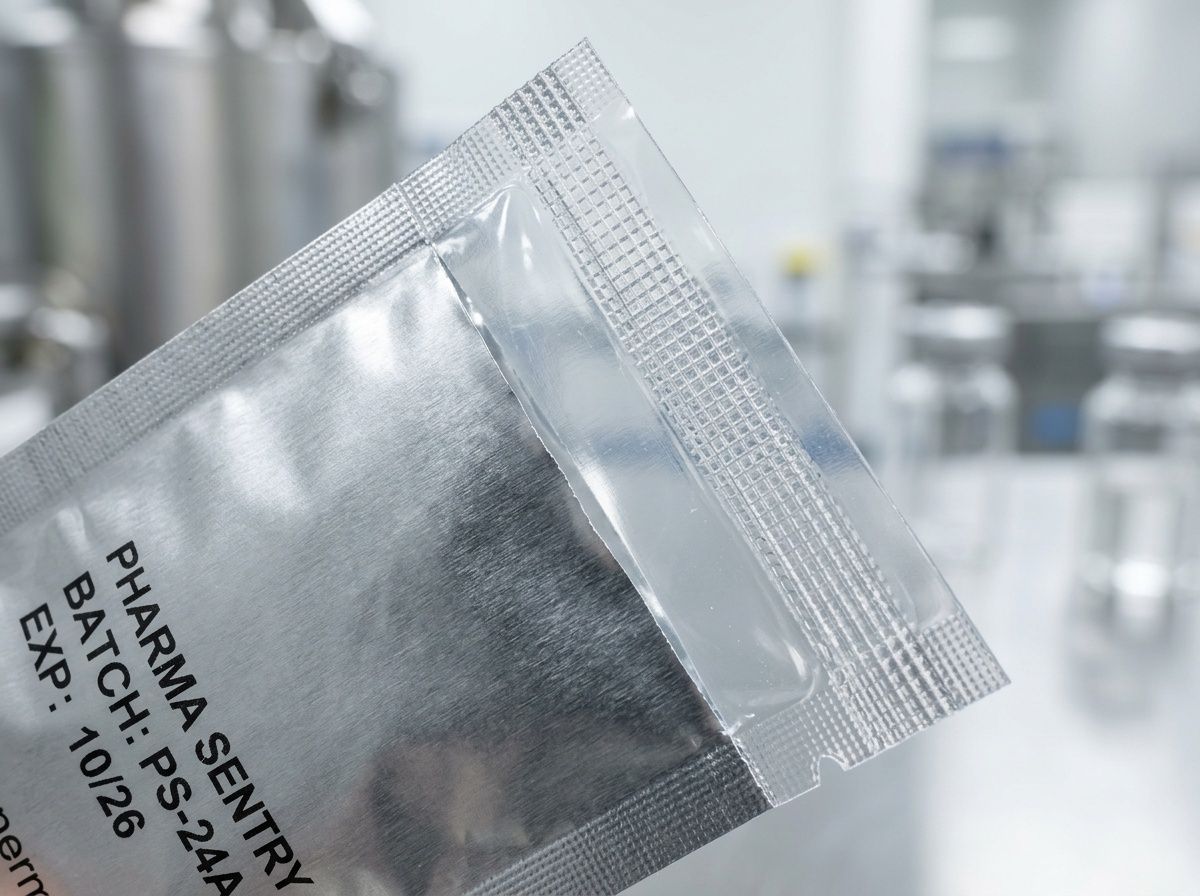
In a pharmaceutical environment, a “dusty seal” isn’t just a leak risk; it’s a microbial risk. If powder is trapped in the seal, it can act as a bridge for moisture and bacteria to enter the pouch. Our comparative visual audit shows that 106 Ω film allows for a “clean throat” discharge, ensuring that the heat-sealing zone remains pristine. This is critical for maintaining the 24-month shelf life required in the medical space.
Optimizing High-Speed Filling Lines: Throughput without Turbulence
If you want to increase your EBITDA, you don’t do it by buying cheaper bags. You do it by running your machines faster. Static is the #1 enemy of machine speed in the powder world.
Eliminating the “Bridging” Phenomenon in Filling Hoppers
Static doesn’t just happen in the bag; it happens in the hopper. When powder becomes charged, it starts to “bridge”—forming an arch over the discharge outlet that stops the flow. By using dissipative liners and films, you neutralize the charge that causes this “particle-to-particle” attraction. The powder flows like a liquid, not a solid.
Enhancing Vertical Form Fill Seal (VFFS) Performance
In a VFFS machine, the film is pulled over a metal forming tube. This creates immense friction. If the film is insulative, it builds up a massive static charge before the powder even touches it. This “pre-charge” creates a “suction” effect that pulls the powder into the side walls.
By switching to high-performance dissipative films, we have seen factories increase their cycle speed from 80 bpm to 120 bpm. That is a 50% increase in production capacity with zero additional investment in machinery. It’s the easiest “win” a plant manager can get.
Reducing Fine Dust Accumulation on Factory Machinery
There is also the “ATEX” (Explosive Atmosphere) factor. When powder sticks to the outside of packaging or floats around the machine due to static repulsion, it creates a dust explosion hazard. Dissipative packaging keeps the product inside the bag and prevents the “cloud” effect. This keeps your factory cleaner, reduces the frequency of “wash-downs,” and makes you compliant with safety regulations without needing to install expensive extraction systems.
Seamless Transition: Integrating ESD Film into Existing Hardware
One concern I often hear is: “Will this film run on my current Bosch or Hayssen machine?” The answer is yes, but you have to calibrate the “dwell time.” Dissipative additives can slightly change the melting point of the sealant layer. If you are making the switch, I highly suggest you contact our engineering team to get a specific heat-sealing profile. We can usually get you up and running with a 5-degree temperature adjustment.
The Forensic Lab: Validating Anti-static Performance for Powders
You cannot manage what you cannot measure. If you are serious about eliminating the “Wall-Cling Tax,” you need to stop using “surface resistivity” as your only metric.
Surface Resistivity vs. Volume Resistivity: Which Matters for Powders?
Surface resistivity (measured in Ω/sq) tells us how easily a charge can travel across the plane of the film. For powder cling, this is the most important metric because the interaction happens at the surface interface. Volume resistivity matters more for “grounding” bulk quantities, but for a 10g sachet, surface dissipation is king.
The Faraday Cup Test: Measuring the Charge of the Powder itself
If you have a particularly “troublesome” powder, we use a Faraday Cup to measure its “specific charge” in nanocoulombs per gram (nC/g). Some powders, like Cocoa or certain API salts, are “Static Monsters.” They generate more charge per gram than others. Once we know the nC/g of your product, we can tailor the dissipative level of the bag. We don’t guess; we calculate.
Accelerated Aging and ESD Retention
Many cheap anti-static bags work on day 1 but fail on day 180. The anti-static agents migrate to the surface and are wiped away or evaporate. We perform “Accelerated Aging” tests where we bake the film at 60°C for weeks to simulate two years of shelf life.
| Testing Parameter | Migratory Topical (Standard) | Yun Sealoong Permanent ESD |
|---|---|---|
| Initial Resistivity | 109 Ω | 107 Ω |
| Resistivity after 6 Months | 1012 Ω (Failed) | 107 Ω (Stable) |
| Humidity Sensitivity | High (Fails < 20% RH) | Zero (Works at 0% RH) |
| Residue Contamination | Waxy buildup on powder | Zero |
Anti-static vs. Static Shielding: Choosing the Correct Level of Protection
It is important to distinguish between “Anti-static” (preventing a charge from generating) and “Static Shielding” (protecting the contents from an external electrical discharge). For powders, you primarily need the former. However, if your powder is also an electronic component or a sensitive chemical catalyst, you may need the EMI Shielding Static Control Zip Lock Bag, which includes a Faraday Cage metal layer to block external fields.
Bulk Handling and FIBC Liners: Scalability in Fine Chemicals
As you scale from 1kg pouches to 1,000kg FIBC (Flexible Intermediate Bulk Containers), the physics of static becomes dangerous. A 1,000kg “drop” of powder generates enough static energy to ignite flammable vapors or cause a “super-shock” that can knock an operator unconscious.
The Danger of “Bulk Charge” in Large Scale Transfers
In bulk transfers, the “Wall-Cling Tax” isn’t just about $37/kg; it’s about the “Heel.” The “Heel” is the 20-30kg of powder that gets stuck in the corners of a bulk liner and is thrown away because it won’t discharge. For high-value chemicals, this is a massive financial leak.
FIBC Type C vs. Type D Liners: The Role of Dissipative Film
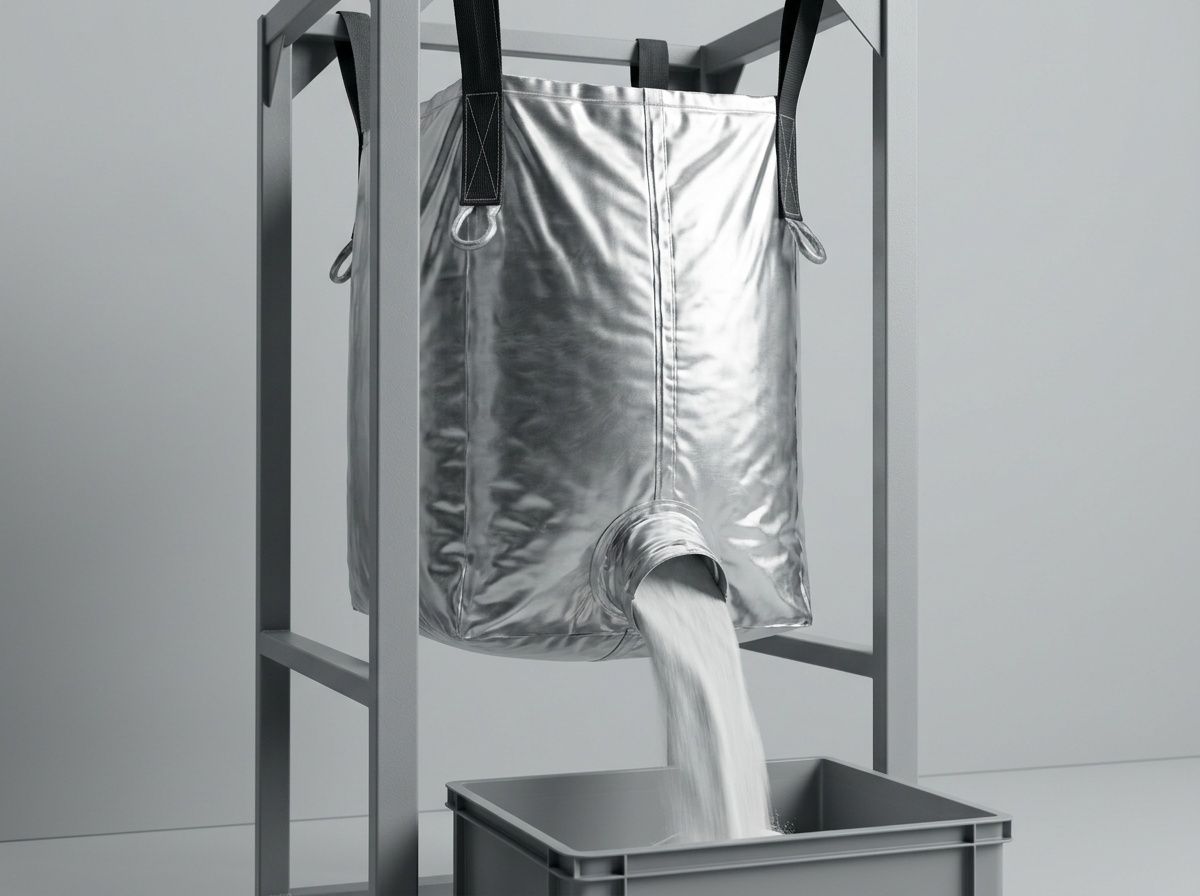
For bulk industrial transport, we utilize the High-Barrier Aluminum Foil FIBC Liner. These are engineered to handle the massive friction of ton-scale loading. By using dissipative foil liners, you ensure that the powder flows out of the bottom spout instantly, leaving zero “heel” and requiring no manual shaking of the bulk bag.
Vibration-Induced Charging During Logistics
Think about a truck driving 1,000 miles. The powder inside the bag is constantly vibrating against the film. This is a “Triboelectric Generator” on wheels. By the time the product reaches your customer, the powder is so highly charged that it has clumped into a “solid block.” The customer then complains that the product is “caked.” It’s not caked from moisture; it’s locked by static. A dissipative liner prevents this vibration-induced charging, ensuring the powder arrives as free-flowing as the day it was packed.
The CFO’s Final Verdict: Reclaiming Margin as a Competitive Strategy
Procurement departments are often incentivized to save $0.05 per bag. This is a classic “Penny Wise, Pound Foolish” scenario. If a $0.20 bag causes $1.50 in product waste, that bag actually costs you $1.70.
Beyond the Bag Price: The “True Cost” Procurement Model
When we present to CFOs, we use the “True Cost” model. We factor in:
- Product Yield: Recovering the 7.7% loss.
- Line Efficiency: Increasing bags per minute by 30%.
- Quality/Returns: Reducing leakers and “dusted” seal failures.
- Labor: Eliminating manual bag-tapping and cleaning downtime.
When you look at the numbers this way, the “expensive” 106 Ω bag is actually the cheapest component on your production line. It is an investment that pays for itself in the first month of operation.
Sustainability through Waste Reduction
In today’s market, “Green” initiatives are mandatory. But the most sustainable thing you can do is not waste the product you already made. If you are throwing away 7% of your probiotics or chemicals because they are stuck to the plastic, your carbon footprint per “usable unit” is 7% higher than it needs to be. Reducing waste at the source is the purest form of sustainability.
Future-Proofing for Micro-Particle Innovation
As we move toward 2026 and beyond, powders are becoming finer. Nanotechnology and micronized drug delivery mean that particles are getting smaller and more sensitive to electrical forces. The packaging you used five years ago will not work for the high-precision powders of tomorrow. If you are still using standard PE for micronized products, you are operating with a massive handicap.
The “Wall-Cling Tax” is optional. You can continue to pay it to the laws of physics, or you can engineering your way out of it by choosing the right material structure. For those ready to stop the bleed, we recommend starting with a review of our Functional Packaging Bags to see what modern material science can do for your bottom line.
Conclusion
Eliminating the “Wall-Cling Tax” is no longer a matter of preference—it is a strategic financial necessity. As demonstrated, optimizing your packaging’s surface resistivity from a standard 1013 Ω to our engineered 106 Ω “Goldilocks Zone” can recover up to 7.4% of wasted product and boost line throughput by 35%.
As a source manufacturer, Yun Sealoong specializes in multi-layer co-extruded films that provide permanent, humidity-independent dissipation. We move beyond basic aesthetics to solve the physics of powder adhesion, ensuring your most expensive active ingredients reach the consumer instead of the trash.
Ready to reclaim your margins and optimize your filling line?
Contact our engineering team today for a custom barrier analysis or to request a high-performance sample kit for your specific powder formulation. Let’s eliminate the “invisible tax” on your EBITDA.


0 Comments