
Key Takeaways
- Strategic Material Selection Optimizes Bulk Costs: Polyethylene-based structures offer a cost-effective solution for high-volume dry goods like biscuits, providing essential moisture protection while minimizing procurement expenses compared to more complex multi-layer laminates.
- Thermal Stability Prevents Pastry Deformation: Polypropylene and BOPP films provide the necessary heat resistance and structural integrity for fresh items like egg yolk puffs, ensuring the packaging maintains its shape and protects delicate contents during handling.
- Hybrid Laminates Balance Visibility and Protection: Utilizing PET for clarity alongside aluminum foil or aluminized backings creates a high-barrier environment against light and moisture while allowing a clear front panel for product display in premium gift applications.
- Functional Barriers Mitigate Product Loss: Shifting from generic custom printing to specialized material combinations like PET/PE or BOPP reduces waste by addressing specific failure modes such as moisture ingress and structural collapse in the bakery supply chain.
Introduction
In the high-volume bakery supply chain, the failure to align material specifications with product chemistry often results in either prohibitive procurement costs or premature staling. Using generic custom bakery packaging bags for fresh items like egg yolk puffs can lead to structural deformation if the film lacks the necessary thermal stability and rigidity. Conversely, over-specifying with complex multi-layer laminates for dry biscuits unnecessarily inflates budgets for wholesale bakery supplies when simpler, polyethylene-based structures provide sufficient protection.
Strategic material selection serves as a critical lever for both margin protection and product integrity. Polypropylene provides the resilience required for heat resistant pastry bags, while PET food grade bags offer the puncture resistant packaging necessary for premium gift sets that endure complex logistics. For items highly sensitive to oxidation, aluminum foil food pouches offer a superior moisture barrier packaging solution. The technical breakdown provided in the accompanying video illustrates how these distinct materials perform under typical bakery handling conditions, focusing on the trade-offs between visibility and physical barrier properties.
The Mechanical and Chemical Vulnerabilities of Industrial Bakery Products
In the industrial bakery sector, the transition from production line to retail shelf is a period fraught with technical risks. Packaging is often viewed through the lens of aesthetics, yet its primary function is to serve as a precisely engineered barrier against the environmental factors that trigger spoilage and structural failure. Understanding the mechanical and chemical vulnerabilities of baked goods is the first step in moving from generic containment to advanced material science solutions.
Moisture Equilibrium and the Loss of Textural Integrity
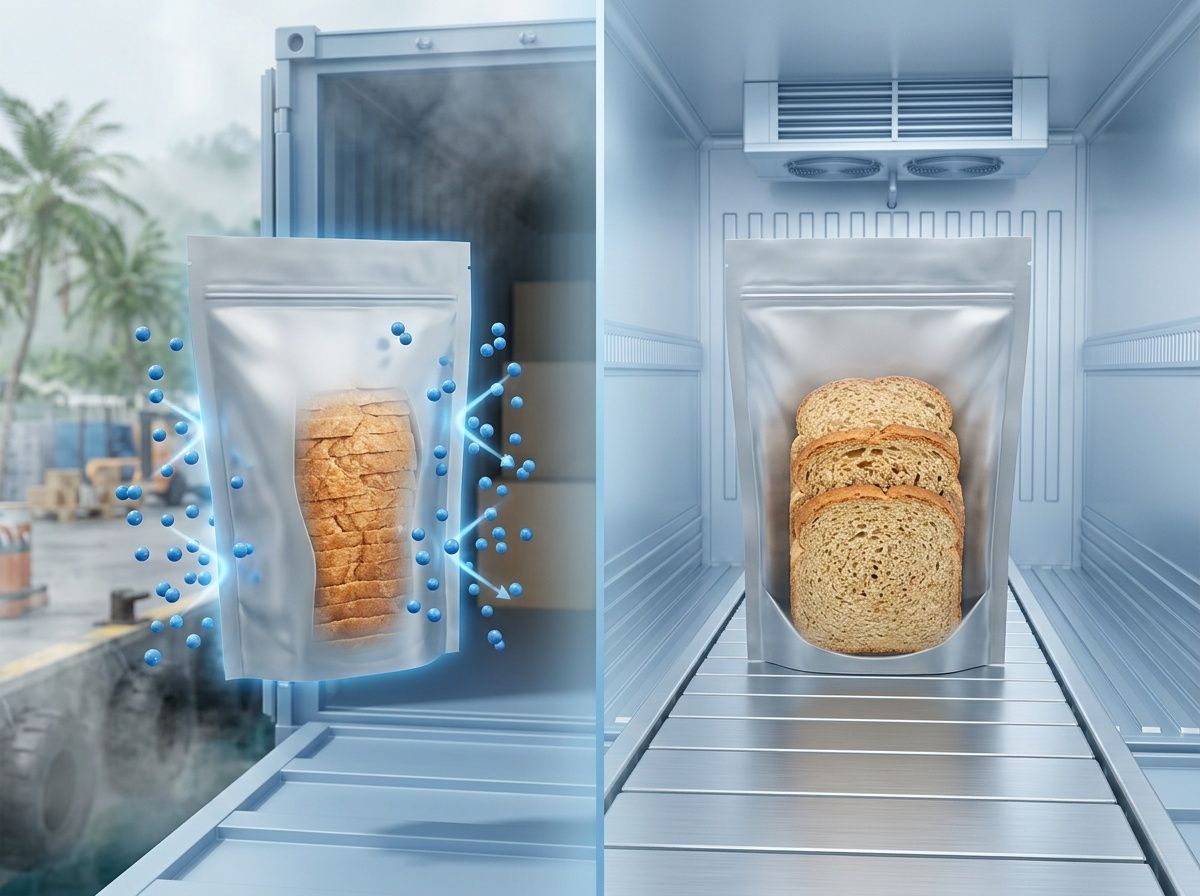
The most pervasive challenge in bakery logistics is the management of water activity (aw). Unlike simple moisture content, water activity measures the energy status of water within a product, determining how much moisture is available to migrate or support microbial growth. Industrial bakery items generally fall into two categories: high-moisture products like soft breads and pastries, and low-moisture products like biscuits and crackers.
For low-moisture items, the primary failure mode is the absorption of atmospheric water vapor. When a crisp biscuit is exposed to an environment with a higher relative humidity than its internal equilibrium, water molecules permeate the packaging and bond with the starch and sugar structures. This leads to a loss of “snap” and the onset of a soggy texture. Conversely, for high-moisture items like cakes, the migration of water out of the product leads to staling—a process characterized by the retrogradation of amylopectin in starch, causing the crumb to become dry, hard, and crumbly.
To prevent these failures, custom flexible food packaging must be engineered with specific Water Vapor Transmission Rates (WVTR). If the WVTR is too high, the product’s shelf life is measured in days rather than months. However, the solution is not always a total seal; some fresh-baked goods require a degree of breathability to prevent the accumulation of condensation inside the bag, which can lead to rapid mold growth (rhizopus stolonifer). The boundary condition for a procurement manager is finding the balance where the moisture barrier matches the product’s internal water activity profile across various climate zones during transport.
Thermal Sensitivity in the Post-Production Cooling Phase
Industrial bakeries often face the “warm-pack” dilemma. Packing products while they are still slightly above ambient temperature—usually to meet tight delivery schedules—introduces significant thermal stress to the packaging material. Standard thin-gauge films can suffer from thermal deformation or “shrinkage” when they come into contact with a 40-50 degree Celsius pastry.
This thermal sensitivity also impacts the chemical stability of the film. Lower-quality plastics may release “off-odors” or volatile organic compounds (VOCs) when heated, which are quickly absorbed by the porous structure of the bakery item, ruining the sensory profile. Furthermore, warm products release steam; if the bag’s inner surface does not have anti-fog properties, this steam condenses into visible droplets. These droplets do not just obscure the product from the consumer; they create localized areas of high water activity on the crust, inviting localized spoilage even if the overall bag environment is controlled.
Structural deformation is another critical risk. A generic bag lacks the wall stiffness required to support the weight of stacked products in a secondary shipping carton. For delicate items like croissants or egg yolk puffs, the packaging must provide a degree of tensioned rigidity. If the film is too soft, it will cling to the surface of the pastry, potentially tearing the delicate outer crust when the consumer opens the bag. Engineering the bag with a higher modulus of elasticity ensures that the packaging maintains a protective air cushion or gas cushion around the product, preventing mechanical crushing during delivery.
Engineering Material Layers in Custom Bakery Packaging Bags for Barrier Performance
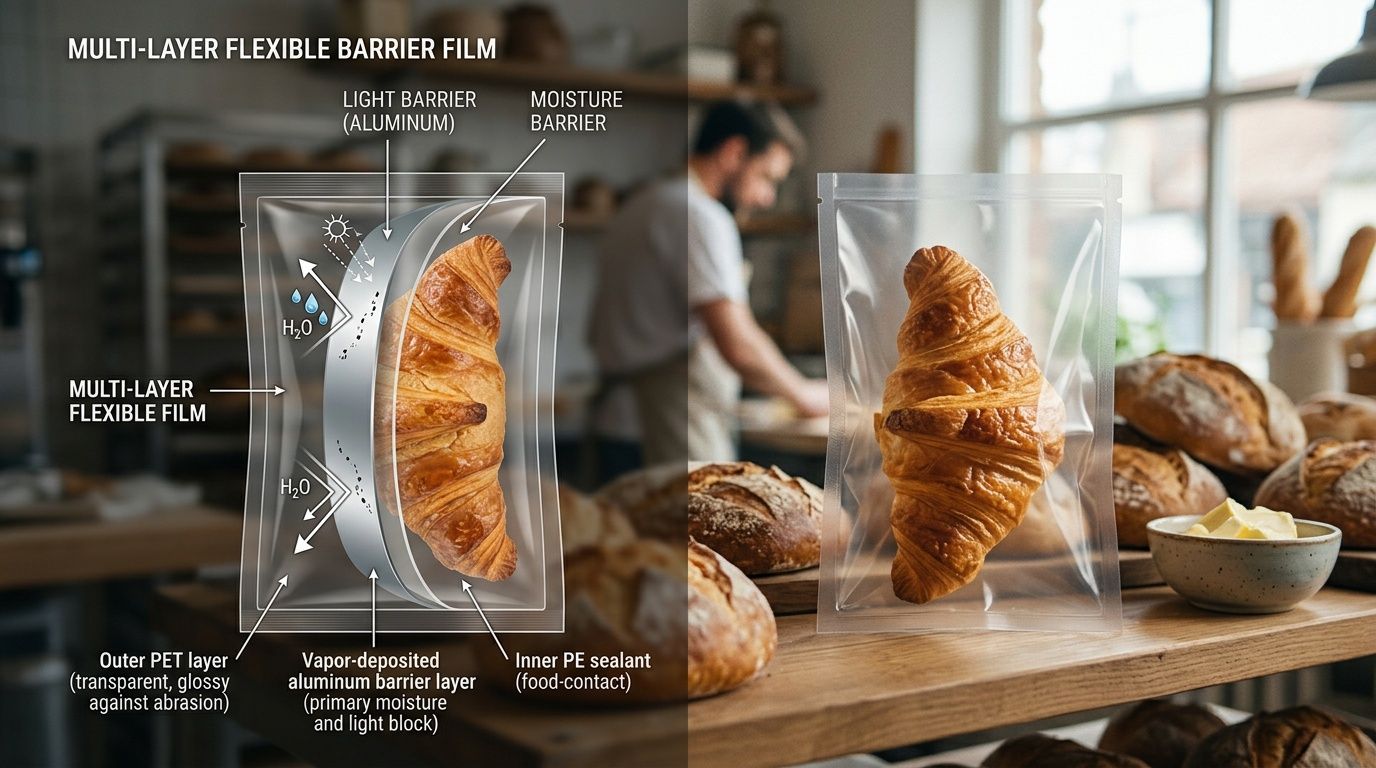
Modern bakery packaging is rarely a single material. Instead, it is a multi-layered laminate, where each polymer layer is selected to solve a specific physical or chemical problem. By stacking these functions, manufacturers create a thin, lightweight film that performs better than a single thick layer of a traditional plastic.
PET as a Structural Foundation for Puncture Resistant Packaging
Polyethylene Terephthalate (PET) is frequently utilized as the outermost layer in high-performance bakery laminates. Its role is primarily structural and aesthetic. PET offers an exceptionally high tensile strength, which is vital for high-speed automated filling lines where the bag is subjected to rapid pulling, snapping, and thermal sealing cycles.
One of the key advantages of PET is its puncture resistance. In a wholesale environment, bags are often jostled against each other; for products with sharp edges, such as artisanal crusty breads or hard-baked biscotti, a standard film would easily fail. PET acts as a shield, distributing the force of an impact across its molecular lattice. Additionally, PET serves as the ideal substrate for high-definition rotogravure or flexographic printing. Because the ink is usually trapped between the PET layer and the inner barrier layer (sandwich printing), the brand’s graphics are protected from scuffing, oils, and chemical cleaners.

For procurement managers, the trade-off with PET is its lack of heat-sealability. PET has a high melting point, meaning it cannot be fused to itself at the temperatures typically used in packaging machines. Therefore, it must be laminated to a sealant layer, such as Polyethylene (PE). This adds to the landing cost of the material but significantly reduces the risk of bag breakage and transit damage.
Gas Flushing and Modified Atmosphere Packaging (MAP) Compatibility
To achieve extended shelf life without relying on chemical preservatives, many industrial bakeries use Modified Atmosphere Packaging (MAP). This involves flushing the bag with an inert gas like Nitrogen (N2) to displace Oxygen (O2), the primary catalyst for lipid oxidation and mold growth.
The effectiveness of MAP is dependent on the Oxygen Transmission Rate (OTR) of the custom bakery packaging bags. If the material has a high OTR, the N2 will leak out and O2 will leak in within hours, rendering the gas flushing ineffective. High-barrier layers, such as EVOH (Ethylene Vinyl Alcohol) or specialized coatings, are often integrated into the laminate to seal the microscopic gaps in the polymer structure.
The boundary condition here is the seal integrity. A high-barrier film is only as good as its weakest point—usually the heat seal. If the sealant layer is not thick enough to flow around crumbs or oil droplets during the sealing process, micro-leaks will occur. In high-fat products like donuts or buttery pastries, the presence of oils can interfere with the molecular bonding of the seal. Therefore, the sealant layer must be engineered for hot tack (the strength of the seal while still hot) and seal-through-contamination capabilities. This ensures that the N2 environment remains stable from the factory to the consumer.
Thermal Stability and Rigidity: Differentiating PE Bakery Bags from PP Pastry Packaging
A common point of confusion for buyers is whether to specify Polyethylene (PE) or Polypropylene (PP). While both are polyolefins, their molecular structures lead to vastly different performance profiles on the bakery floor.
Cost-Effective PE Structures for High-Volume Bulk Dry Goods
Polyethylene, particularly Low-Density Polyethylene (LDPE) and Linear Low-Density Polyethylene (LLDPE), is the workhorse of the bakery industry. Its primary advantage is flexibility and cost-effectiveness. For bulk dry goods like wholesale biscuits or simple crackers, a moisture-proof PET/PE stand-up pouch offers a balance of barrier performance and affordability.
PE is highly ductile, meaning it can stretch significantly before it breaks. This makes it suitable for large, heavy bags of flour or bulk-packed cookies where the material must absorb the kinetic energy of a drop without bursting. Furthermore, PE has a lower initiation temperature for heat sealing, which allows for faster machine speeds and lower energy consumption in the packing plant.
However, PE has limitations. It is naturally hazy compared to other plastics, which may not be ideal for premium products where visual clarity is key. Its thermal resistance is also lower; if exposed to high temperatures in a delivery truck in a tropical climate, PE bags can become overly soft, losing their shape and potentially sticking together (blocking). PE is a reliable choice for stable, high-volume SKUs where the primary goal is moisture protection at a competitive unit price.
Heat Resistance and Clarity in PP Pastry Packaging
Polypropylene (PP), especially Biaxially Oriented Polypropylene (BOPP), is the preferred choice for items that require a premium look or involve higher temperatures. PP is characterized by its exceptional clarity, which makes colors and textures of the pastry stand out on the shelf.
In the context of fresh pastries like egg yolk puffs or wife cakes, PP’s rigidity is a major asset. Unlike PE, which is soft, PP is stiff. This stiffness prevents the bag from collapsing onto the product. When a product is packed warm, PP maintains its structural integrity and resists the cling factor.
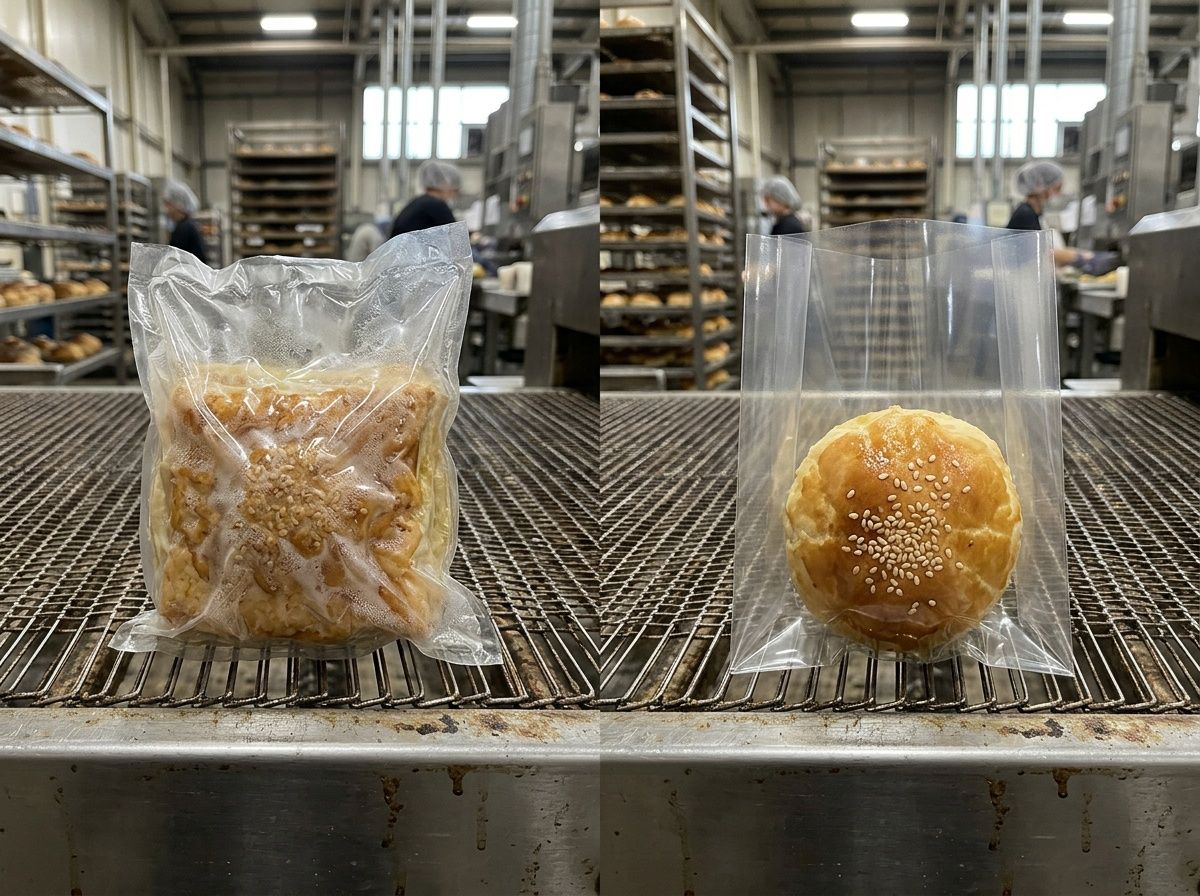
Furthermore, PP has a higher melting point than PE, making it more suitable for environments where the packaging might be subjected to post-packaging heat treatments.
The trade-off is that PP can be brittle at low temperatures. If a bakery product is intended for the frozen supply chain, a pure PP bag might crack during handling. This is why many high-barrier BOPP laminated zipper bags are designed with specific co-polymers to improve impact resistance at cold temperatures. The decision between PE and PP often depends on the shelf presence versus ruggedness requirements of the specific SKU.
| Feature | PE (LDPE/LLDPE) | PP (BOPP/CPP) |
|---|---|---|
| Optical Clarity | Moderate to Low (Hazy) | High (Crystal Clear) |
| Thermal Resistance | Low (Softens at 70-80C) | Moderate/High (Resists up to 120C) |
| Tensile Stiffness | Low (Stretchy) | High (Crisp/Rigid) |
| Cold Resistance | Excellent (Remains flexible) | Poor (Can become brittle) |
| Cost Profile | Economical | Mid-Range |
| Typical Application | Bulk biscuits, frozen dough | Fresh pastries, premium cookies |
High-Barrier Architectures: Aluminum Foil Food Pouches and Hybrid Laminates
When a bakery product contains high levels of fats, delicate spices, or requires a shelf life exceeding six months, standard plastic barriers are often insufficient. In these scenarios, material science utilizes metallic barriers.
Protection Against Photo-Oxidation in Premium Bakery Gifts
Light is an enemy of bakery freshness. UV and even visible light wavelengths can catalyze lipid oxidation, leading to rancidity. This is particularly problematic for premium gift boxes containing shortbread, nuts, or butter-heavy cookies. The fats in these products react with oxygen in the presence of light to form aldehydes, which create off-flavors.
Aluminum foil is the standard for light protection. A layer of aluminum foil as thin as 7 microns is virtually impermeable to light, oxygen, and moisture. This creates a total barrier environment. For high-end export products, using aluminum foil food pouches ensures that the product maintains freshness during long-distance shipping.
However, the cost of pure aluminum foil is higher, and it is prone to flex-cracking. As a solution, many manufacturers use VMPET (Vacuum Metallized PET). This is a PET film coated with a microscopic layer of aluminum. While not a 100% barrier like foil, VMPET provides a 90-95% improvement in barrier performance over standard films at a lower cost and weight, with much better resistance to flex-cracking.
Achieving Aesthetics without Compromising Barrier: The Hybrid Approach
One of the biggest dilemmas in the bakery industry is the conflict between protection and visibility. Consumers prefer to see the product, but exposing it to light through a clear window reduces shelf life.
The material science answer is the hybrid laminate. A common structure is a high-barrier clear front foil pouch. This design uses a high-barrier transparent film (like PET coated with AlOx or SiOx) for the front panel and an aluminum foil or metallized laminate for the back and gussets. This approach allows for light protection on the majority of the bag’s surface area while still offering a clear window for consumer inspection.
For the production team, these hybrid structures require careful calibration. Different materials have different slip coefficients and heat-seal requirements. If the front and back of the bag do not expand and contract at the same rate when heated, the bag will curl or warp—a defect known as puckering. Success in this category depends on matching the mechanical properties of disparate materials into a single, cohesive unit.
Strategic Decision Framework for Selecting Wholesale Bakery Supplies
Technical specifications are one part of the equation; the other is the business logic of procurement. Selecting the right custom bakery packaging bags requires a Total Cost of Ownership (TCO) approach rather than just comparing the price per thousand bags.
Mitigating Product Loss through Functional Barrier Selection
A common mistake in procurement is under-specification—choosing a cheaper film that seems adequate but fails under real-world stress. If a bakery saves $0.02 per bag by moving to a thinner, lower-barrier film, but that change results in a 3% increase in retail returns due to staling or a 1% increase in bag breakage during transit, the savings are negated.
The TCO model accounts for:
- 1. Product Waste: The value of the baked goods that must be discarded.
- 2. Logistics Waste: The cost of shipping products that eventually get returned.
- 3. Brand Equity: The cost of a consumer receiving a stale or crushed product.
- 4. Machine Efficiency: A cheaper film might cause more downtime on the packaging line due to inconsistent slip or poor seal strength.
In high-volume wholesale bakery supplies, even a minor change in the Coefficient of Friction (COF) of the film can lead to significant lost productivity. If the film is too tacky, it will not slide over the forming collar of the packaging machine, causing jams. If it is too slippery, the bags will not stack properly on the pallet. Procurement must ensure the material is optimized for the specific machinery in the plant.
Scaling Procurement: From Stock Pouches to Custom Engineering
For small bakeries or start-ups, using stock bags is a logical starting point. However, as SKU volumes grow, the move to custom-engineered laminates becomes a financial necessity. Customization allows for downgauging—the process of reducing the thickness of the film in areas where it is over-engineered while reinforcing areas where it is weak.
For example, a stock bag might be 100 microns thick to ensure it covers a wide range of uses. A custom-engineered bag for a specific biscuit might only need to be 80 microns thick because the material science is precisely tuned to the biscuit’s weight and shape. This 20% reduction in material usage directly translates to lower costs and a smaller environmental footprint.
Implementation and Quality Control: Beyond Custom Printed Cookie Bags
The final stage of the packaging journey is implementation on the factory floor. Even the most advanced material will fail if the quality control (QC) parameters are not strictly maintained during the conversion and filling processes.
Optimizing Seal Strength in High-Fat Environments
One of the most frequent points of failure in bakery packaging is seal through contamination. In an industrial bakery, the environment is often filled with microscopic particles of flour, sugar, or oils. When the heat-sealing jaws close on a bag, any powder or oil trapped in the seal area acts as a barrier, preventing the polymer chains from fusing.
To solve this, technical engineers often recommend using a specialty sealant layer, such as Metallocene Polyethylene (mPE). Metallocene-catalyzed resins have a narrow molecular weight distribution, which gives them superior hot tack and the ability to squeeze out contaminants during the sealing cycle.
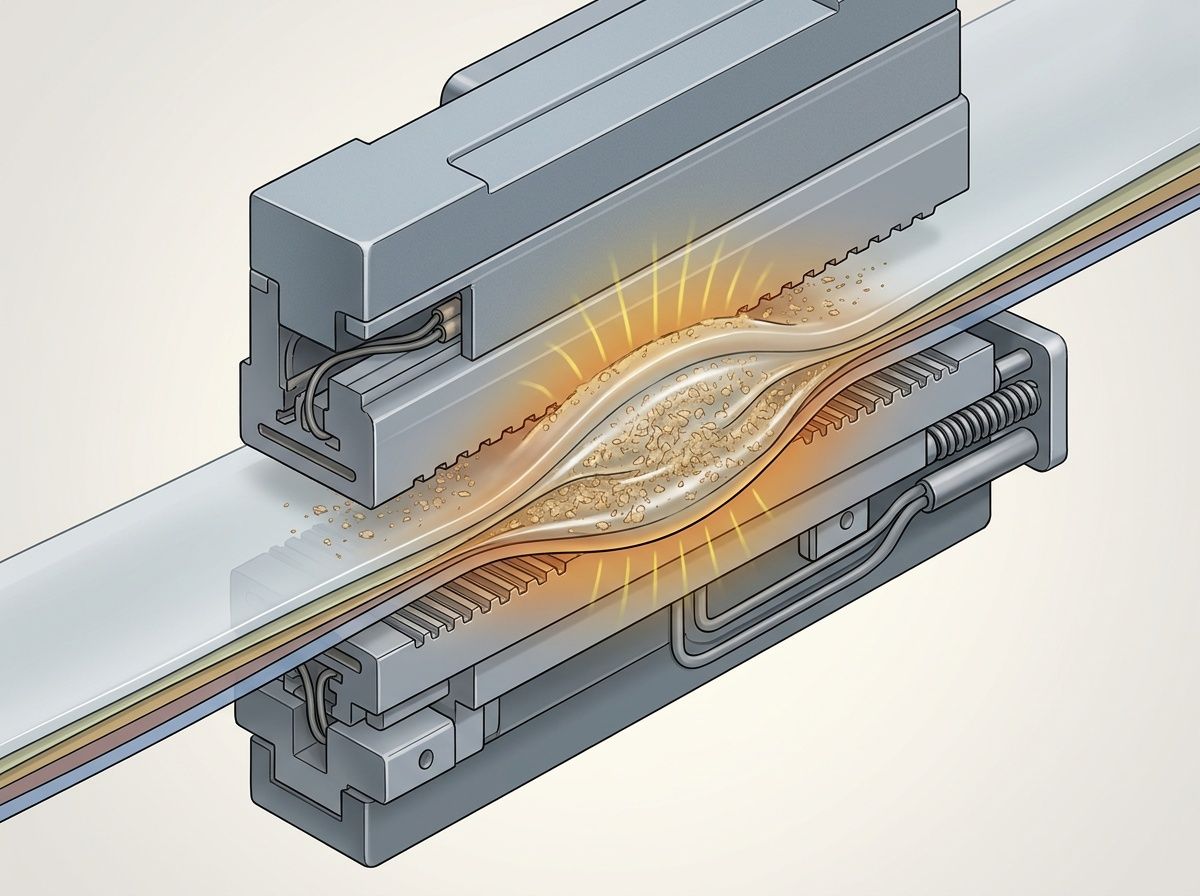
This ensures that even a bag of oily donuts or floury bread rolls maintains a hermetic seal.
Testing this in the QC lab involves burst testing—where a bag is inflated until it pops to see if the seal or the material fails first—and creep testing, which measures the seal’s ability to hold up under constant pressure over time. For custom printed cookie bags, ensuring the seal remains intact is the only way to guarantee that the moisture-controlled environment inside the bag is preserved during distribution.
Functional Additives: Anti-Fog and Anti-Static Properties
In addition to the primary polymer layers, functional additives play a role in the performance of bakery bags.
Anti-Fog Additives: Warm-packed goods create condensation. Anti-fog additives work by reducing the surface tension of the water droplets. Instead of forming a fog of tiny spheres that scatter light, the water spreads out into a continuous, transparent film. This maintains product visibility and prevents localized water pooling.
Anti-Static Additives: In the dry environment of a bakery, plastic films can build up a static charge. This charge attracts flour dust to the surface of the bag, making it look dirty and causing dust to cling to the zipper or seal area. Anti-static layers dissipate this charge, ensuring that the packaging remains clean and the sealing surfaces remain clear of debris.
Specifying these additives depends on the specific production environment. A bakery in a humid region will benefit from anti-fog, while a large-scale industrial flour mill producing dry mixes will prioritize anti-static properties to prevent seal failures. By aligning material science with the physical realities of the bakery floor, brands effectively control costs while ensuring products reach the consumer in peak condition.
Conclusion
The selection of industrial bakery packaging depends on aligning polymer properties with the specific moisture equilibrium and thermal requirements of the product. Utilizing multi-layered laminates like PET for structural integrity, PE for cost-effective moisture protection, or PP for thermal stability allows manufacturers to mitigate risks such as staling and mechanical deformation. For procurement managers, transitioning from generic specifications to a material-focused strategy optimizes the total cost of ownership by reducing retail returns and enhancing production line efficiency. Balancing barrier performance with functional additives like anti-fog or anti-static agents ensures product quality throughout the logistics chain. To discuss barrier requirements for specific product lines, contact technical engineering specialists.


0 Comments