
Key Takeaways
- ASTM D1894 Compliance: Adhering to these surface friction testing standards allows engineers to differentiate between static and kinetic friction, ensuring precise film tension control and preventing mechanical jams during high-speed VFFS machine cycles.
- Friction-Induced Heat Mitigation: Optimizing the coefficient of friction reduces heat generation during rapid pillow packing cycles, which prevents localized temperature spikes that could otherwise compromise food safety or cause premature spoilage in sensitive products.
- Slip Additive Optimization: Integrating specific slip additives into multiple extrusion BOPP film rolls regulates surface friction to increase machine throughput, providing the necessary lubricity for fragile snacks to move through filling lines without breakage.
- Logistical Stacking Stability: Managing the coefficient of friction across flexible packaging materials ensures that finished pouches and bags maintain structural integrity during palletization, reducing the risk of product shifting or load collapse during transport.
Introduction
In high-speed vertical form fill seal (VFFS) operations, an unoptimized coefficient of friction in packaging often manifests as erratic film tension, mechanical jams, or misaligned seals. These technical failures are frequently rooted in an imbalance between static vs kinetic friction, where the flexible packaging film either lacks the necessary lubricity to glide through the forming collar or provides insufficient resistance for stable tracking. When the friction profile deviates from ASTM D1894 standards, the immediate consequence is a sharp decline in VFFS machine performance, but the hidden risks extend far deeper into the supply chain.
Beyond mechanical throughput, inadequate surface friction testing can mask latent threats to food safety and structural integrity. Excessive friction during rapid packing cycles can generate localized heat, potentially compromising the barrier properties of the film or accelerating spoilage in heat-sensitive products. Conversely, materials that are too slick compromise stacking stability during palletization, increasing the risk of load collapse during transit. Finding the equilibrium requires the precise application of slip additives during the extrusion process to balance machine glide with the grip necessary for easy open packaging and secure transport.
The Mechanics of Coefficient of Friction in Packaging under ASTM D1894
In the ecosystem of high-speed automated packaging, the coefficient of friction in packaging (COF) is a critical performance metric that dictates the feasibility of a production run. COF is defined as the ratio of the force of friction between two bodies and the force pressing them together. In technical terms, it is expressed as mu = F/N, where F is the force required to initiate or maintain movement and N is the normal force. In the context of flexible films, this measurement determines how easily a film slides over itself or over the metallic surfaces of a packaging machine.
Differentiating Static and Kinetic Friction in Film Performance
The distinction between static (mu_s) and kinetic (mu_k) friction is fundamental to understanding packaging failure modes. Static COF measures the “breakaway” force required to start the motion between two surfaces at rest. Kinetic COF, conversely, measures the force required to maintain a uniform sliding motion once the initial resistance has been overcome.
For a packaging engineer, the relationship between these two values is often more important than the individual numbers. A high differential between static and kinetic friction leads to “chatter” or “stick-slip” behavior. On an automated production line, this manifests as inconsistent movement, where the film resists movement until a threshold of tension is reached, at which point it moves forward abruptly. This inconsistency can lead to significant failures in registration and seal integrity.
When using an industrial heat sealable BOPP roll, the static COF must be low enough to prevent the roll from “blocking” or sticking during the unwind process, yet the kinetic COF must provide enough resistance to allow the machine’s tensioning systems to maintain control. If the kinetic friction is too low, the film may “over-run” the rollers, leading to slack and misalignment. If it is too high, the motor torque required to pull the film may exceed the film’s yield point, causing permanent deformation or tearing.
Standardized Surface Friction Testing Procedures
The industry standard for quantifying these forces is ASTM D1894. This protocol utilizes a horizontal plane and a sled, typically weighing 200 grams, covered with the material being tested. The sled is pulled at a controlled speed—usually 150 mm per minute—across either another layer of the same film or a polished stainless steel surface that mimics the contact points of a VFFS (Vertical Form Fill Seal) machine.
Temperature and humidity are the primary boundary conditions for this test. High humidity can increase the COF of certain polar polymers, such as nylon or EVOH, due to moisture absorption and increased surface tackiness. Conversely, high temperatures can cause slip additives to soften or migrate more rapidly, leading to erratic readings. A standardized environment of 23 degrees Celsius and 50% relative humidity is essential for lot-to-lot consistency.

| COF Threshold | Classification | Typical Applications |
|---|---|---|
| < 0.20 | High Slip | High-speed VFFS, small pouches, lightweight snacks |
| 0.20 – 0.35 | Medium Slip | General purpose, retail bags, dry goods |
| 0.35 – 0.50 | Low Slip | Heavy-duty sacks, palletized bags requiring stability |
| > 0.50 | High Friction | Speciality grip packaging, anti-skid industrial liners |
The procurement of film requires a detailed understanding of these thresholds. A “High Slip” film might be suitable for a high-speed snack line but could present an operational challenge for warehouse managers attempting to stack finished pallets. The trade-off between machine lubricity and logistical stability is the central challenge of COF engineering.
Optimizing VFFS Machine Performance through Friction Control
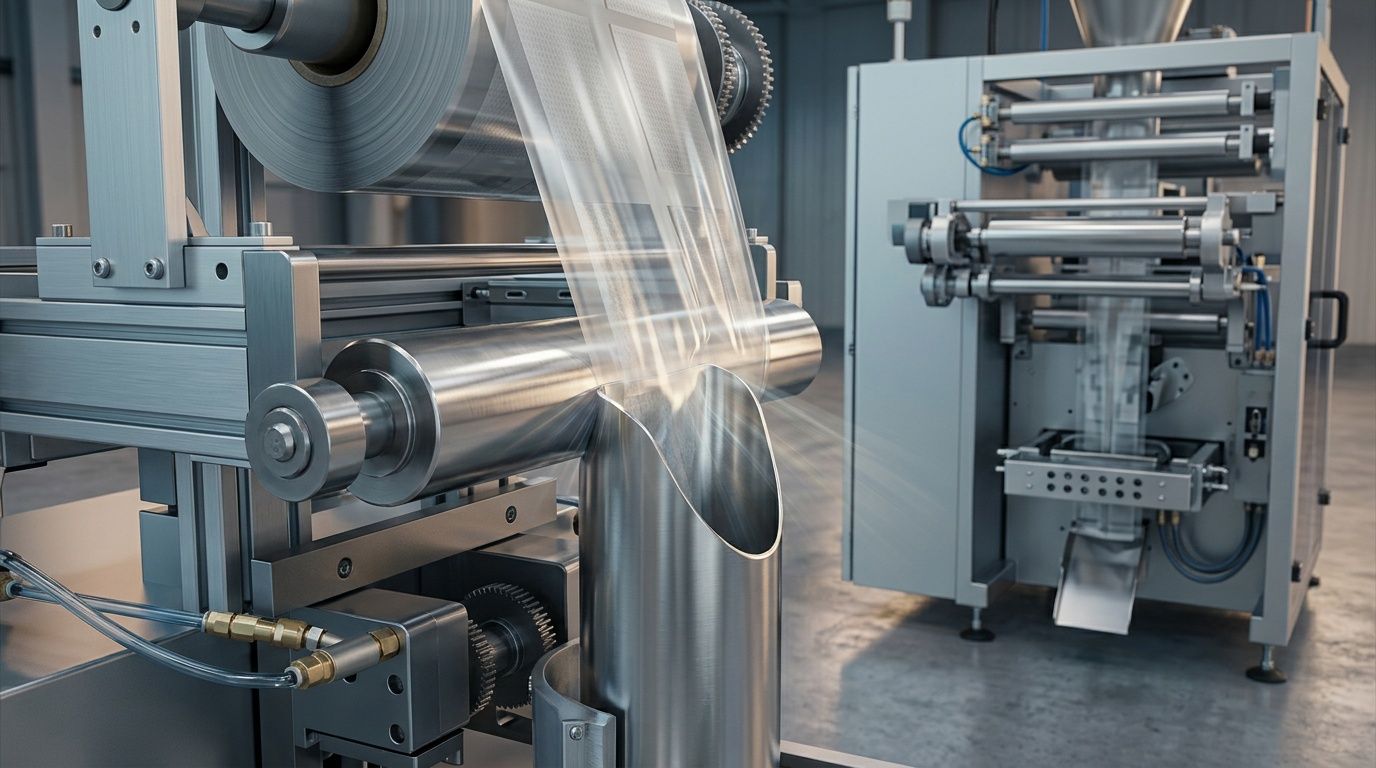
Vertical Form Fill Seal (VFFS) machines are the standard equipment of the flexible packaging industry, and their efficiency is directly proportional to the consistency of the coefficient of friction in packaging. The film travels a complex path, beginning at the unwind stand, passing through dancer rollers for tension control, and eventually being forced over a metallic forming collar that shapes the flat web into a tube.
Balancing Lubricity and Traction on the Forming Collar
The forming collar is the most friction-intensive point in the packaging process. As the film is pulled over the curved steel edge, it is subjected to high normal forces. If the COF is too high, the friction generates significant drag. This drag increases the tension in the film, which can lead to “necking”—a narrowing of the web that causes the vertical seal to drift out of position.
Using a high-speed automatic packaging film with an optimized COF ensures that the film glides over the forming collar with minimal resistance. This reduces the mechanical load on the pulling belts. However, there is a lower boundary for friction. If the film is too slippery (COF < 0.15), the pulling belts may lose traction. This results in slipping, where the belts move but the film does not, causing inconsistent bag lengths and registration errors.
The trade-off involves the “Inside/Outside” friction profile. Most VFFS films are engineered to have a lower COF on the outside (the side contacting the metal collar) and a different COF on the inside (the side contacting the product or the sealing jaws). This differentiation prevents the film from sticking to the forming tube while ensuring the product can slide into the bag without resistance.
Impact of Coefficient of Friction on Film Tension and Seal Alignment
Consistent friction is the prerequisite for seal alignment. In a VFFS system, the vertical seal is formed as the two edges of the film overlap. If the COF varies across the width of the web, or if there is a slip-stick event, one side of the film may be pulled harder than the other. This causes “skewing,” where the film twists as it enters the sealing area.
Skewing leads to wrinkling in the heat seal, which creates micro-channels that allow oxygen entry and moisture escape, reducing product shelf life. If the COF is too high, the heat-sealing jaws may drag the film during the sealing cycle, leading to “seal smear” or thinning of the polymer. This reduces the burst strength of the bag, making it susceptible to failure during pressure changes in transport.
To mitigate these risks, manufacturers employ differential COF strategies, where the sealant layer is formulated with specific anti-block agents to ensure it does not stick to itself during the high-pressure sealing phase, while the outer layer is optimized for machine contact.
Mitigating Friction-Induced Heat to Preserve Food Safety
A consequence of the coefficient of friction in packaging is the generation of heat. In high-speed packaging cycles, where films move at velocities exceeding 30 meters per minute, mechanical energy lost to friction is converted into thermal energy. This is governed by the principle Q = mu * N * d, where Q is the heat generated, mu is the friction coefficient, N is the normal force, and d is the distance traveled.
Thermal Degradation during Rapid Pillow Packing Cycles
In a rapid pillow packing cycle, the film is under constant tension as it slides over metal forming plates. In high-output environments, these plates can reach temperatures higher than the ambient air due to continuous friction. This localized temperature spike can affect the polymer’s molecular structure.
Most flexible packaging films rely on a specific crystalline structure for barrier properties. When friction-induced heat pushes the polymer toward its glass transition temperature (Tg), the polymer chains become more mobile. This can lead to an increase in the Oxygen Transmission Rate (OTR) and Water Vapor Transmission Rate (WVTR). For oxygen-sensitive products, even minor degradation in the barrier can lead to premature rancidity.
Using a VFFS roll stock film designed for sensitive snacks involves balancing the COF to minimize heat generation. Keeping friction low allows thermal energy to dissipate more effectively, maintaining the internal environment of the bag. This is critical for nitrogen-flushed (MAP) packaging, where film integrity prevents the protective atmosphere from escaping.
Impact on Heat-Sensitive Ingredients and Product Integrity
The heat generated by friction can also affect the product. Many modern foods contain heat-sensitive components such as chocolate coatings or probiotics. If the inner surface of the film heats up due to friction as the product is dropped into the bag, it can cause localized melting.
For chocolate-coated items, excessive friction on the VFFS line can cause the inner surface of the film to warm enough to cause scuffing or melting upon contact. This affects the aesthetic appeal and can lead to the product sticking to the inside of the bag. By maintaining a controlled coefficient of friction in packaging, manufacturers ensure that the drop zone remains cool, preserving the texture and quality of the food.
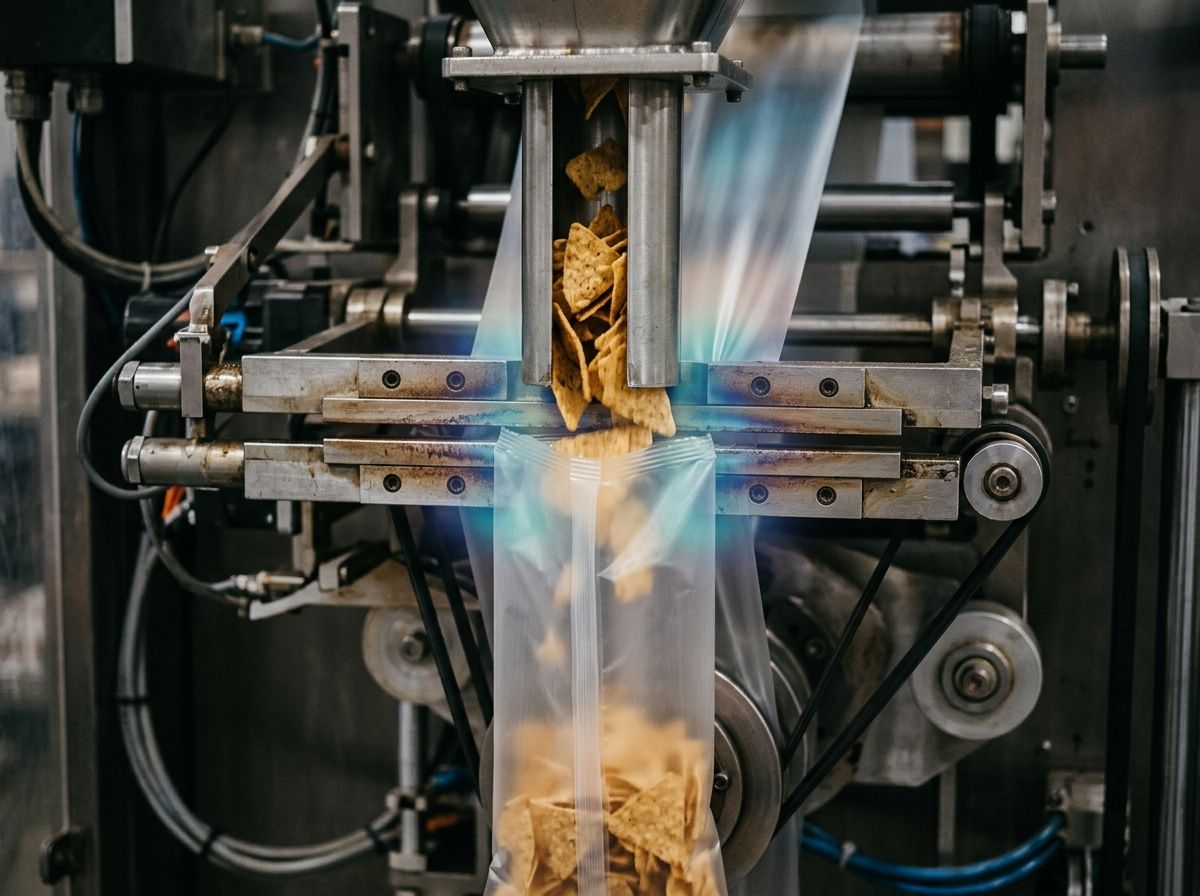
Controlling COF is a strategic tool in food safety management. Data indicates that friction-induced heat is a primary cause of latent spoilage, where the barrier is compromised briefly during high-speed packing.
Engineering Surface Morphology with Slip Additives
To achieve the desired coefficient of friction in packaging, surface morphology is manipulated using slip and anti-block additives. Without these additives, polymers like polyethylene (PE) and polypropylene (PP) would be naturally tacky, sticking to machinery and preventing industrial use.
Mechanisms of Migratory vs. Non-Migratory Slip Agents
The common method for reducing COF is the use of migratory slip additives, such as Erucamide or Oleamide. These fatty acid amides are blended into the polymer resin and migrate to the surface over time to form a lubricating layer.
However, migratory additives are time-dependent. The COF of a freshly extruded film will be higher than that of a film stored for 48 hours. This process is also temperature-dependent; in hot environments, migration can be too aggressive, leading to an oily surface that interferes with ink adhesion or heat sealing—a phenomenon known as over-blooming.
Engineers also use non-migratory slip agents, such as cross-linked silicone or specialized inorganic anti-block particles. These additives are anchored within the polymer matrix and provide a consistent COF by creating a microscopic surface roughness (Ra). This reduces the contact area between surfaces, lowering friction. Non-migratory agents maintain a stable COF regardless of storage time or temperature fluctuations.
Multi-layer Co-extrusion for Targeted Friction Profiles
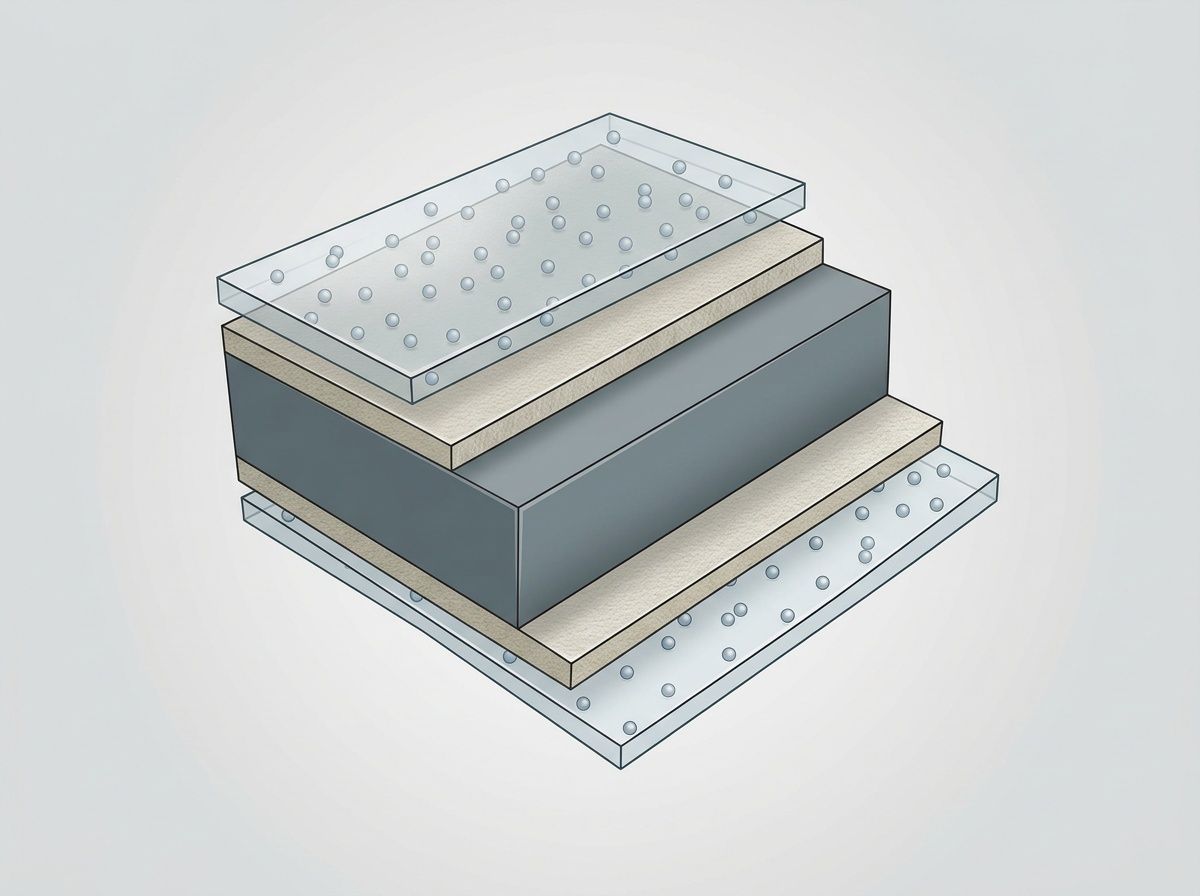
Modern packaging films are typically 3 to 9-layer structures produced via co-extrusion. This allows for targeted COF on specific surfaces. In a typical structure:
- Layer A (Outside): High-slip additives to glide over machine parts.
- Layer B (Core): Engineered for mechanical strength and barrier properties.
- Layer A (Inside): Optimized for product flow or heat-sealing requirements.
This spatial control allows for engineered films that behave differently depending on the contact side. It also allows for functional barriers in core layers to prevent slip additives from migrating into the food, ensuring compliance with food contact regulations.
Logistical Stability and the Trade-off of Easy Open Packaging
While a low COF is necessary for production efficiency, it can be a liability during logistics and for the consumer. This friction paradox must be managed through precise engineering.
Managing Stacking Stability during Palletization
The primary failure mode associated with low COF in logistics is pallet slump. When bags are stacked, they rely on friction for stability. If the film is too slippery, vibration during transport can cause the bags to slide.
To prevent this, some functional flexible packaging solutions utilize anti-skid coatings or high-friction zones. These are often applied over the printed area of the bag. The goal is to maintain a low-friction interior and exterior for machine performance while providing grip where bags contact each other on the pallet. Increasing the COF through surface texturing allows for more stable stacks, optimizing warehouse space and reducing the need for secondary stretch wrap.
The Friction-Seal Strength Paradox in Easy Open Design
For the consumer, the coefficient of friction in packaging influences grip. Packaging failure is often evident when consumers attempt to open a container with greasy or wet fingers, causing fingers to slide off the material.
Easy-open features, such as laser scoring, work in tandem with surface friction. If a film is too slippery, the consumer cannot exert enough force to initiate the tear. Conversely, a matte finish with an increased COF provides the necessary grip for controlled opening. Engineers must find a middle ground where high-friction grip areas are applied selectively, leaving the rest of the film with a low COF for high-speed processing.
Technical Criteria for Evaluating COF in Packaging Procurement
Specifying the coefficient of friction in packaging requires an understanding of the environmental and mechanical variables that cause values to drift.
Establishing COF Specification Tolerances
Specifying COF as a fixed value is less effective than defining a range, such as 0.25 +/- 0.05. This tolerance accounts for variance in the extrusion process and slip agent migration.
Procurement must also specify the surfaces being tested. A Film-to-Film (F-F) test measures behavior when bags are stacked, while a Film-to-Metal (F-M) test measures behavior on the production line.
| Procurement Checklist for COF | Technical Requirement | Rationale |
|---|---|---|
| Test Standard | ASTM D1894 | Ensures global comparability of data |
| Surface Type | Film-to-Steel (S) & Film-to-Film (F) | Evaluates machine runnability and stacking |
| Timing | 48 hours post-extrusion | Allows migratory additives to stabilize |
| Temperature | 23C and 35C | Tests performance in various plant climates |
| Tolerance | +/- 0.05 | Accounts for manufacturing variance |
Impact of Storage Conditions on Friction Performance
Blocking of film rolls is a result of COF mismanagement, occurring when layers fuse under winding tension. This is exacerbated by high-temperature storage or insufficient anti-block additives. To manage this, procurement should enforce a First-In, First-Out (FIFO) inventory system. Consistent storage below 30 degrees Celsius is necessary to prevent over-migration and maintain the engineered COF profile.
The coefficient of friction in packaging is a determining factor in successful production runs. By analyzing the physics of heat generation, surface morphology, and logistical stability, technical buyers can ensure film specifications align with supply chain efficiency.
Conclusion
Effective management of the coefficient of friction requires a precise balance between static and kinetic forces to prevent mechanical chatter and film deformation. ASTM D1894 testing ensures that surface morphology maintains a stable friction profile across high-speed VFFS operations. These technical parameters directly influence machine throughput, seal integrity, and pallet stability. Properly calibrated COF ranges minimize friction-induced heat, protecting both the polymer barrier properties and the thermal sensitivity of the product during rapid production cycles. For analysis of specific barrier requirements for a product line, reach out to the engineering team.


0 Comments