

Key Takeaways
- Plastic-Plastic Laminates Extend Distribution Radii: High-barrier plastic-plastic films deliver critical moisture and aroma retention capable of maintaining a mold-free duration of up to one week under demonstrated sample testing conditions, making them ideal for sliced sandwich breads.
- Paper-Plastic Composites Improve Artisan Presentation: Windowed paper-plastic structures combine sustainable retail appeal with clear visual presentation, delivering an effective packaging format for artisan and European loaves with shorter retail product life cycles.
- Substrate Selection Aligns With Distribution Timelines: Commercial bakery procurement teams must evaluate barrier performance against specific shelf life requirements, pairing high-barrier films for extended logistics with windowed composite bags for premium, rapid-turnover retail display.
Introduction
Premature staling and mold growth represent two of the most direct threats to commercial bakery margins, routinely turning logistics into an expensive race against product spoilage. While expanding distribution networks require dependable moisture retention and aroma containment, retail merchandising increasingly demands rustic, eco-conscious presentation. For procurement teams, failing to align barrier properties with a product’s actual turnover velocity leads either to increased retail shrink or unnecessary material costs.
Selecting the right bread packaging solutions requires evaluating the structural differences between multi-layer polymer films and composite substrates. High barrier bread bags engineered from plastic laminates effectively limit moisture migration and oxygen transmission, supporting mold-free duration across extended logistics routes under demonstrated sample conditions. In contrast, paper plastic bread bags equipped with transparent display windows deliver the tactile and visual authenticity expected for artisan loaves, though within tighter retail timelines.
Managing these material trade-offs is critical to safeguarding product quality while satisfying retailer expectations. This analysis breaks down the functional performance of primary bakery substrates, seal mechanics, and optical properties, giving packaging engineers and commercial buyers the technical framework needed to match specific product lines with their appropriate packaging structures.
Technical Mechanics of Bakery Spoilage: Moisture Migration, Retrogradation, and Aerobic Mold Growth
The industrial preservation of baked goods requires a precise understanding of the biophysical and biochemical degradation pathways that occur immediately following the post-bake cooling phase. Commercial bakery products represent dynamic, non-equilibrium thermodynamic systems. Within an individual loaf, significant gradients in water activity (aw), moisture concentration, and structural density exist between the high-moisture crumb matrix and the dehydrated outer crust. When enclosed within a packaging system, these internal gradients immediately interact with the package headspace and the external ambient atmosphere. If the packaging substrate is improperly engineered, this thermodynamic imbalance leads directly to rapid textural staling, aromatic degradation, and microbial proliferation. Packaging engineers and procurement teams must therefore evaluate barrier materials not merely as passive protective coverings, but as calibrated atmospheric containment systems designed to control mass transfer rates across complex logistical lifecycles.
Moisture Loss and Starch Retrogradation Dynamics
At the moment a loaf completes its baking cycle and reaches ambient equilibrium, the crumb typically exhibits a water activity level ranging between 0.94 aw and 0.97 aw, representing an internal moisture content often exceeding 40% by weight. In stark contrast, the exterior crust is formed through rapid thermal dehydration and Maillard browning reactions, leaving it with a water activity generally below 0.50 aw. This steep chemical potential gradient drives the spontaneous, continuous diffusion of water molecules from the core crumb toward the peripheral crust and into the surrounding package headspace.
This moisture migration is inextricably linked to starch retrogradation, the primary biophysical driver of crumb firming and perceived staling. During baking, the native crystalline structures of wheat starch granules undergo gelatinization, absorbing water and swelling as amylose and amylopectin chains dissociate into an amorphous state. Upon cooling, these disordered polymer chains begin to re-align and re-crystallize into structured crystalline matrices. Amylose recrystallization occurs rapidly within hours of baking, while amylopectin recrystallization proceeds slowly over multiple days.
Crucially, the rate of amylopectin retrogradation is highly dependent on local moisture content and environmental relative humidity. When a packaging substrate exhibits an excessively high Water Vapor Transmission Rate (WVTR), moisture continuously escapes the system. This accelerates the dehydration of the gluten-starch matrix, forcing moisture out of the amorphous crumb regions and speeding up cross-linking between starch polymers and gluten proteins, which results in a brittle, dry texture. Conversely, if a packaging material completely traps all evaporating moisture without thermal stability, the migrating core water accumulates in the crust layer. This plastifies the crisp crystalline crust, transforming it into a soft, leathery, and unpalatable boundary.
Controlling WVTR is therefore a critical engineering trade-off: the substrate must retain sufficient moisture within the system to maintain crumb elasticity and prevent weight loss penalties, while managing headspace humidity to prevent localized condensation.

Oxygen Permeation and Mold Growth Acceleration
While starch retrogradation alters the physical rheology of bread, aerobic mold growth represents the absolute endpoint of microbiological shelf life for ambient bakery products. The primary fungal vectors responsible for commercial bread spoilage include xerophilic and mesophilic molds such as Penicillium commune, Penicillium roqueforti, Aspergillus niger, and Rhizopus stolonifer. The dormant airborne spores of these species inevitably contaminate the loaf surface during slicing, conveying, and packaging operations that occur post-baking.
The germination of fungal conidiospores and the subsequent proliferation of vegetative hyphae require three fundamental ambient conditions: available free water (an aw threshold typically above 0.75 for Penicillium species), moderate ambient temperatures, and molecular oxygen (O2) within the packaging headspace. In standard atmospheric packaging, the initial headspace contains approximately 20.9% O2. As mold spores metabolize available simple sugars and starches on the bread surface, they consume oxygen and generate carbon dioxide (CO2) and metabolic water, creating a micro-environment that further accelerates fungal colony expansion.
The Oxygen Transmission Rate (OTR) of the packaging substrate dictates the replenishment kinetics of oxygen from the external atmosphere into the sealed package headspace. In flexible films with poor gas barrier performance, oxygen rapidly diffuses inward, maintaining headspace oxygen concentrations above the 0.5% to 1.0% critical threshold required to sustain fungal respiration.
Furthermore, temperature fluctuations during warehousing and long-haul transportation induce cyclical dew point shifts within the package. When warm, moisture-laden air inside the pouch contacts a packaging wall cooled by external logistics environments, phase-change condensation occurs. This creates localized micro-droplets of liquid water on the film’s inner surface and the bread crust. These liquid water films spike the local water activity to 1.0 aw, lowering the activation energy for fungal spore germination and causing rapid, visible mold colony formation long before the product reaches its intended retail shelf life limit.
Alongside fungal growth, continuous oxygen permeation triggers the oxidative degradation of volatile organic compounds (VOCs)—specifically key aldehydes, esters, and lipid-derived flavor constituents that define fresh bread aroma. Oxygen permeation also promotes the rancidification of unsaturated fats present in enriched dough formulations, such as brioche, sandwich loaves, and burger buns. Consequently, an optimized gas barrier is necessary not only for microbial inhibition but also for safeguarding the volatile sensory profile of the crumb throughout commercial handling.
Evaluating Core Substrates in Industrial Bread Packaging Solutions
Industrial bakery operations must select flexible packaging substrates that balance gas and moisture barrier properties, mechanical toughness on high-speed converting machinery, visual retail appeal, and unit economics. Today, two major substrate families dominate commercial lines: multi-layer plastic-plastic co-extrusions or laminates, and hybrid paper-plastic composites. Selecting the appropriate substrate requires an analysis of polymer morphology, mechanical barrier layers, and web conversion performance within the broader landscape of flexible food packaging configurations.
Multilayer Plastic Laminates: Engineering Moisture and Aroma Barriers
Multi-layer polymeric laminates are the benchmark for high-barrier, long-distribution bakery packaging. These structures are engineered by combining distinct polymer plies, each selected for specific physical, chemical, and mechanical properties, joined via adhesive lamination, extrusion lamination, or multi-layer blown/cast co-extrusion.
A standard high-performance specification for commercial sliced loaves involves oriented polypropylene (BOPP) or polyethylene terephthalate (PET) outer webs reverse-printed and laminated to low-density polyethylene (LDPE), linear low-density polyethylene (LLDPE), or cast polypropylene (CPP) inner sealant layers. The outer BOPP or PET ply provides high tensile strength, thermal resistance during seal jaw contact, dimensional stability, and optical gloss. The core and sealant layers, composed of non-polar polyolefins, provide ductility, high puncture resistance against rigid bread crusts, and the continuous hydrophobic barrier needed to minimize water vapor transmission.
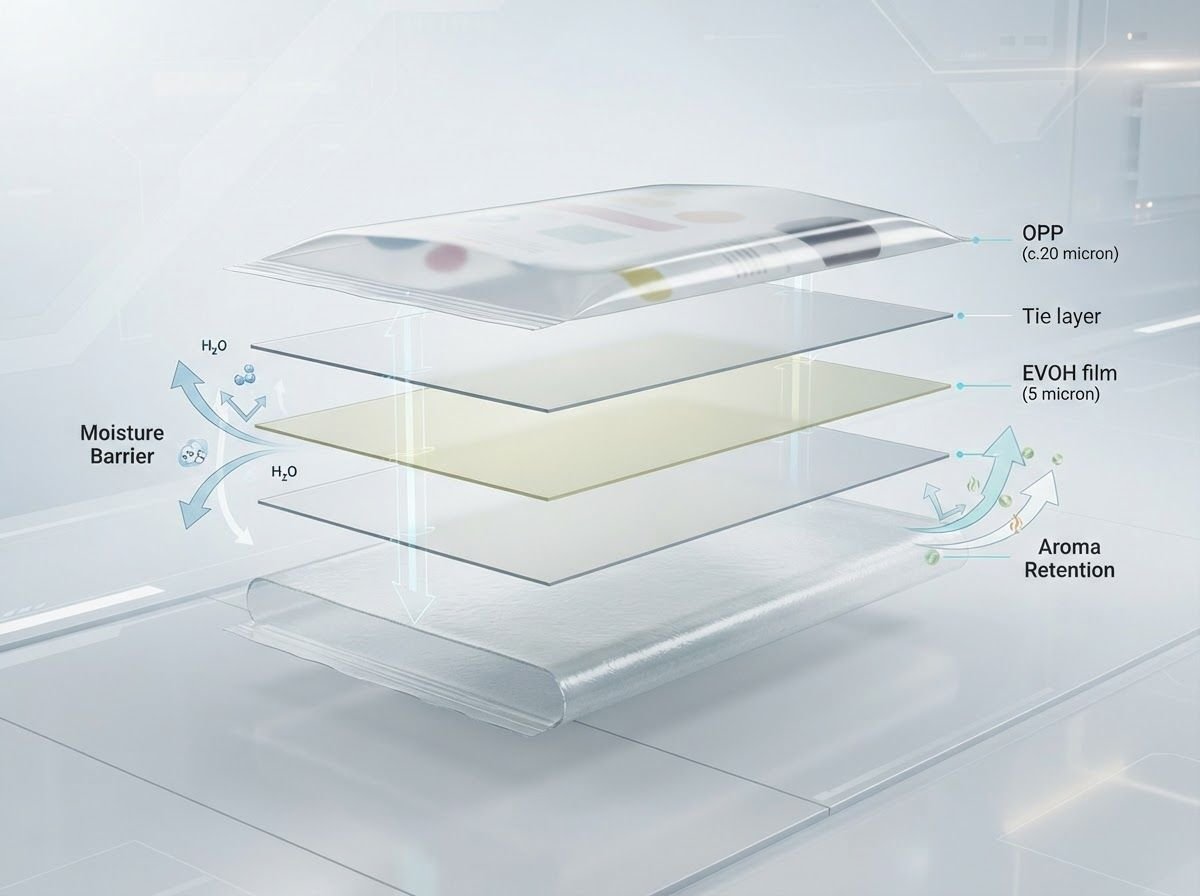
For operations requiring extended distribution windows and aroma preservation, advanced barriers incorporate ultra-thin coatings of ethylene vinyl alcohol (EVOH), polyvinylidene chloride (PVDC), or inorganic vacuum-deposited aluminum oxides (AlOx). EVOH exhibits exceptional gas barrier performance against O2, N2, and CO2 under dry conditions, preventing both oxygen ingress and the volatile escape of lipid-soluble aroma compounds. However, because the hydroxyl groups in EVOH are hydrophilic and plasticized by water molecules, EVOH layers must be encapsulated between hydrophobic PE or PP tie-layers to maintain gas barrier integrity in high-humidity bread headspaces.
The molecular structure of polyolefin sealant webs directly governs seal hermeticity. LLDPE manufactured via metallocene catalysis (mLLDPE) provides a narrow molecular weight distribution, resulting in low Seal Initiation Temperatures (SIT), broad hot tack sealing windows, and outstanding flex-crack resistance. Flex-crack resistance is critical in commercial bakery logistics, where repeated cyclic bending and vibration during transit can generate sub-micron fissures (pinholes) in brittle barrier layers, compromising the internal atmospheric barrier.
For high-volume retail displays requiring structural stability, high-clarity polyolefin laminates are frequently converted into specialized formats, such as a moisture-proof windowed bread pouch, which pairs multi-layer moisture barrier web stock with flat-bottom pouch geometry for upright merchandising.
Paper-Plastic Composites: Merging Structural Rigidity with Windowed Visibility
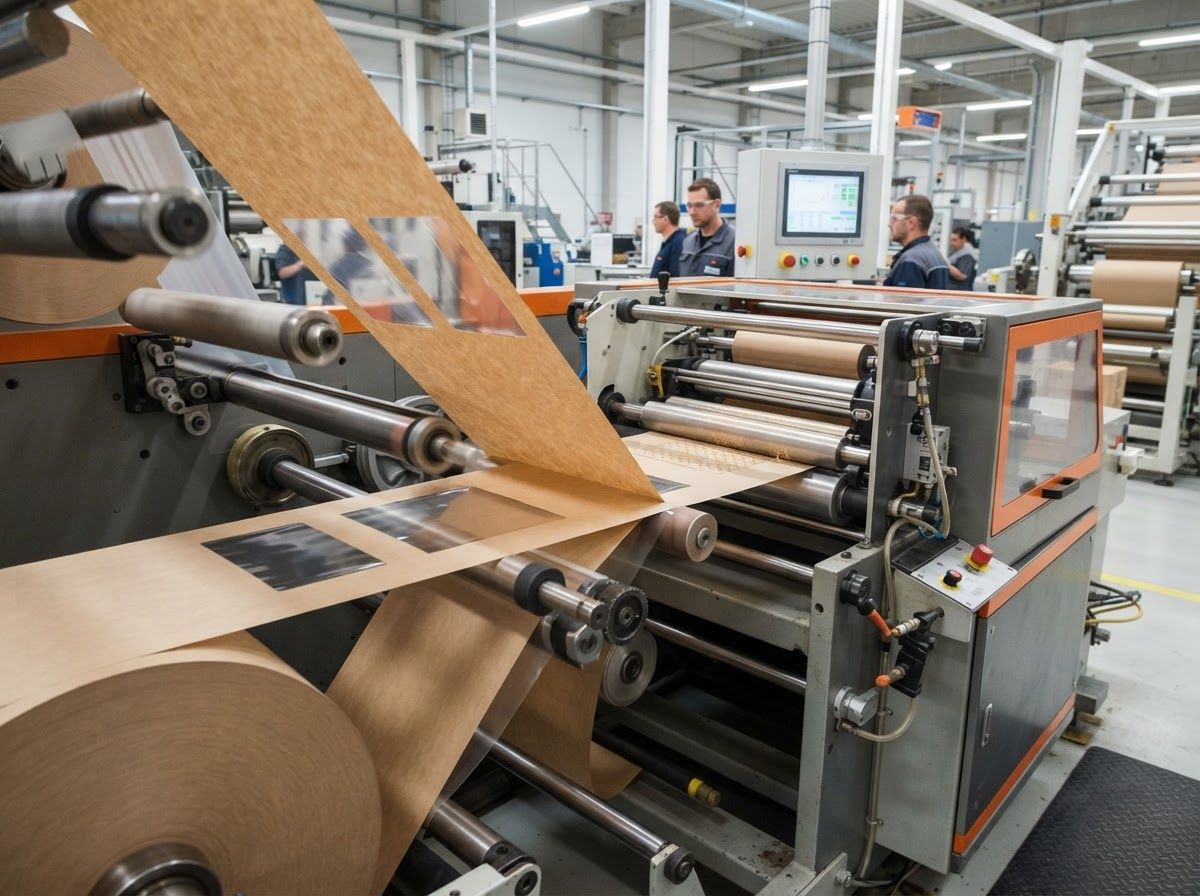
Paper-plastic composite substrates address a different set of merchandising requirements, pairing an authentic artisanal texture with functional product protection. These materials typically consist of machine-glazed (MG) or unbleached natural kraft paper (ranging from 35 gsm to 70 gsm) laminated to a polymeric inner film or coated with an extrusion-applied polyolefin liner (typically 15 to 30 microns of PE or CPP).
The outer cellulose matrix provides natural mechanical stiffness, high tear resistance, puncture dissipation, and dead-fold characteristics. Dead-fold is the ability of a material to hold a crease or mechanical fold, which is ideal for traditional tin-tie or folded bag closures. The paper substrate also protects sensitive baked goods from direct photo-oxidation caused by retail fluorescent and LED lighting, which can catalyze lipid peroxidation and crumb discoloration in high-fat formulations.
However, cellulose fibers are naturally porous and hydrophilic, freely absorbing and desorbing moisture based on ambient relative humidity. Without an inner polymer layer, a plain paper bag allows uninhibited moisture evaporation, rapidly dehydrating the bread crumb within 24 to 48 hours. To mitigate this, paper-plastic composites bond a continuous or micro-perforated polymeric inner liner to the kraft paper backing. This inner film prevents grease migration (oil staining from butter or shortening) and provides a controllable moisture barrier.
To allow consumers to inspect the enclosed bread without compromising the bag’s structural integrity, paper-plastic composites often incorporate a continuous, transparent viewing window. This window is created by precision die-cutting the outer paper layer prior to web lamination, leaving a clear strip of transparent BOPP, PET, or PLA film exposed. The structural challenge in manufacturing windowed paper-plastic composites lies in managing the differential elasticity and thermal expansion coefficients between the rigid paper web and the flexible plastic film during high-speed adhesive lamination. Any tension mismatch across the converting line leads to web curling, substrate puckering, and uneven seal faces, which can cause micro-channel leaks during downstream heat sealing operations.
Barrier Performance and Shelf Life Preservation across Distribution Radii
The choice between high-barrier polymer films and breathable paper-plastic structures is fundamentally determined by the bread’s formulation, crust type, and commercial distribution radius. Packaging engineers must evaluate the target shelf life window against the product’s loss-of-quality timeline, ensuring the barrier system prevents early staling without inducing unwanted secondary degradation.
Extended Logistics: Optimizing Barrier Properties for Sliced Sandwich Loaves
Industrial pan breads—including standard white, whole wheat, multi-grain sandwich loaves, and enriched sliced buns—are characterized by high initial crumb moisture (38% to 44%), fine cell structure, soft crusts, and low tolerance for moisture loss. These products are manufactured in centralized industrial bakeries and distributed across regional hubs and national retail networks, requiring extended logistics windows.
For these long-haul, multi-day distribution chains, the packaging must minimize WVTR to prevent slice desiccation and weight loss, while maintaining a reliable oxygen barrier to suppress fungal germination. When enclosed within a high-barrier multi-layer polyolefin structure with hermetic closure integrity, the packaging isolates the product from ambient relative humidity swings. Under demonstrated sample testing conditions, high-barrier polymeric configurations have achieved up to a 1-week mold-free duration without requiring synthetic chemical preservative overdosing.
In these extended logistics applications, the high-barrier substrate keeps moisture locked inside the soft crumb, preserving the subjective perception of freshness throughout the multi-stage transit timeline. The structural film also prevents the ingress of volatile environmental odors (e.g., diesel fumes, warehouse aromatics) that can otherwise permeate low-barrier films and contaminate the delicate, fat-based flavor matrices of commercial sandwich breads.
Short-Cycle Retail: Micro-Perforations and Breathability for Crust Retention in Artisan Loaves
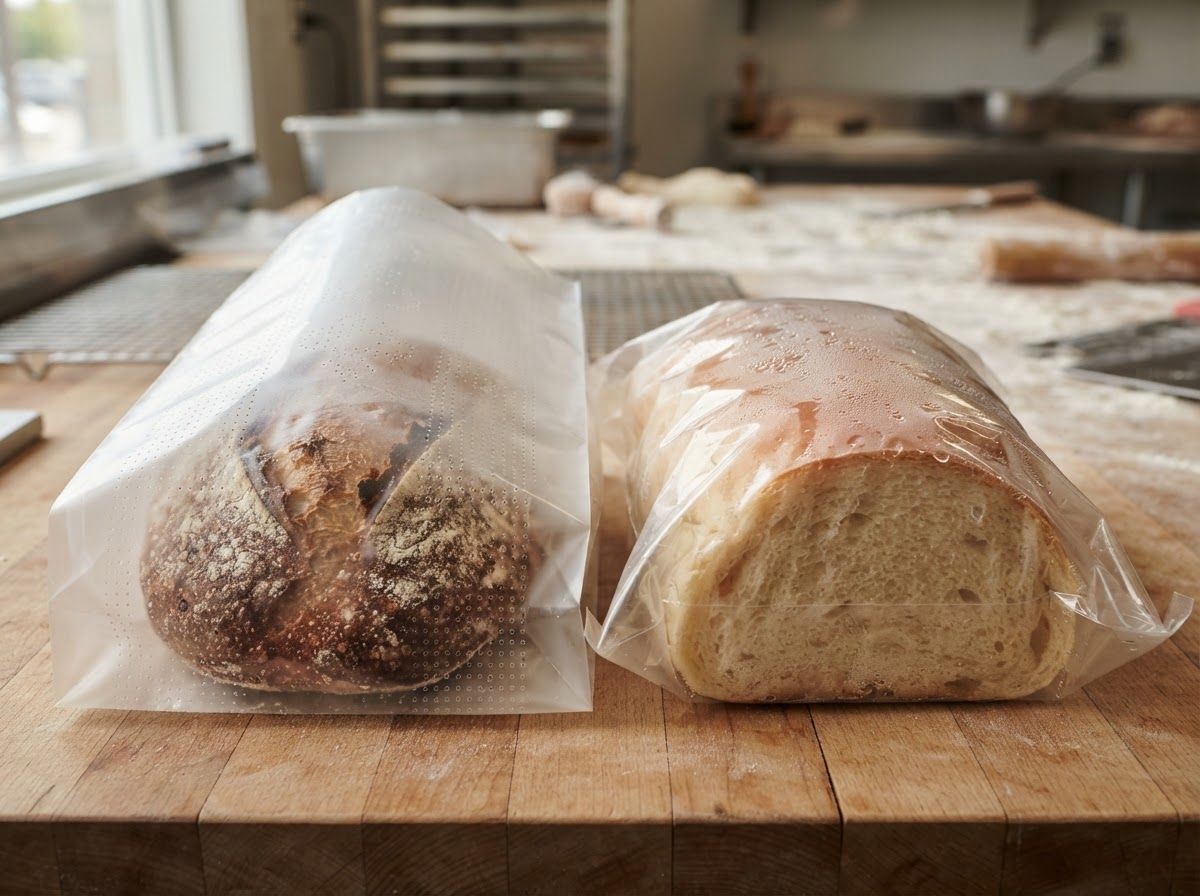
In contrast to industrial sandwich loaves, lean-dough European artisan breads, baguettes, ciabattas, and sourdoughs depend on a thick, highly crisp, retrograded exterior crust that contrasts with an open, aerated crumb. In these rustic bread formulations, trapping migrating moisture within a high-barrier hermetic package is detrimental to product quality.
When an artisan loaf with a crisp crust is sealed inside an impermeable high-barrier plastic pouch, water vapor diffusing from the moist crumb becomes trapped in the small headspace. The relative humidity within the pouch rapidly climbs toward equilibrium (frequently exceeding 90% RH). The dry, glassy crust absorbs this trapped water vapor, causing the starch-protein matrix to undergo a glass-to-rubber phase transition. Within a few hours, the brittle, crunchy crust turns tough, leathery, and elastic.
To preserve the sensory quality of artisan breads over short 24- to 72-hour retail turnover cycles, the packaging material must be engineered with controlled breathability. This is achieved using porous paper substrates or micro-perforated plastic films. Engineered micro-perforations (mechanically or laser-drilled holes ranging from 50 to 150 microns in diameter) allow excess moisture vapor to vent continuously into the ambient air, preventing crust softening.
For short-cycle artisanal retail, formats such as a windowed kraft bakery bag provide the breathability needed to preserve crust texture while allowing visual inspection through a clear window. The structural trade-off of this approach is a shorter microbiological shelf life: because the package is open to ambient moisture loss and oxygen exchange, the bread will naturally stale and harden within two to three days, making it suitable primarily for local, daily delivery models.
| Packaging Substrate Structure | Moisture Barrier (WVTR Level) | Oxygen Barrier (OTR Level) | Primary Bakery Target | Target Logistics Horizon | Structural Trade-Off |
|---|---|---|---|---|---|
| Multi-Layer BOPP / Metallocene PE | High Barrier (Extremely Low WVTR) | Moderate to High Barrier | Sliced Sandwich Loaves, Enriched Buns | Extended Regional & Long-Haul Logistics | Softens crisp crusts; requires anti-mold strategy if condensation occurs. |
| PET / EVOH / Polyolefin Co-Ex | Maximum Barrier (Near-Zero WVTR) | Maximum Barrier (Ultra-Low OTR) | Par-Baked Frozen Loaves, Modified Atmosphere (MAP) Loaves | Extended Logistics & Ambient Warehousing | Higher material cost; requires hermetic heat seals to deliver barrier value. |
| Windowed Kraft Paper / Solid PE Liner | Moderate Barrier | Moderate to Low Barrier | European Hearth Breads, Batards, Brioche | Regional Multi-Day Retail (3–5 Days) | Multi-material construction introduces recycling stream separation challenges. |
| Micro-Perforated Cast PP (CPP) | Breathable (Controlled Moisture Release) | Unsealed / Ambient Exchange | Crusty Baguettes, Hard Rolls, Artisan Sourdough | Local Daily Delivery / Rapid Turn (24–48 Hours) | Rapid core staling and moisture loss; strictly limited to short-cycle retail. |
| Mono-Material Oriented PE (MDO-PE / PE) | High Barrier (Optimized WVTR) | Moderate Barrier | Standard Sliced Loaves, Commercial Toast | Regional Logistics Hubs (5–7 Days) | Narrower heat-sealing process window compared to traditional PET/PE laminates. |
The comparative data summarized in Table 1 illustrates how substrate selection is fundamentally governed by the balance between moisture retention and product shelf life dynamics. Selecting an ultra-high barrier substrate for lean, crusty bread causes product failure through crust degradation just as quickly as selecting an unlined, breathable paper wrap causes failure in industrial sliced bread through rapid crumb desiccation. Packaging engineers must carefully balance the packaging material’s barrier properties against the product’s moisture loss profile and expected retail turnover speed.
Structural Formats and Automated Packaging Line Compatibility
Packaging materials must perform reliably on automated packaging lines. Converting rollstock into finished, sealed packages at industrial speeds requires predictable mechanical properties, thermal stability, and consistent surface friction. Mismatches between substrate properties and packaging machine kinematics can lead to frequent web jams, inconsistent seals, high scrap rates, and compromised package integrity.
High-Speed Horizontal Flow Wrap and Wicketed Bag Automation
The two most prevalent automation methods in commercial bakery packaging are Horizontal Form-Fill-Seal (HFFS / Flow Wrapping) continuous lines and automated Wicketed Bag loading systems. Each platform places distinct mechanical demands on flexible packaging substrates.
On high-speed HFFS lines, continuous rolls of film are pulled over forming collars, folded around the product, sealed longitudinally (fin or lap seal), and cross-cut and sealed with heated rotary jaws at speeds often exceeding 80 to 120 packages per minute. Substrate performance on HFFS equipment is driven by several key factors:
- Coefficient of Friction (COF): The kinetic and static COF of the film (both film-to-film and film-to-metal) must be held within tightly controlled operating windows, typically between 0.20 and 0.30. An excessively high COF causes web drag, film stretching, and visual distortion over the forming collar, while an excessively low COF causes web wandering, improper tracking, and misaligned longitudinal fin seals.
- Tensile Modulus and Elongation: Multi-layer oriented films (e.g., BOPP, PET) exhibit high tensile modulus and minimal elongation under machine-direction web tension, ensuring accurate print registration and smooth cutting. In contrast, unoriented high-barrier polyethylene films can stretch under high tension, causing pitch drift across optical registration sensors.
- Heat Seal Initiation Temperature (SIT) and Hot Tack: Sealant layers must initiate bonding at the lowest possible temperature while maintaining high “hot tack”—the mechanical strength of the molten seal immediately after the sealing jaws open. High hot tack prevents the sealed ends from popping open while the package is propelled onto downstream discharge conveyors.
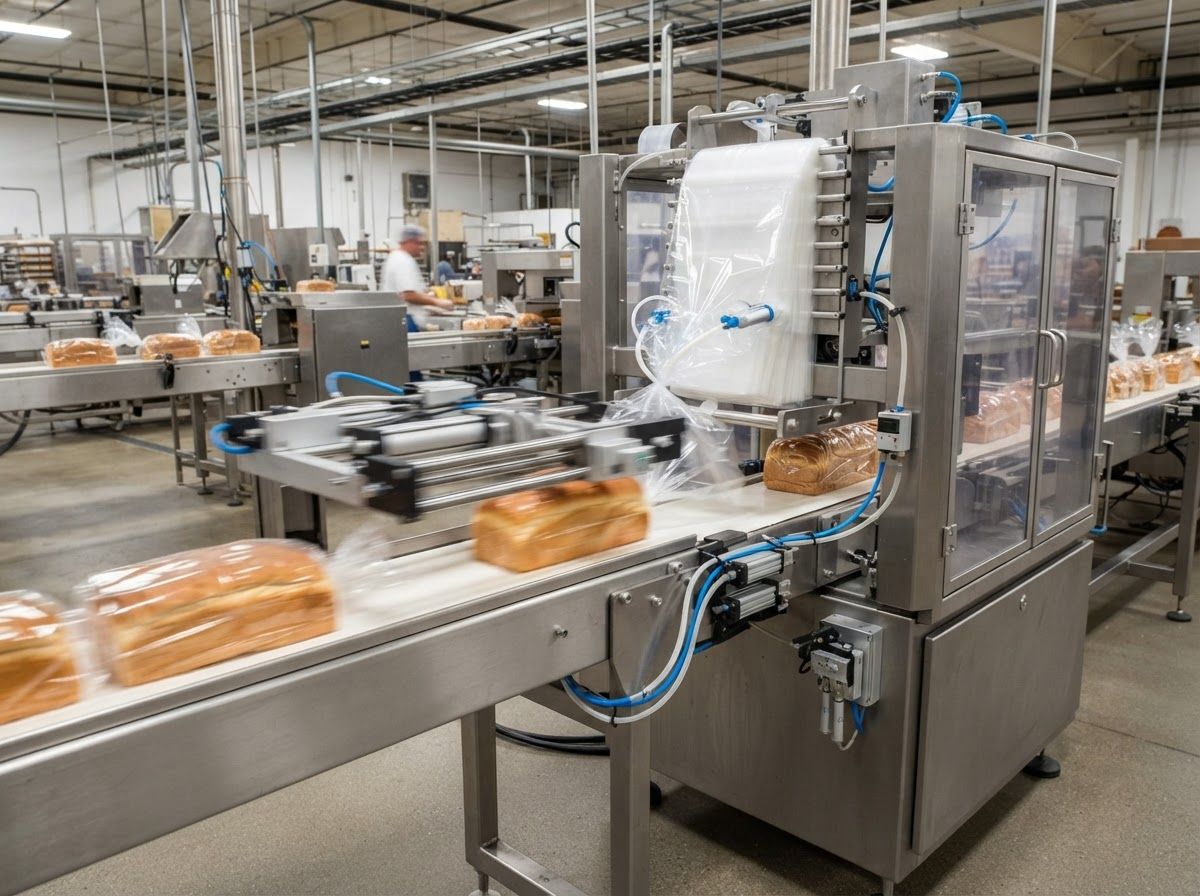
For high-volume sliced pan breads, automated wicketed bagging remains a common industry standard. In this process, pre-made bags stacked on wire wickets are inflated with targeted, high-velocity air jets. Mechanical reciprocating arms then enter the inflated bag, expand, pull the sliced loaf inside, and transfer the bag to an automated closure station.
Machinability in wicketed bagging lines depends on film opening behavior, anti-static properties, and flexural stiffness:
- Anti-Static Formulation: High-speed handling of pure polymeric bags generates significant triboelectric static charges. Without internal slip and anti-static additives, static cling prevents the air jet from opening the bag cleanly, leading to missed insertions and automated line jams.
- Paper vs. Polymer Stiffness: Paper-plastic composite bags offer superior column stiffness, which helps them hold an open shape during mechanical loaf insertion. However, paper has virtually zero elasticity. If a loaf encounters mechanical resistance during insertion, paper composites will tear catastrophically along the gusset seams, whereas multi-layer polyolefin bags can stretch elastically to absorb insertion shock.
Closure Integrity: Hermetic Heat Seals, Resealable Zippers, and Mechanical Ties
A packaging film’s barrier properties are only as effective as the integrity of its final package seal. Spoilage gases and moisture will readily bypass a high-barrier film through sub-micron leaks in the seal area, a phenomenon known as micro-channel leakage.
Industrial bread packaging uses several different closure mechanisms, each offering distinct hermetic and operational characteristics:
- Continuous Thermal Hermetic Heat Seals: Found on HFFS flow-wrapped packages, continuous fin and end seals provide complete hermetic isolation when properly optimized. The critical risk zone for heat seals occurs at gusset intersections and multi-layer film overlaps, where the film thickness abruptly transitions from two layers to four layers. Sealing jaw profiles must provide sufficient dwell time, compliant backing materials, and calibrated pressure to melt and flow the sealant resin into these micro-crevices without burning through adjacent thin-film sections.
- Mechanical Plastic Clips (Kwik Lok) and Twist Ties: Widely used on sliced sandwich bread wicketed bags, mechanical clips and wire twist ties provide an economical, easily reclosable format. However, mechanical ties are non-hermetic closures. They gather the gathered neck of the bag into a crimped bundle, leaving microscopic air channels that allow continuous gas exchange. This non-hermetic seal limits the loaf’s mold-free duration to local and regional supply chains, unless combined with internal anti-microbial treatments or clean-room bagging environments.
- Tin-Tie Mechanical Fold Closures: Commonly applied to paper and paper-plastic composite bags, tin-ties consist of a paper- or plastic-encased metal wire strip adhered across the top of the bag. The top is folded downward multiple times and secured by bending the wire tabs inward. While providing a premium retail appearance and easy reclosure, tin-tie closures are non-hermetic, making them best suited for short-cycle retail goods where structural reclosure is valued over long-term gas barrier isolation.
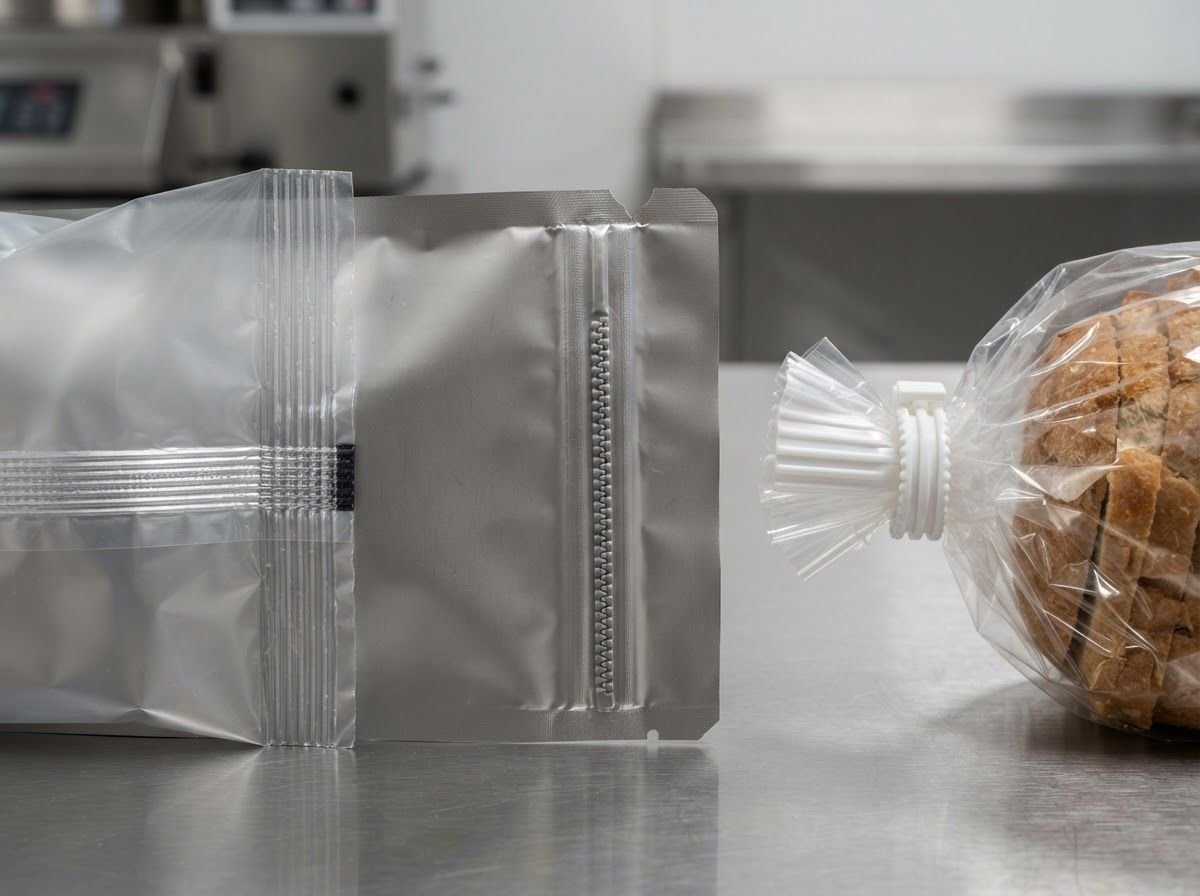
- Integrated Press-to-Close Resealable Zippers: Applied to premium pouches, integrated polyethylene zippers provide consumer reclosability while preserving freshness after opening. To maintain a modified atmosphere prior to retail sale, the zipper profile must be positioned behind a solid, hermetically sealed tear notch strip that the consumer removes before initial use.
Sustainable Retail Appeal and Material Trade-Offs in Bread Packaging Solutions
Modern packaging engineers face mounting pressure to balance shelf life performance with environmental sustainability initiatives, including Extended Producer Responsibility (EPR) legislation, plastic packaging taxation, and corporate commitments to recyclability and carbon footprint reduction. Managing these requirements requires an objective technical evaluation of the trade-offs between packaging sustainability, product protection, and food waste prevention.
Recyclability Challenges in Composite vs. Mono-Material Flexible Films
The flexible packaging industry is actively shifting toward circular economy frameworks. However, traditional high-barrier films and paper-plastic composites face distinct challenges within municipal recycling infrastructures:
Multi-material laminates combining chemically dissimilar polymers (such as PET/PE, BOPP/PE, or foil-laminated films) cannot be mechanically recycled together. Because PET, PP, and PE have incompatible melting temperatures and immiscible polymer chemistry, reprocessing them together results in a brittle, low-value plastic regrind with poor tensile properties.
Similarly, while paper-plastic composites are often perceived by consumers as more environmentally friendly, they present complex separation challenges at end-of-life:
- Industrial Repulping Limitations: Standard municipal paper recycling mills recover cellulose fibers by slushing paper products in an aqueous hydropulper. When paper is tightly laminated to a continuous plastic film or viewing window with water-insoluble polyurethane adhesives, the polymer liner can clog screening equipment and impede fiber recovery.
- Separation Requirements: Unless the consumer manually separates the plastic window from the paper pouch, the entire composite package is often rejected by optical sorting equipment at Materials Recovery Facilities (MRFs) and diverted to incineration or landfill.
To solve this issue, the packaging sector has accelerated the development of mono-material, recycle-ready flexible barrier structures. These advanced films are engineered entirely within a single polymer family—primarily all-polyethylene (mono-PE) or all-polypropylene (mono-PP) systems:
- In an all-PE structure, oriented PE film (MDO-PE) replaces reverse-printed PET or BOPP outer layers, which is then laminated to a low-density PE sealant web.
- Barrier properties against oxygen are achieved using ultra-thin EVOH barrier coatings (typically under 5% of total package weight by volume) or vacuum-applied AlOx/SiOx inorganic coatings that do not disrupt standard polyolefin recycling streams.
Mono-material polyolefin films can be collected and reprocessed through existing PE film recycling streams. However, they present narrower processing windows on packaging lines. Mono-PE films have lower heat resistance than PET-laminated webs, making them more sensitive to sealing jaw overheating and thermal stretching during high-speed HFFS converting operations.
Balancing Visual Window Clarity with Total Barrier Area
Transparent viewing windows are a powerful merchandising tool, allowing consumers to verify product freshness, crust color, and crumb quality directly at the retail shelf. However, incorporating windows into flexible packaging structures introduces structural and barrier trade-offs that packaging engineers must manage:
- Barrier Discontinuity in Paper Formats: In paper-plastic composite packaging, cutting a display window into the paper matrix removes the opaque, light-blocking cellulose barrier across that area. The underlying plastic film allows photo-active light wavelengths to enter, which can accelerate the degradation of light-sensitive fats in enriched doughs.
- Tensile Weakness Along Window Edges: The die-cut boundary between the outer paper web and the clear plastic window creates a localized stress concentration zone. When bags are loaded at high speeds on automated packaging lines, dynamic tensile loads can cause the paper to shear or delaminate away from the window boundary.
- Internal Condensation and Anti-Fog Coatings: Temperature shifts during distribution can cause migrating moisture to condense as water droplets on the inside of transparent plastic windows. This condensation obscures the product and can pool against the bread crust, creating localized spots for early mold germination.
To maintain clarity and shelf appeal, clear window films are often treated with internal anti-fog surface coatings. Anti-fog additives are surfactant compounds (such as glycerol fatty acid esters or ethoxylated sorbitan esters) incorporated directly into the polymer resin or applied as a topcoat.
These surfactants lower the surface energy of the inner polymer film. Instead of forming discrete, light-scattering water droplets, condensing moisture spreads into an ultra-thin, continuous, transparent sheet of water that maintains visual clarity and prevents large droplets from falling onto the loaf surface.

Procurement Decision Framework: Matching Packaging Substrates to Bakery Product Lifecycles
Selecting the optimal bread packaging substrate requires an objective framework that evaluates total operational and commercial costs. Procurement teams must look beyond initial material unit costs to consider the broader financial impacts of shelf life performance, line efficiency, and product waste across the entire value chain.
Total Cost of Ownership (TCO) and Shrinkage Analysis
A basic procurement pitfall is selecting packaging materials based entirely on the lowest rollstock or pouch unit price (cost per thousand units). In the industrial bakery sector, this narrow focus often increases the Total Cost of Ownership (TCO) by elevating costs in three downstream operational areas:
Total Packaging Cost Equation (Conceptual): TCO = Direct Substrate Unit Cost + Line Jam & Converting Scrap Costs + Logistics & Ambient Shrinkage Losses + Retail Return-to-Vendor (RTV) Write-offs
- Converting and Packaging Line Efficiency: Lower-grade, inconsistent packaging films with high gauge variability or unstable slip additives can cause frequent web jams, seal burn-throughs, and structural split failures on automated lines. A packaging material that runs with a 3% to 5% line scrap rate quickly erodes the initial unit-cost savings compared to a premium, tightly toleranced substrate that runs efficiently at higher machine speeds.
- Logistics Shrinkage and Staling Write-Offs: Using a low-barrier film for an extended regional distribution network accelerates product staling. As moisture migrates and the crumb firms, product quality declines before reaching the consumer. This increases retail markdown rates, shortens store display life, and damages brand equity.
- Return-to-Vendor (RTV) Penalties: In many commercial bakery distribution models, unsold or mold-spoiled bread is returned from the retailer to the bakery under direct-store-delivery (DSD) agreements. The bakery absorbs the full financial loss of the returned loaf, including ingredients, manufacturing labor, energy, and transportation. Upgrading to a high-barrier substrate that maintains freshness and provides a reliable mold-free duration across the distribution window directly reduces these costly RTV write-offs.
| Bread Category & Crumb Type | Shelf Life Window & Target aw | Critical Degradation Risk | Recommended Substrate & Format | Closure / Sealing Mechanism |
|---|---|---|---|---|
| Industrial Sliced Pan Bread (White, Wheat, Multi-grain) | 5 to 8 Days (Ambient) Target: 0.92–0.95 aw |
Moisture loss desiccation, crumb firming, aerobic mold growth. | High-Barrier Multi-Layer Polyolefin Laminate (BOPP/PE or All-PE Mono-Material) | Automated Wicketed Bag with Mechanical Clip, or HFFS Hermetic Fin Seal |
| Crusty Artisan Hearth Loaves (Sourdough, Batards, Boules) | 1 to 3 Days (Rapid Turnover) Target: 0.88–0.94 aw |
Crust softening via trapped moisture, crumb retrogradation. | Windowed Micro-Perforated Kraft Paper / Polymer Composite Bag | Folded Top with Mechanical Tin-Tie or Heat-Sealed Header Strip |
| European Hard Baguettes | 24 to 48 Hours Target: 0.85–0.92 aw |
Immediate crust rubberization if sealed; staling if unlined. | Micro-Perforated CPP Sleeve or Open-Ended Kraft Bread Sleeve | Open End or Folded Tab Seal (Non-Hermetic) |
| Enriched Sweet Breads & Brioche (High-Fat Crumb) | 7 to 14 Days (Extended Distribution) Target: 0.86–0.92 aw |
Lipid oxidation, rancidity, volatile aroma loss, fungal growth. | Ultra-High Barrier PET / EVOH / PE Co-Ex or Metallized Film Pouch | Continuous Hermetic Heat Seal with Resealable Internal Zipper |
| Pre-Baked / Par-Baked Crusts & Loaves | 14 to 30+ Days (Ambient MAP) Target: 0.90–0.95 aw |
Fungal germination, severe aroma loss over extended storage. | Multi-Layer High-Barrier Thermoforming Film (PA/EVOH/PE) | Continuous Vacuum Gas-Flushed (N2/CO2) Hermetic Perimeter Heat Seal |
Substrate Selection Matrix for Commercial Bakeries
To guide commercial procurement and packaging engineering decisions, Table 2 maps bread formulations and distribution models directly to recommended substrate structures and closure systems.
Applying this matrix requires balancing technical shelf life requirements against commercial retail positioning:
- For High-Volume, Wide-Radius Industrial Bakeries: Operations producing high volumes of sliced pan bread, hamburger buns, and sandwich rolls distributed through regional distribution centers should prioritize high-barrier polyolefin films. While mechanical clip closures remain standard for everyday consumer convenience, high-speed HFFS lines running hermetic fin-seal packages—or using mono-material all-PE barrier pouches—deliver the lowest overall TCO by minimizing retail product returns.
- For Premium, Short-Radius Commercial and Semi-Artisan Bakeries: Operations targeting premium retail channels with European-style crusty breads, sourdoughs, and baguettes should utilize windowed kraft paper-plastic composites or micro-perforated CPP films. These substrates preserve the authentic crust texture that defines product quality, accepting shorter shelf life windows in exchange for higher shelf appeal and retail margins.
When preparing Requests for Quotation (RFQs) for packaging film and bag suppliers, commercial procurement teams must specify these essential technical parameters:
- Target Barrier Specifications: Define explicit maximum allowable Water Vapor Transmission Rates (WVTR) and Oxygen Transmission Rates (OTR) based on product shelf life models.
- Machinability Parameters: Specify required kinetic and static Coefficient of Friction (COF) ranges, web width and roll diameter tolerances, and maximum allowable core run-out.
- Seal Integrity Profile: Define the required Heat Seal Initiation Temperature (SIT) window, hot tack strength requirements, and minimum seal strength limits under standard line speeds.
- Substrate Dimensional Tolerances: Specify total gauge thickness tolerances (typically within plus or minus 5%), optical haze and gloss values, and anti-fog additive performance standards.
By aligning material properties with product degradation pathways, packaging machine dynamics, and distribution requirements, commercial bakeries can implement packaging solutions that protect product quality, reduce retail shrinkage, and optimize total operational costs.
Conclusion
Industrial bread packaging performance relies on aligning substrate barrier properties—specifically water vapor and oxygen transmission rates—with the biophysical degradation pathways of specific dough formulations and distribution timelines. While multi-layer polyolefin films preserve crumb moisture and inhibit mold growth across extended supply chains, breathable paper-plastic composites prevent crust softening in short-cycle artisan retail. For commercial procurement teams, evaluating these barrier requirements alongside line machinability, coefficient of friction, and seal integrity mitigates converting scrap and reduces return-to-vendor losses. Optimizing total packaging costs requires assessing product shelf life dynamics against automated line efficiency rather than unit price alone. To discuss barrier requirements for your product line, reach out to our team.


0 Comments