

Key Takeaways
- Superior Chemical Stability: The BOPP/AL/PE laminated structure addresses specific chemical vulnerabilities of coffee by preventing lipid oxidation and the loss of volatile aromas through an airtight oxygen and moisture barrier.
- UV Light Mitigation: Integrating an aluminum foil layer provides total opacity to block UV radiation, which protects sensitive coffee oils from degradation and maintains the intended flavor profile throughout the retail shelf life.
- Logistical Thermal Resistance: Aluminum foil offers critical thermal stability that preserves packaging integrity during international transport, protecting the product against temperature fluctuations that could otherwise compromise seal strength or internal atmosphere quality.
- Structural Barrier Integration: Utilizing heavy-duty aluminum in flat-bottom and side-gusseted formats combines structural stability for retail display with a high-performance barrier that prevents moisture ingress during high-pressure industrial handling and storage.
Introduction
The chemical stability of roasted coffee is compromised the moment it leaves the roaster, as volatile aromas dissipate and sensitive lipids begin to oxidize upon contact with oxygen and moisture. While many brands prioritize aesthetic shelf presence, the failure to address these microscopic vulnerabilities leads to flavor staling and product clumping, leading to costly returns and the erosion of brand reputation in competitive retail environments.
Central to solving these issues is the integration of aluminum foil coffee packaging, which utilizes a multi-layer coffee packaging structure to create a physical shield. Unlike standard metalized films that may suffer from microscopic inconsistencies, a dedicated aluminum layer provides the total opacity required for UV protection coffee bags, preventing light-induced degradation of coffee oils. Furthermore, this moisture proof coffee packaging maintains its structural and chemical integrity across international logistics chains, where extreme temperature fluctuations can often compromise the internal atmosphere and seal strength of inferior materials.
Evaluating how high barrier coffee bags perform under rigorous industrial handling requires understanding the specific interaction between foil laminate structures and environmental stressors. This knowledge allows stakeholders to determine which material configurations are essential for maintaining the intended flavor profile from the point of origin to the global consumer.
Chemical Degradation of Roasted Coffee and the Role of Aluminum Foil Coffee Packaging
The preservation of roasted coffee is a significant challenge in the food science and industrial packaging sectors. Unlike many dry shelf-stable goods, coffee is a chemically dynamic product that begins a rapid process of degradation the moment it leaves the roaster. This degradation is driven primarily by the interaction between the coffee’s complex chemical constituents—lipids, volatile organic compounds (VOCs), and residual moisture—and the external environment. To mitigate these risks, flexible-food-packaging solutions utilize aluminum foil as a physical barrier rather than a semi-permeable membrane.
Lipid Oxidation and the Vulnerability of Coffee Oils
Roasted coffee beans contain between 10% and 17% lipids, which are highly susceptible to oxidation. These oils are the primary carriers of flavor and mouthfeel, but when exposed to atmospheric oxygen (O2), they undergo a series of free radical chain reactions known as autoxidation. This process results in the formation of hydroperoxides, which subsequently break down into aldehydes, ketones, and carboxylic acids. In sensory terms, this manifests as rancidity—a sharp, metallic, or soapy flavor that masks the coffee’s original profile.
The role of aluminum foil coffee packaging in this context is to provide a near-absolute oxygen barrier. While standard polymers like Polyethylene (PE) or Polypropylene (PP) have measurable Oxygen Transmission Rates (OTR), solid aluminum foil acts as a crystalline lattice that prevents O2 molecules from permeating the structure at a molecular level. This is critical for ground coffee, where the surface area is increased by orders of magnitude compared to whole beans. Without the protection of an aluminum layer, ground coffee can lose its flavor characteristics in as little as 48 to 72 hours. Procurement professionals recognize that the cost of aluminum foil is an investment in protecting product chemical integrity over an 18-month shelf life.
Volatile Organic Compound (VOC) Retention
The aroma of coffee is composed of over 800 volatile organic compounds, many of which exist in low molecular weights. These compounds are highly kinetic; they seek to escape the coffee matrix and dissipate into the surrounding atmosphere. This phenomenon, often referred to as aroma scalping or flavor migration, occurs when packaging materials absorb these volatiles or allow them to permeate through the bag wall.
Traditional plastic films often fail to retain these VOCs because the molecular structure of the plastic allows for the slow diffusion of small organic molecules. In contrast, the integration of an aluminum layer creates a physical stop for these compounds. By locking the aromas inside the package, the aluminum foil ensures that when the consumer opens the bag, the olfactory experience matches the moment the coffee was packaged. Technically, the efficacy of the barrier is measured not just by what it excludes (oxygen and moisture) but by what it retains (essential oils and esters). For roasters, failure to address these microscopic vulnerabilities leads to a flat flavor profile that erodes brand value and consumer loyalty.

The Engineering of Multi-Layer structures: BOPP/AL/PE
Modern industrial packaging rarely relies on a single material. An effective high-performance solution for the coffee industry is a sophisticated lamination of multiple functional layers, typically consisting of Biaxially Oriented Polypropylene (BOPP), Aluminum Foil (AL), and Polyethylene (PE). This laminated aluminum foil stand-up pouch structure is engineered to balance mechanical strength, barrier performance, and food safety.
Layer-by-Layer Functional Analysis
The outer layer, BOPP, serves as the primary structural and aesthetic component. It provides a high-clarity surface for high-resolution rotogravure or flexographic printing, allowing brands to achieve the high-saturation designs necessary for retail differentiation. Beyond aesthetics, BOPP offers high tensile strength and stiffness, ensuring the bag maintains its shape during the rigors of automated filling lines and shipping. It also acts as the first line of defense against external moisture and physical abrasions.
The middle layer is the functional core: Aluminum Foil. Typically utilized in gauges ranging from 6 to 9 microns, this layer provides critical barrier properties. At this thickness, the foil offers total opacity and a near-zero OTR, yet remains flexible and cost-effective. The foil transforms a standard bag into a high-barrier system.
The innermost layer, PE, is the sealant layer. It is selected for heat-sealability and food-grade safety. Because PE is in direct contact with the coffee, it must be chemically inert to prevent any plastic taste from migrating into the beans. The PE layer must also be thick enough to provide sufficient caulk during the heat-sealing process, ensuring the seal is hermetic even if small particles of coffee dust are present in the seal area.
Pinhole Resistance and Barrier Continuity
One of the primary engineering challenges with thin aluminum foil is pinhole sensitivity. Aluminum is a brittle material; when it is folded or crinkled during manufacturing, transport, or handling, microscopic cracks or pinholes can develop. If a pinhole occurs, the barrier properties of the entire package are compromised, allowing O2 and moisture to bypass the foil layer.
To solve this, the multi-layer lamination process uses specialized adhesives to bond the foil to the surrounding polymer layers. The BOPP and PE layers act as protective cushions for the aluminum. When the bag is flexed, the polymers absorb mechanical stress, distributing it across the surface and preventing the foil from reaching its breaking point. This synergy is why a laminated structure is more durable than a single layer of foil.

In B2B procurement, evaluating the flex-crack resistance of a laminate is as important as evaluating its OTR, as a high-barrier material that fails during shipping is ineffective.
| Feature | BOPP/PE | VMPET/PE | BOPP/AL/PE |
|---|---|---|---|
| Light Transmission | High | Low | Zero |
| O2 Barrier | Moderate | High | Excellent |
| Aroma Retention | Poor | Moderate | Excellent |
| Flex-crack Resistance | Excellent | Good | Moderate (Enhanced by Lamination) |
UV Protection and Thermal Stability in Global Logistics
In international trade, coffee packaging must withstand environmental stressors. A container in a tropical port can reach internal temperatures exceeding 60 degrees Celsius, while a package in a retail display is subjected to constant UV radiation from high-intensity lighting. Aluminum foil provides simultaneous protection against both thermal and photochemical threats.
Mitigation of UV-Induced Photoxidation
Light, particularly in the ultraviolet (UV) spectrum (290-400nm), acts as a catalyst for chemical reactions in coffee. UV radiation provides the activation energy necessary to trigger the breakdown of chlorogenic acids and the oxidation of surface lipids. This process can occur even in the absence of significant oxygen, leading to a light-struck off-flavor that is noticeable in light-roasted specialty coffees.
By using UV protection coffee bags with a solid aluminum layer, roasters achieve 100% opacity. Unlike metalized films (VMPET), which are semi-transparent when held up to a light source, solid aluminum foil reflects nearly all incident radiation. This is a key factor for B2B clients who distribute through big-box retailers, where products may sit under harsh fluorescent or LED lighting for months. Total light exclusion is the method to ensure that coffee color and flavor remain stable from the warehouse to the consumer.
Thermal Expansion and Seal Integrity
Global logistics involve significant temperature fluctuations. As the temperature rises, the gases inside a coffee bag—specifically the CO2 released by the beans—expand. This creates internal pressure that stresses the seals. Furthermore, high heat can soften standard polymer films, increasing their permeability and making them more susceptible to stretching or bursting.
Aluminum foil serves as a thermal stabilizer. While it is a conductor of heat, in a laminated structure, it reflects radiant heat, helping to maintain a consistent internal temperature relative to the external environment. Aluminum does not stretch or deform under thermal stress. This dimensional stability ensures that the bag maintains its structural integrity even when exposed to the heat of transoceanic shipping. For large-scale distributors, using a side gusset aluminum foil bag provides the robustness required to survive the stacking loads in a shipping container, where the combination of heat and weight can cause lesser materials to fail.

Structural Integrity of Stand Up Foil Pouches and High-Capacity Formats
The physical format of a bag is a structural engineering decision that affects the longevity of the barrier. As coffee volumes increase—from 250g retail packs to 5kg industrial bags—the mechanical demands on the aluminum foil layer become more complex.
Mechanical Stress Distribution in Quad Seal Coffee Bags
The Quad Seal or four-corner seal design is a standard for large-volume coffee packaging. In this format, the bag is reinforced at all four corners, allowing it to maintain a box-like shape. This structural rigidity is critical for quad seal coffee bags because it prevents the slumping that can occur with traditional pillow pouches.
When a bag slumps, the weight of the coffee shifts, creating localized stress points on the aluminum foil. Over time, this constant pressure can cause the foil to fatigue and crack. The quad seal design distributes the weight of the coffee evenly across the vertical pillars of the bag, reducing the mechanical load on the foil barrier. This allows for the use of thinner foil gauges without sacrificing the integrity of the O2 shield. For B2B buyers, the quad seal offers a balance of palletization efficiency and long-term shelf stability.
Moisture Proof Coffee Packaging in Industrial Storage
Moisture ingress accelerates almost all pathways of chemical staling. When coffee absorbs moisture, its water activity (aw) increases, which can lead to clumping and the growth of molds.
Aluminum foil is an effective solution for moisture proof coffee packaging. Its Water Vapor Transmission Rate (WVTR) is virtually immeasurable in a well-constructed laminate. This is important for ground coffee, which is highly hygroscopic. In industrial storage environments that may not be climate-controlled, the aluminum layer acts as a vault, isolating the coffee from ambient humidity. For brands using a flat bottom foil coffee bag, the structural stability of the flat base combined with the moisture-proof foil allows for high-density stacking in warehouses, maximizing space without risking the integrity of the base units.
Integration of Degassing Valves and Precision Sealing
A high-barrier bag is dependent on its weakest points, typically the degassing valve and the heat seals. These components must be integrated with the aluminum foil layer using precise engineering parameters to maintain a hermetic environment.
The Synergistic Role of One-Way Degassing Valves
Freshly roasted coffee releases significant amounts of CO2. If this gas is not allowed to escape, the pressure will cause the bag to bloat and eventually burst. The one-way degassing valve allows CO2 to exit once a specific internal pressure is reached, but prevents outside air from entering.
The technical challenge lies in the interface between the valve and the foil lined coffee pouches. Because aluminum is a rigid material, the valve must be heat-pressed or ultrasonically welded to the inner PE layer with precision. Any microscopic gaps around the valve seat create an oxygen leak that bypasses the foil barrier. Therefore, the choice of valve and the calibration of the application machinery are as critical as the foil itself in maintaining internal atmosphere quality.
Heat Seal Reliability in Aluminum Laminates
Aluminum foil acts as a heat sink during the sealing process. The aluminum layer quickly conducts heat away from the seal area, which can make it difficult to achieve the dwell time and temperature necessary to melt the inner PE layer and create a strong bond.
To compensate, industrial filling lines use specific sealing temperatures and pressures when working with aluminum foil coffee packaging. If the temperature is too low, the seal will be prone to leaking. If the temperature is too high, the polymer layers can degrade or delaminate. Precision in the sealing parameters separates a professional packaging operation from a mediocre one. For B2B procurement, it is essential to ensure that the packaging supplier provides materials with a wide sealing window, allowing for consistent results despite minor fluctuations in the production environment.
Comparative Decision Matrix: Aluminum Foil vs. Metalized Film (VMPET)
In the B2B marketplace, there are significant performance differences between solid aluminum foil and metalized films like VMPET, leading to trade-offs in shelf life and brand reputation.
Barrier Longevity and Pinhole Sensitivity
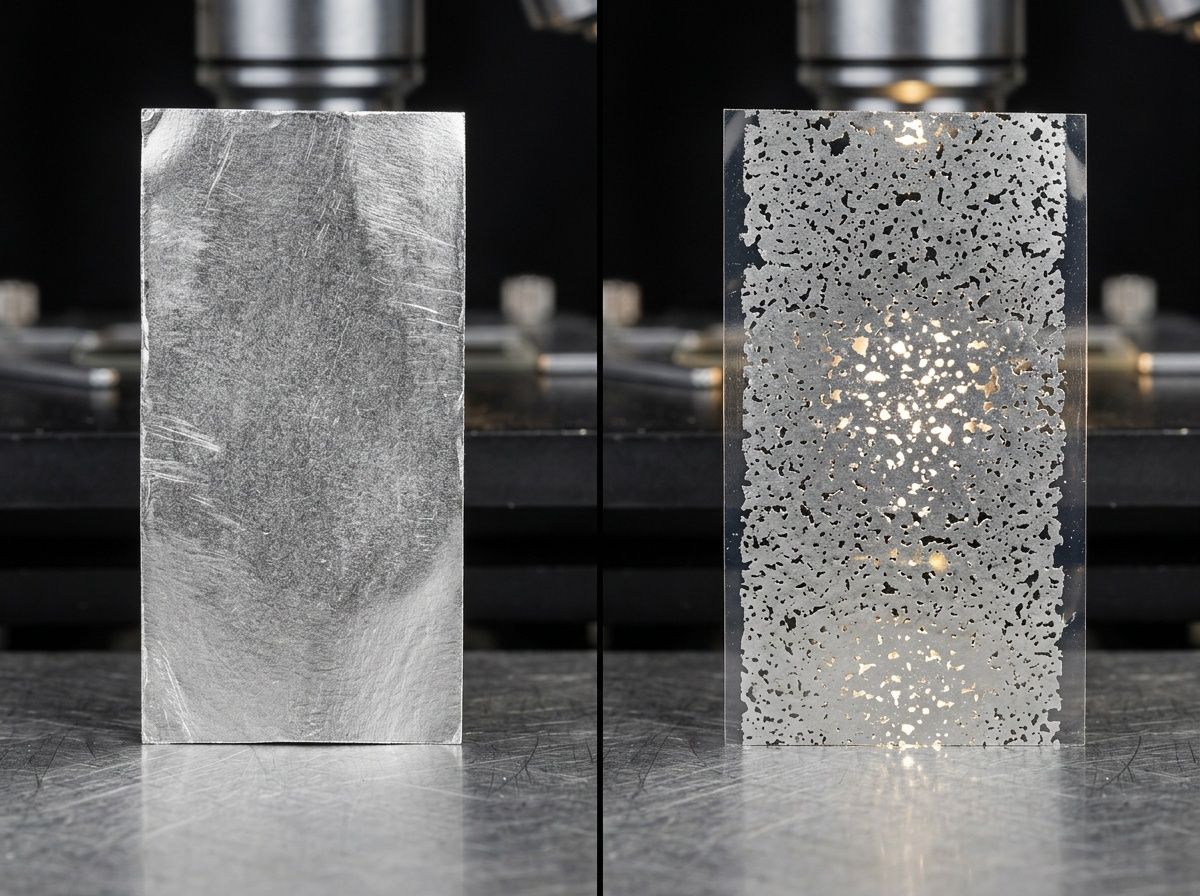
Metalized film is created through vacuum deposition, where a thin layer of aluminum atoms is sprayed onto a plastic film. This creates a shiny surface but not a solid layer. Under a microscope, metalized film reveals a discontinuous structure with microscopic gaps between the metal particles.
Solid aluminum foil is a continuous sheet of metal. This difference is critical for products with a shelf life exceeding six months. While a aluminum foil coffee pouch might require a higher initial investment than a VMPET version, the foil provides barrier longevity that VMPET cannot match. Over time, the OTR of VMPET can degrade as the metal layer oxidizes or cracks, whereas solid foil remains a barrier until it is physically punctured. For premium coffee brands, the risk of a stale bag reaching a customer after 10 months is a cost that outweighs the savings of choosing a metalized film.
ROI on Flavor Stability
The decision to invest in high barrier coffee bags is a strategic one based on the Total Cost of Ownership (TCO). Procurement managers consider several factors:
- Product Returns: The cost of disposing of stale coffee returned by retailers.
- Brand Protection: The loss of consumer trust when a premium product tastes mediocre.
- Market Expansion: High-barrier packaging allows a brand to ship products further and keep them on the shelf longer, opening new geographical markets.
For products intended for rapid consumption, VMPET may be sufficient. However, for the specialty coffee industry, where the product is defined by volatile aroma and delicate oils, aluminum foil provides the necessary flavor insurance.
| Metric | Metalized Film (VMPET) | Solid Aluminum Foil (AL) |
|---|---|---|
| Typical Barrier Duration | 3 – 6 Months | 12 – 24 Months |
| Material Continuity | Discontinuous (Porous) | Continuous (Solid) |
| Heat Resistance | Moderate | High |
| Suitability for Specialty Coffee | Low | High |
Shelf-Life Engineering Selection Table
The following table outlines recommended material structures based on target shelf life and product format.
| Shelf Life Target | Product Format | Recommended Structure | Key Rationale |
|---|---|---|---|
| 3 – 6 Months | Whole Bean (Retail) | VMPET / PE | Sufficient for rapid turnover in local markets. |
| 6 – 12 Months | Whole Bean (Export) | BOPP / AL / PE | Necessary to survive temperature spikes in transit. |
| 12 – 18 Months | Ground Coffee | PET / AL / PE | Absolute moisture barrier required for high surface area. |
| 18+ Months | Industrial / Bulk | PA / AL / PE | Nylon (PA) added for superior puncture resistance. |
The engineering behind aluminum foil coffee packaging is a complex interplay of material science, mechanical design, and chemical preservation. By prioritizing the high-barrier properties of aluminum, roasters can ensure that products are protected from oxidation and degradation, delivering a consistent cup of coffee to consumers.
Conclusion
The preservation of roasted coffee requires a physical barrier against oxygen transmission, moisture ingress, and the dissipation of volatile organic compounds. A multi-layer lamination incorporating solid aluminum foil provides a crystalline lattice that ensures total UV opacity and near-zero permeability, maintaining chemical integrity throughout complex global logistics. For procurement managers, selecting aluminum foil over metalized alternatives represents a strategic investment in long-term flavor stability and brand protection. This choice effectively mitigates the risks of lipid rancidity and aroma scalping, particularly for ground coffee and export-grade products. To discuss specific barrier requirements or material specifications for your production line, contact the engineering team.


0 Comments