
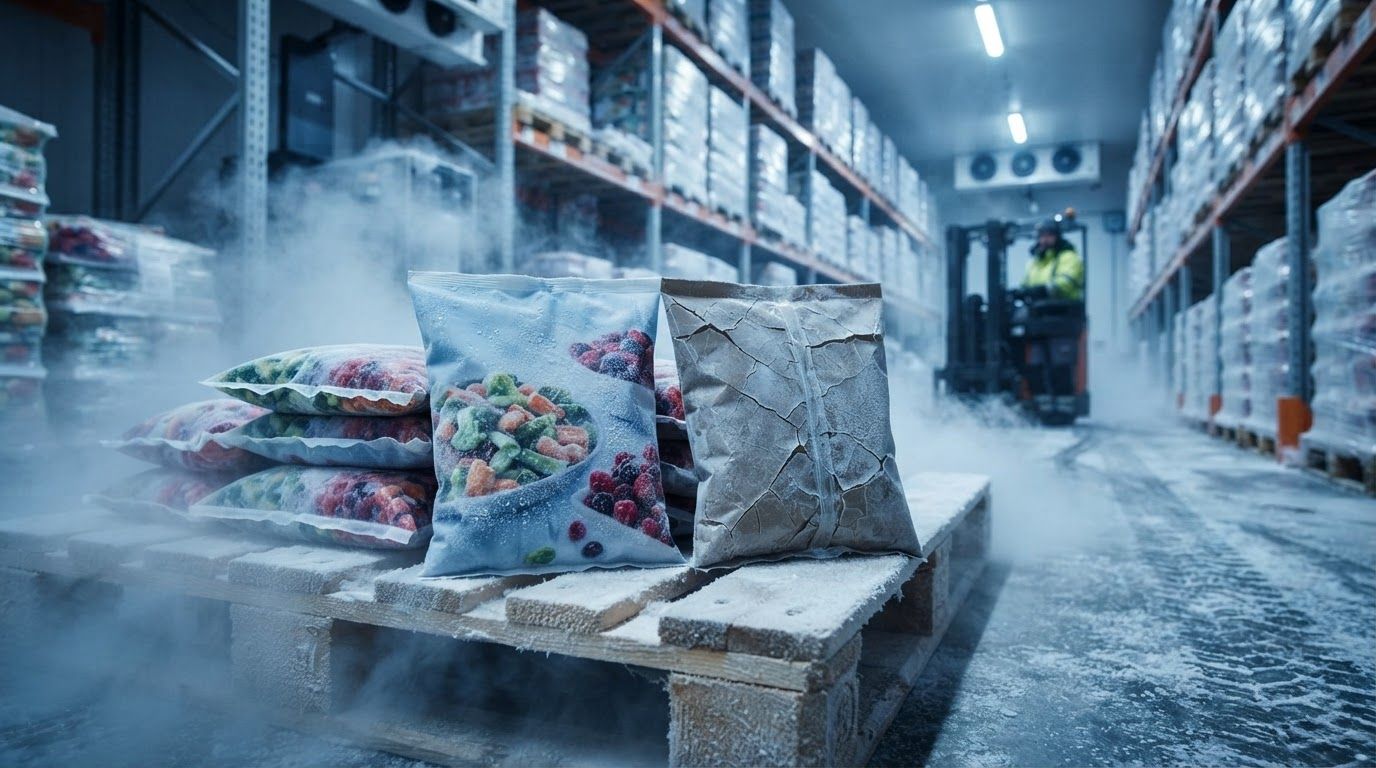
Key Takeaways
- Multi-Layer Barrier Laminations: Combining PET, PA, and PE films provides the essential moisture and oxygen barrier properties required to prevent freezer burn and lipid oxidation during prolonged sub-zero storage.
- Polyamide Mechanical Durability: Integrating PA and nylon composite layers delivers critical low-temperature flexibility and puncture resistance, significantly reducing package cracking caused by rigid or sharp-edged frozen food products.
- Sub-Zero Seal Reliability: Formulating food-grade polyethylene inner layers helps minimize seal embrittlement and containment leakage under extreme freezing conditions and dynamic cold-chain transit stresses.
- Food-Grade Polymer Selection: Prioritizing verified PE, PA, and PET composite structures over non-compliant polymers such as PVC ensures strict adherence to food safety standards while preserving low-temperature physical integrity.
Introduction
Standard flexible packaging films frequently fail in deep-freeze environments due to low-temperature embrittlement, where unoptimized polymers lose ductility and fracture under dynamic transit stress. When physical integrity is compromised, rapid moisture sublimation leads to irreversible freezer burn and accelerated lipid oxidation, resulting in severe product loss and retailer rejections. Engineering reliable frozen food packaging bags requires balancing structural flexibility with impermeable vapor barriers under sustained sub-zero conditions.
Achieving dependable low-temperature containment depends on strategic multi-layer film formulation. Incorporating oriented polyamide layers yields puncture resistant freezer bags capable of withstanding the abrasive edges of frozen proteins and prepared foods, while tailored polyethylene sealant layers prevent brittle seam cracking during distribution. In parallel, advanced moisture barrier packaging structures prevent ice recrystallization and protect sensitive food formulations against ambient oxygen transfer throughout extended storage cycles.
Understanding the mechanical behavior, barrier mechanisms, and sealing parameters of these multi-layer laminations enables packaging engineers and procurement managers to specify material combinations that maintain hermetic seals, lower product loss rates, and comply with rigorous food safety standards across the cold chain.
Low-Temperature Failure Modes in Frozen Food Packaging Bags: Embrittlement, Flex Cracking, and Sublimation
Industrial cold-chain logistics subject flexible packaging to severe physical and thermodynamic environments. In standard commercial operations, quick-frozen foods undergo blast freezing at temperatures ranging from -30°C to -40°C, followed by prolonged storage and intermodal transport at -18°C to -25°C. When conventional thermoplastic films engineered primarily for ambient distribution are deployed in these sub-zero environments, they frequently suffer structural failure.
At ambient temperatures, commodity flexible polymers exhibit high viscoelasticity, absorbing kinetic shocks through molecular relaxation and localized plastic deformation. However, exposure to deep-freeze conditions restricts the mobility of long-chain polymer segments. As thermal kinetic energy drops, polymer chains can no longer execute rapid conformational rotations to dissipate applied mechanical loads.
Consequently, mechanical stresses induced by transport vibration, case packing, pallet drop impacts, and automated conveyor sorting accumulate at localized stress concentrators rather than distributing across the polymer matrix. This localized stress concentration triggers brittle fracture, flex cracking, and micro-pinholing, compromising the hermetic integrity of the container and rendering the packaged food vulnerable to environmental degradation.
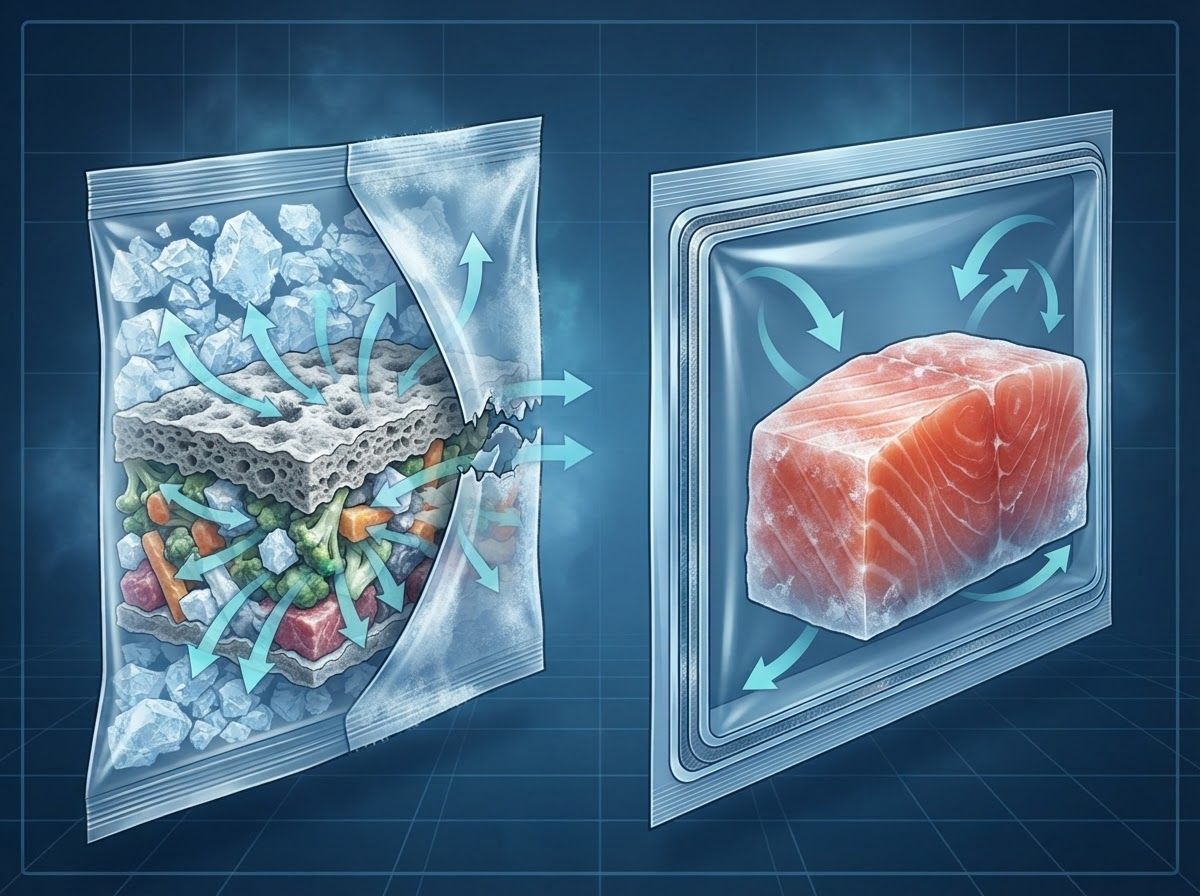
The sub-zero packaging failure cascade begins with deep-freeze exposure (-18°C to -40°C) and the resulting loss of polymer chain segmental mobility near or below Tg. Dynamic transport stress and mechanical handling shocks then induce flex cracking, micro-pinholing, and seal notch fractures. These structural defects cause trans-barrier vapor depletion and headspace atmospheric ingress, ultimately producing freezer burn, cellular protein denaturation, and lipid auto-oxidation.
Beyond macroscopic breakage, structural failure at sub-zero temperatures initiates mass-transfer degradation mechanisms. When packaging loses hermetic integrity, moisture vapor exits the package headspace via sublimation-driven partial pressure gradients, creating localized surface desiccation known as freezer burn.
Concurrently, external oxygen enters through micro-defects, accelerating lipid oxidation and enzymatic browning in sensitive frozen proteins and prepared foods. Mitigating these interrelated failure modes requires analyzing polymer thermodynamics, low-temperature fracture mechanics, and mass-transfer physics.
Glass Transition Dynamics and Mechanical Embrittlement Under Sub-Zero Conditions
The fundamental driver of low-temperature polymer embrittlement is the relationship between the operational storage temperature and the glass transition temperature (Tg) of the individual polymer constituents within a packaging film. The glass transition represents the reversible transition in amorphous polymers or the amorphous domains of semi-crystalline polymers from a flexible, rubbery, compliant state to a hard, rigid, glassy state.
In semi-crystalline polyolefins such as standard homopolymer polypropylene (PP) and high-density polyethylene (HDPE), the amorphous regions between crystalline lamellae provide essential impact damping and flexural compliance at ambient conditions. Standard isotactic homopolymer polypropylene possesses a glass transition temperature typically situated between 0°C and -10°C.
When a standard homopolymer PP structure is introduced into a standard -18°C commercial freezer or a -35°C cryogenic blast freezer, ambient thermal energy drops below the relaxation threshold of the polymer backbone. The free volume within the amorphous domains contracts, trapping macromolecular chains in fixed conformational states. As a result, the polymer transitions past its Tg into an unyielding, glassy state characterized by low impact strength, high modulus of elasticity, and reduced elongation-at-break.
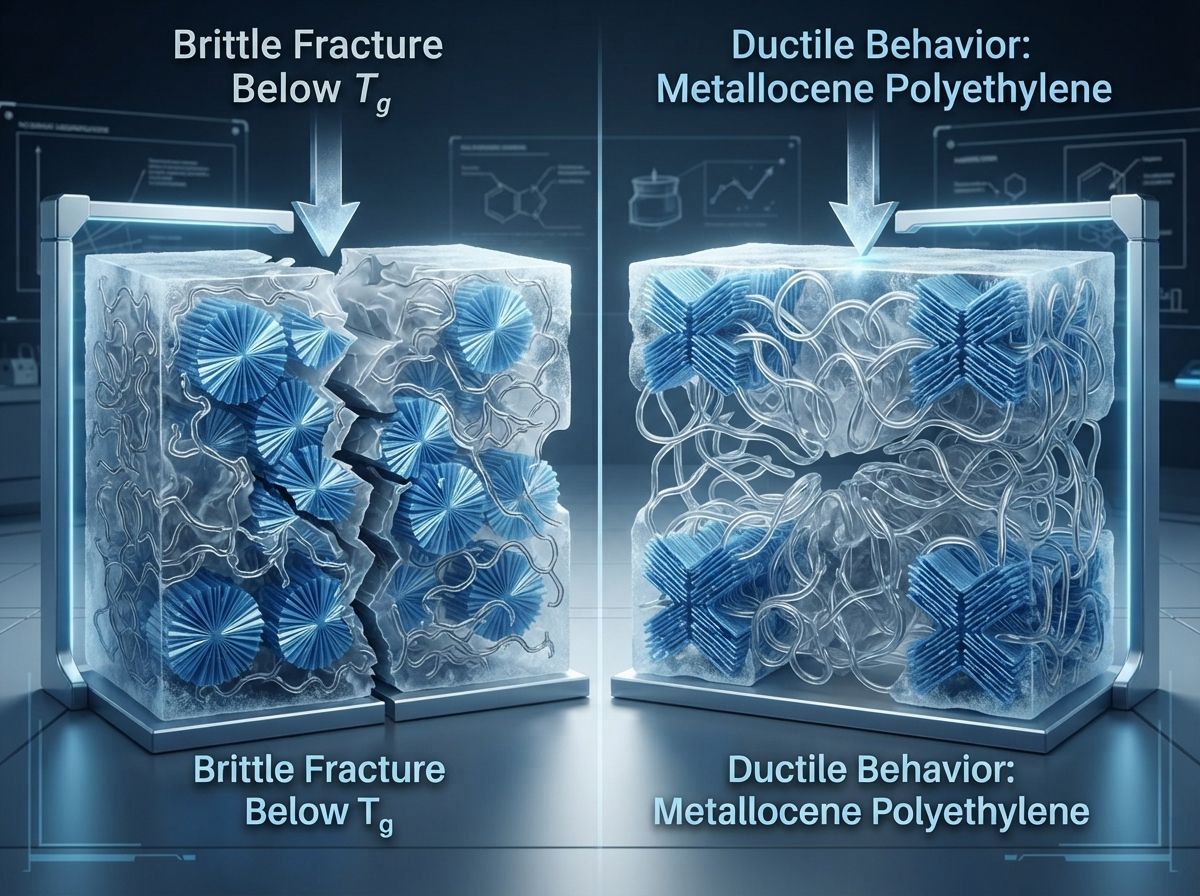
In the rubbery state (T > Tg), high free volume maintains active segmental rotation and effective impact absorption. In the glassy state (T < Tg), restricted free volume freezes segmental rotation, accelerating brittle fracture propagation.
Under operational stresses—such as case drop impacts on cold warehouse concrete or repetitive high-frequency vibration during refrigerated truck transit—the glassy amorphous regions cannot undergo molecular yield or localized shear banding. Instead, micro-voids nucleate at interfacial boundaries between crystalline spherulites and amorphous phases.
These micro-voids coalesce into crazes that rapidly propagate as sharp, catastrophic cracks across the entire film cross-section. Standard non-oriented polyolefins frequently experience brittle shatter under low energy thresholds when subjected to mechanical shock in their glassy regime.
To counter low-temperature embrittlement, packaging engineers formulate composite films using co-polymerized resins, impact modifiers, and low-Tg elastomers. Linear low-density polyethylene (LLDPE) and ultra-low-density polyethylene (ULDPE) exhibit glass transition temperatures well below deep-freeze conditions, with the Tg of standard LLDPE typically residing between -100°C and -120°C.
By incorporating metallocene-catalyzed polyethylenes (mLLDPE) or polyolefin elastomers (POE) containing randomized alpha-olefin comonomers (such as 1-butene, 1-hexene, or 1-octene), the regularity of the crystal lattice is disrupted. This disruption yields a high density of inter-lamellar tie-chains that remain flexible and kinetically active down to -40°C.
These resilient tie-chains bridge crystalline domains, absorbing dynamic fracture energy, arresting micro-crack propagation, and retaining ductile elongation even under cryogenic conditions.
The Thermodynamics of Freezer Burn: Water Vapor Permeation and Ice Sublimation
Freezer burn is a thermodynamic, mass-transfer phenomenon driven by moisture phase transitions and trans-barrier chemical potential gradients. In frozen food systems, water is immobilized within the food matrix as crystallized ice. The vapor pressure of ice is temperature-dependent, governed by the Clausius-Clapeyron relation.
Within an airtight, hermetically sealed flexible pouch stored at a constant -18°C, an equilibrium water vapor pressure establishes between the surface of the frozen product and the internal package headspace. The internal relative humidity reaches near-saturation (100% equilibrium relative humidity at the food surface temperature).
However, commercial cold chains are rarely isothermal. Cyclical temperature fluctuations occur during defrost cycles in cold storage facilities, pallet staging on loading docks, and customer handling in retail display cabinets. When the ambient temperature within a storage compartment rises, the temperature of the package headspace and the outer packaging film increases faster than the interior thermal mass of the frozen food block.
This temperature differential generates a steep water vapor pressure gradient across the food surface, the package headspace, and the surrounding ambient environment.
The process of sublimative mass transfer follows a distinct sequence:
- Temperature spikes in the headspace create a vapor pressure mismatch where internal pressure exceeds external pressure.
- Food surface ice crystals sublimate directly into headspace vapor.
- Vapor migrates outward through permeable film layers or micro-pinholes.
- Subsequent cooling causes desublimation of remaining vapor into loose cavity frost crystals.
- The product surface matrix develops irreversible spongy porosity and cellular collapse.
As the vapor pressure of the headspace drops below the saturation vapor pressure of the frozen food surface, ice crystals sublimate directly from the solid state into water vapor without passing through an intermediate liquid phase.
If the flexible packaging film possesses an elevated Water Vapor Transmission Rate (WVTR), or if flex cracking has introduced micro-voids through the barrier layers, this sublimated water vapor diffuses outward into the lower-humidity warehouse or retail environment.
When the cold-chain cycle cools back down, the moisture remaining within the headspace cannot fully re-incorporate into the desiccated food tissue. Instead, it desublimates as loose, granular ice frost along the inner walls of the plastic pouch. The underlying food tissue sustains irreversible structural and biochemical degradation:
- Cellular Cavitation and Structural Sponginess: In cellular matrices (such as IQF poultry breast, beef steaks, and shrimp), the sublimation of intracellular and extracellular ice crystals leaves open, porous cavities. Cell walls collapse under localized capillary forces, resulting in a toughened, fibrous, and spongy texture that fails to rehydrate upon cooking.
- Surface Discoloration and Protein Denaturation: Localized water loss elevates intracellular solute concentrations, altering local ionic strength and pH. This biochemical shift denatures functional proteins, leading to opacity loss, gray-white surface mottling, and enzymatic degradation.
- Accelerated Secondary Lipid Auto-Oxidation: The dry, porous surface matrix left by ice sublimation exposes unsaturated lipids directly to headspace oxygen. Without a protective ice glaze, atmospheric oxygen rapidly oxidizes structural lipids, generating rancid volatile aldehydes and ketones that ruin sensory profiles.
Preventing freezer burn requires engineered flexible packaging that maintains an exceptionally low WVTR across dynamic sub-zero temperature cycles, while offering the flexural fatigue resistance needed to prevent micro-pinholing during handling.
Multi-Layer Film Formulations: Selecting Polymers for Cold Resistance and Barrier Integrity
Resolving the dual challenges of cryogenic embrittlement and trans-barrier mass transfer requires multi-layer composite film structures. Monolithic, single-polymer films cannot simultaneously deliver high-tensile printability, low-temperature puncture resistance, gas barrier efficiency, and low-temperature thermal sealability.
Advanced frozen food packaging relies on multi-layer coextrusions or adhesive-laminated composites where individual polymer strata perform dedicated mechanical or physicochemical functions. In the engineering of functional flexible food packaging, composite structures are optimized across three functional zones: the outer print/protective layer, the central barrier/core reinforcement layer, and the internal sealant layer.
- The Outer Print and Abuse-Resistant Layer: Typically composed of Biaxially Oriented Polyethylene Terephthalate (BOPET) or Biaxially Oriented Polyamide (BOPA/Nylon), this layer provides dimensional stability, scuff resistance, and high optical clarity for reverse-rotogravure or flexographic printing. BOPET offers high tensile strength and thermal resistance, shielding the inner layers from melting or distorting during contact with high-temperature industrial heat-sealing jaws.
- The Intermediate Barrier and Reinforcement Core: Positioned between the outer substrate and inner sealant, the central core provides gas impermeability and dissipates mechanical shock waves. Polymers such as Biaxially Oriented Polyamide (BOPA), Ethylene Vinyl Alcohol (EVOH), or Vacuum Metallized Polyethylene Terephthalate (VMPET) are selected based on the gas sensitivity of the packaged food.
- The Inner Sealant Layer: Positioned in direct contact with the foodstuff, the sealant layer must maintain ductility down to -40°C while achieving hermetic thermal welds at rapid packaging line speeds. This layer predominantly utilizes specialized formulations of metallocene-catalyzed Linear Low-Density Polyethylene (mLLDPE), often blended with Low-Density Polyethylene (LDPE) or polyolefin plastomers (POP).
Historically, certain market segments utilized plasticized Polyvinyl Chloride (PVC) films for basic cold-storage wrapping due to their initial flexibility and cling properties. However, PVC relies heavily on low-molecular-weight phthalate or adipate plasticizers to depress its natural glass transition temperature (which sits around 80°C in unplasticized resin).
Under sub-zero cold-chain conditions, these plasticizers can migrate toward the film surface, resulting in gradual polymer embrittlement and risk of chemical migration into fatty food matrices.
Furthermore, international regulatory frameworks, such as EU Regulation (EU) No 10/2011 and US FDA food contact notifications, enforce strict migration limits on plasticizers and vinyl chloride monomers. Modern high-integrity frozen food packaging relies on unplasticized polyolefin, polyamide, and polyester laminates, eliminating plasticizer migration risks while providing superior mechanical resilience at low temperatures.
Polyamide and Nylon Composites for Cryogenic Puncture Resistance
Polyamide (PA), commonly referred to as nylon, is an essential structural polymer for high-abuse sub-zero flexible packaging. Aliphatic polyamides—primarily Polyamide 6 (PA6) and Polyamide 6,6 (PA66)—contain repeating amide linkages (–CO–NH–) along their carbon backbones.
These polar amide groups establish an extensive, intermolecular hydrogen-bonding network between adjacent polymer chains. This dense hydrogen-bonded morphology gives polyamides high tensile strength, exceptional resistance to flex fatigue, high burst strength, and superior puncture resistance across a broad temperature profile.
When sharp-edged, individualized frozen foodstuffs—such as bone-in pork chops, IQF shell-on king prawns, raw frozen crab legs, or hard-crystallized dumpling edges—are agitated during vibratory conveyance, bulk cartoning, or transit, they generate concentrated mechanical point-loads on the packaging interior.
In packaging that relies on brittle, low-yield films, these localized impacts induce point punctures that breach barrier protection. Incorporating high-barrier polyamide vacuum pouches into the film structure mitigates this failure mode. Under point loads, standard polyolefins with weaker inter-chain bonding allow rapid notch propagation and puncture. In contrast, the dense hydrogen-bonding network of a BOPA/nylon matrix distributes concentrated stresses across the film plane, arresting puncture propagation.
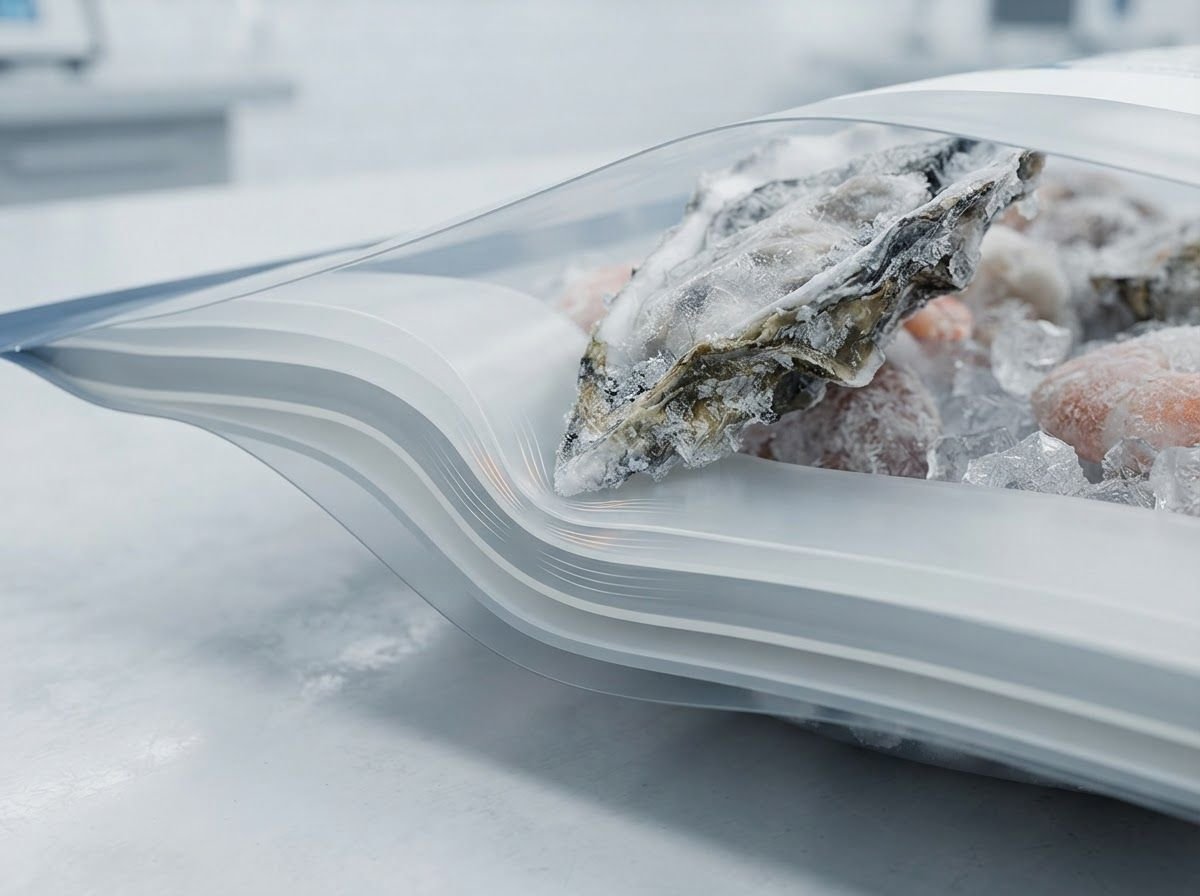
In multi-layer laminate engineering, packaging technologists evaluate the functional performance differences between Biaxially Oriented Polyamide (BOPA) and Cast Polyamide (CPA):
- Biaxially Oriented Polyamide (BOPA): BOPA undergoes simultaneous or sequential mechanical stretching in both the machine direction (MD) and transverse direction (TD) during film extrusion. This biaxial orientation aligns the crystalline lamellae parallel to the film plane, maximizing planar tensile modulus, dramatically reducing directional pinhole flex cracking (measured via Gelbo flex testing), and enhancing gas barrier efficiency. BOPA is the standard core choice for vacuum pouches and heavy-duty bulk frozen food packaging requiring long-term transport endurance.
- Cast Polyamide (CPA): CPA remains unoriented post-extrusion, exhibiting a lower tensile modulus than BOPA but offering higher multidirectional elongation-at-break and superior thermoformability. CPA is selected for deep-draw thermoforming rollstock applications, where the film must stretch deep into mold cavities without necking or thinning prior to cryogenic freezing.
Polyethylene Formulations and Metallocene Blends for Low-Temperature Ductility
The inner sealant layer of a frozen food pouch must deliver absolute hermetic integrity while maintaining high mechanical compliance at low temperatures. Conventional low-density polyethylene (LDPE), synthesized via free-radical high-pressure autoclaving, contains extensive long-chain branching.
While these long-chain branches improve melt strength and processability on blown film extruders, they limit the crystallization kinetics and lower the ultimate tensile and tear strength of the solid film. Conventional Ziegler-Natta catalyzed LLDPE (ZN-LLDPE) introduces linear backbones with short-chain branches, improving tensile strength; however, its broad molecular weight distribution and non-uniform comonomer distribution result in low-molecular-weight fractions that weaken seal strength, alongside highly crystalline fractions that reduce film ductility at -20°C.
The development of single-site metallocene catalysts (mLLDPE) has transformed low-temperature sealant performance. Unlike Ziegler-Natta LLDPE resins that exhibit broad molecular weight distributions and brittle cold-phase domains, metallocene catalysts possess uniform, well-defined active catalytic sites. They produce polyolefins with narrow molecular weight distributions (Mw/Mn typically between 2.0 and 2.5) and uniform short-chain branching along the polymer backbone, ensuring consistent low-temperature ductility.
This structural uniformity optimizes film performance in cold environments:
- Suppression of Cold Micro-Crack Propagation: The narrow distribution of short-chain branches prevents the formation of thick, brittle crystalline spherulites. Instead, it promotes a homogeneous distribution of small crystallites connected by an ultra-dense network of inter-lamellar tie-molecules. When subjected to impact at -30°C, these tie-molecules dynamically yield and distribute stress, preventing micro-voids from coalescing into macro-cracks.
- Enhanced Dart Impact Resistance: Blown film formulations incorporating 40% to 80% octene- or hexene-based mLLDPE within the sealant layer increase cryogenic dart impact energy thresholds compared to conventional ZN-LLDPE/LDPE sealant blends.
- Balanced Elastic Modulus and Sealing Performance: Pure mLLDPE can exhibit high tack and narrow processing windows on standard extrusion lines. Packaging engineers resolve this by formulating synergistic three-layer or five-layer coextruded sealant skins, blending mLLDPE with fractional-melt LDPE (to provide bubble stability and melt strength) and polyolefin plastomers (POP) to reduce the Seal Initiation Temperature (SIT) to between 85°C and 95°C.
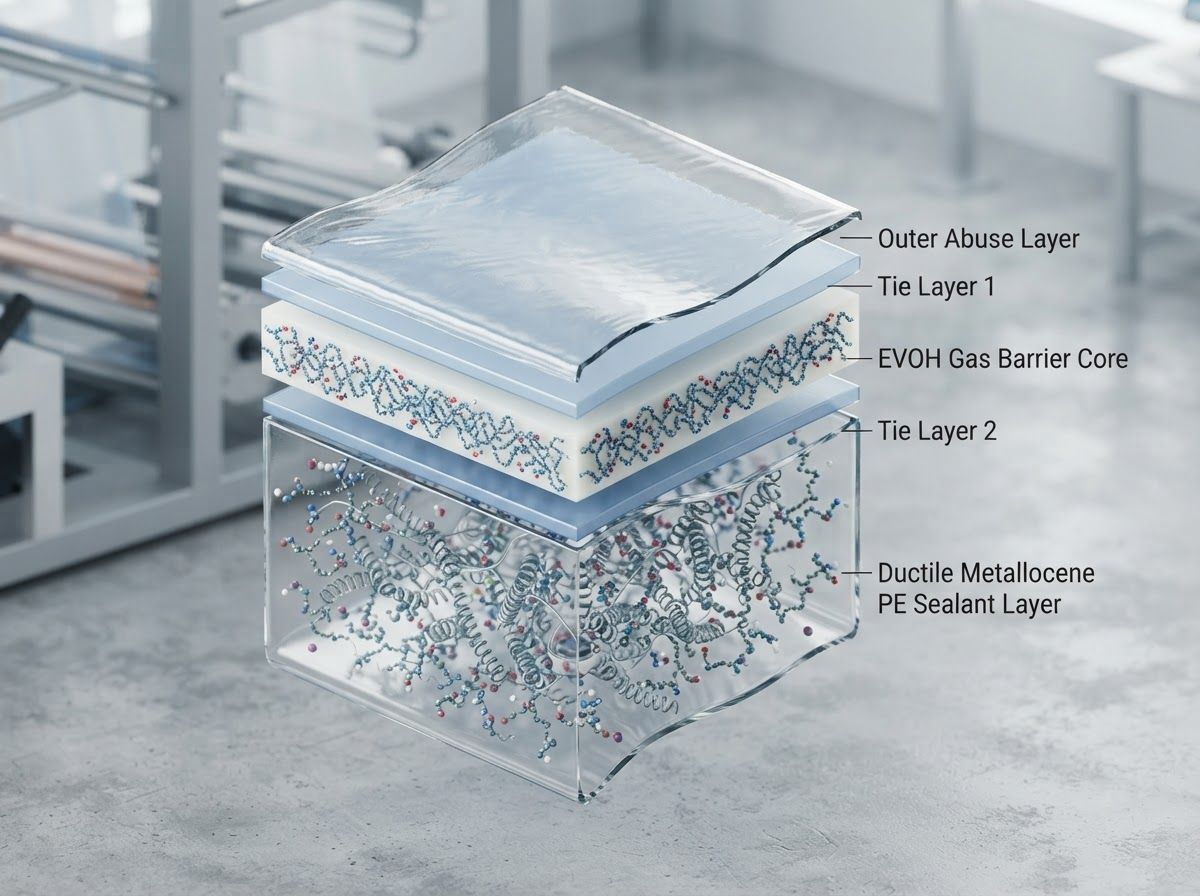
Table 1: Polymer Layer Function Matrix in Cold-Resistant Packaging
| Polymer Layer Type | Glass Transition Range (Tg) | Mechanical Role at -20°C | Moisture Barrier (WVTR) | Oxygen Barrier (OTR) | Primary Structural Position |
|---|---|---|---|---|---|
| Biaxially Oriented PET (BOPET) | +70°C to +80°C | High tensile stiffness; dimensional print stability; low elongation | Moderate to Low | Moderate | Outer Substrate / Print Web |
| Biaxially Oriented Polyamide (BOPA/Nylon) | +40°C to +50°C (dry); drops with moisture | Exceptional puncture absorption; flex-crack fatigue resistance | Low | Moderate to High | Intermediate Core / Abuse Web |
| Metallocene LLDPE (mLLDPE) | -100°C to -120°C | High ductile elongation; cryogenic impact damping; tear arrest | Moderate | Low | Inner Sealant Web |
| Metallized PET (VMPET) | +70°C to +80°C | Rigid carrier; high optical reflectivity; moderate flex resistance | High to Ultra-High | High to Ultra-High | Intermediate Barrier Layer |
| Aluminum Foil (Alu) | N/A (Crystalline Metal) | Inelastic; vulnerable to flex-cracking; zero plastic recovery | Total Impermeability (Pin-hole dependent) | Total Impermeability (Pin-hole dependent) | Central Core Barrier Layer |
Table 1 Analysis: Designing cold-resistant packaging requires balancing the structural properties of each material layer. High-Tg outer substrates like BOPET provide essential tensile rigidity and print stability, while low-Tg inner layers such as mLLDPE ensure mechanical compliance and seal integrity at -20°C.
Intermediate layers like BOPA bridge these performance requirements, dissipating mechanical point-loads from sharp frozen food edges. For high-fat, oxygen-sensitive goods, integrating VMPET or EVOH introduces robust gas barrier protection without sacrificing flexural endurance.
Optimizing Barrier Properties in Frozen Food Packaging Bags to Inhibit Lipid Oxidation and Ice Recrystallization
Preserving frozen food quality over commercial storage periods (typically 6 to 24 months) requires strict control over gas and moisture permeation rates. The biochemical degradation of frozen foodstuffs proceeds along two interconnected chemical and physical pathways: moisture migration via Fickian diffusion, and lipid auto-oxidation via free-radical chain reactions.
To maintain baseline sensory, nutritional, and microbiological quality, packaging specifications for high-fat frozen proteins and value-added ready meals target an Oxygen Transmission Rate (OTR) of less than 1.0 to 2.0 cc/m2/24hr (measured at 23°C, 0% RH under ASTM D3985) and a Water Vapor Transmission Rate (WVTR) of less than 0.5 to 1.0 g/m2/24hr (measured at 37.8°C, 90% RH under ASTM F1249).
Mass transfer in frozen packaging occurs through two primary mechanisms:
- Direct Polymeric Permeation: Gas and vapor dissolve into the outer film surface, diffuse across the concentration gradient, and desorb from the inner surface into the package headspace.
- Micro-Defect Transport: Pinholes, seal micro-channels, and flex cracks allow direct bulk convective flow, bypassing polymer matrix resistance entirely.
In industrial packaging systems, passive barrier properties are paired with active gas management, such as deploying commercial vacuum packaging systems to evacuate headspace air before thermal sealing.
Removing ambient air collapses the flexible pouch around the contours of the foodstuff. This structural adaptation minimizes the internal headspace volume available for vapor expansion, limits the reservoir of gaseous oxygen available for chemical reaction, and reduces the insulating air gap between the food surface and the flexible film.
Minimizing this air gap accelerates conductive heat transfer during rapid blast-freezing operations, promoting the formation of small, uniform intracellular ice crystals while suppressing large, destructive extracellular ice recrystallization.
Water Vapor Transmission Rates (WVTR) and Sub-Zero Moisture Retention
Moisture vapor migration across a continuous polymeric barrier follows the classic solution-diffusion mechanism governed by Fick’s first law of diffusion: Vapor Flux (J) = -D * (dc / dx), where D is the diffusion coefficient of water in the polymer and dc/dx represents the concentration gradient across the film thickness. The overall permeability coefficient (P) is the product of the thermodynamic solubility coefficient (S) and kinetic diffusion coefficient (D): P = S * D.
In sub-zero storage environments, the absolute saturation vapor pressure of water outside the package is low. However, the continuous operation of refrigeration compressor cooling coils creates a persistent drying effect within the warehouse air.
These cooling coils continuously condense atmospheric water vapor onto their refrigerated surfaces, lowering the ambient relative humidity within the warehouse. This creates a continuous imbalance between the near-100% relative humidity inside the package headspace and the low-humidity storage environment, driving steady moisture extraction from the packaged food.
To maintain product weight, prevent surface dehydration, and comply with strict net-weight retail labeling regulations over a 12-to-24-month cold-chain lifespan, packaging films must limit total water loss to less than 0.5% to 1.0% of total product mass.
Achieving this low permeability requires high-density polyolefin sealant webs or specialized barrier-coated substrates. In polyolefin films, increasing the density of the polyethylene matrix—from standard LDPE (0.918–0.922 g/cc) up to medium-density and high-density PE phases (0.935–0.955 g/cc)—increases the volume fraction of impenetrable crystalline lamellae.
These crystalline zones force diffusing water molecules along tortuous paths through the remaining amorphous channels, reducing the effective diffusion coefficient (D) and lowering overall WVTR.
Oxygen Barrier Strategies for High-Fat Frozen Proteins and Seafood
Frozen muscle foods—such as Atlantic salmon, yellowfin tuna, mackerel, pork bellies, and prepared ready meals containing butter- or oil-based sauces—contain high concentrations of mono- and polyunsaturated fatty acids (PUFAs).
While sub-zero temperatures substantially retard microbial proliferation, they do not arrest chemical lipid auto-oxidation. Free-radical lipid auto-oxidation proceeds through initiation (forming free radicals), propagation (reaction with oxygen to yield peroxyl radicals and hydroperoxides), and termination (degradation into volatile aldehydes, ketones, and organic acids).
In frozen fatty fish and meats, oxygen ingress drives the rapid oxidation of cellular myoglobin and hemoglobin proteins, transforming bright red oxymyoglobin into dull, brown metmyoglobin.
Simultaneously, the breakdown of lipid hydroperoxides generates short-chain volatile aldehydes (such as hexanal) and ketones, producing objectionable rancid off-flavors and off-odors that destroy product palatability long before the food reaches its microbiological shelf-life limit.
To prevent lipid auto-oxidation and sensory degradation, packaging engineers select barrier systems based on three primary core technologies:
- Ethylene Vinyl Alcohol (EVOH) Copolymers: EVOH is a semi-crystalline copolymer of ethylene and vinyl alcohol delivering an OTR of 0.2 to 1.0 cc/m2/day and WVTR of 1.5 to 3.0 g/m2/day. The high concentration of polar hydroxyl groups (–OH) provides an exceptionally tight intermolecular network, delivering an outstanding barrier to atmospheric gases. Because EVOH is inherently hydrophilic, moisture absorption plasticizes its polymer chains, causing its gas barrier to decline at elevated relative humidity. In frozen food packaging, EVOH must be protected as a central core layer, symmetrically encapsulated between hydrophobic polyolefin (PE) water-vapor barriers via functionalized maleic anhydride-grafted tie-layers. This structure delivers high optical clarity, enabling consumer visibility of frozen cuts while maintaining low OTR values.
- Vacuum Metallized Polyethylene Terephthalate (VMPET): Metallized films provide an OTR of 0.5 to 1.5 cc/m2/day and WVTR of 0.5 to 1.2 g/m2/day. They are manufactured by evaporating high-purity aluminum under deep vacuum, condensing a microscopic, nanometer-thin layer of metallic aluminum onto the surface of a corona-treated BOPET carrier film. VMPET provides a robust oxygen, moisture, and light barrier at a lower material cost than solid aluminum foil. Furthermore, the flexible polyester carrier substrate offers superior flex-crack fatigue resistance compared to solid foil, making it suitable for high-speed automated packaging of frozen convenience foods.
- Solid Aluminum Foil (Alu Lamination): For extreme shelf-life requirements (18 to 36 months) and ultra-sensitive frozen items (such as high-value whole-head prawns or unglazed tuna steaks), aluminum foil laminated pouches using multi-layer PET/AL/PE structures provide near-zero OTR and WVTR ratings, delivering an absolute barrier against gas permeation, moisture migration, and photo-oxidation. However, because dead-fold metal foil lacks the viscoelastic recovery of pure polymers, it must be protected between durable outer BOPET or BOPA layers and an inner mLLDPE sealant to prevent flex-crack pinholing during handling and transport.
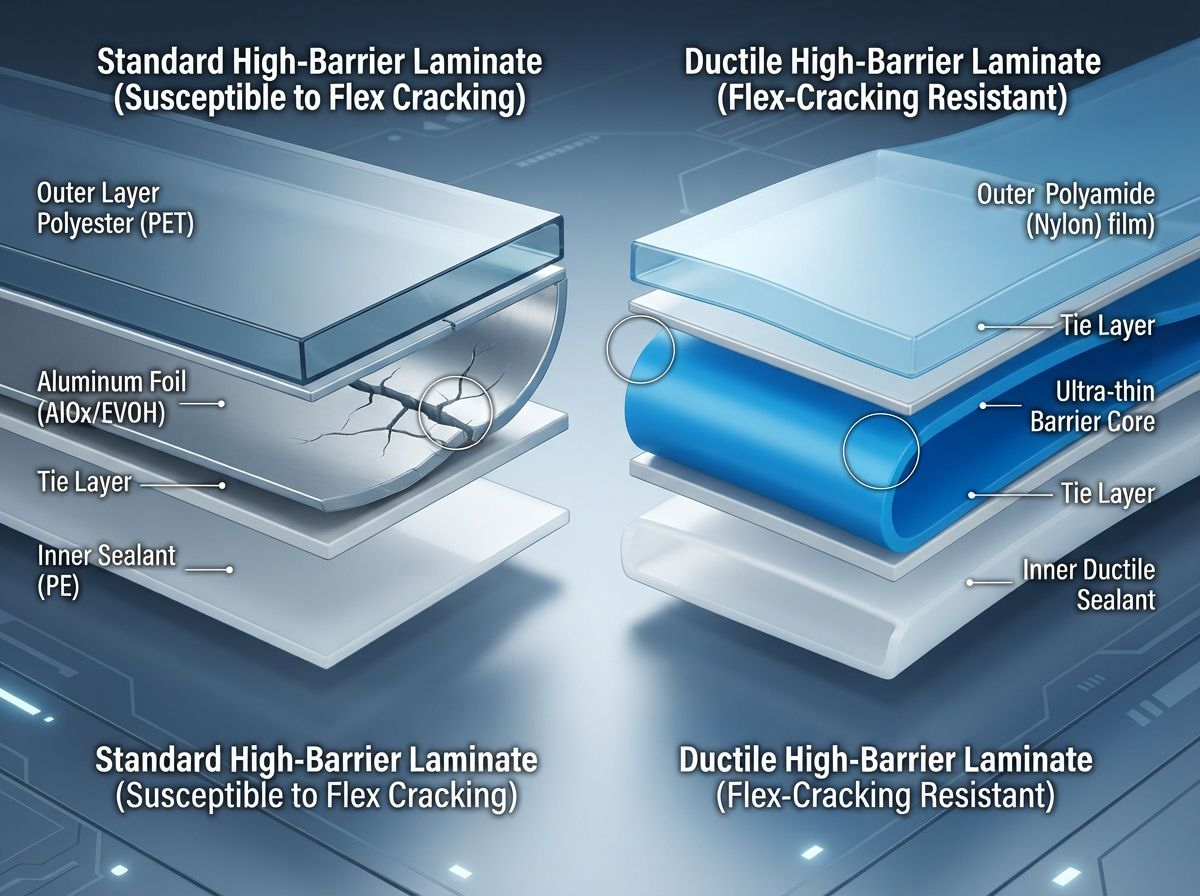
Table 2: Sub-Zero Packaging Barrier Matrix by Frozen Food Category
| Frozen Food Category | Primary Degradation Risk | Target WVTR Priority | Target OTR Priority | Recommended Laminate Structure | Typical Shelf-Life Target |
|---|---|---|---|---|---|
| IQF Vegetables & Fruits | Surface desiccation; ice recrystallization; enzymatic browning | High (< 0.8 g/m2/day) | Moderate (< 30.0 cc/m2/day) | Coex BOPA / PE or Reverse-Printed BOPET / mLLDPE | 12–18 Months |
| High-Fat Fish & Seafood (Salmon, Mackerel, Tuna) | Lipid oxidation; rancidity; metmyoglobin browning; moisture loss | Ultra-High (< 0.2 g/m2/day) | Ultra-High (< 1.0 cc/m2/day) | BOPET / Alu / BOPA / mLLDPE or BOPA / EVOH / mLLDPE | 18–24 Months |
| Bone-In Poultry & Red Meat | Puncture damage; localized freezer burn; myoglobin oxidation | High (< 0.5 g/m2/day) | High (< 2.0 cc/m2/day) | Heavy-Gauge BOPA / BOPA / mLLDPE (Multi-ply Nylon) | 12–24 Months |
| Prepared Ready Meals & Sauces | Flavor scalping; moisture redistribution; lipid-sauce separation | High (< 0.6 g/m2/day) | High (< 1.5 cc/m2/day) | BOPET / VMPET / mLLDPE or BOPET / EVOH / PE | 12–18 Months |
Table 2 Analysis: Matching packaging barrier properties to specific food degradation pathways prevents both premature product spoilage and costly material over-specification.
High-fat proteins demand ultra-low OTR barriers to suppress rancidity, whereas moisture-rich IQF produce requires high WVTR performance to arrest ice crystal sublimation. Structurally, products with sharp geometries require puncture-dissipating BOPA layers to preserve barrier integrity throughout commercial distribution.
Seal Integrity and Thermal Sealing Parameters for Sub-Zero Transit Durability
A packaging film with superior barrier and puncture resistance remains vulnerable if its thermal closure seams fail under cold-chain stress. In industrial horizontal form-fill-seal (HFFS), vertical form-fill-seal (VFFS), and pre-formed pouch-filling operations, the thermal seal represents the critical failure zone.
Thermal sealing relies on polymer physics: transferring thermal energy through outer substrates melts the inner sealant faces, driving interfacial molecular chain interdiffusion, intermolecular entanglement, and subsequent recrystallization across the joint upon cooling.
Hermetic heat sealing relies on three core parameters:
- Temperature: Supplies activation energy to melt the sealant polymer phase.
- Dwell Time: Provides the temporal window for macromolecular chains to diffuse across the interface.
- Pressure: Drives intimate physical contact and flattens out wrinkles or contaminants.
In sub-zero distribution, thermal seals face severe physical demands:
- Notch Brittleness in the Heat-Affected Zone (HAZ): The region immediately adjacent to the compressed seal seam—the Heat-Affected Zone—experiences sharp thermal gradients and localized thinning under sealing jaw pressure. If excess thermal energy degrades the molecular weight of the polymer, or if rapid cooling creates sharp morphologic boundaries between crystalline spherulites, this notch zone becomes brittle. Under impact at -20°C, mechanical stresses concentrate at the HAZ notch, triggering catastrophic peel failures or brittle casing splits.
- Differential Thermal Contraction Stresses: Multi-layer laminates combine materials with different Coefficients of Thermal Expansion (CTE). For instance, unoriented polyethylene possesses a significantly higher volumetric thermal expansion coefficient than biaxially oriented PET or aluminum foil. As the packaged pouch cools from its high-temperature heat-sealing phase down to -35°C blast freezing, the PE sealant layer contracts more rapidly than the outer substrate. This thermal contraction mismatch generates persistent residual shear stresses along the laminated interface and seal boundary, predisposing poorly bonded or insufficiently crosslinked seals to delamination and micro-channel formation under mechanical shock.
Deploying optimized food-grade polyethylene vacuum bags formulated with high-ductility linear low-density polyethylene ensures uniform polymer chain entanglement across the seal interface, maintaining flexible, high-integrity closures that endure dynamic sub-zero shipping stresses.
Heat-Seal Parameter Optimization: Temperature, Dwell Time, and Clamping Pressure
Achieving a durable, hermetic seal requires precise calibration of the primary sealing parameters: jaw temperature, dwell time, and clamping pressure. Operating below the Seal Initiation Temperature (SIT) causes incomplete chain diffusion and delamination, whereas excessive heating triggers sealant flow-out, severe HAZ thinning, and barrier core degradation.
- Seal Temperature and the Melt Transition: The jaw temperature must heat the inner sealant interface beyond its Melting Temperature (Tm) and above its operational Seal Initiation Temperature (SIT), while remaining safely below the thermal degradation and melting thresholds of the outer protective carrier (such as BOPET or BOPA). Operating below the SIT results in incomplete chain interdiffusion, yielding weak interfaces that fail via adhesive peel under minimal cryogenic impact. Conversely, excessive temperature causes sealant flow-out, squeezing molten resin away from the joint, creating severe wall thinning along the seal edge, and causing HAZ embrittlement.
- Dwell Time and Chain Reptation Kinetics: Thermal energy requires adequate time to conduct from the heated exterior jaws through the outer structural and barrier webs to the internal sealant interface. Polymer chain interdiffusion follows de Gennes’ reptation model, where the relaxation time (τ) required for polymer chains to fully interlace across an interface is time-dependent. While high-speed packaging operations aim for short dwell times (often 150 to 400 milliseconds), setting the dwell time too low prevents complete chain entanglement, leaving the seal vulnerable to micro-void formation under hydrostatic product pressure.
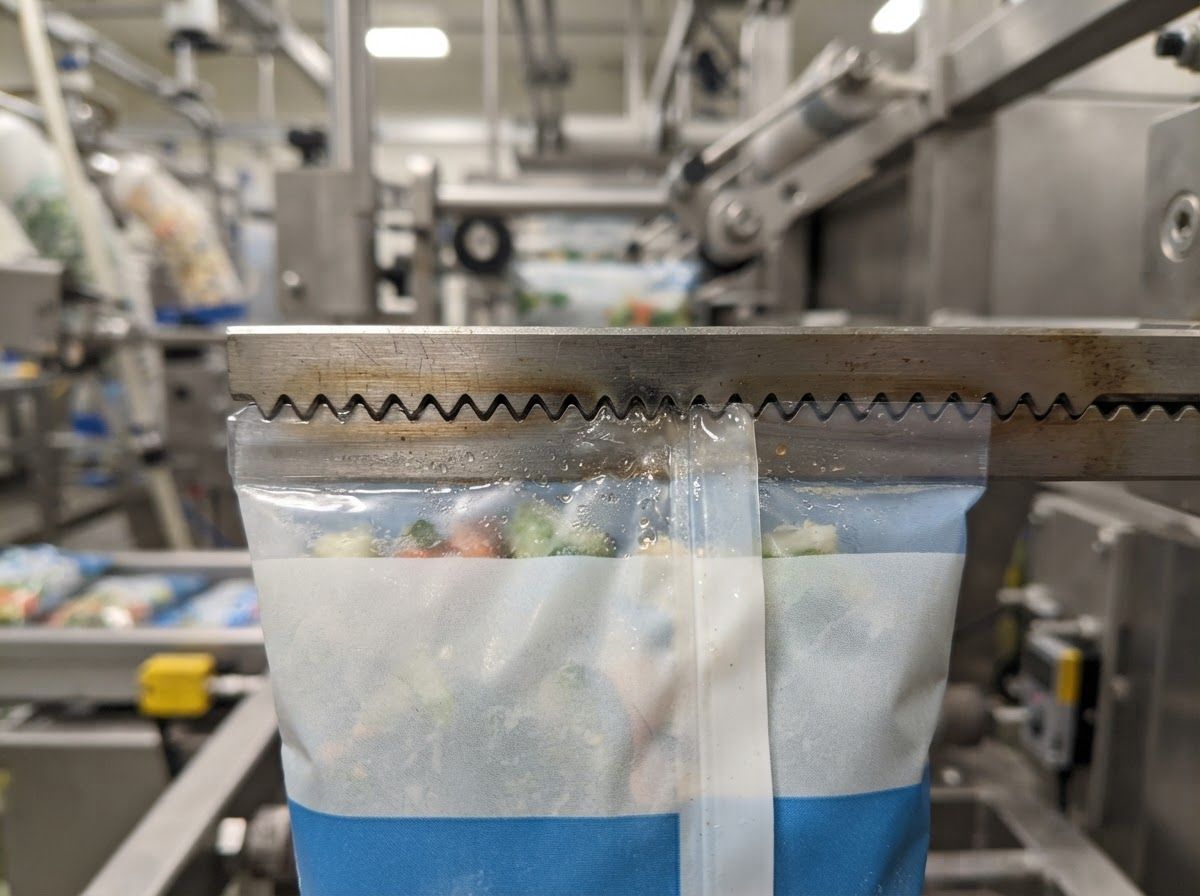
- Clamping Pressure and Jaw Geometry: Clamping pressure must apply uniform compressive force across the entire seal surface, bringing the molten inner interfaces into intimate microscopic contact and flattening out package wrinkles. Industrial jaw designs utilize specific serration profiles (such as horizontal, cross-hatch, or radiused-edge flat profiles). Serrated profiles increase the effective contact surface area and create localized mechanical interlocks, whereas radiused transition edges eliminate sharp stress concentrators along the HAZ notch boundary, reducing low-temperature notch fracture.
Seal Contamination Tolerance and Metallocene Catalyst Sealants
In industrial frozen food packaging lines, product residues—including animal fats, meat juices, blood, water droplets, and pulverized ice crystals—frequently splatter across the seal zone during high-speed bag filling. When standard LDPE or homopolymer sealants are clamped over these contaminants, the foreign matter forms an unbonded boundary layer that interrupts polymer chain fusion.
This contamination creates micro-capillary channels across the seal seam, causing hermetic failure, vacuum loss, and product spoilage.
To resolve seal-contamination failures, modern packaging specifications deploy advanced metallocene-catalyzed polyethylenes (mLLDPE), polyolefin plastomers (POP), or ionomer resins (ethylene-methacrylic acid copolymers crosslinked with metal salts):
- Encapsulation and Caulking Mobility: Metallocene LLDPE and plastomer resins exhibit lower melting points, lower shear viscosities in the molten state, and high hot tack strength. When closed over fluid fats or particulate ice dust, the molten resin flows around and encapsulates the foreign particles, displacing localized contaminants into microscopic, isolated islands while maintaining a continuous, hermetic polymer weld across the broader seal plane.
- Hot Tack Strength Across Extended Windows: Hot tack—the cohesive strength of the molten seal immediately following the opening of the sealing jaws while the resin remains hot—is critical on high-speed vertical form-fill-seal (VFFS) bagging lines. Heavy, free-falling frozen food portions impact the bottom seal immediately after formation. mLLDPE and POP sealants provide high hot tack strength across a wide temperature window, preventing bottom-seal blowouts and ensuring leak-free performance on high-speed production lines.
Technical Specification and Procurement Criteria for Cold-Chain Flexible Packaging
Specifying and procuring flexible packaging for sub-zero food logistics requires an integrated engineering approach that aligns physical testing protocols, food matrix requirements, and distribution stresses with total cost of ownership (TCO) objectives.
Procurement teams must shift from evaluating unit packaging purchase price in isolation to analyzing end-to-end operational costs: TCO = Material Cost + Conversion Cost + Scrap/Downtime Cost + Leakage/Waste Cost + Rejection/Chargeback Cost. An incremental investment in structural film performance significantly reduces systemic downstream losses.
When structuring procurement agreements for high-performance frozen food bags, technical specifications must mandate verified testing regimes, precise resin formulations, tight gauge tolerances, and comprehensive international food-contact safety compliance.
The procurement specification process should evaluate three functional criteria:
- Product Geometry Analysis: Sharp, bone-in cuts or pointed ice edges mandate BOPA or multi-ply nylon reinforcement, whereas smooth, uniform bulk goods function effectively with high-ductility mLLDPE/LDPE blends.
- Lipid & Sensitivity Profiling: Foods with high polyunsaturated fatty acid content require high-barrier VMPET, EVOH, or aluminum foil structures, while non-fat, rapid-turnover items can utilize standard polyolefin profiles.
- Verification & Compliance Sign-Off: Formulations must meet ASTM sub-zero mechanical thresholds and regulatory migration testing limits (FDA and EU 10/2011).
Cold-Environment Mechanical Testing and Validation Protocols
Standard room-temperature laboratory testing fails to predict flexible film performance in commercial -20°C distribution environments. To establish true fitness-for-use, incoming quality control (IQC) and structural validation protocols must perform mechanical testing under conditioned sub-zero environments:
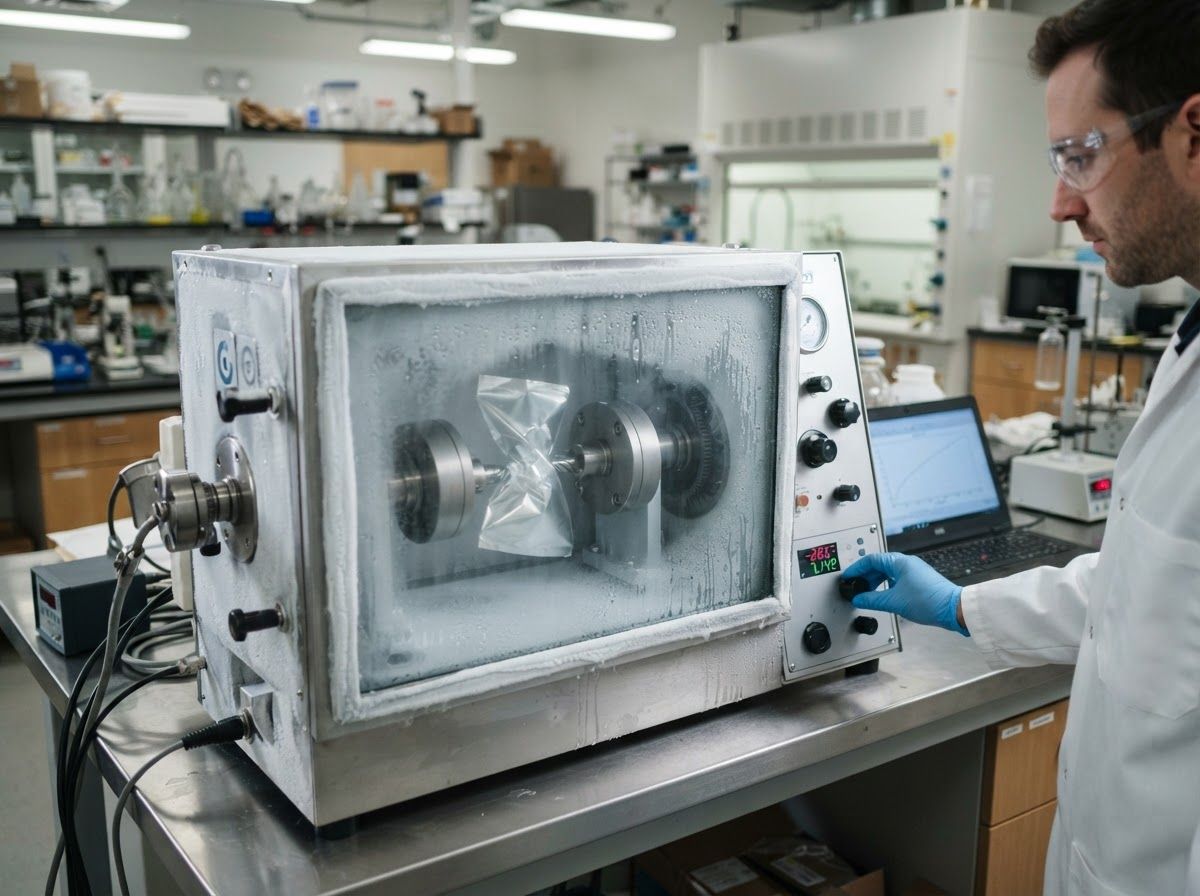
- Sub-Zero Dart Impact Resistance (ASTM D1709 / ISO 7765-1 at -18°C): Standard dart impact testing measures the kinetic energy that causes flexible plastic film to fail under specified impact conditions from a free-falling dart. Conditioning test specimens at -18°C to -40°C for at least 24 hours prior to release simulates the impact resistance of the film when filled cases are dropped on cold fulfillment center floors. High-performance multi-layer freezer films should maintain high dart drop impact energies, without exhibiting brittle, star-crack shattering.
- Low-Temperature Gelbo Flex Durability (ASTM F392 at Sub-Zero Temperatures): The Gelbo flex test subjects cylindrical film samples to repetitive twisting and crushing motions, simulating the mechanical flexural fatigue films experience during long-distance intermodal transport. Following a specified cycle count (e.g., 250 to 1,000 flex cycles at low temperature), the sample is evaluated for pinhole formation via dye penetration or helium mass spectrometry. High-integrity BOPA/mLLDPE composites suppress pinhole formation under dynamic flex testing.
- Internal Pressure Burst and Creep Strength (ASTM F1145 / ASTM F2054): Restrained or unrestrained burst testing pressurizes the sealed packaging pouch with compressed gas until the thermal seam ruptures. This test evaluates overall seal strength, identifies localized weak spots, and confirms that seal seams withstand internal pressure spikes caused by altitude changes during air freight or mountain-pass transit without peeling or bursting.
- Dye Penetration and Bubble Emission Leak Detection (ASTM F1929 / ASTM D3078): Verifying hermetic integrity requires dye penetration testing (using surfactant-doped visual dyes to detect micro-channels along seal seams) and vacuum-decay bubble emission testing (submerging the sealed pouch in a vacuum chamber fluid to visually identify escaping gas streams).
Procurement Decision Framework: Balancing Film Thickness, Barrier Performance, and Cost
Procurement engineers and packaging development teams must balance film thickness (gauge optimization), structural performance, and total packaging spend. Over-engineered gauge choices increase material spend, carbon footprint, and sealing cycle times, while under-engineered films result in line jams, cold embrittlement, and costly retail rejections. Right-gauged multi-layer laminates (such as BOPA/mLLDPE) maximize structural toughness at minimal overall gauge.
To secure reliable, cost-effective cold-chain packaging, procurement frameworks should follow four core vetting principles:
- Verify Complete Technical Data Sheets (TDS): Technical data sheets should document performance values for key parameters—such as Dart Drop Impact, Elmendorf Tear Strength, Tensile Strength at Break, WVTR, and OTR—specifically noting the standard test temperatures and relative humidities applied. Data sheets that only report ambient (23°C) mechanical metrics should be audited for verified sub-zero testing data.
- Audit Film Thickness Uniformity and Gauge Tolerance: In multi-layer blown or cast film extrusion, nominal thickness variations must remain tightly controlled (typically within +/-3% to +/-5% of nominal gauge). Off-gauge, thin spots along the film profile create localized weak zones that invite preferential flex cracking, localized barrier loss, and inconsistent heat transfer across automated sealing jaws.
- Validate Food-Contact Regulatory Documentation: Procurement teams must ensure that supplied films comply fully with target regional food contact regulations, including US FDA 21 CFR § 177 sections and European Commission Regulation (EU) No 10/2011. Certificates of Compliance (CoC) and overall/specific migration testing reports must verify that slip additives, anti-block agents, primary resins, and laminating adhesives do not migrate into fatty or aqueous food simulants beyond legal limits.
- Implement TCO Risk-Reward Analysis: Investing in high-performance resin formulations (such as upgrading from single-layer standard polyolefins to coextruded BOPA/mLLDPE structures) yields substantial operational returns. Preventing seal failure, eliminating retail chargebacks from freezer burn, and maintaining continuous packaging line throughput delivers net system cost savings across high-volume industrial cold chains.
Table 3: Quality Control & Mechanical Testing Protocol for Cold-Chain Packaging
| Standard Test Method | Test Description & Conditioning | Target Failure Criteria / Threshold | Operational Quality Impact |
|---|---|---|---|
| ASTM D1709 (Method A/B) | Low-Temperature Dart Drop Impact (Pre-conditioned at -18°C for 24 hours) | No brittle shatter; high failure energy retention compared to ambient baseline | Prevents bottom-seal and wall ruptures when cases drop in sub-zero distribution |
| ASTM F392 | Gelbo Flex Durability (Repetitive twisting/crushing at low temperature) | Pin-hole count: 0 pinholes per 300 sq. cm after standard 250–500 cycle flex test | Prevents micro-capillary leaks and vacuum loss caused by road vibration |
| ASTM F1145 / F2054 | Internal Seal Burst and Creep Pressure Resistance | Burst pressure exceeding internal product stress limits; cohesive seal failure | Prevents seal seam splits during automated bulk casing and high-altitude transport |
| ASTM F1249 / D3985 | Instrumental WVTR (37.8°C, 90% RH) and OTR (23°C, 0% RH) | WVTR < 0.5–1.0 g/m2/day; OTR < 1.0–2.0 cc/m2/day (for high-fat foods) | Inhibits freezer burn desiccation and oxidative rancidity across shelf life |
| ASTM F1929 / D3078 | Dye Penetration & Submerged Bubble Emission Leak Testing | Zero dye penetration along seal seams; zero continuous bubble stream release | Confirms hermetic fusion and detects channel voids caused by fat/ice contamination |
Table 3 Analysis: Establishing comprehensive quality validation protocols ensures packaging materials survive demanding cold-chain handling before volume manufacturing begins.
Mandating sub-zero conditioned physical tests (such as low-temperature Dart Drop and Gelbo flex tests) bridges the gap between static room-temperature data sheets and real-world distribution stresses. Integrating these standard validation criteria directly into supplier procurement contracts protects operational margins and safeguards brand reputation across global cold chains.
Conclusion
Selecting flexible packaging for industrial cold chains requires aligning polymer thermodynamics, barrier properties, and thermal seal mechanics with sub-zero distribution stresses. Engineered multi-layer laminates combining ductile metallocene polyethylenes, puncture-resistant polyamides, and specialized gas barriers effectively mitigate glass transition embrittlement, flex cracking, and freezer burn. For procurement and operations teams, prioritizing verified sub-zero mechanical testing and precise resin selection minimizes systemic costs associated with seal failure, moisture loss, and product rejection. Evaluating total cost of ownership rather than initial material price ensures sustained hermetic integrity throughout dynamic commercial storage. For specific material specifications or transit testing data, contact technical specialists.


0 Comments