

Key Takeaways
- The Science of Zero Permeability: Utilizing high barrier aluminum foil packaging ensures a total physical block against moisture and oxygen to prevent the degradation of sensitive pharmaceutical ingredients.
- Extreme Temperature Resistance: Advanced foil structures provide reliable protection across thermal extremes, maintaining material stability from deep-freeze logistics to high-temperature sterilization processes.
- Risk Mitigation in Precision Industries: Deploying medical grade foil acts as a strategic safeguard against contamination, fulfilling the zero-tolerance safety requirements of high-tech and life science sectors.
- Optimizing Supply Chain Security: Superior barrier properties reduce total ownership costs by preventing the catastrophic loss of high-value bulk materials during long-distance maritime or air transit.
Read on to discover how high-barrier solutions protect your most critical industrial assets.
Introduction
In precision-driven sectors such as biotechnology and high-tech manufacturing, the margin for error in logistics is virtually non-existent. A single instance of moisture ingress or oxygen exposure can render a high-value batch of pharmaceutical precursors or delicate electronic components completely worthless. For these industries, high barrier aluminum foil packaging serves as more than just a wrapper; it functions as an external shield, providing a vital physical barrier that preserves the intrinsic value of the cargo throughout the global supply chain.
Our latest performance testing highlights the robust nature of these materials, showcasing how advanced foil structures withstand mechanical stress and thermal fluctuations that would cause traditional materials to fail. By observing the material’s behavior under these simulated real-world pressures, it becomes clear why industry leaders treat packaging as a form of risk insurance rather than a mere procurement expense. This level of protection is a strategic necessity for any operation where product degradation is not an option.
This article examines the engineering behind zero permeability and how it eliminates the threat of contamination in sensitive environments. We will break down why medical grade foil is essential for maintaining product efficacy and how achieving extreme temperature resistance allows for seamless transit from sub-zero storage to high-heat sterilization environments. By exploring these technical benchmarks, you will learn how to optimize your packaging strategy to safeguard your most sensitive assets and reduce the total cost of ownership across your logistics operations.
In the high-stakes world of precision manufacturing and pharmaceutical logistics, the word “packaging” is often a significant understatement. With fifteen years of experience in industrial sealing solutions, I have observed high-value batches of Active Pharmaceutical Ingredients (APIs) and sensitive aerospace components compromised because packaging was treated as a commodity rather than a critical piece of engineering.
When we discuss High Barrier Aluminum Foil Packaging, we are not discussing a simple container. We are discussing a technical shield for your cargo. Industrial foil structures manage the atmospheric interaction of the contents—effectively eliminating gas exchange entirely.
Standard packaging may appear sufficient, but the difference lies in molecular integrity. If you are shipping volatile chemicals, vaccines, or precision silicon wafers across the equator in a humid shipping container, the physics of your packaging is the primary defense against significant product loss and insurance claims.
The Physics of “Zero”: Why Molecular Permeability is the Silent Killer of Precision Assets
Most industrial polymers, from standard LDPE to high-clarity PET, are permeable at a molecular level. Under an electron microscope, these films appear as a chaotic mesh of polymer chains. Gas molecules like oxygen and water vapor find a “tortuous path” through these chains, eventually reaching the product. While minimal ingress may be acceptable for consumer goods, it is catastrophic for moisture-sensitive catalysts or high-value chemicals.
The conflict here is between the illusion of protection and absolute physical isolation. Many logistics operations face losses because they rely on “high-barrier” plastics that still possess a measurable Water Vapor Transmission Rate (WVTR). In the world of precision assets, low permeability is insufficient. Zero permeability is the requirement.
This is where 1100 or 1235 alloy aluminum is utilized. These alloys are 99.9% pure aluminum. When laminated into a structure, they create a crystalline barrier. Gas molecules cannot pass through the metallic lattice. The key is the “dead-fold” property. Unlike plastic, which exhibits elastic memory, aluminum foil maintains its shape when folded, ensuring the physical barrier remains intact at seal points and corners.
However, the Pinhole Threshold is a critical factor. Choosing a foil thinner than 9 micrometers (µm) increases the risk of microscopic voids. At 12µm and above, the foil is considered an absolute barrier. For industrial packaging needs, we recommend a minimum of 12µm to achieve the absolute physical limits of protection.
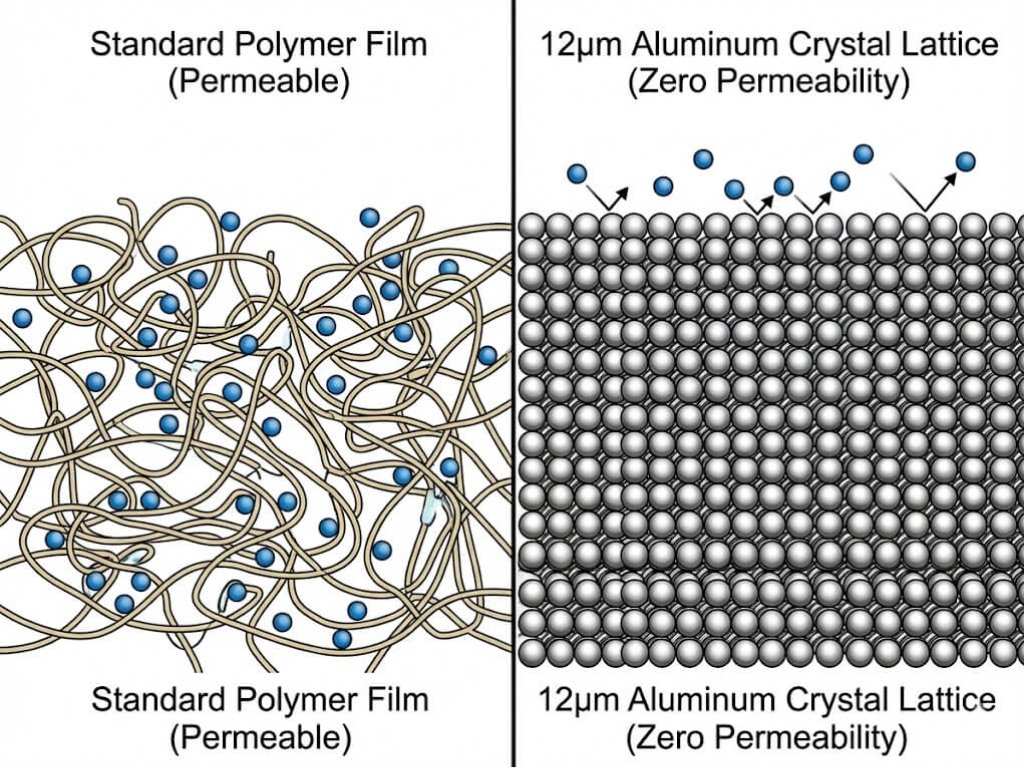
Table 1: Barrier Performance Comparison
| Material Structure | WVTR (g/m²/24h) | OTR (cc/m²/24h/atm) | Barrier Type |
|---|---|---|---|
| Standard LDPE (50µm) | 4.5 – 6.0 | 2500 – 3000 | Porous |
| Metallized PET (VMPET) | 0.5 – 1.2 | 1.5 – 2.5 | High-Resistance |
| Pure AL Foil (12µm) | < 0.001 | < 0.001 | Absolute |
| OPA/AL/PE Composite | < 0.01 | < 0.01 | Absolute + Structural |
Technical Note: Scent migration is a crude but effective indicator of barrier failure. With a properly engineered High Barrier Aluminum Foil Packaging structure, there is zero migration. If a chemical aroma is detectable through a sealed bag, the OTR (Oxygen Transmission Rate) is too high.
Thermal Extremes: Maintaining Structural Integrity from -70°C to +150°C
Global logistics involves significant thermal fluctuations. Products may be loaded at 30°C, reach 55°C in a shipping container, and then be moved to deep-freeze nitrogen storage at -70°C. Most plastics become brittle and develop micro-cracks at sub-zero temperatures or delaminate under intense heat.
Pure aluminum foil remains stable across these extremes, but the integrity depends on the bonding agents used in the laminate. Standard adhesives may “glass out” at low temperatures, leading to delamination when the material is moved.
For products requiring 150℃ steam sterilization, specialized retort-grade adhesives are required. These cross-linked polymers maintain a chemical bond even when the aluminum and plastic layers expand and contract at different rates. The material must maintain surface tension; “tunneling” (where the foil separates from the plastic) indicates a flawed lamination process.
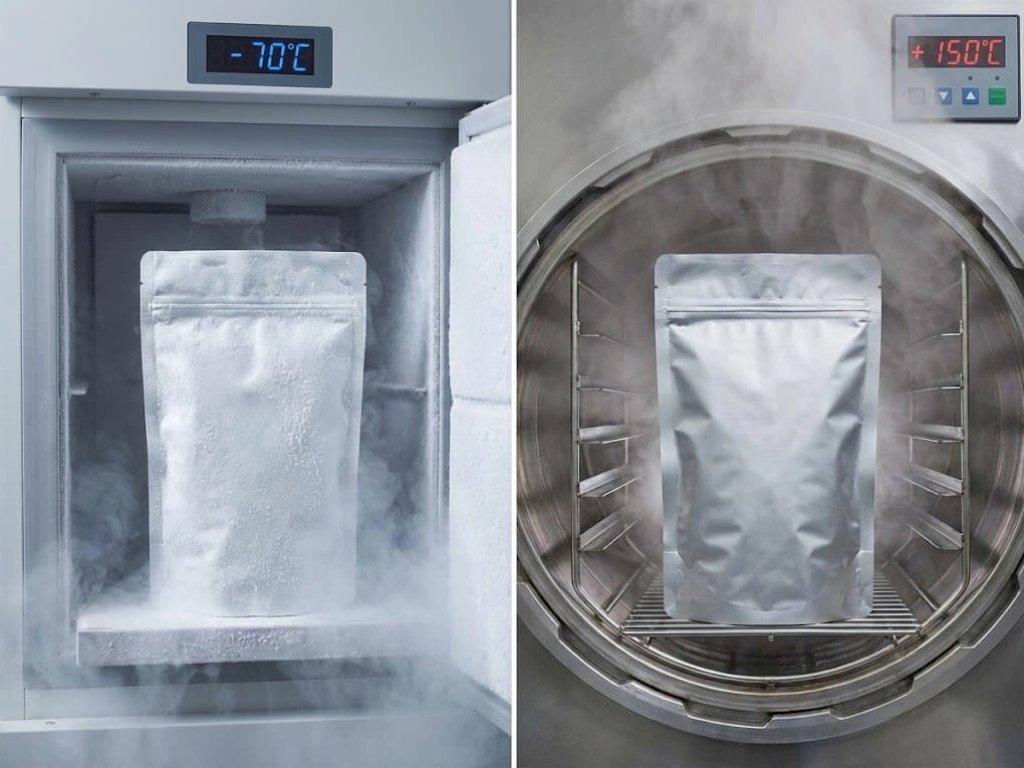
Table 2: Thermal Performance Benchmark
| Condition | Peel Strength (N/15mm) | Tensile Strength (MPa) | Failure Mode (Standard) |
|---|---|---|---|
| Room Temp (25°C) | 8.5 | 45 | None |
| Deep Freeze (-70°C) | 7.2 | 52 | Embrittlement / Cracking |
| Autoclave (135°C) | 6.8 | 38 | Delamination / Shrinkage |
| Retort Grade (AL) | 8.1 | 42 | Stable Structure |
Industrial Case: Cold-chain logistics often expose packaging to thermal shock. Using a Mylar Bag construction with a 12µm aluminum core and OPA (Nylon) reinforcement prevents the “stress-whitening” and flaking often seen in lower-grade metallized films during dry ice storage transitions.
The Strategic Bioshield: Medical-Grade Foil for Sensitive Assets
In life sciences, packaging is an extension of the product. For vaccine adjuvants, the concern extends beyond moisture to the degradation caused by light and leachable chemicals.
High Barrier Aluminum Foil Packaging provides total opacity. Many biologics are photosensitive; light in the 200nm to 800nm range can trigger degradation. Furthermore, “Zero-Leachable” standards are vital. In medical-grade foil structures (such as OPA/AL/PVC), the aluminum layer is so dense that adhesive molecules cannot migrate into the product zone, ensuring the purity of high-value chemicals.
Table 3: Light Transmission & Purity Metrics
| Wave Length (nm) | Clear PET Film (%) | Metallized PET (%) | AL Foil (9µm+) (%) |
|---|---|---|---|
| 200 (UVC) | 12.0 | 0.05 | 0.00 |
| 450 (Blue Light) | 88.0 | 1.20 | 0.00 |
| 700 (Infrared) | 92.0 | 4.50 | 0.00 |
| Migration Risk | High | Medium | Zero |
Beyond light protection, a continuous metal layer provides a Faraday cage effect, protecting Precision Chip Packaging from Electrostatic Discharge (ESD).
Mechanical Fortification: Resisting the Demands of Bulk Logistics
In bulk logistics, such as shipping 500kg of high-purity granules in an Aluminum Foil FIBC Liner, the primary threat is mechanical vibration.
Aluminum foil requires reinforcement to withstand repeated bending (Gelbo Flex testing). By bonding OPA (Nylon) to the exterior, the structure gains the necessary durability to absorb kinetic energy. A three-layer PA/AL/PE “sandwich” makes the packaging robust for heavy-duty applications.
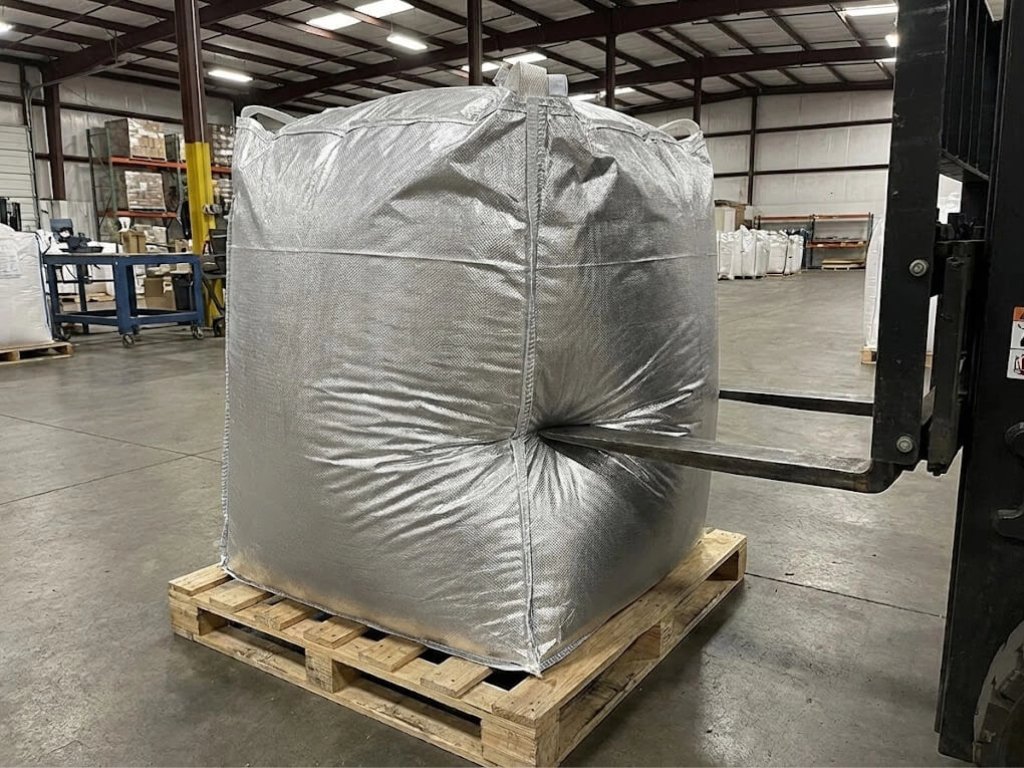
Testing indicates that while standard foil may develop pinholes after 50 cycles, a 15-micron Nylon layer extends this to over 2,000 cycles without a breach. This is essential to maintain the vacuum seal of million-dollar cargo.
Table 4: Mechanical Durability Profile
| Material Structure | Puncture Resistance (N) | Gelbo Flex (Cycles to Failure) | Application |
|---|---|---|---|
| PE/AL/PE (Standard) | 45 | < 100 | Small Pouches |
| PET/AL/PE | 65 | 400 | Medium Sacks |
| OPA/AL/PE (Reinforced) | 120+ | 2,500+ | Bulk Industrial |
| OPA/AL/CPP (Retort) | 110 | 1,800 | High Heat |
Operational Insight: Abrasion friction between bags during long-haul trucking can compromise lower-quality materials. For abrasive granules, the coefficient of friction and puncture ratings are critical metrics that must be verified to ensure cargo safety.
Strategic Supply Chain Security: Risk Mitigation ROI
The true value of High Barrier Aluminum Foil Packaging lies in Risk Mitigation ROI. Choosing a lower-cost Vacuum Bag that fails results in the loss of raw materials, international shipping costs, and customer trust.
High-performance foil structures act as risk insurance. They extend shelf-life, enabling more cost-effective shipping methods over longer distances. If a product remains stable for 24 months instead of 6, sea freight becomes a viable alternative to air freight, significantly reducing logistics expenditure.
For R&D and startups developing new electrolytes or catalysts, utilizing small-batch customized foil allows for definitive stability testing by removing packaging failure as a variable.
To evaluate if your current material structure is sufficient for your global supply chain requirements, contact our technical team via Contact Us for a comprehensive packaging audit.
Conclusion
Choosing High Barrier Aluminum Foil Packaging is a strategic engineering decision for zero-failure logistics. A 12µm+ crystalline aluminum lattice remains the only physical barrier capable of achieving near-zero WVTR/OTR while protecting assets from thermal and mechanical stress.
As a source manufacturer, we specialize in custom-engineered laminates designed for the pharmaceutical and aerospace sectors, providing the protection required for high-value cargo in global transit.
Ready to eliminate permeability risks? Contact our engineering team today for a custom barrier analysis or to request a technical sample kit for your specific chemical compatibility requirements.
Get a Quote & Professional Technical Support


0 Comments