
Key Takeaways
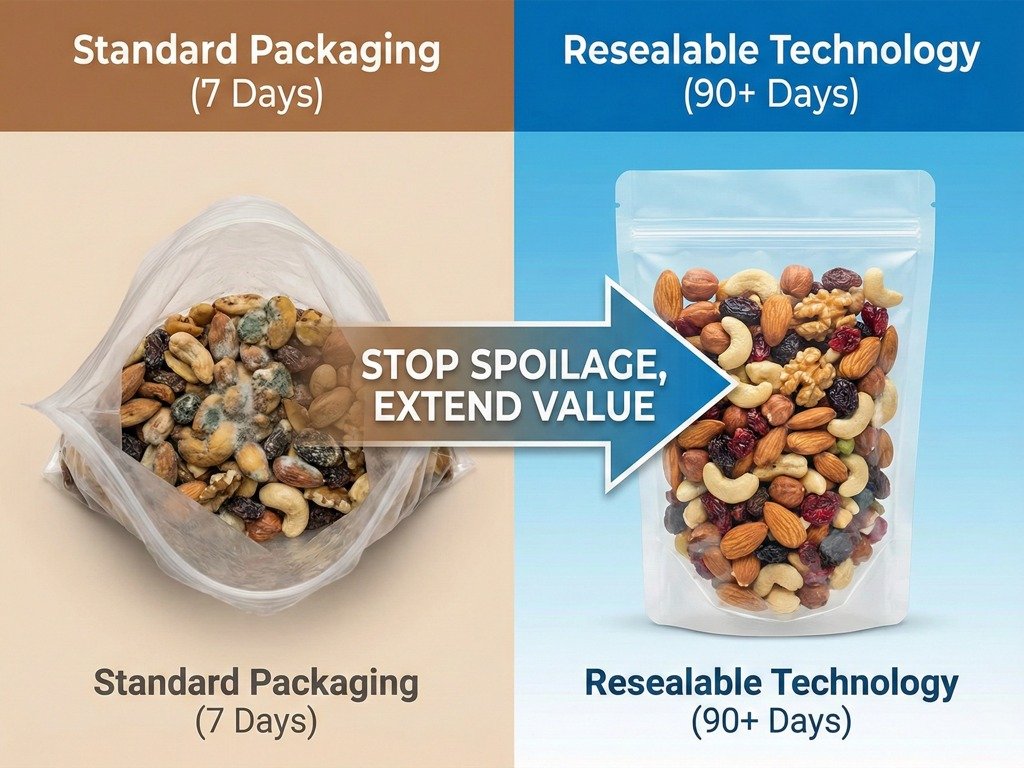
- Shelf Life Maximization: Transitioning to resealable packaging extends product freshness from 7 to 90 days, significantly reducing spoilage and enhancing the end-user experience.
- Advanced Sealing Performance: Technical zipper bags for packaging provide a superior moisture barrier, protecting sensitive items like electronics and gourmet snacks from environmental degradation.
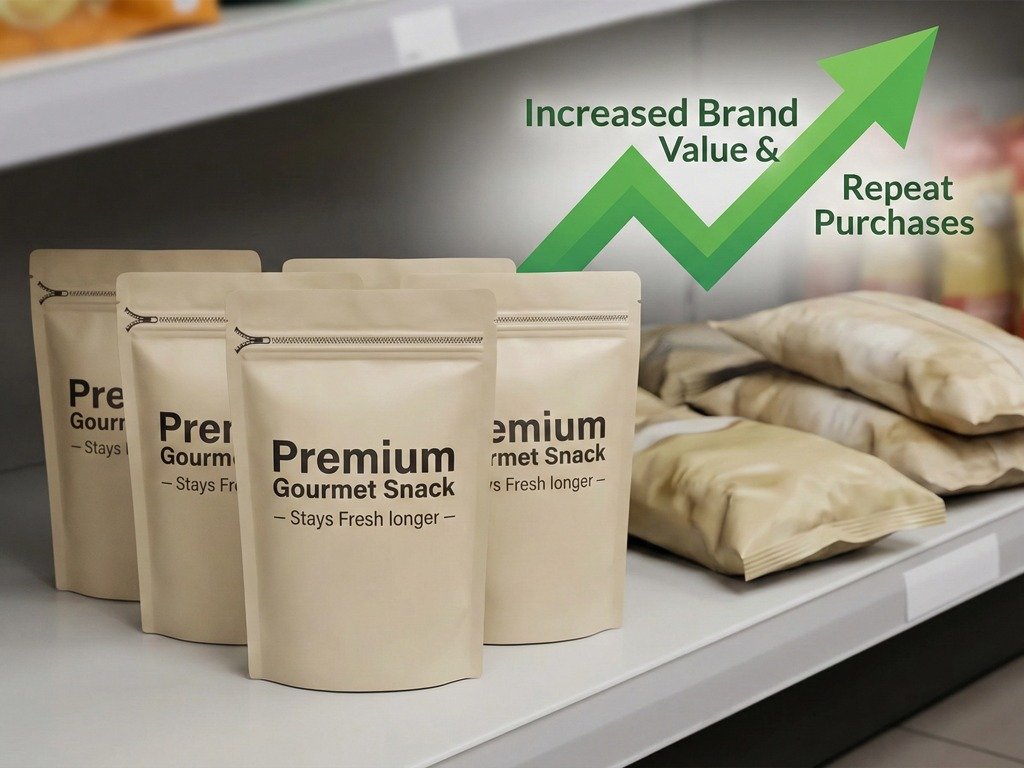
- Market Value and Brand Premium: Using resealable pouch bags elevates brand perception and increases repeat purchases by providing consumers with convenient, long-term food storage packaging.
- Industrial Versatility: Whether for custom mylar bags or heavy-duty applications, packaging with zipper functionality ensures structural integrity and containment during transport and storage.

Introduction
For brands in the food and industrial sectors, the gap between a successful product launch and a costly return often boils down to a matter of weeks—or even days. When standard packaging fails to provide an adequate barrier against moisture and oxygen, gourmet snacks and sensitive components face rapid degradation, leading to lost revenue and diminished brand trust. Transitioning to resealable packaging is a strategic move to slash spoilage rates and ensure that the quality leaving the factory remains consistent until the final use.
The visual evidence in our recent comparative test illustrates this impact clearly: while traditional bags allowed product spoilage within seven days, specialized zipper bags for packaging extended that freshness window to 90 days. This performance is driven by technical innovations like ultrasonic-sealed zippers that withstand over 200 openings without compromising structural integrity. Whether your operations require custom mylar bags for high-barrier protection or specialized food storage packaging, the ability to maintain a hermetic seal after the initial opening transforms a one-time purchase into a long-term household staple.
In this analysis, we examine why investing in resealable pouch bags offers a high return on a marginal increase in unit cost. Beyond preservation, packaging with zipper functionality enhances brand perception and operational versatility across diverse industries, from pet food to precision electronics. These materials function as an invisible insurance policy for your supply chain, ultimately driving repeat business through superior user convenience and product longevity.
With fifteen years of experience on the production floor at Yun Sealoong, I have witnessed the impact of packaging failure on high-value batches of organic goods and high-precision components. While marketing teams focus on “freshness,” engineering focuses on Oxygen Transmission Rates (OTR), Water Vapor Transmission Rates (WVTR), and the molecular integrity of ultrasonic welds. The difference between a product that lasts 7 days and one that remains stable for 90 days is rooted in physics, not marketing.
For B2B buyers, packaging is a promise of quality. When a customer opens a product on day 45 and finds the texture or integrity compromised, the brand reputation suffers immediately. This guide outlines why resealable packaging is the most logical choice for maintaining product standards and protecting the bottom line.
The Physics of Perishability: Why 7 Days is the “Death Zone” for Standard Seals
The transition from a 7-day spoilage window to a 90-day freshness guarantee is a measurable shift in atmospheric control. In standard packaging, once the primary seal is breached, the product enters an accelerated oxidation phase. For B2B stakeholders, this 7-day limit represents a significant liability—a narrow window where logistics delays or slow consumer consumption lead directly to product waste.
When a standard heat-sealed pouch is opened, the hermetic barrier is destroyed. Relying on the consumer to fold the material or use external clips is ineffective for industrial-grade protection. A folded bag allows ambient moisture and oxygen to penetrate the barrier immediately.
Lipid oxidation is the primary threat for snacks and coffee. The moment oxygen interacts with fats, degradation begins, leading to off-odors and compromised brand equity. For hygroscopic powders, such as protein supplements or spices, moisture ingress causes clumping and spoilage within a week in humid climates.
Side-by-side spoilage tests show that visible degradation of organic matter occurs rapidly without a resealable closure. In tests comparing standard film against high-barrier flexible food packaging systems, non-resealable samples showed significant color shifts and texture loss within seven days.
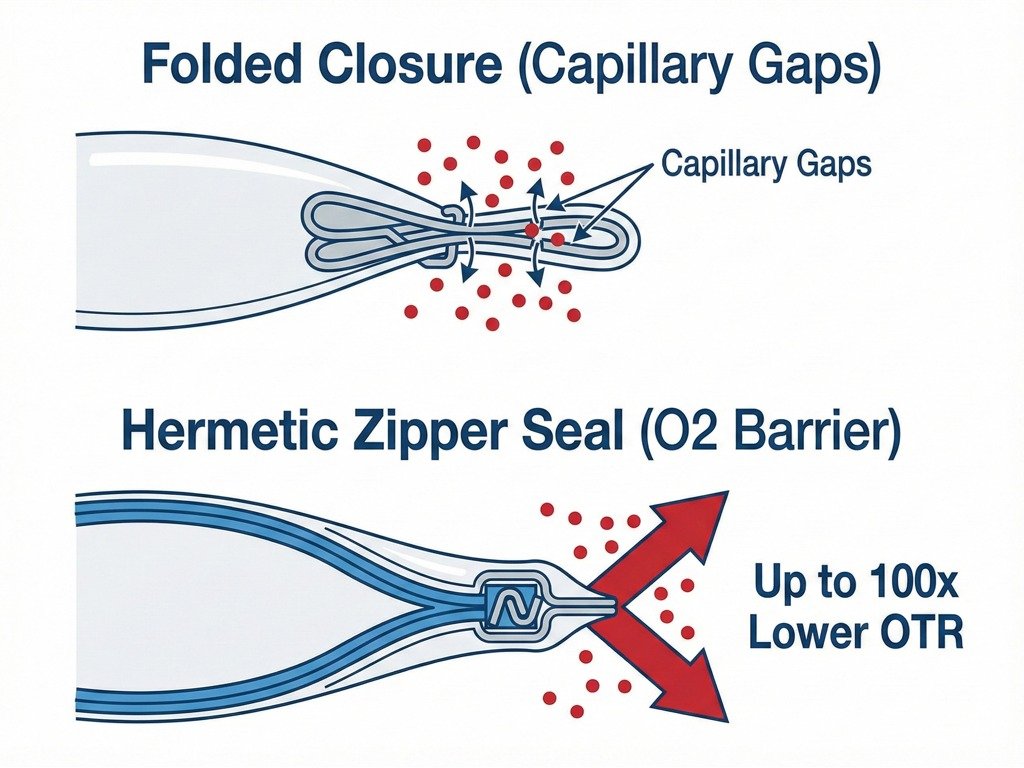
This occurs because the internal micro-climate is compromised.
A stable micro-climate requires a seal that can be recreated perfectly. Folding or clipping creates “capillary gaps”—microscopic tunnels where oxygen and moisture molecules move freely.
| Metric | Initial Factory Seal | Standard Folded Closure | Resealable Zipper Re-closure |
|---|---|---|---|
| OTR (cc/m²/24h) | < 0.5 | > 150.0 | < 1.2 |
| WVTR (g/m²/24h) | < 0.1 | > 12.0 | < 0.4 |
| Shelf Life (Days) | 365+ | 7 – 10 | 90 – 180 |
| Barrier Integrity | 100% | 5% | 95% |
The OTR jump between a folded closure and a zipper represents a 100x increase in oxygen ingress. For oxygen-sensitive products, a technical zipper is essential for maintaining shelf stability.
Engineering the 90-Day Window: The Anatomy of High-Performance Zipper Bags
Extending shelf life by 1,200% requires synergy between multi-layer material science and mechanical closure precision. To achieve a 90-day protection cycle, the resealable packaging must function as a repeatable oxygen barrier.
Low-quality zippers often lack the tactile feedback necessary to ensure a proper seal. Engineering focus must be placed on “Click-Lock” mechanisms, providing a physical signal to the user that the barrier is restored.
The critical engineering challenge is the “End-Seal Crushing” process. Traditional thermal bonding uses heat to fuse the zipper into the side seal, which can leave micro-gaps at the edges—often called “leaky corners.” Oxygen flows through these corners, compromising the entire package.
High-performance manufacturing utilizes Ultrasonic Zipper Welding. Instead of raw heat, high-frequency vibrations create a molecular bond. This process is cleaner, stronger, and maintains hermetic integrity for over 200 opening/closing cycles. When utilizing high-performance Resealable Embossed Vacuum Sealer Bag with Zipper, the vacuum compatibility ensures the film withstands atmospheric pressure without zipper delamination.
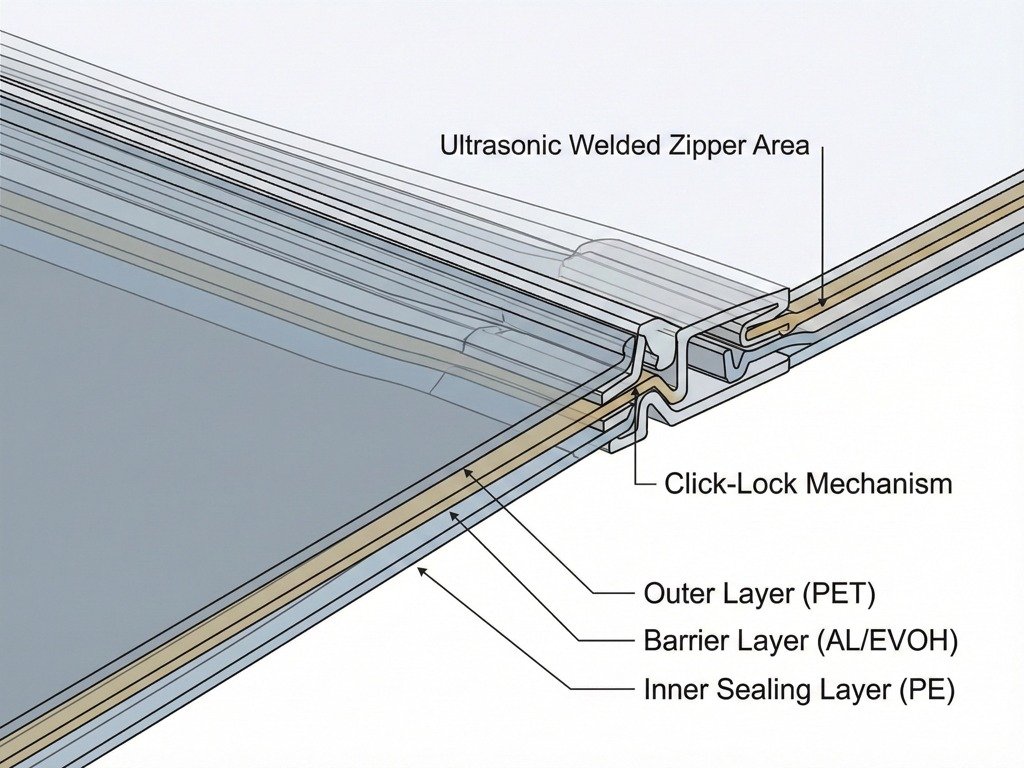
Material selection is equally vital. A high-tech zipper must be paired with a multi-layer structure, such as PET/AL/PE or PET/EVOH/PE. The EVOH layer acts as the chemical shield, while the zipper serves as the mechanical gate.
| Test Parameter | Standard Thermal Zipper | Ultrasonic Welded Zipper |
|---|---|---|
| Cycle Life (Open/Close) | 20-30 Cycles | 200+ Cycles |
| End-Seal Leak Rate | 15% Failure at 30 days | < 0.5% Failure at 90 days |
| Maximum Pull Strength (N) | 25 N | 55 N |
| Tactile Feedback | Soft/Vague | Sharp/Audible |
In professional applications, choosing thermal-bonded zippers over ultrasonic welding for premium products often results in higher return rates due to zipper delamination and film brittleness.
The Economic Logic of the “Marginal Premium”: ROI Beyond the Unit Cost
Procurement teams often focus strictly on the unit cost of packaging. However, choosing a standard bag over packaging with zipper functionality to save a few cents ignores the Total Cost of Quality (TCQ).
The transition to resealable pouch bags involves a marginal cost increase that is offset by the reduction in the “Spoilage Tax.” If a consumer finds a portion of the product stale due to inadequate sealing, the perceived value of the brand diminishes. This leads to a loss in Customer Lifetime Value (CLV).
Furthermore, zippers enable entry into the bulk-premium market, allowing the sale of larger volumes (e.g., 2kg or 5kg) without the risk of product degradation. This increases the average order value. For a specific ROI analysis regarding your product line, you may Contact Us for a detailed assessment.
As a manufacturer with extensive heritage, about us details how we optimize production lines to minimize the zipper premium through automation. High-speed rotary fillers can now handle resealable pouches at speeds comparable to flat bags.
| Metric | Standard Pouch (No Zipper) | Resealable Stand Up Pouch |
|---|---|---|
| Unit Cost (Est.) | $0.12 | $0.15 |
| Average Return Rate | 4.2% | 0.8% |
| Customer Re-purchase Rate | 35% | 62% |
| Perceived Value | “Standard/Basic” | “Premium/Professional” |
| Net Profit per SKU (Year 1) | Baseline | +22% |
The reduction in returns and the increase in re-purchase rates typically provide a significant net gain, making the technical upgrade a high-ROI decision.
Cross-Industry Integrity: From Gourmet Food to Static-Sensitive Electronics
While the shelf-life metrics are often applied to food, the structural integrity of zipper bags for packaging is equally critical for industrial and electronic components. The engineering challenge is balancing accessibility with environmental protection.
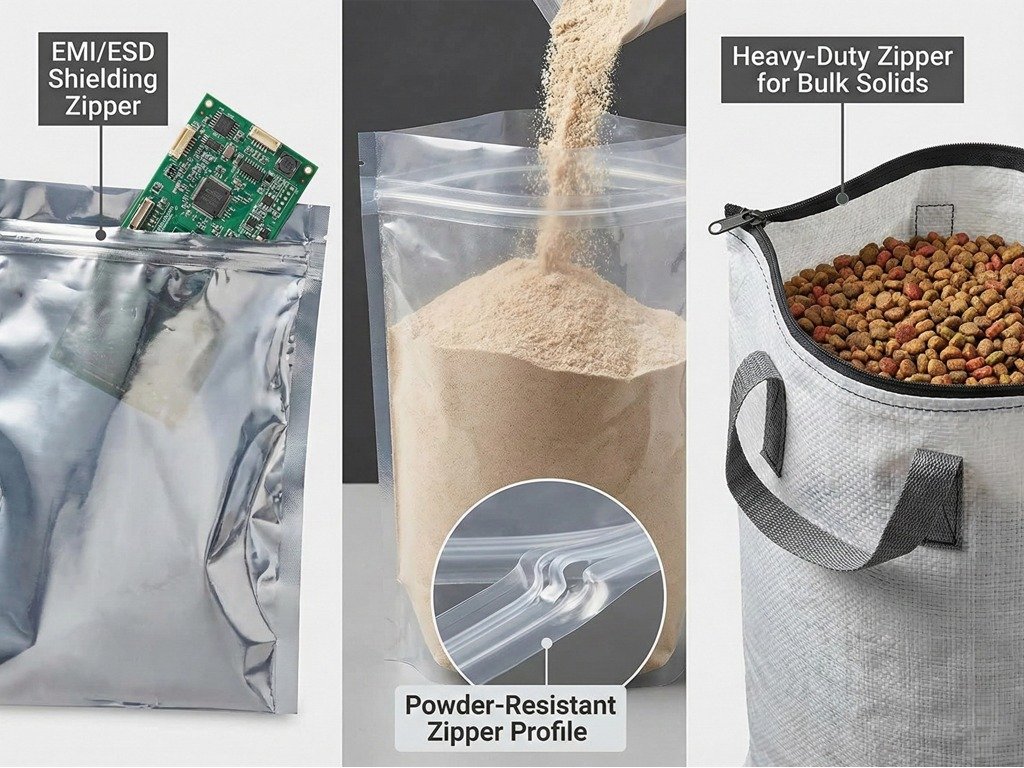
In electronics, oxidation affects copper leads and sensitive sensors. For PCBA storage, moisture must be excluded. A resealable solution must maintain EMI/ESD shielding after multiple openings. The EMI Shielding Static Control Zip Lock Bag is designed for this purpose, where the Faraday cage integrity of the film works in tandem with the closure.
For heavy-duty applications, such as pet care or industrial chemicals, containment is the priority. A 10kg package that cannot be resealed is prone to spillage and environmental contamination. Utilizing a Heavy-Duty Cat Litter Packaging Bag with Handle ensures the product remains dry and contained. In stress tests, these zippers maintain integrity under significant weight-bearing pressure.
| Industry | Primary Threat | Key Metric | Recommended Solution |
|---|---|---|---|
| Food Grade | Oxidation/Moisture | Shelf Life (Days) | Multi-layer EVOH/AL |
| Electronics | Static/Corrosion | Surface Resistivity | EMI Shielding Bag |
| Industrial/Pet | Spillage/Puncture | Burst Strength (N) | Heavy-Duty Handle Bag |
Strategic Integration: Matching Resealable Technology to Product Density
Effective resealable packaging must be matched to the specific product characteristics. Choosing the wrong zipper profile can lead to operational failures.
Powders are a common challenge for standard closures. Grains trapped in zipper tracks prevent a full seal. For these applications, “Debris-Resistant” zippers with specific flange geometry are required to clear the track during closure.
High-density solids require high burst resistance. Internal pressure from heavy contents can cause a zipper to fail upon impact. Double-track zippers or hook-to-hook closures are recommended for functional bags requiring high internal strength.
For brands balancing aesthetics and function, a Custom Printed Small Stand up Pouch with Zipper offers a moisture-proof barrier compatible with high-speed automated filling lines.
| Closure Type | Ideal Content | Burst Resistance | Powder Compatibility |
|---|---|---|---|
| Single Track | Small Snacks/Light Solids | Medium | Low |
| Double Track | Liquids/Heavy Solids | High | Medium |
| Powder Zipper | Protein/Flour/Spices | Medium | Very High |
| Slider Zipper | Large Format/Pet Food | High | Low |
Conclusion
The difference between a 7-day liability and a 90-day freshness guarantee is found in the technical execution of atmospheric control. High-performance resealable packaging is a requirement for reducing Oxygen Transmission Rates (OTR) by up to 100x compared to non-mechanical closures. By integrating ultrasonic zipper welding and multi-layer barrier films, manufacturers can eliminate the capillary gaps that lead to oxidation and brand erosion.
At Yun Sealoong, our fifteen years of manufacturing expertise ensures that every closure provides the mechanical integrity required for diverse applications, from gourmet food to sensitive electronics. We provide engineered shelf-life security to protect your product and your reputation.
To optimize your packaging strategy and improve product longevity, Contact our engineering team for a custom barrier analysis or to request a sample kit of our high-performance resealable solutions.


0 Comments