
Key Takeaways
- The Precision of Registration: Achieving ±0.1mm registration accuracy eliminates ghosting effects in custom printed flexible packaging to ensure professional and crisp brand visuals.
- Gravure Over Digital Printing: Using 9-color gravure printing delivers superior color saturation and consistency for iconic brand shades compared to the common limitations of digital technology.
- Protecting Brand Equity: Eliminating color deviation through strict Pantone color matching is essential for maintaining consumer trust and justifying a premium product price point.
- Systemic Color Consistency: Achieving uniform color across different bag shapes and materials requires a standardized flexible packaging manufacturer process to ensure total brand cohesion.
Read on to discover how high-precision printing can safeguard your brand identity.
Introduction
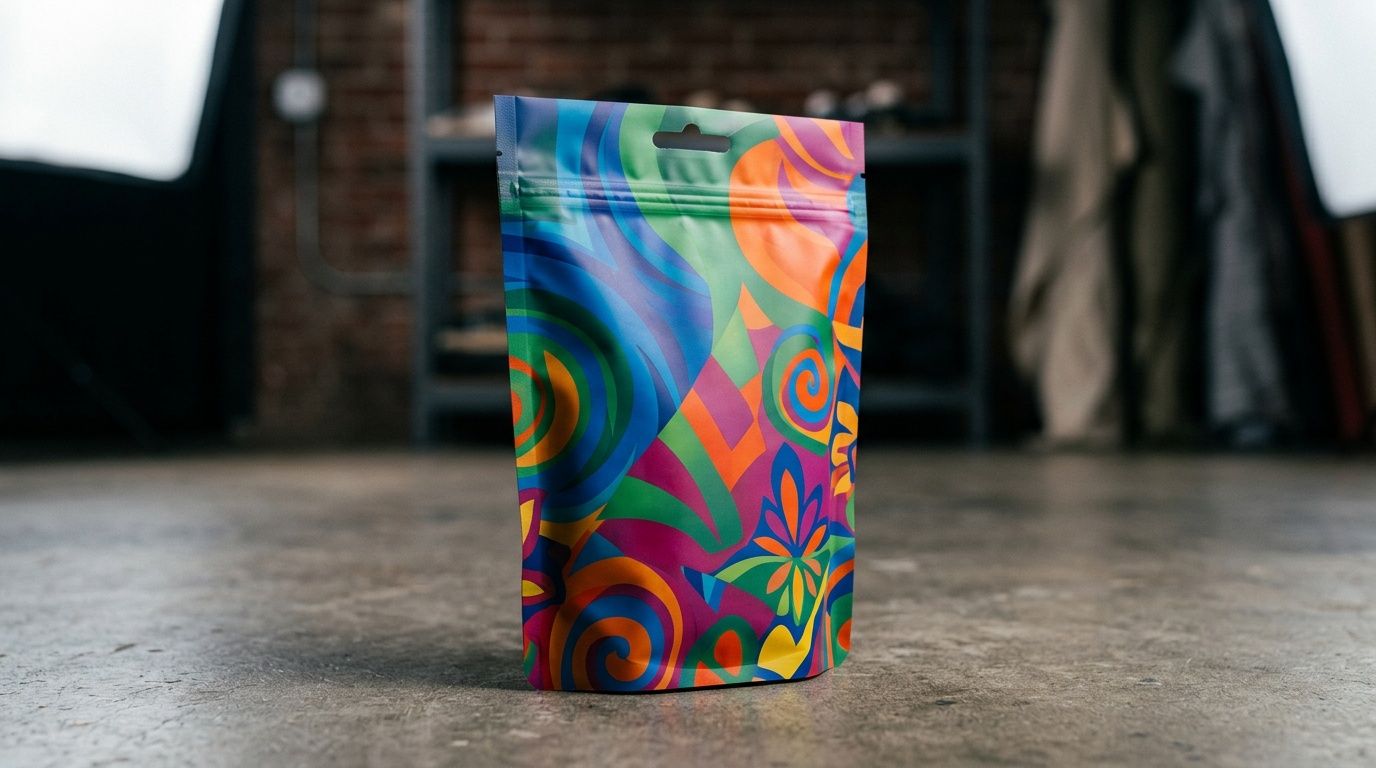
For high-end consumer brands, a slight shift in a signature hue can be the difference between a premium product and a shelf-worn imitation. In the competitive landscape of custom printed flexible packaging, color deviation remains a persistent crisis that erodes consumer trust and devalues brand identity. When a customer sees inconsistent shades across different custom printed ziplock bags or high barrier mylar bags, they perceive a lack of quality control, directly impacting the product’s perceived value. Maintaining strict Pantone color matching is no longer a luxury; it is a fundamental requirement for any serious flexible packaging manufacturer.
The technical challenge lies in managing variables like temperature, humidity, and ink viscosity at high production speeds. As demonstrated in our featured video, achieving total color fidelity requires more than just high-quality pigments; it demands a sophisticated 9-color printing press and a climate-controlled environment. The video illustrates our real-time inspection system in action, showcasing how we achieve ±0.1mm registration accuracy to eliminate the ghosting effects that often plague lower-tier production lines. By comparing gravure vs digital printing cost and output, the footage reveals why gravure remains the gold standard for brands demanding absolute Pantone color matching packaging.
This guide explores how a leading China packaging factory leverages precision engineering to safeguard your brand equity. We will examine the critical role of food grade ink certification and the systemic processes necessary to ensure brand color consistency across various bag formats and materials. By understanding these technical nuances, procurement managers and packaging engineers can better mitigate the risks of color drift, ensuring that every unit on the shelf serves as a faithful and professional representative of the brand’s premium image.
A premium snack brand’s market position is intrinsically tied to its visual identity. Consider the case of a brand whose “Sun-Ripened Gold” shifted toward a greenish-ochre during a high-speed production run. While the product quality remained high, the packaging suggested age or poor storage. Retailers flagged the stock as potentially compromised, leading to a 15% return rate and significant damage to the brand’s reputation.
Color consistency is a technical specification. If your Custom Flexible Food Packaging Solutions cannot maintain a Delta-E variance below the threshold of human perception, it leads to the erosion of brand trust. Custom printed flexible packaging requires rigorous management of physics, humidity, and mechanical drift.
1. The Psychology of “Color Betrayal”: Why 1% Deviation Affects Brand Value
In the retail environment, a consumer’s subconscious performs an authenticity check in seconds. This trust filter is hyper-sensitive to color consistency. When a buyer sees multiple units on a shelf with varying shades, it flags a quality control issue, leading to doubts regarding the product’s freshness or authenticity.
For procurement managers, a 1% deviation across high-volume orders is a logistical catastrophe. Iconic brand colors are often the most difficult to replicate as they exist on the edge of the achievable color gamut for standard plastic films.
We define this through the science of Delta-E (ΔE), the mathematical distance between two colors in a 3D color space. While some manufacturers consider a ΔE of 5.0 acceptable, professional standards require a ΔE below 2.0. Achieving this necessitates spectral curve analysis and ink density monitoring rather than visual estimation.
Inconsistent logos often stem from the substrate’s base tint. Whether using Custom Labels & Printing Supplies or specific films, the material’s refractive index must be accounted for to prevent color distortion.
2. Gravure vs. Digital: The Physics of Pigment Laydown and Ink Volume
Digital printing is suitable for short-run prototyping, but for deep, saturated solid colors and high-volume production, gravure is the industry standard.
The two methods differ significantly in pigment application. Digital printing utilizes microscopic droplets, which can result in “dot gain” or an “orange peel” texture. This lack of optical density often fails to meet luxury branding requirements.
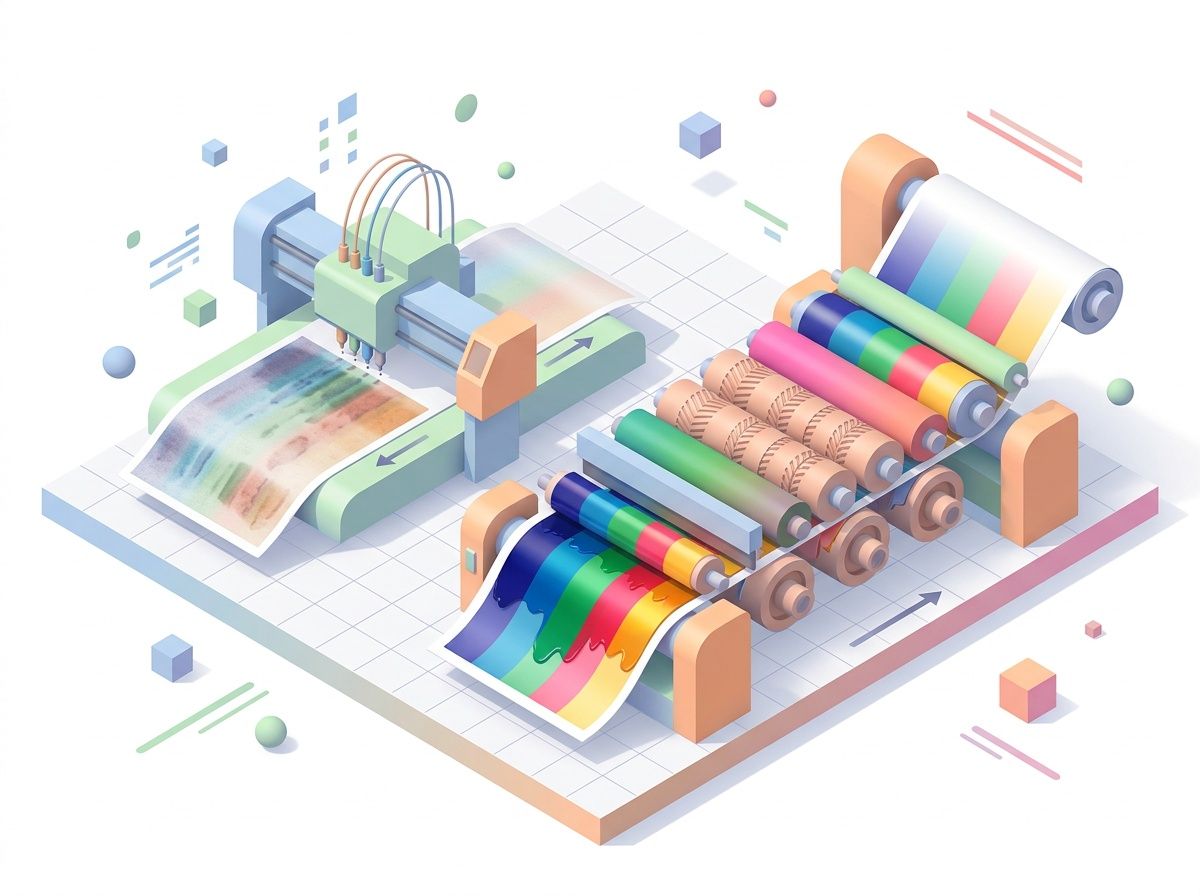
Gravure, utilized for the Gravure Printed Pouch, is an intaglio process. Microscopic cells are etched into a copper-plated steel cylinder. As the cylinder rotates, it picks up a significant volume of pigment. A doctor blade removes excess ink, and the cylinder transfers a thick, wet layer to the film that levels out during drying, creating a smooth finish.
The Opaque White Under-base is critical on metallized or kraft substrates. A high-opacity white layer creates a neutral canvas, ensuring that the substrate does not bleed through and dull the primary colors.
| Feature | Digital Printing | 9-Color Gravure Printing |
|---|---|---|
| Ink Layer Thickness | 1 – 2 Microns | 8 – 12 Microns |
| Color Consistency (ΔE) | ± 3.5 to 5.0 | < 2.0 |
| Large Area Uniformity | Poor (Banding issues) | Excellent (Solid Laydown) |
| Metallic/Spot Color | Limited (Simulated) | True Pantone Spot Colors |
| Unit Cost at 100k units | High (Static) | Low (Amortized) |
Technical Note: For designs featuring large solid color areas, gravure is essential to avoid “banding” lines typical of digital print head movement.
3. The ±0.1mm Frontier: Solving Registration Issues in High-Speed Runs
A 9-color printing press operates with extreme mechanical precision. At speeds reaching 300 meters per minute, any slight misalignment between cylinders results in “ghosting,” which compromises text clarity and image resolution. In custom printed ziplock bags, registration accuracy is paramount.
High-performance facilities use servo-driven optical sensors to detect drift instantly. If the film stretches by as little as 0.05mm due to roller tension, the servo motor adjusts cylinder alignment in real-time. This ±0.1mm mechanical precision ensures high-definition visual quality.
Environmental factors like static electricity can also impact registration. Active de-ionizing bars are used to neutralize charges that might otherwise cause ink misting, ensuring fine-print legibility.
4. The 9-Color Symphony: Beyond CMYK for Premium Branding
Standard CMYK printing relies on “optical mixing,” which can lead to metamerism—where colors shift under different lighting conditions (e.g., warehouse fluorescent vs. retail LED).
A 9-color setup allows for the use of “Spot Colors.” Specific Pantone inks are pre-mixed and assigned dedicated cylinders, ensuring absolute consistency across millions of units.
This setup also enables sophisticated tactile effects. In a 9-color run, stations can be dedicated to matte lacquers or high-gloss spot varnishes, such as in a Spot UV Pouch.
Ink sequencing is also vital. For high barrier mylar bags, printing is often done in reverse order on the inner side of the outer PET layer. This “sandwich” technique protects the graphics from abrasion during transit.
5. Environmental Volatility: Controlling Printing Variables
The printing environment must be strictly controlled. Plastic films like BOPP and PET are sensitive to temperature and moisture, stretching as conditions change and affecting registration.
Ink viscosity is another critical variable. Automated solvent dosing systems are used to maintain viscosity within a 1-second variance (measured via a Zahn cup). Deviations can lead to “pinholing” (if too thick) or “scumming” (if too thin).
| Variable | Change | Impact on Packaging | Resulting ΔE |
|---|---|---|---|
| Temperature | +10°C | Ink thins, drying too fast | +1.2 (Lighter) |
| Humidity | +20% | Film stretches (PET/BOPP) | +0.8 (Blurry edges) |
| Solvent Balance | 5% imbalance | Pigment clumping | +2.5 (Muddy tone) |
| Corona Treatment | <38 Dynes | Poor ink adhesion | Ink Peeling |
Maintaining a climate-controlled facility—typically 23°C and 50% humidity—is essential for consistency. When vetting a China packaging factory, environmental control is a key indicator of quality.
6. Durability Testing: Performance in Extreme Conditions
Packaging must maintain its integrity throughout its lifecycle. For an Aluminum Foil Retort Pouch, inks must be cross-linked to withstand 121°C sterilization without migration.
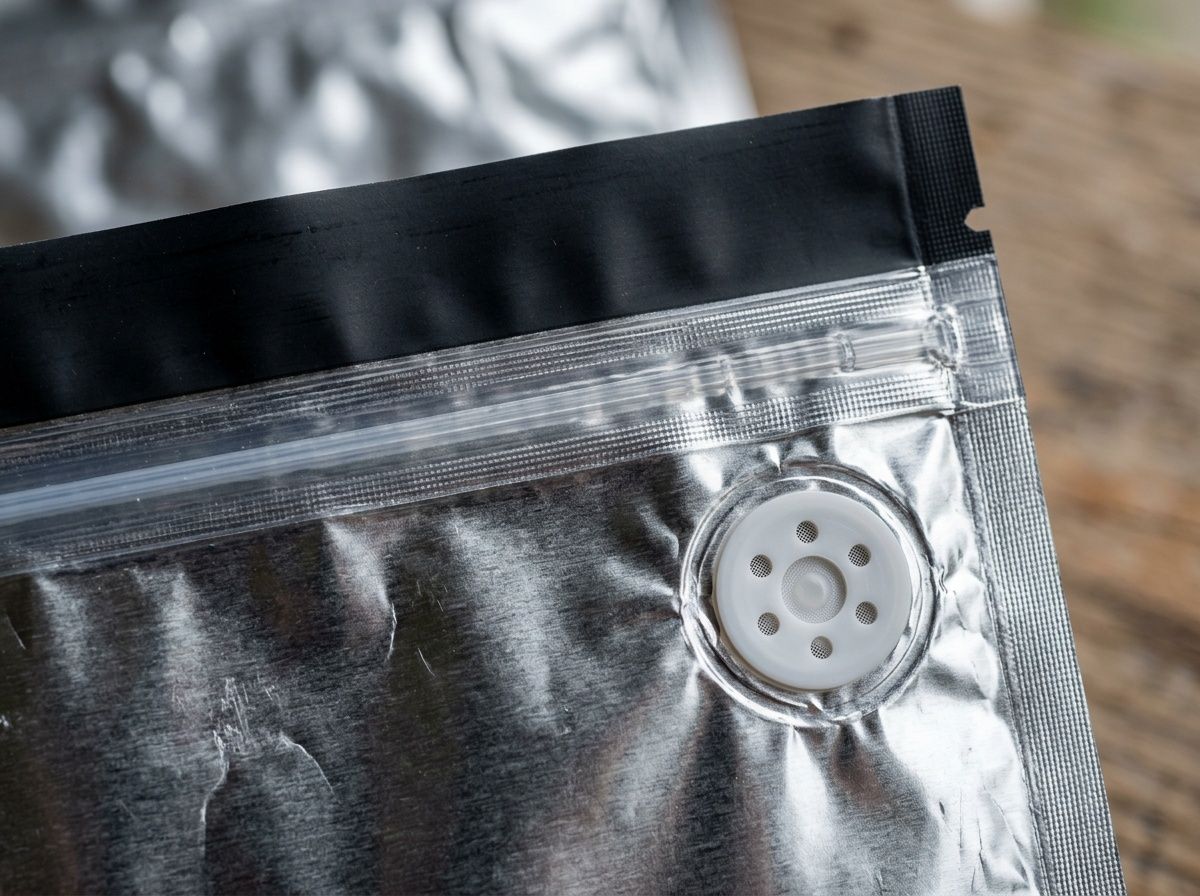
In applications like a Coffee Bag with Valve, the packaging must withstand CO2 off-gassing and potential reaction with oils. High-bond, solvent-less laminates prevent delamination and leaching.
Standard quality control includes the “Tape Test” for adhesion and “Rub Tests” for scuff resistance. Furthermore, UV resistance is ensured by using high Grade (7 or 8) light-fast pigments on the Blue Wool Scale to prevent fading under retail lighting.
7. Global Procurement ROI: Gravure vs. Digital Analysis
While gravure involves initial cylinder costs (typically $150–$350 per cylinder), the Total Cost of Ownership (TCO) is lower for volume production. Digital printing maintains a static “click fee,” whereas gravure unit costs drop significantly as volume increases.
| Order Quantity | Digital Unit Cost (Est) | Gravure Unit Cost (Est) | Cylinder Amortization | Winner |
|---|---|---|---|---|
| 5,000 units | $0.45 | $0.85 (inc. plates) | $0.50/unit | Digital |
| 50,000 units | $0.42 | $0.28 (inc. plates) | $0.05/unit | Gravure |
| 500,000 units | $0.40 | $0.12 | $0.005/unit | Gravure |
For market testing, digital is efficient. However, for established product lines, gravure offers superior unit economics and brand consistency.
8. From Lab to Shelf: Standardizing the Pantone Workflow
A professional 5-step color approval protocol ensures accuracy:
- 1. The Digital Fingerprint: Using spectrophotometers to read the spectral DNA of the target color.
- 2. The Drawdown Test: Applying ink to the actual film substrate (e.g., high-barrier spout pouch film) to observe the interaction.
- 3. The Pilot Run: Real-time inspection during the initial press run to verify registration.
- 4. Systematic Cohesion: Comparing new runs against a “Master Sample” rather than the previous batch to prevent standard drift.
- 5. Certificate of Analysis (COA): Providing ΔE data reports across the entire production run.
This precision is why we are the preferred flexible packaging manufacturer for brands requiring exact standards.
Conclusion
Packaging is a technical specification where a ΔE variance above 2.0 or a 0.5mm registration shift represents a risk to brand equity. Utilizing 9-color gravure manufacturing and ±0.1mm mechanical precision ensures that Custom Flexible Food Packaging achieves optimal optical density and consistency.
From high-temperature retort pouches to luxury spot UV finishes, controlling variables like humidity, viscosity, and spectral DNA is essential for protecting brand identity at scale.
Ready to eliminate color drift and optimize your packaging ROI? Contact our engineering team today for a custom barrier analysis, a detailed quote, or to request a sample kit showcasing our ±0.1mm printing precision.


0 Comments