
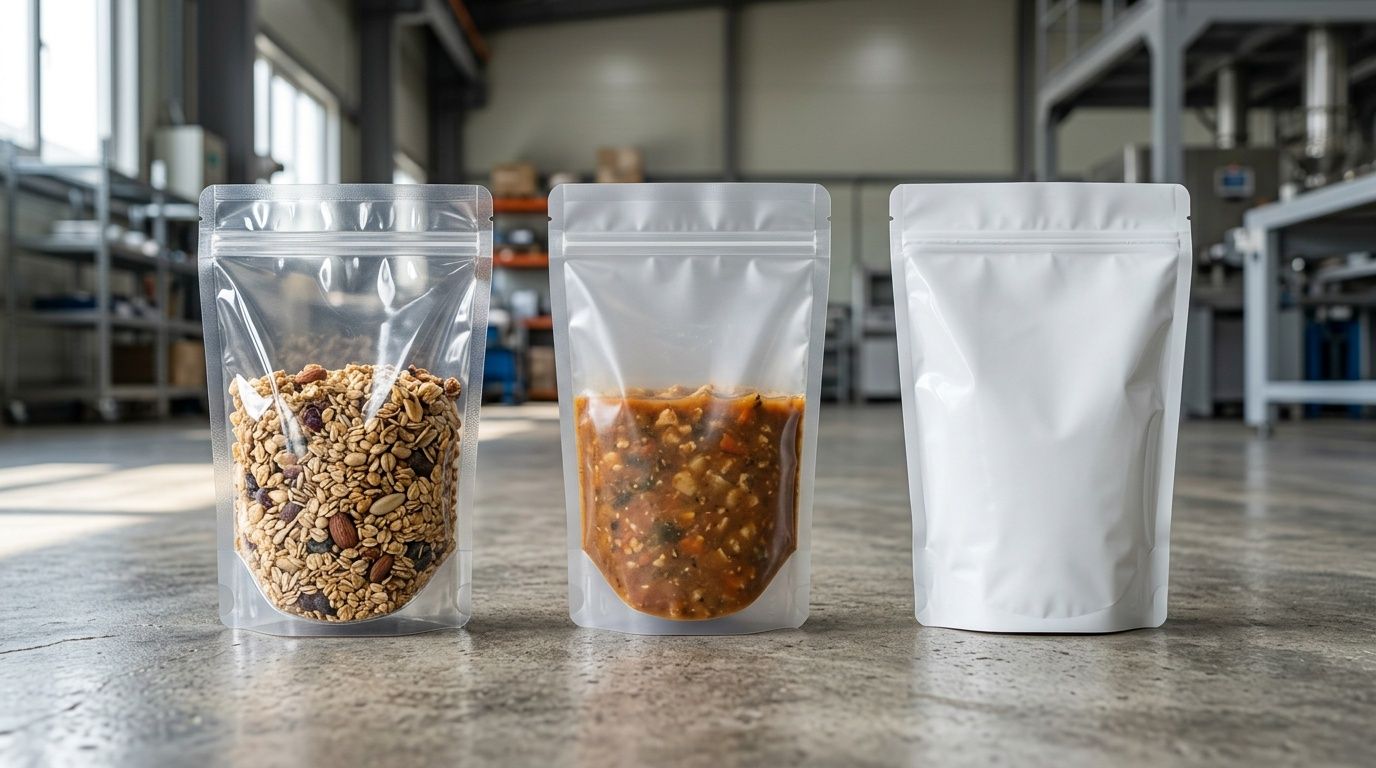
Key Takeaways
- Thermal Stability in High-Heat Applications: Cast Polypropylene (CPP) provides the necessary heat resistance for microwavable and retort packaging, ensuring that seal integrity is maintained during high-temperature food processing where standard PE layers might fail.
- Structural Integrity and Display Quality: Rigid PET films offer superior tensile strength and transparency compared to polyolefins, serving as a high-stiffness outer layer that enhances shelf appeal while protecting the internal contents from physical impact.
- Barrier Efficiency in Composite Pouching: Combining PET with a PE internal layer creates a moisture-proof PET/PE structure that balances the barrier requirements for dry goods with the cost-efficiency of flexible moisture-resistant polymers.
- Mechanical Durability of Multilayer Films: Integrating oriented polypropylene (BOPP) into BOPP/AL/PE structures significantly increases puncture resistance and mechanical strength, making these multi-layered solutions suitable for heavy-duty industrial food storage and complex logistics.
Introduction
Selecting a food grade polymer based solely on unit cost frequently leads to seal failure during high-heat processing or compromised freshness due to inadequate moisture barrier properties. The choice between PE vs PP vs PET food packaging depends on a precise calibration of thermal stability, mechanical stiffness, and gas permeability that many standard specifications overlook.
In demanding applications such as retort or microwave safe plastic, polypropylene (PP) provides the essential heat resistance that low-density alternatives lack, maintaining structural integrity under pressure. For shelf-stable dry goods, the focus shifts to flexible film structures that utilize PET for its high tensile strength in packaging and exceptional clarity, often laminated with PE to achieve a reliable moisture-proof seal. Balancing transparency vs durability is rarely about selecting a single material, but rather understanding how oriented films like BOPP or rigid PET layers interact with internal barrier plies to protect the product during complex logistics.
This evaluation serves as a packaging material selection guide to determine which material combination satisfies specific requirements for heat stability, shelf-life extension, and retail presentation. It establishes a technical framework for evaluating polymer performance across different food categories and processing environments.
A Packaging Material Selection Guide for Food Grade Polymers
In the complex landscape of industrial food preservation, the selection of a primary polymer is a fundamental engineering choice that dictates the physical integrity, chemical safety, and commercial viability of the product. The three pillars of modern flexible food packaging solutions are Polyethylene (PE), Polypropylene (PP), and Polyethylene Terephthalate (PET). Each material brings a distinct molecular profile, and understanding these differences is critical for procurement managers and packaging engineers who must balance cost with technical performance.
Defining PE vs PP vs PET Molecular Characteristics
To understand why these materials behave differently on a production line or a retail shelf, the molecular architecture must be examined. Polyethylene (PE) is the most structurally simple of the three, consisting of long chains of ethylene monomers. Depending on the polymerization process, PE can be categorized into High-Density Polyethylene (HDPE), Low-Density Polyethylene (LDPE), and Linear Low-Density Polyethylene (LLDPE). LDPE features a high degree of long-chain branching, which creates a flexible material with high clarity but lower tensile strength. In contrast, HDPE has minimal branching, allowing polymer chains to pack tightly, resulting in a more rigid, opaque film with superior moisture barrier properties.
Polypropylene (PP) introduces a methyl group (CH3) to every other carbon atom in its backbone. This structural addition significantly increases the polymer’s melting point and stiffness compared to PE. PP exists in various forms, such as Cast Polypropylene (CPP) and Biaxially Oriented Polypropylene (BOPP). CPP is known for its heat-sealing properties and transparency, making it suitable for internal sealing layers. BOPP, through the process of biaxial stretching, gets high mechanical strength and clarity, often serving as the outer layer of a laminate.
Polyethylene Terephthalate (PET) belongs to the polyester family. Its molecular structure contains aromatic rings, which impart a high level of rigidity and a high glass transition temperature (Tg). These aromatic rings act as physical barriers within the polymer matrix, making it more difficult for gas molecules like O2 to permeate through the film. This is why PET is the industry standard for oxygen-sensitive products. From a procurement standpoint, the stiffness of PET allows for thinner gauges while maintaining the structural integrity of a pouch, a factor that directly impacts the cost-per-unit in high-volume manufacturing.
Evaluating Moisture Barrier Properties Across Polymer Types
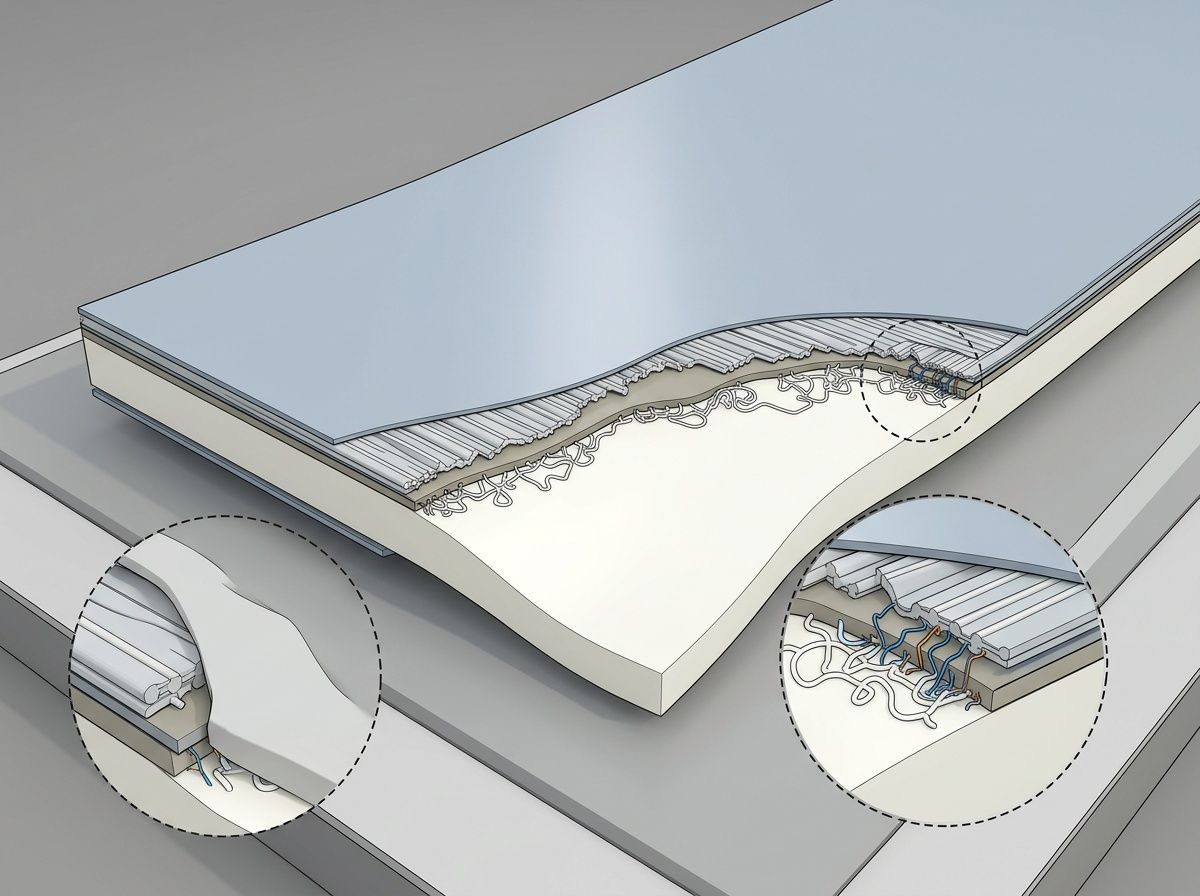
The ability to control the Water Vapor Transmission Rate (WVTR) is a critical function of a food-grade polymer. Moisture ingress can lead to microbial growth, texture degradation, and chemical instability in powdered products. Polyolefins (PE and PP) are inherently hydrophobic. Their non-polar nature makes them effective barriers against water vapor.
PE, particularly in its high-density form (HDPE), provides an effective moisture barrier. In multi-layer structures, a PE layer is often the primary component that ensures the product remains dry or retains its internal moisture content. LLDPE is frequently used in frozen food applications because it maintains moisture-proof properties at sub-zero temperatures, where other materials might become brittle.
PP also offers strong moisture resistance, often comparable to LDPE. The advantage of PP lies in its balance of moisture protection and thermal stability. In applications where a package must be heat-sterilized, PP remains stable, ensuring that the moisture barrier does not degrade during the processing phase.
PET is significantly less effective than PE or PP regarding moisture barrier properties. Its polar ester groups have a higher affinity for water molecules than the non-polar bonds in polyolefins. Consequently, PET is rarely used as a standalone moisture barrier. In the context of the PE vs PP vs PET food packaging debate, PET is almost always laminated to a PE or PP layer to combine the oxygen barrier and stiffness of PET with the moisture barrier of the polyolefin.
Table 1: Comparative Physical Properties of Standard 20-Micron Packaging Films
| Property | Polyethylene (PE/LLDPE) | Polypropylene (PP/CPP) | Polyester (PET) |
|---|---|---|---|
| Melting Point Range | 105C – 135C | 160C – 170C | 250C – 265C |
| Transparency | Low to Medium | Medium to High | Very High |
| Moisture Barrier (WVTR) | Excellent | Good to Excellent | Moderate |
| Oxygen Barrier (OTR) | Poor | Poor | Excellent |
| Tensile Strength | Low | Moderate | Very High |
| Flexibility | High | Moderate | Low (Rigid) |
| Chemical Resistance | High | High | Moderate |
Managing Thermal Stability in PE vs PP vs PET Food Packaging
Thermal stability dictates the final material choice for industrial food processors. When a package is subjected to heat during sealing, microwave heating, or retort sterilization, the polymer’s response determines if the package will protect the food or fail.
Microwave Safe Plastic and Retort Processing Requirements
The primary distinction between PP and PE in thermal applications is the melting point (Tm). Standard PE films begin to soften at temperatures as low as 90C and will melt between 105C and 130C. This makes them unsuitable for applications involving boiling water or steam sterilization. If a PE-lined pouch is selected for a retort application (typically requiring 121C), the seal will fail, and the polymer may migrate into the food product.
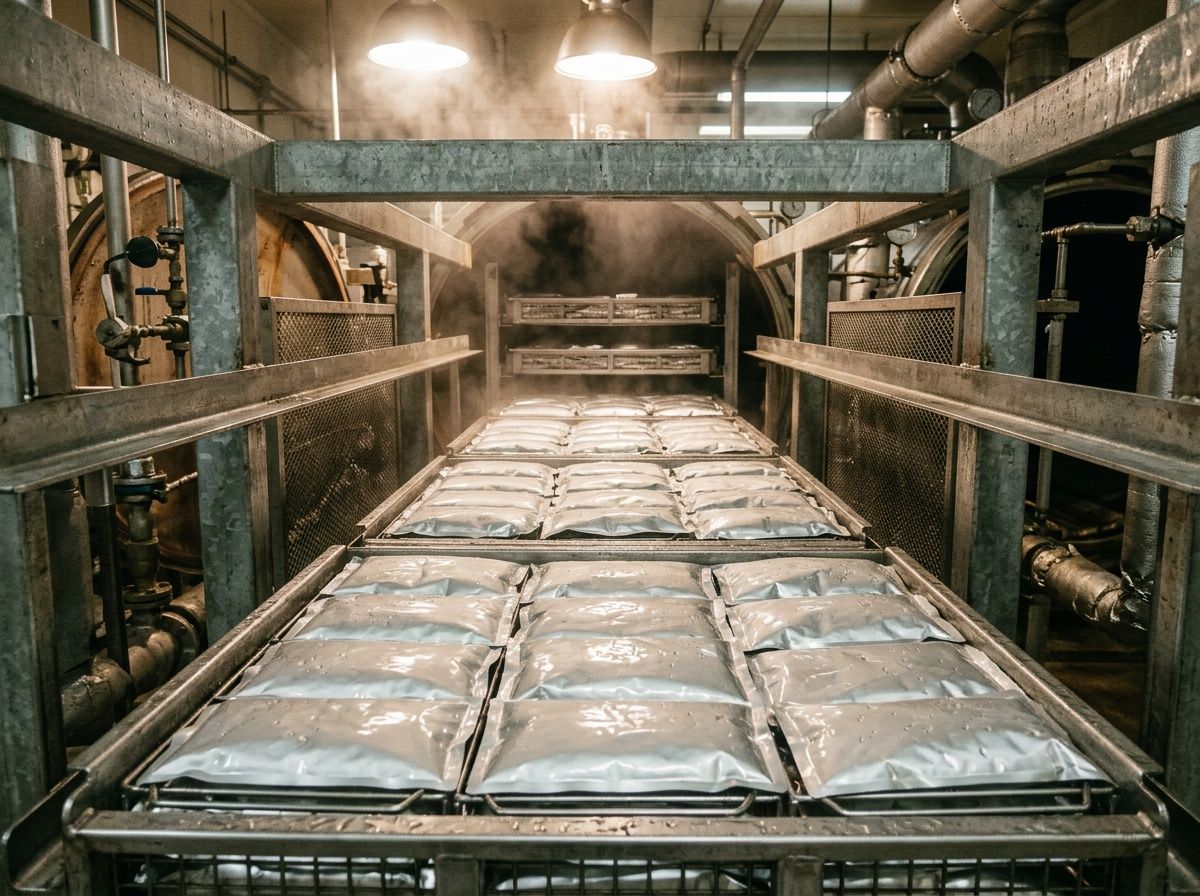
Polypropylene, specifically heat-sealable CPP packaging film, is an industry standard for high-temperature food packaging. With a melting point typically exceeding 160C, PP can withstand the rigors of microwave heating and autoclaving. In a microwave safe plastic context, the high Vicat softening point of PP ensures the container or pouch maintains its structural shape while the contents reach boiling temperatures. Furthermore, PP exhibits high seal-through-contamination resistance. In industrial filling lines, a PP sealing layer can melt through fats or oils to create a hermetic bond more effectively than standard PE.
The failure mode for PP in thermal environments usually relates to cooling rates. If a PP pouch is cooled too quickly after a retort process, it can develop micro-cracks, which compromise the barrier. Processing equipment must be calibrated to the thermal properties of the specific PP grade.
Thermal Expansion and Dimensional Stability
While PE and PP are used for sealing layers, PET is the primary choice for the outer structural layer in high-temperature environments. The high melting point of PET (approx 260C) and low coefficient of thermal expansion make it highly stable. When a laminate is passed through a heat sealer, the sealing bars operate at temperatures high enough to melt the inner PE or PP layer.
PET acts as a thermal backbone, remaining rigid and unaffected by the temperatures required to fuse the internal layers. This dimensional stability is vital for high-speed automated packaging lines. In Vertical Form Fill Seal (VFFS) machines, the film is pulled over a forming collar under tension. A material with poor thermal stability or high elasticity, like PE, might stretch or distort under the heat of the vertical seal, leading to misaligned graphics or weakened seams. PET prevents this distortion, allowing for consistent package quality.
Furthermore, PET’s thermal resistance allows for the application of technical coatings and inks. Many high-definition printing processes require heat-curing. PET can travel through these ovens at high speeds without losing its flatness, a result that is difficult to achieve with pure polyolefin films.
Balancing Transparency vs Durability in Rigid PET and PE Films
In the retail environment, a package must display the product’s freshness while protecting the product from the logistics chain. The choice between PET and PE centers on balancing these requirements.
Maximizing Tensile Strength in Packaging for Physical Protection
The mechanical durability of a package is measured by its tensile strength and its modulus of elasticity. PET is a high-modulus material, meaning it is rigid. This rigidity is an advantage for stand-up pouches. A pouch made primarily of PE may slump on the shelf as the product settles. A high-rigidity PET polyester film provides the structural stiffness that keeps the pouch upright throughout its shelf life.
However, stiffness can sometimes translate to brittleness. PET has lower puncture resistance compared to LLDPE. In the logistics of sharp-edged food items, such as dried pasta, a pure PET structure might suffer from pinholing if dropped. PE is valued for its elasticity; the long, branched chains of LDPE can stretch before failing. In a hybrid structure, the PE layer acts as the shock absorber, while the PET layer provides the puncture-resistant skin and the structural frame.
If the product is fragile and requires a cushion, a thicker PE-rich structure is appropriate. If the product requires a premium display and must stay upright on a retail shelf, the PET content should be prioritized.
Optical Clarity and Surface Energy for High-Definition Printing
PET is naturally transparent due to its semi-crystalline structure, which can be controlled during the film-making process to minimize light scattering. It offers a glass-like appearance that enhances the colors of the food inside.
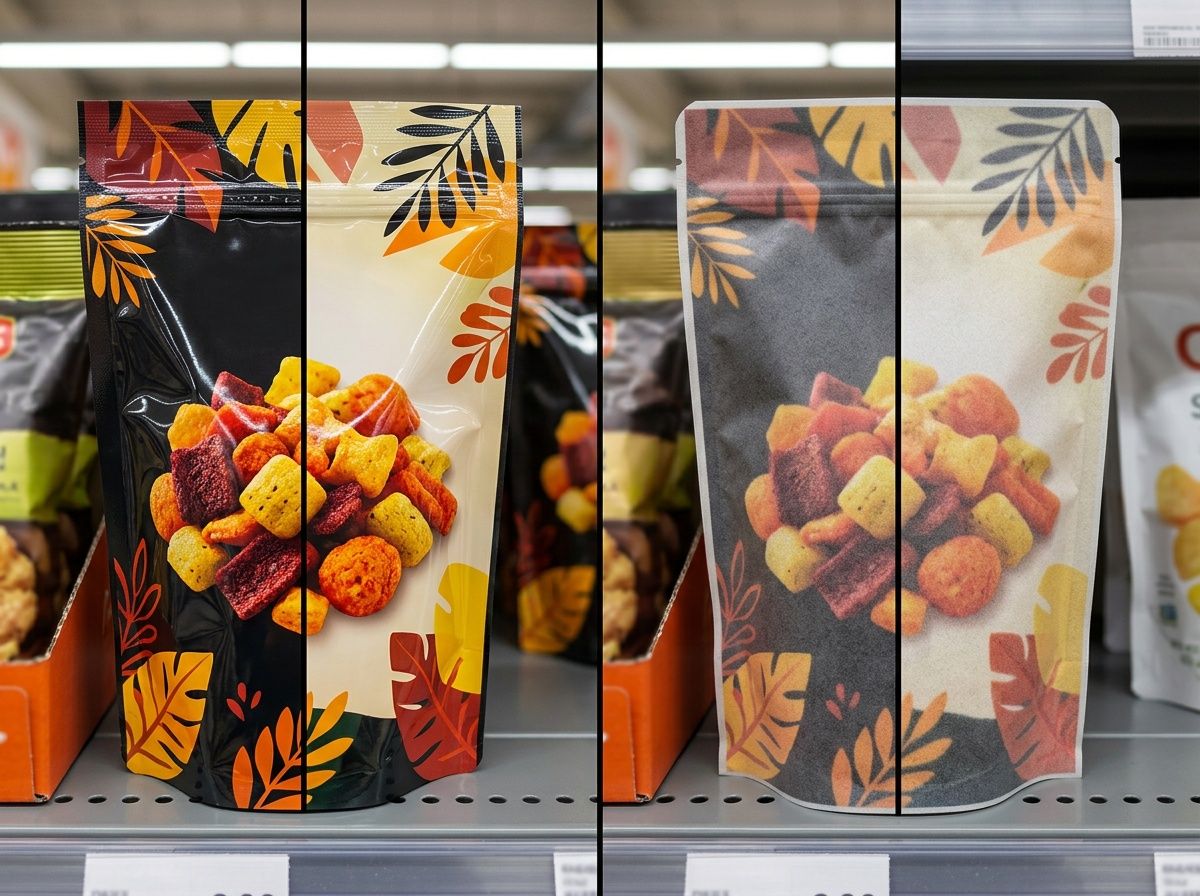
PE is generally more translucent or milky. While high-clarity grades of LLDPE exist, they rarely match the optical brilliance of PET. Furthermore, the surface energy of PET is naturally higher than that of PE or PP, making it an ideal substrate for printing. Ink adhesion is better on PET, and because printing is usually performed on the reverse side of the PET before lamination, the ink is trapped between the layers. This prevents ink scratching and ensures the food does not come into contact with printing chemicals.
PET can be treated to have a high-gloss or a matte finish. While matte PE is used for its tactile feel, it lacks the barrier protection and print registration accuracy that a matte-coated PET offers.
Engineering Flexible Film Structures for Barrier Efficiency
Composite structures leverage the strengths of each material to meet modern food preservation requirements. This multi-layer approach optimizes product safety.
The PET/PE Composite: Optimization for Dry Goods
The moisture-proof PET/PE stand-up pouch is standard in the dry food industry. In this structure, the PET layer is positioned on the outside to provide a printing surface, an oxygen barrier to prevent oxidation of fats, and the mechanical stiffness required for the pouch to stand.
The PE layer is laminated to the inside to provide a hermetic heat seal. Because PE melts at a lower temperature, it can be fused without damaging the outer PET layer. Additionally, the PE layer provides the critical moisture barrier that keeps dry goods like nuts and cereals from becoming stale.
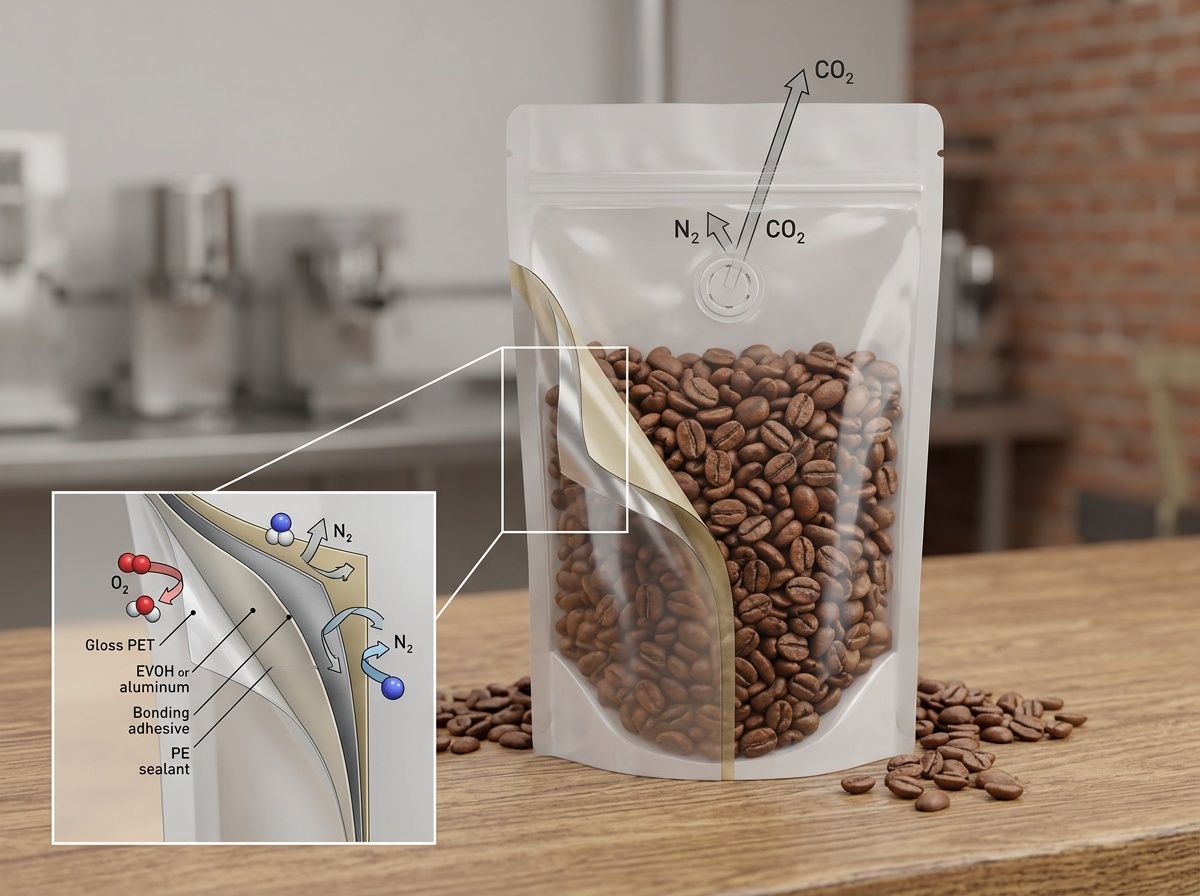
For products with high oil content, the PET/PE structure is often enhanced with a gas flush, replacing internal oxygen with Nitrogen (N2). The low oxygen transmission rate (OTR) of the PET layer ensures the N2 remains inside, extending the aroma retention rate. Without the PET layer, oxygen would permeate through a simple PE bag quickly, leading to off-flavors.
Advanced Barrier Layers: Integrating Aluminum and EVOH
When a product requires a shelf life of 12-24 months or is highly light-sensitive, a third layer such as Aluminum foil (AL) or Ethylene Vinyl Alcohol (EVOH) is introduced.
In a PET/AL/PE structure, the aluminum foil provides a barrier against light, oxygen, and moisture. However, aluminum foil is prone to flex-cracking. The PET layer protects the foil from external scratches, while the PE layer provides a flexible cushion and the sealing mechanism. This structure is common for coffee packaging, where aroma retention is the primary goal.
Table 2: Material Selection Matrix by Food Category
| Food Type | Primary Threat | Recommended Structure | Key Material Logic |
|---|---|---|---|
| Frozen Vegetables | Cold Cracking / Moisture | LLDPE Blends | PE remains flexible at -18C. |
| Roasted Nuts | Oxidation / Moisture | PET/PE or PET/VMPET/PE | PET blocks O2; PE blocks H2O. |
| Microwavable Meals | Thermal Deformation | PET/CPP | CPP survives 100C+ temperatures. |
| Coffee / Spices | Aroma Loss / UV Light | PET/AL/PE | Aluminum provides a total barrier. |
| Fresh Produce | Ethylene Buildup | Perforated PP/PE | Controlled breathability is key. |
Mechanical Durability and Logistics in PE vs PP vs PET Food Packaging
The journey from the factory to the consumer involves mechanical stresses including vibration and compression. The material selection must account for these rigors.
Oriented Polypropylene (BOPP) for Puncture Resistance
When unoriented PP is biaxially stretched, it becomes BOPP. This process re-aligns the polymer chains, increasing the film’s tensile strength and impact resistance. A multi-layer BOPP/AL/PE pouch is a durable solution for heavy-duty industrial storage.
BOPP provides a tough skin that is resistant to stretching, ensuring the package does not sag under the weight of the product. For industrial bags of rice or pet food, the stiffness of BOPP combined with the puncture resistance of an inner PE layer ensures the bag can survive standard logistics drops.
Engineers must account for notch sensitivity; while BOPP is strong, a small tear can propagate across the film. To mitigate this, PE is often blended with the sealing layer to act as a tear-stop mechanism.
Evaluating Burst Strength in Large-Format Packaging
Burst strength refers to the package’s ability to withstand internal pressure, which is important for gas-filled products or those shipped at high altitudes.
PE is effective for burst strength due to high elongation-at-break, allowing seals and the film to expand under pressure without snapping. In large-format industrial bags, a co-extruded PE film can provide high toughness. By layering high-stiffness HDPE with high-stretch LLDPE, manufacturers create a film that is both rigid and resistant to bursting.
A pure PET or PP structure may be too brittle for high-pressure scenarios. If a PET-heavy pouch is compressed, the lack of elasticity can lead to seal failure. Consequently, the percentage of PE in the laminate is typically increased for heavy-duty logistics to provide the necessary toughness.
TCO and Implementation Factors in Material Selection
The final decision involves the Total Cost of Ownership (TCO), which includes more than the price per kilogram of resin.
Calculating the Value of Shelf Life Extension
Over-prioritizing initial material cost can lead to higher long-term expenses. While a PE bag is less expensive than a PET/PE laminate, a high return rate due to staleness makes the simpler bag more costly.
Investing in a higher-barrier PET/PE structure can extend shelf life, allowing food producers to reach distant markets and reduce waste at the retail level. A 15% increase in material costs can be offset by a significant reduction in food waste. PET and PP are also efficient in terms of yield; because they are stiffer, they can often be used in thinner gauges than PE to achieve the same structural result, reducing total plastic weight and transportation costs.
Transitioning Between Polymer Structures: Machinery Constraints
Implementation of a new material structure must account for existing machinery. The Coefficient of Friction (COF) is a critical parameter; PET, PP, and PE have different slip characteristics.
If a factory switches from PE bags to a high-gloss PET laminate, the film may drag on forming collars, leading to downtime. Adjusting the COF involves adding slip agents during extrusion, which must be balanced with seal strength requirements.
Thermal calibration is also necessary. Switching from a PE sealing layer to a PP layer requires increasing seal bar temperatures by 30-40C. Material selection must include a machinery audit to ensure the polymer can be processed efficiently on available equipment. Understanding the interplay between molecular structure, thermal stability, and mechanical durability allows for informed decisions that optimize both product safety and the bottom line.
Conclusion
Selecting the optimal polymer for food packaging requires a precise alignment between molecular properties and environmental stressors. Polyethylene offers superior moisture protection and flexibility, while Polypropylene provides the thermal stability necessary for retort and microwave applications. Polyethylene Terephthalate serves as the essential structural backbone, providing high-definition clarity and a superior oxygen barrier. Technical distinctions dictate shelf life, production speed, and total cost of ownership by reducing spoilage and mechanical failure. Choosing the correct composite structure ensures the package maintains its integrity from the production line to the retail shelf. To discuss barrier requirements for a specific product line, reach out to the engineering specialists.


0 Comments