
Key Takeaways
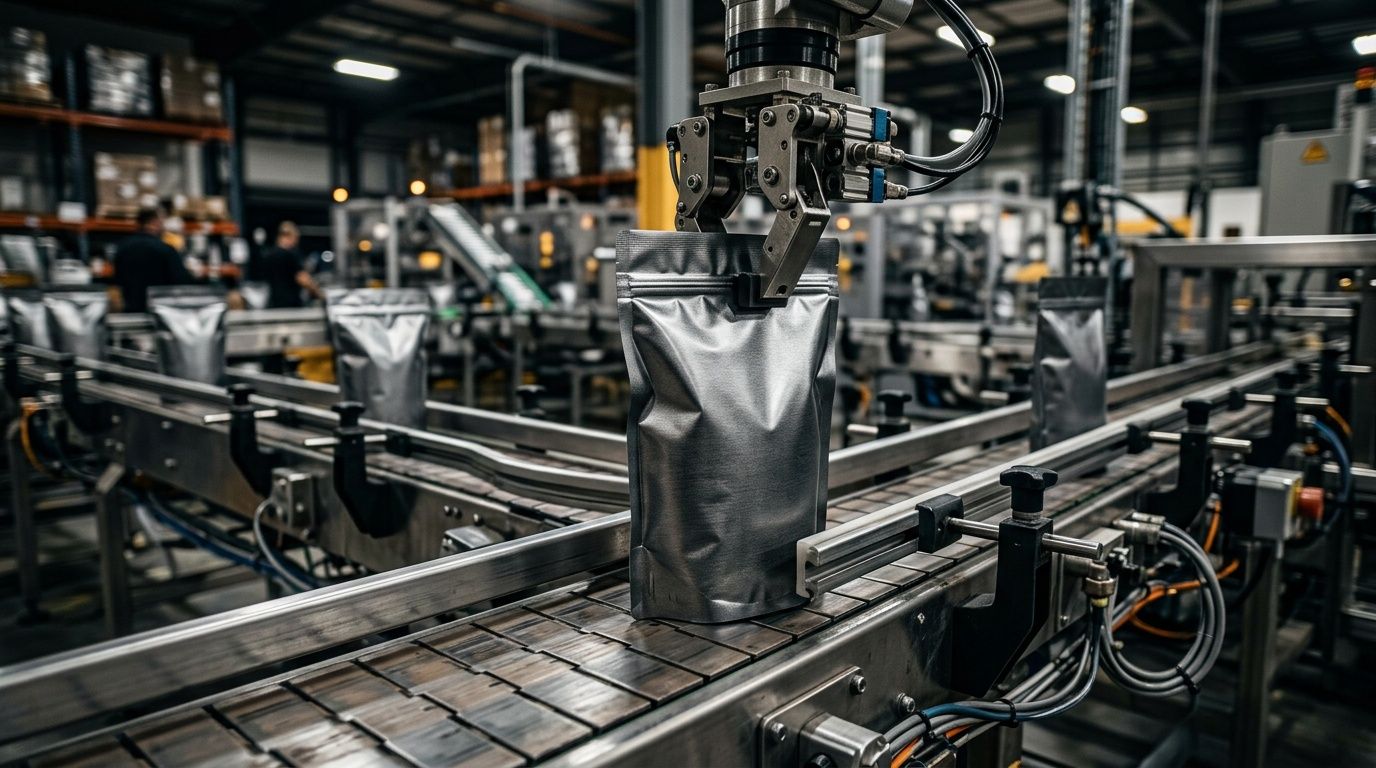
- Multi-layer Structural Advantage: Utilizing PET/PA multi-layer composites instead of single-layer materials provides the high tensile strength required to withstand physical stresses during long-haul shipping, reducing breakage rates across the supply chain.
- Nylon-Reinforced Load Bearing: The integration of Polyamide within the film laminate acts as a core reinforcement that enhances the material’s ability to carry heavy loads, preventing structural failure when subjected to the mechanical pressures of e-commerce logistics.
- Engineered Puncture Resistance: High-strength structures like 160-micron PET/PA/AL/CPP laminates provide a heavy-duty mechanical barrier that increases puncture and impact resistance, protecting contents from sharp-edge contact and rough handling.
- Tensile Strength as Risk Mitigation: Engineering packaging to meet specific tensile and burst strength metrics functions as a technical safeguard that preserves seal integrity, minimizing product loss during high-stress transport.
Logistics Breakage and Material Specification
Logistics breakage represents a significant financial drain for high-volume snack brands, where structural failure leads to direct product loss and compromised food safety. These issues frequently stem from a lack of sufficient tensile strength to withstand the mechanical pressures of automated sorting and the stacking loads prevalent in long-haul transport. When a package fails under the weight of its own contents, the root cause is often a material specification that cannot handle the maximum pulling force exerted during the rigors of the supply chain.
Achieving high strength flexible packaging requires a strategic shift away from standard single-layer materials toward engineered multi-layer lamination. By integrating a nylon packaging film within the composite structure, manufacturers can enhance the material’s impact resistance and puncture resistance. This polyamide core provides the necessary toughness to distribute stress across the film surface, maintaining seal integrity even when the package is subjected to high burst strength demands or sharp-edge contact during e-commerce delivery.
Selecting the right material specification involves balancing film thickness with the specific physics of transport packaging solutions. Analysis helps determine the appropriate mechanical barrier requirements for product weight and evaluates how specific multi-layer structures function as a technical safeguard against logistics-induced breakage.
Tensile Strength in Modern Supply Chains
In the modern global supply chain, high strength flexible packaging has transitioned from a premium specification to a functional necessity. The core of this transition lies in “Tensile Strength,” a technical metric that defines the maximum pulling force a material can withstand before failure. As logistics networks become increasingly automated, the reliance on standard single-layer materials has proven insufficient for heavy-duty or high-value snack products.
Technical analysis of high-performance films reveals that Polyamide (PA), commonly known as Nylon, serves as the structural backbone of advanced packaging. By integrating PA into a multi-layer composite—such as a 160-micron PET/PA/AL/CPP structure—engineers can create a reinforcing skeleton that enhances impact resistance and energy absorption. This provides a strategic buffer against the mechanical stresses of long-haul transit.
For procurement professionals, understanding these physics-based properties is essential for risk mitigation. High-tensile packaging protects the Total Cost of Ownership (TCO) by reducing unsaleable returns, protecting brand reputation, and ensuring that products survive the final stage of e-commerce delivery. By prioritizing multi-layer lamination and specific material gauges like 160-microns, brands can move toward proactive supply chain integrity.
Mechanical Stress Factors and the Physics of Logistics Breakage
A package survives or fails based on its ability to withstand a combination of static, dynamic, and environmental forces. Logistics breakage occurs when the external mechanical load exceeds the material’s ultimate tensile strength or its seal integrity.
Static Loading vs. Dynamic Impact in Automated Sorting
Static loading is observed at the bottom of a pallet where bags are subjected to a constant downward force. Under this pressure, the air inside the bag exerts an outward force against the film and the seals.

If the tensile strength of the film is insufficient, the material undergoes permanent deformation, eventually leading to a burst.
The shift toward e-commerce has introduced dynamic impact. In automated sorting centers, packages travel on high-speed conveyor belts and are subjected to sudden drops. These events create high-G force impacts. High-strength materials like Nylon are effective here because they possess high elongation at break, meaning they can stretch to absorb the energy of the impact rather than snapping or puncturing immediately.
Structural Fatigue Under Vibration and Multi-point Contact
Long-distance transport involves constant vibration. These micro-vibrations cause structural fatigue or “flex cracking.” As a transport vehicle travels, friction occurs between the bags and the secondary packaging or between the bags themselves.
Over thousands of miles, these micro-movements can wear down the surface of the film. In lower-quality, single-layer films, this leads to pinholing, where tiny holes develop and compromise barrier properties. High-strength flexible packaging engineered with a dedicated Nylon layer is designed to resist this fatigue. The molecular structure of PA allows the film to endure these repetitive oscillations without the polymer chains breaking down. This is critical for products requiring a high vacuum or modified atmosphere (MAP).
The Role of Nylon Packaging Film in High Strength Structures
Polyamide (PA) is a primary choice for mechanical reinforcement in flexible packaging. It provides the toughness that simpler polymers like Polyethylene (PE) or Polypropylene (PP) lack.
Polyamide as a Load-Bearing Core in Multi-layer Lamination
The technical performance of Nylon stems from strong hydrogen bonding between molecular chains, which translates into tensile strength and toughness. When PA is used in a PA-reinforced high-tensile stand-up pouch, it functions as a structural skeleton. In a typical four-layer laminate like PET/PA/AL/CPP, the outer PET layer provides stiffness and printability, while the aluminum (AL) provides the oxygen barrier.
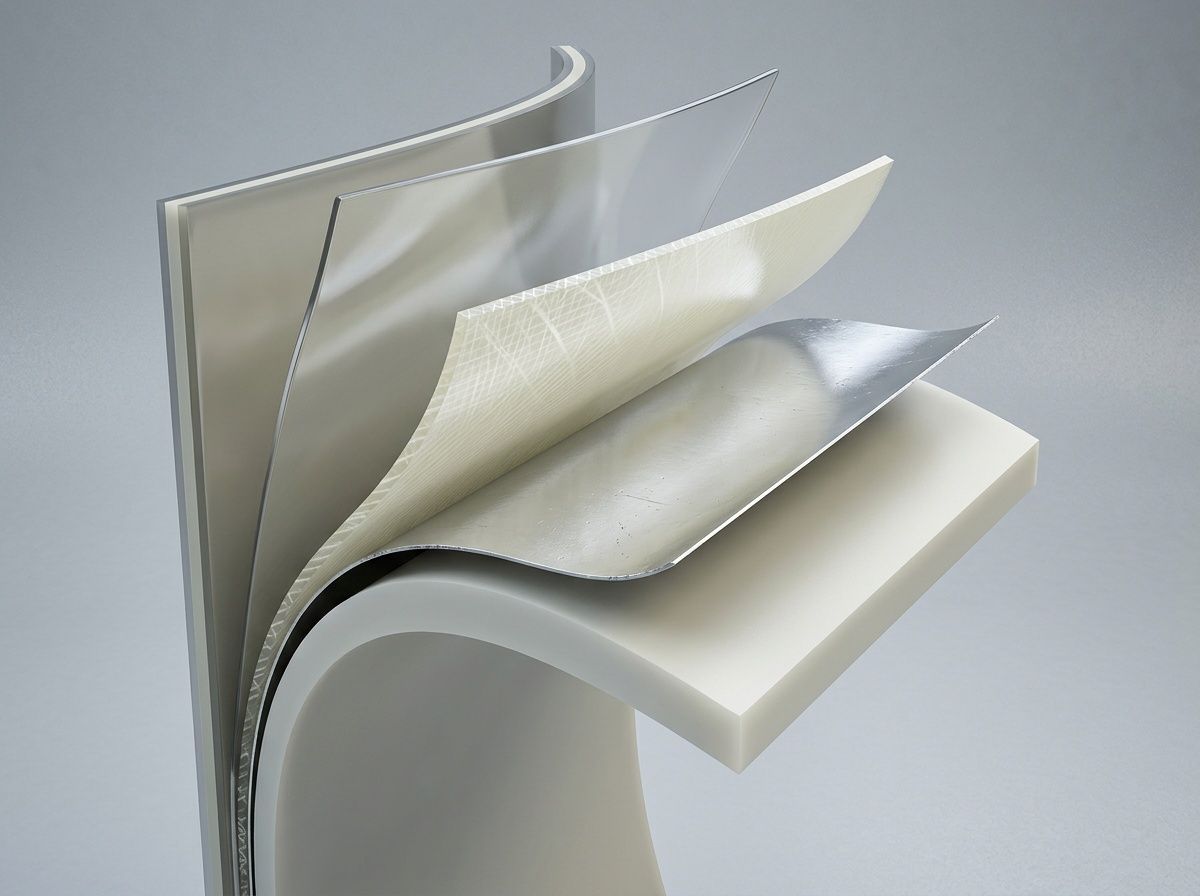
The PA layer, positioned between the barrier and the sealing layer, acts as a shock absorber. It has a high tensile energy absorption (TEA) rate. As a bag expands under pressure, the Nylon layer stretches and holds the structure together, preventing cracks from propagating through the entire bag.
Enhancing Impact Resistance Through Nylon Integration
Nylon maintains its ductility under high-strain rates. This property is vital for preventing burst failure. When a heavy bag hits a surface, internal pressure spikes, targeting the weakest point in the package.
By integrating a Nylon packaging film, the force is distributed across the entire surface area. The PA layer allows the package to deform slightly, increasing the time over which the impact force is applied and reducing the peak force felt by the seals. This engineering choice allows high-strength bags to survive rigorous drop tests. Furthermore, Nylon’s resistance to flex-cracking ensures that barrier integrity remains intact through multi-stop delivery routes.
Engineering Puncture Resistance for Heavy-Duty Applications
Puncture resistance addresses the threat of sharp objects, ranging from staples in a shipping carton to the sharp corners of neighboring products. For products with sharp edges like crackers or dried seafood, internal puncture resistance is essential.
The Correlation Between Micron Thickness and Puncture Defense
Material composition is the true determinant of performance rather than thickness alone. A Heavy-duty PET/PA multi-layer food bag utilizing a 160-micron specification is engineered for high-level protection. At 160 microns, the film has sufficient mass to resist piercing, while the inclusion of Nylon prevents the film from becoming brittle.
In a PA-reinforced multi-layer structure, the thickness works in tandem with the polymer’s high yield strength. The 160-micron gauge provides the stiffness required to prevent a sharp object from indenting the film, while the multi-layer construction ensures that if a puncture begins, the energy required to tear the hole is extremely high.
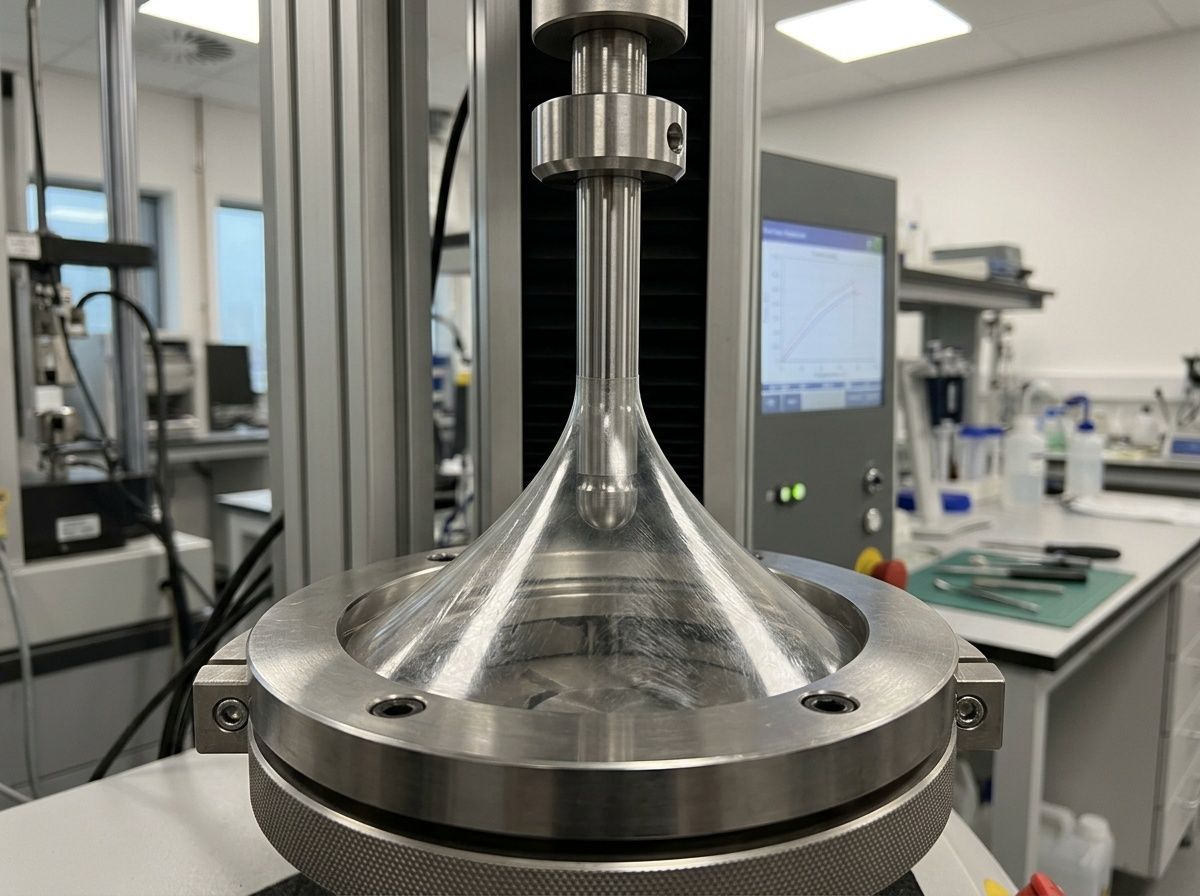
This prevents small nicks from turning into catastrophic failures.
Safeguarding Seal Integrity Against Sharp-Edge Contact
Punctures frequently occur near seals or along gussets. When a pouch is filled and sealed, the material at the transition point between the seal and the main body is under localized stress.
High strength flexible packaging solves this through seal-zone reinforcement. For instance, in heavy-duty food applications, the internal product may shift during transport, pressing sharp edges against the bottom gusset. A 160-micron multi-layer structure provides a cushioning effect, where the inner CPP (Cast Polypropylene) layer provides a soft sealing interface and the PA layer provides the puncture defense. This protection is essential for maintaining a hermetic seal.
Comparative Analysis: Multi-layer Lamination vs. Mono-material Structures
For high-stress industrial and logistics applications, the performance gap between multi-layer and mono-material structures remains significant.
Distributing Tensile Stress Across Heterogeneous Layers
In a mono-material structure, stress travels through the material at a uniform rate. If there is a defect, the stress concentrates at that point, leading to rapid failure.
In contrast, a multi-layer composite like a Reinforced high-barrier stand-up ziplock bag is heterogeneous. Each layer has a different modulus of elasticity. When stress is applied, it must cross the inter-layer boundaries, which act as barriers to crack propagation. A 160-micron multi-layer bag can have significantly higher impact strength than a thicker mono-layer bag.
Table 1: Mechanical Property Comparison (Qualitative)
| Feature | Single-Layer PE | 2-Layer (PET/PE) | 4-Layer (PET/PA/AL/CPP) |
|---|---|---|---|
| Tensile Strength | Low | Moderate | Excellent |
| Burst Strength | Low | Moderate | High |
| Puncture Resistance | Low | Moderate | Excellent |
| Flex-Crack Resistance | Moderate | Low | Excellent |
| Logistics Suitability | Local/Lightweight | Standard Retail | Heavy-Duty/E-com/Long-Haul |
Preventing Burst Failure: Managing Internal Pressure
In mono-material bags, the seal is often the weakest point because the same material used for the body is also used for the heat-seal, limiting the ultimate strength of the bond.
In multi-layer lamination, the sealant layer is chosen for its seal strength while the support layers (PET and PA) do not melt at the sealing temperature. This allows the packaging equipment to apply higher pressure and heat to the seal without melting through the bag. The multi-layer structure distributes internal pressure evenly across the film’s surface, preventing seal blowouts.
Technical Metrics for Flexible Packaging Quality Control
Quality evaluation focuses on three primary tests: Tensile Testing (ASTM D882), Burst Testing (ASTM F1140), and Puncture Resistance (ASTM F1306).
Standardizing Tensile Strength and Elongation Tests
ASTM D882 measures the force required to break the material. Key data points include:
- Yield Point: The point where the material begins to deform permanently.
- Ultimate Tensile Strength (UTS): The maximum stress the material can handle before snapping.
- Elongation at Break: How much the material stretches before it fails. High elongation in Nylon acts as a safety net, absorbing impact energy.
Validating Seal Integrity Through Internal Pressure Testing
Burst testing (ASTM F1140) evaluates the package as a whole by inflating a bag with air until it bursts:
- Burst Test: Rapid inflation to find the absolute breaking point.
- Creep Test: Holding the bag at a constant pressure to simulate static loads.
A high-strength bag should ideally fail in the film rather than the seal. If the film ruptures while the seals remain intact, it proves that the seal integrity exceeds the material’s limits.
Optimizing TCO Through Advanced Transport Packaging Solutions
A sophisticated procurement strategy looks beyond the initial unit price to the Total Cost of Ownership (TCO).
The Economic Impact of Logistics-Induced Product Loss
Costs associated with package failure include:
- Product Loss: Direct cost of wasted goods.
- Clean-up and Contamination: Secondary loss when a burst bag affects adjacent items.
- Return Logistics: Shipping and disposal costs.
- Retailer Fines: Penalties for damaged-on-arrival shipments.
- Brand Equity: Negative consumer reviews due to damaged goods.
Switching to a Flexible Food Packaging solution can eliminate these costs. A minor reduction in logistics breakage often compensates for higher packaging material costs.
Table 2: Logistics Cost Simulation (Theoretical Model)
| Metric | Economy Packaging (Single-Layer) | High-Strength (PA-Reinforced) |
|---|---|---|
| Material Cost per 10k units | $1,000 | $1,200 |
| Breakage Rate | 3.0% | 0.2% |
| Value of Lost Product | $1,500 | $100 |
| Handling/Cleanup Costs | $500 | $20 |
| Total Logistics Cost | $3,000 | $1,320 |
| Net Savings | – | $1,680 |
Strategic Selection of Material Specifications
Material selection should be based on risk:
- Heavier Products (>500g): Require high tensile strength due to kinetic energy.
- Sharp/Irregular Shapes: Require high puncture resistance.
- Direct-to-Consumer (DTC): Requires reinforced transport packaging for increased handling.
- High-Altitude Transit: Tests seal burst strength due to internal pressure changes.
A tiered approach ensures protection where it matters while managing costs where risks are low.
Conclusion
High-strength flexible packaging is a functional necessity within modern logistics networks. Technical analysis confirms that integrating Polyamide into multi-layer composites, such as 160-micron PET/PA/AL/CPP structures, provides a critical reinforcing skeleton against static loading and dynamic impacts. This approach ensures superior puncture resistance and seal integrity, vital for mitigating structural fatigue during long-haul transit. For procurement managers, prioritizing these physics-based properties is essential for protecting the total cost of ownership and reducing unsaleable returns in automated supply chains. To discuss specific material specifications or transit testing data for the product line, contact the engineering team.


0 Comments