

Key Takeaways
- Material selection by fermentation level: High-barrier aluminum foil laminates prevent oxidation in green teas, whereas the relative breathability of Kraft paper structures supports the necessary aging requirements of post-fermented varieties like Pu-erh.
- Aluminum foil as an oxidation barrier: Incorporating an aluminum layer within BOPP or PE laminates creates a near-impenetrable barrier against light and moisture, which is critical for maintaining the chemical stability and aromatic profile of high-value loose leaf teas.
- Strategic use of Kraft-CPP composites: Kraft paper combined with CPP or BOPP linings balances natural branding with functional moisture protection, making it an ideal choice for short-term retail cycles where eco-friendly appeal is prioritized over long-term oxidation resistance.
- Gusseted laminates for bulk logistics: Side-gusseted aluminum-laminated bags offer high volume efficiency and mechanical strength for industrial wholesale storage, ensuring that bulk tea remains protected from moisture ingress and aromatic degradation during extended transport.
Introduction
Selecting tea packaging materials based solely on visual branding or unit cost often results in rapid aromatic degradation or moisture ingress, particularly when the material’s barrier properties conflict with the tea’s fermentation profile. While green and white teas require near-absolute protection against oxygen to prevent the breakdown of volatile compounds, post-fermented varieties like Pu-erh depend on controlled breathability to mature. Mistaking a decorative kraft paper tea pouch for a functional barrier, or conversely, sealing an aging-sensitive tea in high-barrier foil laminates for tea, can compromise the product’s chemical stability before it reaches the end consumer.
Technical performance hinges on the specific layering of the substrate. Incorporating an aluminum layer within composite tea packaging provides an impenetrable moisture barrier tea bags need to safeguard loose leaf tea storage against environmental fluctuations during long-haul logistics. However, for retail cycles where sustainable tea packaging is a priority, Kraft-CPP composites offer a strategic balance between mechanical strength and shelf appeal. Understanding these material mechanics is essential for maintaining tea shelf life extension and ensuring that the flavor profile remains consistent across diverse global supply chains.
This analysis provides the technical framework necessary to evaluate material specifications against specific tea chemistry and distribution requirements. It assists procurement teams in determining whether to prioritize the absolute barrier protection properties of foil-lined structures or the functional breathability of specialized paper composites for their wholesale tea bags.
The Chemical Sensitivity of Camellia Sinensis: Why Material Engineering Matters
The preservation of tea quality is a complex exercise in biochemical stabilization. When tea leaves are harvested, processed, and dried, the organic compounds that define their flavor, color, and aroma—primarily polyphenols, amino acids, chlorophyll, and volatile essential oils—remain highly reactive. The primary goal of industrial tea packaging materials is to create a micro-environment that halts or retards these reactions. Understanding the micro-mechanisms of tea degradation is the first step in engineering the correct barrier solution.
Oxidation is the most aggressive adversary of tea freshness. In non-fermented teas like Green and White tea, the preservation of catechins and chlorophyll is critical. When oxygen (O2) permeates a low-quality packaging material, it triggers the oxidation of catechins into theaflavins and thearubigins.

While this process is intentional during the production of Black tea, in Green tea, it results in a stale flavor profile and a shift in liquor color from vibrant green to a dull brown. Furthermore, chlorophyll is highly sensitive to both oxygen and light. Under the catalysis of UV radiation, chlorophyll degrades into pheophytin, leading to the irreversible loss of the tea’s visual appeal. This chemical sensitivity necessitates a material that offers near-zero oxygen transmission rates (OTR) and total opacity.
Moisture ingress represents the second major threat. Dried tea is inherently hygroscopic, meaning it has a natural affinity for water vapor. As moisture content increases, the water activity (aw) within the package rises. Once the aw crosses a specific threshold, it facilitates enzymatic browning and provides a substrate for microbial growth, including molds and yeasts. Even before visible spoilage occurs, moisture acts as a solvent that allows volatile aromatic esters to dissolve and escape through the packaging wall, leading to flat or hollow tea.
The evaporation of aromatic esters is a critical failure mode. The characteristic nose of a high-end Oolong or Jasmine tea is composed of volatile organic compounds (VOCs) that are extremely delicate. If the inner layer of the packaging material is too porous or chemically incompatible with these oils, the aroma will migrate into the polymer matrix or diffuse through the bag entirely. Therefore, the selection of tea packaging materials must involve a rigorous assessment of how the material interacts with the tea’s specific volatile profile.
Multi-Layer Barrier Protection Properties of Modern Tea Packaging Materials
To combat the multifaceted threats of oxidation, moisture, and aromatic loss, the industry uses multi-layer laminate structures. These composites combine the strengths of different polymers and foils to create a performance envelope that no single material could achieve alone. A typical high-performance structure involves three distinct layers: an outer printing layer, a central functional barrier, and an inner sealant layer.
The outer layer, often composed of Biaxially Oriented Polypropylene (BOPP) or Polyethylene Terephthalate (PET), serves as the first line of defense. This layer is engineered for mechanical durability and high-definition printability. BOPP offers excellent clarity and scratch resistance, ensuring that the brand’s visual identity remains intact. More importantly, this outer skin provides structural integrity, protecting the more fragile internal barrier layers from physical abrasion and puncture.
The core of any high-protection system is the aluminum foil (AL) layer. Aluminum foil is unique in flexible packaging because it provides a total barrier. Unlike vacuum-metallized films (VMPET), which are plastic films coated with a thin layer of aluminum atoms, solid aluminum foil is a continuous metallic sheet. At thicknesses commonly used in tea packaging (6.5 micron to 9 micron), AL offers a virtually zero OTR and zero water vapor transmission rate (WVTR). This makes the high-barrier aluminum foil stand-up bag the industry standard for high-value, oxidation-sensitive teas such as premium Dragon Well or Silver Needle. The total opacity of the foil ensures that photo-oxidation is blocked, preserving chlorophyll content.
However, the effectiveness of the aluminum foil is dependent on the quality of the lamination and the thickness of the foil. A common trade-off in procurement is the pinhole effect. As aluminum foil is rolled thinner to reduce costs, the probability of microscopic pinholes increases. While these pinholes are often too small to be seen by the naked eye, they can increase the OTR over a long shelf life. For industrial-scale storage or products destined for long-distance export, specifying a slightly thicker foil or a multi-layer polymer reinforcement is a key technical decision.
The innermost layer, typically Polyethylene (PE) or Cast Polypropylene (CPP), is the sealant layer. This material is chosen for its ability to fuse under heat and pressure, creating a hermetic seal. PE is favored for its flexibility and low-temperature sealing properties, while CPP is selected for its higher heat resistance and superior hot tack. The sealant layer must also be chemically inert. Since it is in direct contact with the tea leaves, it must not leach plastic odors or absorb the tea’s essential oils.
Engineering Kraft Paper Tea Pouches for Controlled Breathability vs. Barrier Performance
There is a growing demand for natural or sustainable packaging. Kraft paper has emerged as a choice for brands seeking a rustic, premium aesthetic. However, from an engineering perspective, Kraft paper presents unique challenges and opportunities depending on the tea variety.
For non-fermented or lightly oxidized teas, Kraft paper alone is an insufficient barrier. Its fibrous, porous structure is permeable to oxygen and moisture. To solve this, manufacturers use a Kraft-composite approach. By laminating Kraft paper to an internal layer of aluminum foil and PE, a brand can achieve the tactile benefits of paper while retaining the technical shielding of a traditional foil bag.

This kraft-foil composite heat-seal pouch is effective for high-end retail products where the consumer expects both a premium hand-feel and a fresh aroma. The paper acts as an insulator and a structural stiffener, giving the bag a dead-fold characteristic.
However, for post-fermented teas like Pu-erh, high-barrier packaging can be detrimental. Pu-erh is a living product that evolves over years through slow oxidation and microbial activity. If Pu-erh is sealed in a zero-permeability aluminum bag, the natural aging process is arrested, and the tea can develop off-notes due to anaerobic conditions. For these products, engineering a controlled breathability package is the goal.
A moisture-proof kraft paper zipper pouch designed for Pu-erh often utilizes a laminate structure, such as Kraft/CPP or Kraft/PE without the aluminum layer. This allows for micro-oxygenation—the slow ingress of oxygen that facilitates the development of complex, earthy flavors over time. The challenge is to balance this breathability with sufficient moisture resistance. This requires precise control over the thickness of the polymer lining and the density of the Kraft paper fibers.
The trade-off between Kraft and plastic-based laminates also involves durability. Kraft paper is more susceptible to tearing and corner cracking during shipping. When designing packaging for the wholesale sector, the weight of the tea becomes a factor. A 5kg bag of tea creates significant internal pressure; a Kraft-based structure must be reinforced with a higher-grammage paper or a secondary plastic reinforcement layer to prevent structural failure at the seams or the gussets.
Structural Design for Industrial Logistics and Wholesale Tea Bags
While chemical barrier properties protect the flavor, structural engineering protects the product’s physical integrity during bulk logistics. In the B2B sector, where tea is often shipped in quantities of 5kg to 25kg per unit, the physics of the packaging is critical.
The side-gusseted bag is the industry standard for wholesale tea distribution. This design features folds on the sides that expand when the bag is filled, creating a rectangular shape. The flat-bottom and square sides allow the bags to be stacked tightly on pallets, maximizing container volume and reducing shipping costs per kilogram.
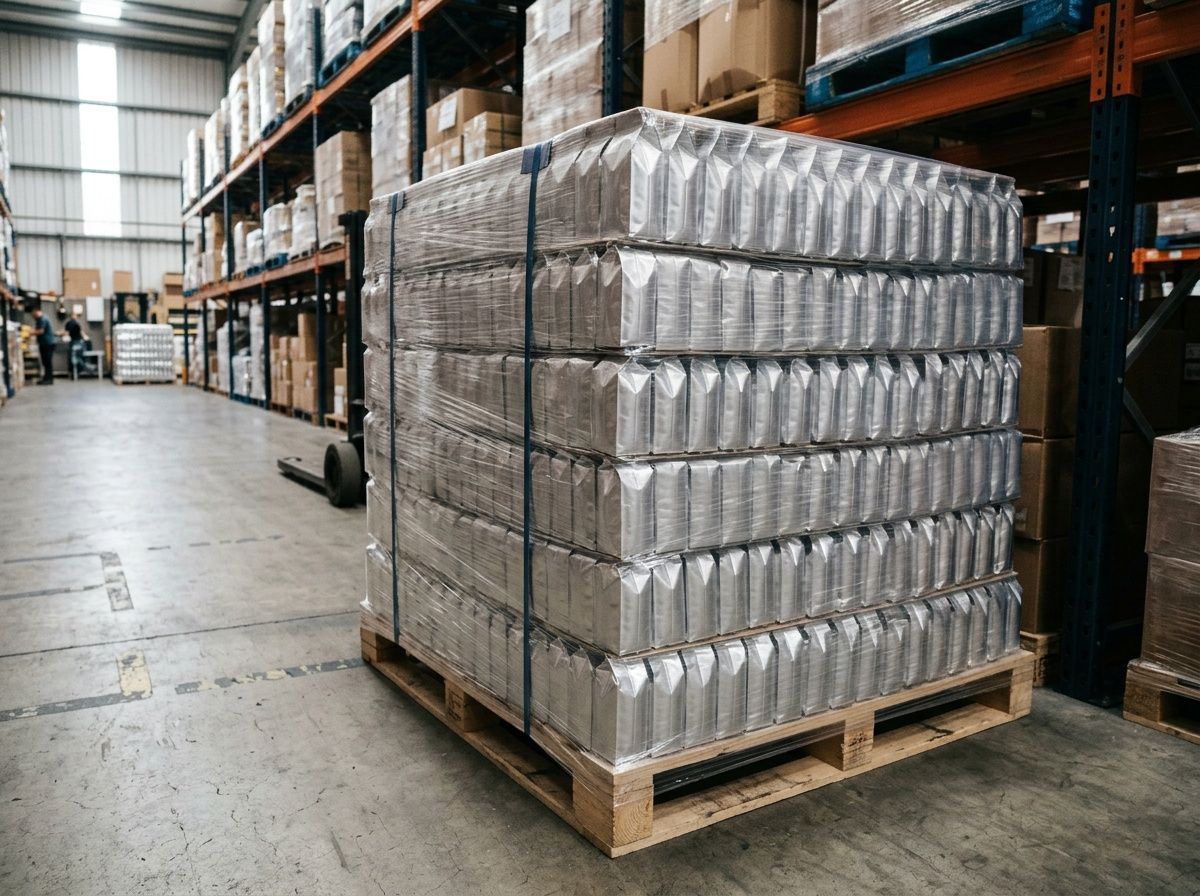
However, the side-gusseted design introduces technical vulnerabilities at the four-corner seals where multiple layers of material meet.
In a gusseted aluminum-laminated bulk bag, a common failure mode is flex cracking. During transport, vibrations cause the tea leaves to shift, creating constant micro-flexing of the material. Because aluminum foil is a metal, it is susceptible to fatigue; repeated flexing can cause the foil to crack. To mitigate this, industrial-grade tea bags often incorporate a reinforcement layer of Nylon (BOPA). Nylon has high puncture resistance and flex-crack resistance, making it an essential component for bulk tea packaging.
Another factor in wholesale structural design is the back-seal or fin-seal. For large-format bags, a center-back seal is often preferred because it distributes the weight of the contents more evenly than a side seal. Engineering the correct seal strength requires a balance: the seal must be strong enough to withstand impact (burst strength) but consistent enough to be opened without heavy machinery.
Furthermore, the Coefficient of Friction (COF) of the outer material is a key procurement consideration. If the outer layer is too slick, bags will slide off pallets. If the material is too tacky, it can be difficult to manage on filling machinery. Material engineers adjust the COF through the use of slip agents or anti-block agents in the outer polymer layer.
Strategic Procurement: Testing and Selecting Tea Packaging Materials
Selecting tea packaging materials is an exercise in risk management and total cost of ownership (TCO) optimization. A strategic approach to selection begins with a technical decision matrix based on the tea’s fermentation level and expected shelf life.
Consider the following matrix for material specification:
- Green and White Teas: Require the highest level of protection. The specification should demand an AL-based laminate with an OTR as close to zero as possible.
- Oolong and Roasted Teas: Moderate sensitivity to oxygen but high sensitivity to moisture. An AL-foil structure is recommended for long-term storage to preserve the roasted aroma.
- Black and Fully Oxidized Teas: Prone to moisture-induced flatness. Focus on high-strength laminates that prevent moisture ingress and maintain structural integrity.
- Pu-erh and Dark Teas: The specification shifts toward Kraft-based composites or specialized breathable polymers that allow for controlled aging while preventing mold.
The procurement process must also account for the Aroma Retention Value. In the tea industry, the value of the product is tied to its sensory profile. Investing in a kraft-foil composite heat-seal pouch for premium samples or retail packs is a value-preservation strategy. It ensures that the first impression—the aroma upon opening the bag—is as potent as possible.
When evaluating suppliers, procurement teams should request OTR and WVTR test results performed under specific conditions (e.g., 23 degrees Celsius, 50% relative humidity for OTR; 38 degrees Celsius, 90% relative humidity for WVTR). These metrics provide a quantitative basis for comparison. Qualitative factors like seal integrity and lamination bond strength are equally important. A bag with a perfect OTR is ineffective if the seal fails under pressure or if the layers delaminate in a humid warehouse.
Finally, the TCO model should include the Environmental Premium. Strategic buyers are already testing mono-material structures (such as all-PE laminates) that are easier to recycle than traditional multi-material composites, balancing the need for barrier protection with corporate sustainability goals.
Implementation Factors: Heat Sealing and Closure Systems
The seal is often the weakest link in the barrier chain. If the heat-sealing process is not perfectly calibrated, microscopic channels can remain at the seams, allowing oxygen and moisture to bypass the high-barrier layer.
Heat sealing is a function of time, temperature, and pressure. In a B2B production environment, finding the sealing window for a specific material is critical. A laminate with a thick aluminum foil layer requires more heat because the metal acts as a heat sink. If the temperature is too low, the bond will lead to peel failure. If the temperature is too high, the polymer can thin out, creating a brittle seal.
The choice of closure type—Ziplock vs. Tin-tie vs. Permanent Heat Seal—dictates shelf life after the product reaches the consumer. For retail, a re-sealable zipper is essential for maintaining freshness. For many premium brands, the ideal configuration is a permanent heat seal at the top for tamper evidence, with a re-sealable zipper located just below the tear notch.
In the case of bulk or wholesale tea, degassing valves are rarely used, as the primary concern is the removal of excess air. High-capacity filling lines often use vacuum sealing or nitrogen flushing to remove oxygen from the bag before the final seal is made. This process requires the packaging material to have high hot tack strength.
The science of tea packaging materials requires an understanding of tea chemistry to define barrier needs, an expertise in polymer science to engineer the laminate, and a focus on mechanical engineering to ensure the bag survives the global supply chain. By matching the material specification to the tea’s biological requirements, a brand can ensure that the quality of the tea is preserved until it reaches the consumer.
Conclusion
Selecting industrial tea packaging requires a precise alignment between material barrier properties—specifically oxygen and water vapor transmission rates—and the chemical stability of the tea’s fermentation level. High-barrier aluminum foil laminates are essential for preventing the oxidation of non-fermented varieties, while Kraft-composite structures provide the controlled breathability necessary for post-fermented maturation. For procurement managers, optimizing the laminate structure by incorporating specialized layers for flex-crack resistance and hermetic sealing directly preserves market value by preventing aromatic loss and moisture-induced degradation during global transit. Technical specifications must prioritize verified transmission data to ensure long-term shelf stability. To discuss barrier requirements for your product line, reach out to our team.


0 Comments