
Key Takeaways
- Polymer selection mitigates chemical migration risks: Utilizing FDA and EU compliant polymers such as PE, PP, and PET ensures chemical stability during temperature fluctuations. This engineering choice prevents toxic migration into food, safeguarding brand integrity and meeting strict regulatory safety standards.
- Multi-layer composites optimize barrier integrity: Material structures including PET/AL/PE and PA/PE are essential for managing Oxygen Transmission Rate (OTR) and Moisture Vapor Transmission Rate (WVTR). These layers act as active barriers against moisture and oxygen ingress to extend product shelf life.
- Cast Polypropylene enhances thermal sealing performance: Integrating food-grade CPP film provides superior heat-sealable properties and moisture-proof protection. This material science ensures package durability during vacuum sealing and heating processes, preventing physical failure and leaks in commercial food factory environments.
- High-performance films stabilize supply chain quality: Selecting functional materials designed for modified atmosphere packaging and frozen food applications reduces spoilage rates. Precise management of polymer properties allows procurement managers to minimize supply chain losses caused by environmental exposure and atmospheric contamination.
Introduction
In food processing, the boundary between product safety and contamination is defined by the molecular stability of the container. Substandard food grade flexible packaging materials can lead to hazardous chemical migration or structural failure, particularly when subjected to the thermal stresses of heat sealing or the extreme conditions of frozen food packaging solutions.
Ensuring long-term shelf life requires a precise management of the oxygen transmission rate OTR and moisture vapor transmission rate WVTR. When materials like BOPET and BOPP films are misapplied in modified atmosphere packaging MAP or vacuum sealing materials, the resulting barrier compromise often leads to premature spoilage and significant supply chain losses. Achieving chemical migration safety demands a rigorous selection of polymers such as PE, PP, and PET that remain inert and maintain their mechanical properties under pressure.
The integration of specialized layers, including heat resistant packaging film and moisture-proof CPP, provides the necessary physical resistance against environmental stressors. These materials must act as an active barrier, preventing the ingress of bacteria and external contaminants while remaining stable across fluctuating thermal loads.
Regulatory Compliance and the Science of Chemical Migration Safety
In the modern food manufacturing landscape, the selection of food grade flexible packaging materials has evolved from a simple procurement task into a sophisticated exercise in risk management and chemical engineering. For food safety engineers and procurement managers, the primary concern is how a material interacts with the food at a molecular level under stress. This shift is driven by a deepening understanding of chemical migration—the process by which low-molecular-weight substances from the packaging material transfer into the food product.
Molecular Stability in FDA Compliant Packaging
The distinction between industrial-grade and food-grade polymers lies in the purity of the resin and the control of the polymerization process. Food-grade polymers, such as high-density polyethylene (HDPE), low-density polyethylene (LDPE), and polypropylene (PP), are synthesized under strict conditions to ensure high molecular stability. Molecular stability refers to the polymer’s ability to maintain its structural integrity without leaching unreacted monomers, catalysts, or additives into the food.
When a resin is classified as food grade, the substance is designed to be inert. However, inertness is relative to the environment. For instance, Polyethylene (PE) is stable in contact with water-based foods but may exhibit different behavior when exposed to high-fat content or specific oils, which can act as solvents. The technical challenge for a food factory is ensuring that the chosen polymer has a molecular weight distribution that minimizes the presence of extractables—small molecules that can easily migrate. In non-compliant or industrial-grade materials, these extractables can include heavy metal residues or phthalates, which pose health risks and can alter the organoleptic properties (taste and smell) of the food, leading to product recalls and brand damage.
Furthermore, the stability of these polymers is influenced by the degree of crystallinity. Highly crystalline polymers like PP offer a tighter molecular lattice, making it harder for foreign molecules to penetrate or for internal additives to escape. Understanding this molecular architecture allows safety engineers to predict how a material will behave when in contact with complex food matrices, such as acidic sauces or lipid-heavy dairy products.
Thermal Stress and Migration Risks in Food Processing
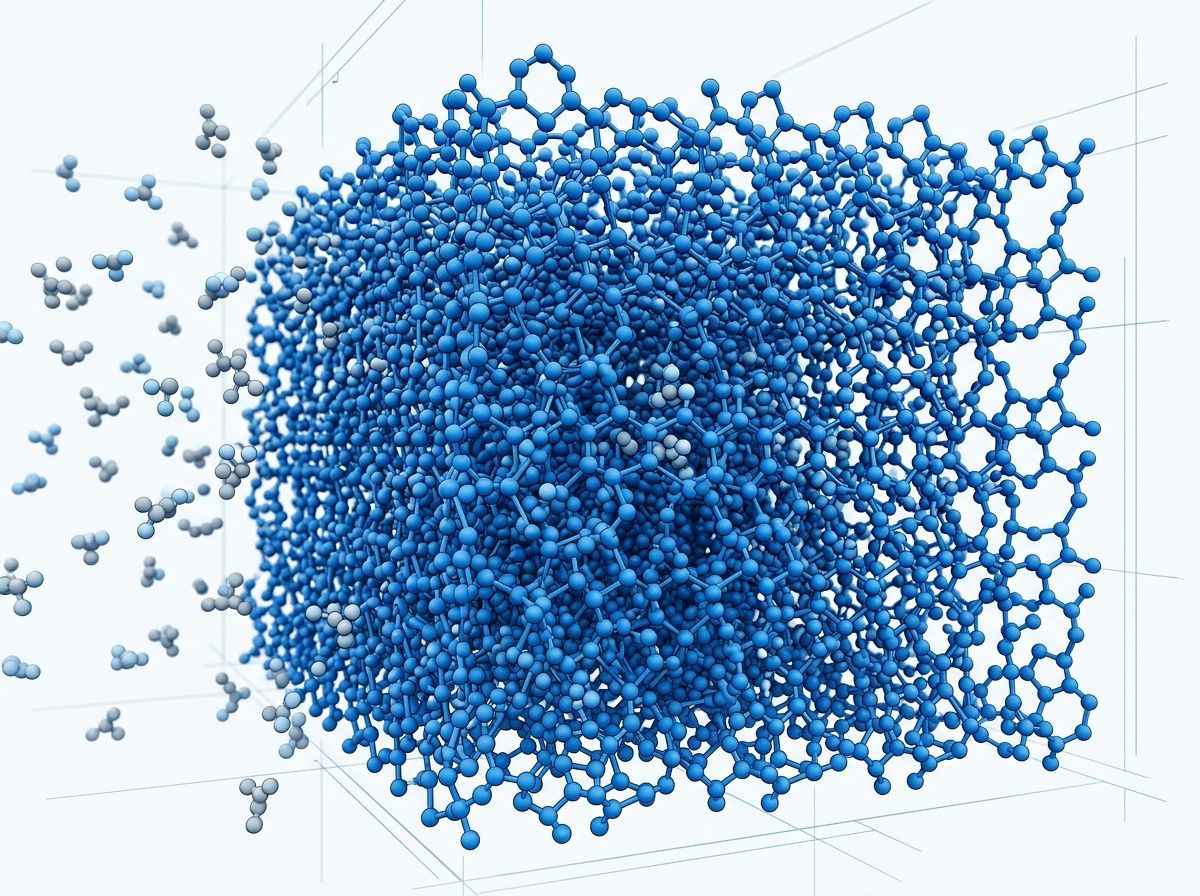
Thermal stress is a significant catalyst for chemical migration in food grade flexible packaging materials. During processes such as heat sealing, pasteurization, or retort sterilization, the kinetic energy of the polymer chains increases, causing the material to expand at a microscopic level. This expansion creates free volume within the polymer matrix, providing a pathway for migration.
Polyethylene Terephthalate (PET) is frequently utilized as the outermost layer in multi-layer structures because of its thermal stability and high glass transition temperature. PET acts as a functional barrier that prevents external contaminants—such as printing inks, solvents from adhesives, and atmospheric pollutants—from migrating inward toward the food. While the inner layer (usually PE or CPP) handles the direct food contact, the PET layer ensures that the structural integrity of the package is not compromised during high-temperature sealing.
The risk of migration is acute during the heat-sealing phase on automated production lines. If the sealing temperature is too high, it may cause the thermal degradation of the inner sealant layer, potentially releasing volatile organic compounds (VOCs). Conversely, if the material is not engineered for thermal resistance, the heat may cause set-off, where inks from the outside of the package migrate to the inside of the next package in a roll-fed system. By utilizing materials with engineered thermal windows, food factories can maintain high-speed production while ensuring that the chemical migration levels remain below the thresholds established by international safety standards. This approach to material science transforms packaging from a passive container into an active safeguard of food purity.
Technical Architecture of High Barrier Flexible Packaging
The engineering of food grade flexible packaging materials is achieved through multi-layer lamination technology designed to create a tortuous path for gases and moisture. By combining different polymers with complementary physical properties, manufacturers can achieve a level of protection that single-layer films cannot match.
Managing OTR and WVTR Through Multi-Layer Composites
The performance of high-barrier packaging is quantified by two critical metrics: Oxygen Transmission Rate (OTR) and Moisture Vapor Transmission Rate (WVTR). Managing these rates is essential for preventing oxidative rancidity in fats, the loss of vitamin content, and the growth of aerobic bacteria or mold.
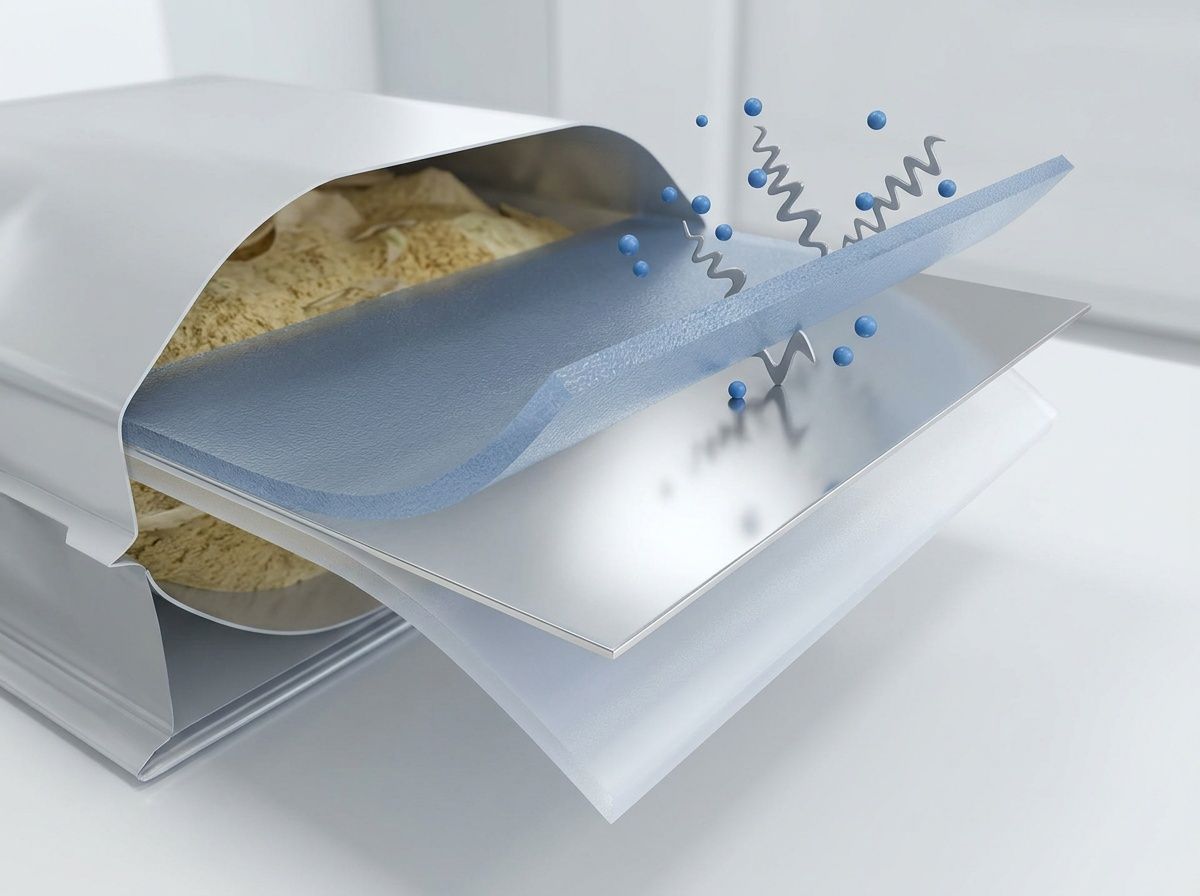
In a high-performance structure, such as a multi-layer high-barrier foil pouch, each layer serves a specific technical purpose. The outer layer, usually BOPET (Biaxially Oriented Polyethylene Terephthalate), provides mechanical strength, printability, and initial thermal resistance. The middle layer is often Aluminum (AL) or EVOH (Ethylene Vinyl Alcohol). Aluminum foil provides a near-zero OTR and WVTR, acting as a total barrier to light, oxygen, and moisture. Because aluminum is brittle and prone to flex-cracking, it must be protected by polymer layers.
For products that require transparency, EVOH is used as a high-oxygen barrier. The technical trade-off with EVOH is its sensitivity to moisture; if the WVTR of the outer layers is not managed, the EVOH layer can absorb water, which significantly degrades its oxygen barrier properties. Engineers must sandwich EVOH between layers of PE or PP to keep it dry. This balance of layer thickness and material selection determines the shelf-life stability of the packaged food.
| Structure | Oxygen Barrier (OTR) | Moisture Barrier (WVTR) | Puncture Resistance | Typical Application |
|---|---|---|---|---|
| PET/PE | Moderate | Moderate | Moderate | General dry snacks |
| PET/AL/PE | Excellent | Excellent | High | Coffee, powdered milk |
| PA/PE | High (Dry) | Moderate | Very High | Vacuum-packed meat |
| PET/EVOH/PE | Excellent | Moderate | High | Transparent retort pouches |
Engineering Barrier Integrity in Vacuum Materials
Vacuum packaging represents a demanding application for flexible materials. When air is evacuated from a package, the material is subjected to atmospheric pressure, which forces the film tightly against the contours of the food. If the food has sharp edges—such as bone-in meats or dried pasta—the risk of pinhole leaks or punctures is high.
Polyamide (PA), commonly known as Nylon, is critical here. A reinforced high-barrier vacuum material typically utilizes a PA/PE co-extruded or laminated structure. The PA layer provides the necessary puncture resistance and toughness, while also acting as an effective oxygen barrier. However, PA is naturally hydrophilic and can absorb moisture from the food or the environment. When PA absorbs moisture, its molecular structure relaxes, which can increase its oxygen permeability.
To counteract this, engineers use co-extrusion technology to bond PA with PE. The PE layer serves two roles: it acts as the primary moisture barrier to protect the PA layer and provides the heat-sealing properties necessary to maintain a hermetic seal under vacuum. The integrity of this seal is critical; even a microscopic failure in the seal area can lead to slow leakers, where oxygen gradually enters the package over weeks, leading to premature spoilage.
Thermal Sealing Performance and the Role of Cast Polypropylene (CPP)
The seal is the most vulnerable part of any flexible package. No matter how high the barrier properties of the film are, the package will fail if the seal does not maintain its integrity throughout the supply chain. In high-speed food processing environments, the material’s ability to form a strong, instant seal is a driver of production efficiency.
Advantages of Heat Resistant CPP
Cast Polypropylene (CPP) is a preferred sealant layer for food products that require heat resistance or high clarity. Unlike BOPP (Biaxially Oriented Polypropylene), which is stretched in two directions to increase strength but loses its heat-sealing effectiveness, food-grade cast polypropylene film is produced without orientation. This results in a material that has excellent hot tack strength.
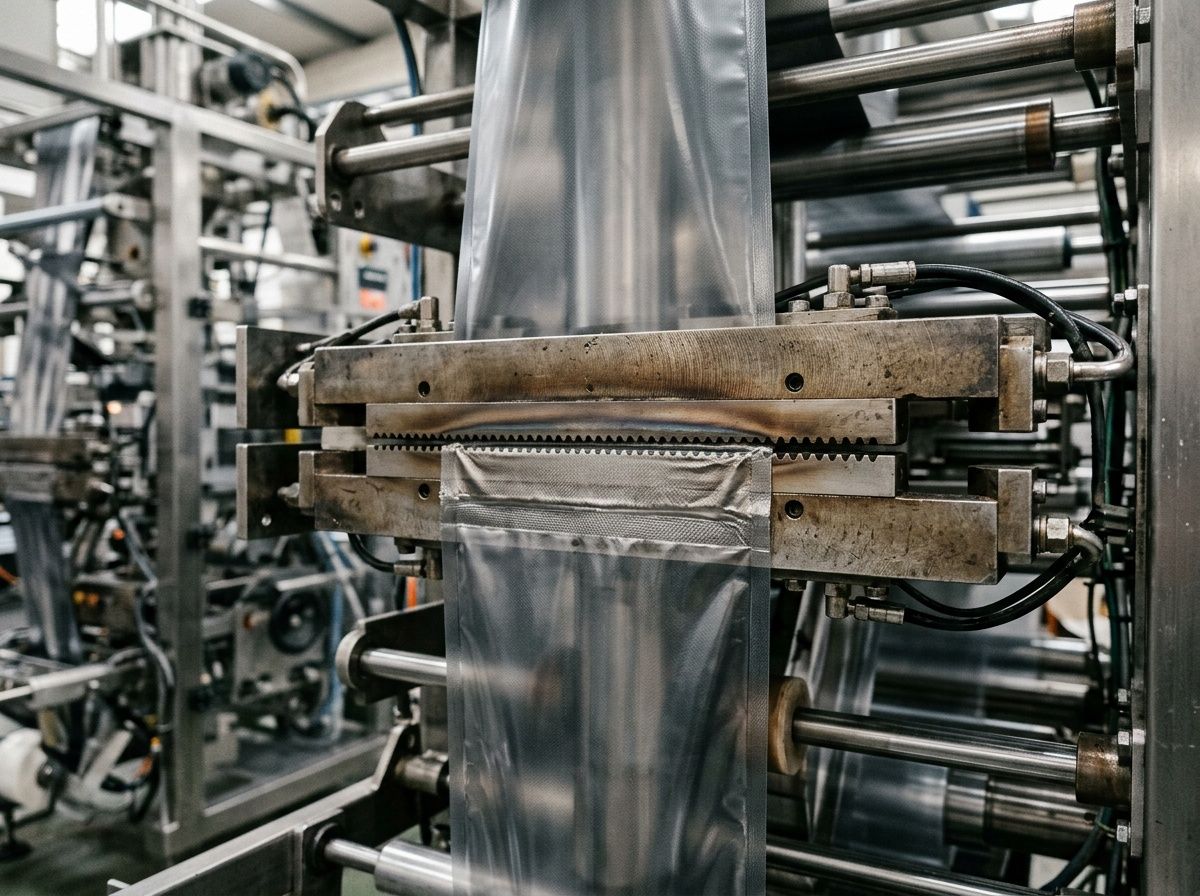
Hot tack refers to the strength of the heat seal while it is still in a molten state, immediately after the sealing bars have opened. In Vertical Form Fill Seal (VFFS) machines, the food product is dropped into the bag immediately after the bottom seal is made. If the hot tack strength is insufficient, the weight of the product will rupture the seal before it cools and solidifies. CPP’s molecular structure allows for a broad sealing window, meaning it can form a secure bond across a range of temperatures. This flexibility is vital in factories where machine temperatures may fluctuate or where high-speed operation requires rapid heat transfer.
Additionally, CPP offers superior resistance to grease-through, a common failure mode where fats from the food migrate into the sealant layer and weaken the bond. This makes CPP a suitable choice for oily snacks, pet food, and prepared meals.
Preventing Physical Failure in Moisture-Proof Layers
Moisture is a constant threat to seal integrity, especially in the packaging of frozen or refrigerated foods. If moisture is trapped in the seal area during the heating process, it can turn into steam, creating micro-channels or voids within the seal. These channels are often invisible to the naked eye but allow bacteria or oxygen to enter.
To prevent such failures, the surface energy of the sealant layer must be carefully controlled. CPP and specialized PE resins are often treated to ensure they have the correct wetting properties, allowing the molten polymer to flow into every crevice of the seal area, even in the presence of minor contaminants like food dust or moisture droplets.
The thickness of the sealant layer also plays a role in caulking. A thicker CPP layer can flow more effectively around contaminants, burying them within the seal to maintain a hermetic closure. Procurement managers must find the minimum thickness required to guarantee a low failure rate under specific factory conditions. This technical optimization directly impacts the scrap rate of the production line.
Application-Specific Engineering: Frozen Food and MAP Solutions
Standard packaging materials often fail when exposed to the extremes of the food supply chain, particularly in sub-zero logistics or modified atmosphere environments. This necessitates application-specific engineering where the polymer’s physical properties are tuned to the environmental conditions.
Polymer Resilience in Sub-Zero Logistics
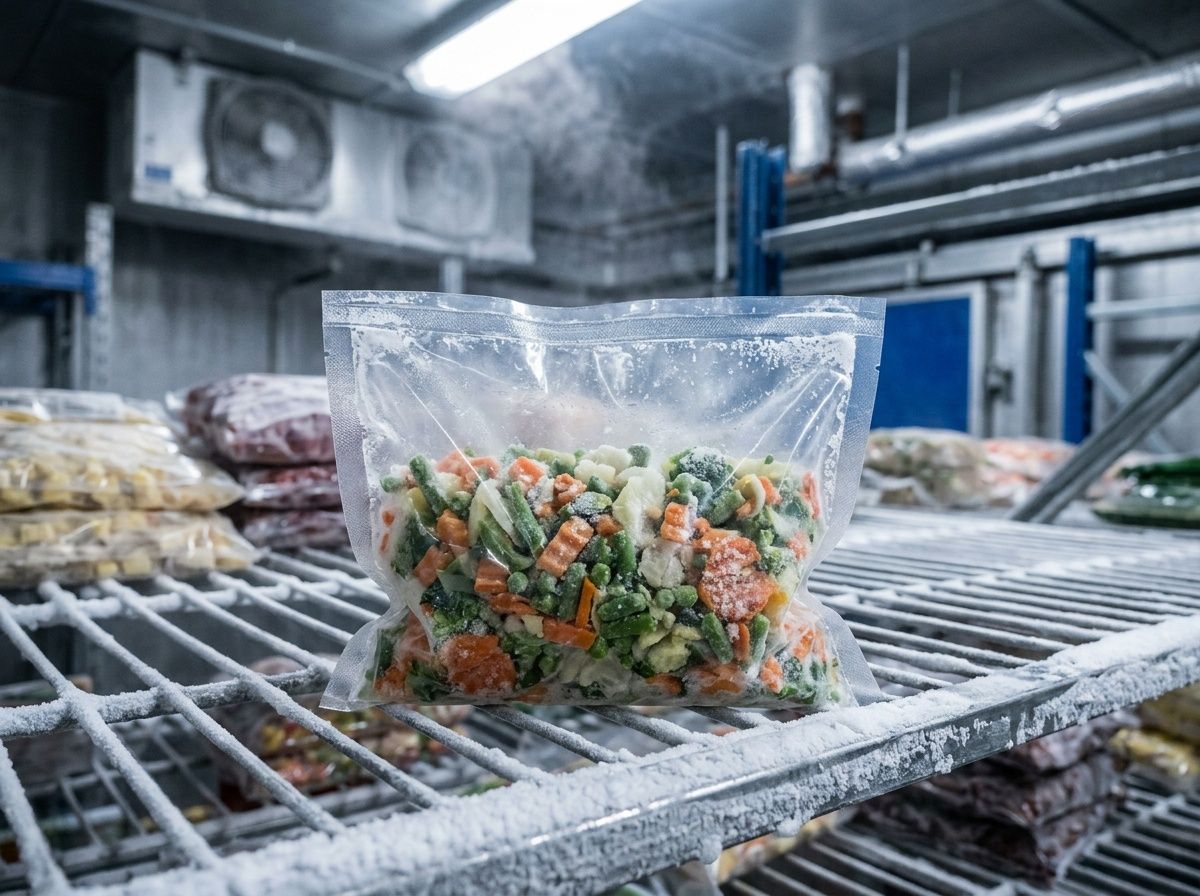
When polymers are cooled, they reach a point known as the glass transition temperature (Tg). Below this temperature, the amorphous regions of the polymer become rigid and brittle. For standard polyethylene, this transition can occur at temperatures common in industrial freezers. If a package of frozen food is dropped or vibrated during transport at -20 degrees Celsius, a brittle film will develop shatter cracks.
To solve this, food grade flexible packaging materials for frozen applications use modified PE resins. By incorporating metallocene-catalyzed PE or blending in elastomeric modifiers, manufacturers can lower the Tg of the film, ensuring it remains flexible even in deep-freeze conditions. This resilience is about maintaining the moisture barrier. In the freezer, sublimation occurs, where ice turns directly into water vapor. If the packaging develops microscopic cracks, moisture will escape the food and crystallize on the surface of the bag—a phenomenon known as freezer burn. High-performance frozen food films must maintain a low WVTR even under mechanical stress at low temperatures to prevent this degradation.
Gas Permeability Control in MAP
Modified Atmosphere Packaging (MAP) is a preservation technique where the air inside the package is replaced with a specific mixture of gases—usually N2 to displace oxygen and CO2 to inhibit bacterial growth. The success of MAP depends on the package’s ability to maintain these specific gas ratios over time.
This requires a selective barrier. For example, some fresh produce applications require breathable films that allow a controlled amount of O2 in and CO2 out to prevent anaerobic fermentation. Conversely, for processed meats or bakery products, the goal is a high-barrier environment. In these cases, the material must have a low permeability to both N2 and CO2.
The engineering challenge is that different gases migrate through polymers at different rates. CO2 typically migrates through plastic films 3 to 5 times faster than O2. Advanced MAP solutions often utilize multi-layer structures incorporating EVOH or specialized PET coatings specifically tested for CO2 transmission rates. This precision ensures that the protective atmosphere remains intact from the factory floor to the consumer, extending shelf life without the need for chemical preservatives.
Procurement Criteria: Balancing TCO with Safety
For the professional buyer, the challenge of sourcing food grade flexible packaging materials lies in moving toward the Total Cost of Ownership (TCO), which accounts for the hidden costs of poor material performance.
Balancing Material Cost with Supply Chain Risk
A low-cost, single-layer PE bag might result in a higher spoilage rate due to inadequate oxygen barrier properties. In such cases, the true cost of that packaging is higher than a more expensive high-performance functional bag.
When evaluating the cost-benefit of high-barrier materials, procurement managers should consider three main factors:
- Product Loss Reduction: High-barrier structures like PET/AL/PE can extend the shelf life of sensitive products. If this extension allows for reaching distant markets or reduces the volume of expired goods, the material provides a clear return.
- Operational Efficiency: The runnability of a film on the packaging machine is determined by its Coefficient of Friction (COF). Consistent COF values ensure the production line runs at maximum speed without jamming or tracking issues.
- Brand Equity Protection: Sourcing materials with verified OTR/WVTR and migration test reports is an insurance against the loss of consumer trust or food safety incidents.
| Evaluation Metric | Basic PE / Single Layer | High-Barrier Multi-Layer | Impact on TCO |
|---|---|---|---|
| Material Cost | Low | Higher | Initial outlay increase |
| Shelf-Life Potential | Short | Extended | Lower spoilage & return costs |
| Machine Speed (COF) | Variable | Optimized/Consistent | Higher throughput per hour |
| Seal Failure Rate | Higher (~5%) | Minimal (<0.1%) | Less waste, higher efficiency |
| Regulatory Risk | Higher (migration) | Low (certified resins) | Brand protection/Compliance |
Technical Validation and Quality Assurance in Food Factories
The final step in a procurement strategy is the technical validation of incoming materials. A food factory should implement a Quality Assurance (QA) protocol that mirrors the technical complexity of the materials.
This includes requesting a Technical Data Sheet (TDS) for every batch, which specifies the OTR, WVTR, and seal strength. For food grade flexible packaging materials, the Declaration of Compliance (DoC) is the most critical document. This document should state that the material has been tested according to relevant standards (such as FDA 21 CFR or EU 10/2011) and that the Overall Migration Limits (OML) and Specific Migration Limits (SML) are not exceeded.
Furthermore, physical testing on the factory floor is essential. This involves burst tests to check the strength of the seals under pressure and dye penetration tests to look for micro-leaks. By treating the packaging material as a critical engineered component rather than a commodity, food manufacturers can ensure a stable supply chain, maximize production efficiency, and guarantee the safety and quality of the food delivered to consumers.
Conclusion
The engineering of food-grade flexible packaging relies on precise molecular stability and multi-layer lamination to mitigate chemical migration and maintain barrier integrity. Managing OTR and WVTR through specific polymer selections like PET, PA, and CPP ensures product safety under varying thermal and mechanical stresses. For procurement managers, prioritizing these technical specifications over initial material costs reduces the Total Cost of Ownership by minimizing spoilage and optimizing production line efficiency. This rigorous approach to material science transforms packaging from a simple container into a critical safeguard for brand reputation and regulatory compliance. To discuss specific barrier requirements or material validation for the product line, reach out to our team.


0 Comments