
Key Takeaways
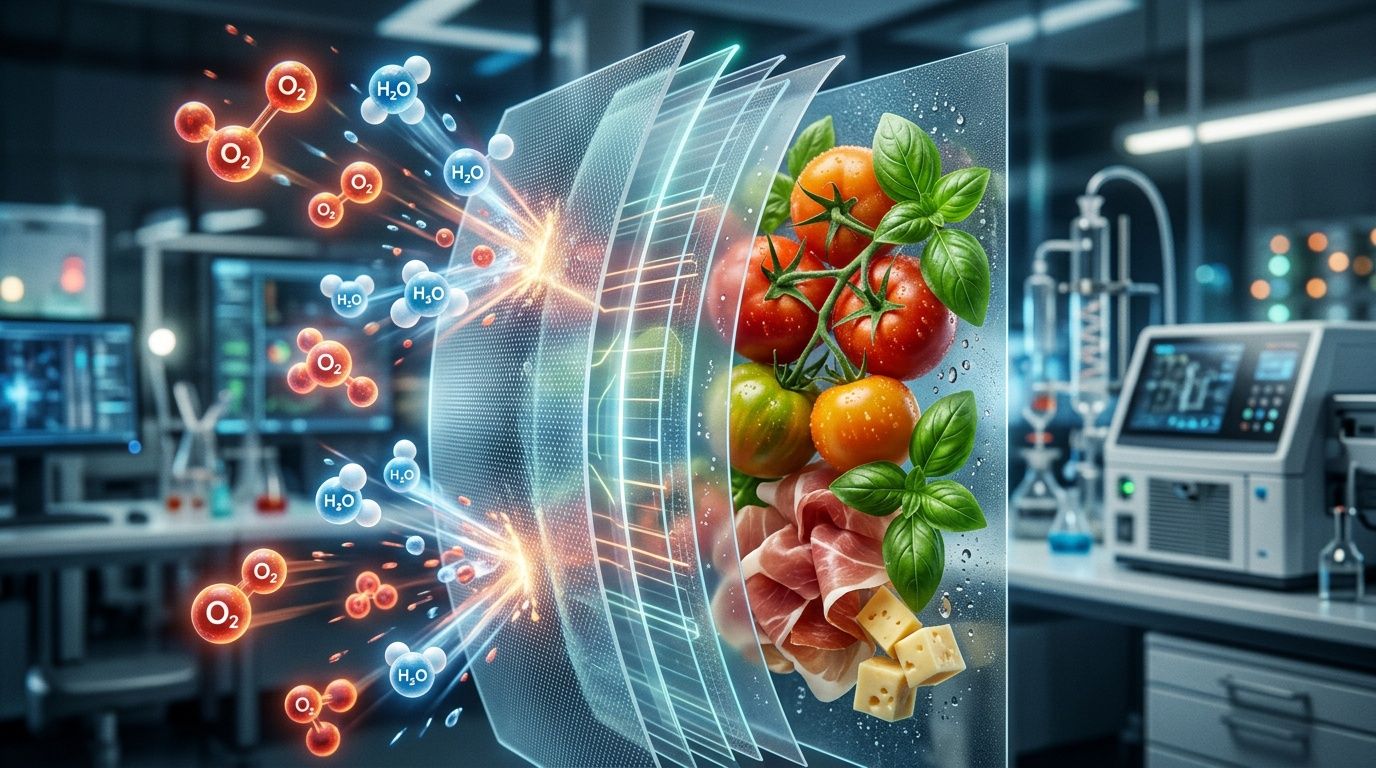
- Maximum Permeability Resistance: The BOPP/AL/PE aluminum foil structure provides near-zero moisture and oxygen permeability, serving as an absolute barrier that prevents environmental degradation and extends the shelf life of sensitive food products.
- Oxygen Transmission Rate Optimization: Multi-layer PA/PE composite structures act as a technically superior oxygen barrier for vacuum preservation, directly reducing oxidation risks and maintaining product integrity for manufacturers prioritizing long-term quality control.
- Chemical Migration Prevention: High-barrier virgin laminates serve as a critical safety shield by preventing the migration of plasticizers and contaminants common in recycled materials, ensuring compliance with global food safety standards and protecting brand reputation.
- Consistency in Automated Production: Industrial-grade laminated film rolls provide stable moisture vapor transmission rates across high-speed packaging lines, allowing procurement directors to balance high-volume output with rigorous moisture-proof performance requirements.
Introduction
For food manufacturers, selecting high barrier food packaging is not merely a matter of physical containment, but a critical hedge against shelf-life degradation and regulatory non-compliance. While many films appear identical to the naked eye, insufficient control over oxygen transmission rate OTR and moisture vapor transmission rate WVTR can lead to premature oxidation or spoilage, resulting in costly product recalls and the erosion of consumer trust.
Beyond physical barrier performance, a more manageable risk lies in the chemical composition of the laminate itself. The use of sub-standard resins or recycled materials can trigger chemical migration, where substances like plasticizers leach into the food product over time. This transfer not only compromises the safety of food grade laminate films but also places the manufacturer at risk of failing flexible packaging safety compliance audits, particularly those required for FDA approved food packaging. Industry history indicates that even a single instance of exceeding chemical migration limits can lead to brand failure and the total loss of market reputation.
Evaluating the mechanical and chemical differences between standard composites and high-performance multi-layer barrier film structures is essential for maintaining long-term quality control. This information helps procurement directors and packaging engineers judge which material structures provide the necessary barrier stability for specific shelf life extension goals while meeting strict chemical migration testing standards.
The Economic Impact of Shelf Life and the Technical Failures of Standard Flexible Films
In the contemporary food supply chain, the role of packaging has undergone a significant transformation. No longer viewed as a mere vessel for containment or a canvas for marketing, packaging is now recognized by quality control managers and procurement directors as a critical “Brand Safety Shield.” The technical integrity of this shield determines the economic viability of a product from the moment it leaves the production line to the second it is consumed. When a packaging solution fails to provide an adequate barrier against environmental stressors, the resulting physical degradation manifests as a cascade of financial liabilities, including product recalls, retail returns, and the erosion of brand equity.
Standard flexible films, often selected for low upfront per-unit cost, frequently lack the specialized polymer architectures required to resist the penetration of oxygen (O2), moisture (H2O), and ultraviolet (UV) light. For high-lipid products or moisture-sensitive dry goods, the use of a commodity-grade film is a high-risk gamble. These materials allow for premature oxidation and moisture exchange, which lead to rancidity, textural changes, and the proliferation of aerobic microbes. In an industrial context, the standard film is a failure mode, particularly when subjected to the rigors of global shipping where temperature fluctuations and humidity spikes are common.
The Mechanics of Spoilage: Beyond Physical Containment
The spoilage of food products is a multi-dimensional chemical and biological process driven by the kinetic energy of external molecules. Environmental factors such as O2 and H2O vapor are in a constant state of flux, attempting to reach equilibrium across the barrier of the packaging film. In low-barrier materials, this process is relatively unimpeded. For example, in snacks with high oil content, the ingress of O2 triggers lipid oxidation. This chemical reaction produces free radicals that break down fatty acids into aldehydes and ketones, resulting in the off flavors and odors associated with rancidity. Standard films without specific gas-barrier layers like Polyamide (PA) or Aluminum (AL) cannot mitigate this oxidative stress over the required 6-to-12-month shelf life.
Furthermore, the ingress of moisture into dehydrated products—such as crackers, cereals, or powdered dairy—alters the water activity (aw) of the food. As the internal humidity of the package rises, the product loses its crispness, and the risk of mold growth increases. Conversely, for high-moisture foods like fresh meats or cheeses, a poor barrier allows internal moisture to escape, leading to weight loss and surface desiccation. The technical failure of a film to manage these transitions renders the product unsellable, turning a localized packaging choice into a systemic financial loss.
Quantifying the Cost of Barrier Failure in Global Supply Chains
The financial implications of barrier failure extend far beyond the loss of the individual package. When a batch of products is returned due to sensory degradation—even if it is still technically safe for consumption—the procurement and logistics costs are compounded. In many cases, the cost of disposing of failed inventory and the associated reverse logistics can be three to five times the original manufacturing cost. This invisible risk is often omitted from early-stage procurement spreadsheets that focus solely on the price per thousand units.
Consumer trust is a fragile asset; once a customer associates a brand with poor quality due to packaging-related spoilage, the cost of customer re-acquisition becomes high. Technical decision-makers must therefore view high-barrier films as an insurance policy—a proactive defense against the volatility of the retail environment and the high cost of brand failure. High-performance materials like those in the high-performance functional bag category provide a necessary defense against these variables.
Technical Mechanics of High Barrier Food Packaging: Decoding OTR and WVTR
To transition from commodity packaging to a high-performance shield, one must understand the engineering metrics that define barrier efficacy. The two primary pillars of barrier technology are Oxygen Transmission Rate (OTR) and Moisture Vapor Transmission Rate (WVTR). These metrics represent the physical limits of a material’s ability to exclude the primary catalysts of food spoilage.
The engineering of these barriers involves manipulating the polymer matrix at a molecular level to create a tortuous path for gas and vapor molecules. This path-length extension, combined with the chemical affinity between the migrant molecule and the polymer chain, determines the transmission rate. In professional food-grade laminates, multiple layers target specific migrants, ensuring a protection profile that standard mono-layer films cannot achieve.
Oxygen Transmission Rate (OTR) and the Physics of Gas Permeation
The Oxygen Transmission Rate (OTR) measures the volume of oxygen gas that passes through a specific area of film over a 24-hour period (expressed as cc/m2/day). The physics of this process follows a three-stage mechanism: adsorption, diffusion, and desorption. O2 molecules are adsorbed onto the outer surface of the film, diffuse through the polymer matrix, and desorb from the inner surface into the package headspace.

The OTR of a film is influenced by the crystallinity of the polymer. Materials with high crystallinity, such as specialized Polyamides (Nylon), provide a dense molecular structure that slows the diffusion stage. This is vital for products requiring multi-layer PA/PE vacuum pouch solutions. In vacuum-sealed environments, the differential pressure accelerates the pull of oxygen through the film. Without a high-barrier PA layer, the vacuum would be lost quickly, leading to aerobic microbial growth. By minimizing OTR, manufacturers can also reduce the volume of nitrogen (N2) flushing required in modified atmosphere packaging (MAP).
Moisture Vapor Transmission Rate (WVTR): Maintaining Hygroscopic Stability
While OTR deals with gas-phase molecules, the Moisture Vapor Transmission Rate (WVTR) focuses on the movement of water vapor through the film (expressed as g/m2/day). Hygroscopic foods—those that readily absorb moisture—require a near-absolute barrier to maintain structural integrity and chemical stability.
The WVTR performance of a material is dependent on environmental conditions, specifically temperature and relative humidity (RH). As temperature increases, the kinetic energy of water molecules rises, making it easier for them to penetrate polymer chains. This necessitates the selection of materials with hydrophobic properties, such as Polyethylene (PE) or Aluminum foil, which do not swell or lose integrity when exposed to high humidity. Understanding the interplay between WVTR and the specific water activity (aw) of the food is essential for preventing textural degradation or the clumping of powdered ingredients.
| Material | OTR Performance | WVTR Performance | Light Barrier | Best Application |
|---|---|---|---|---|
| PE (Polyethylene) | Low (High Permeability) | High | None | Fresh produce, short shelf life |
| PET (Polyester) | Medium | Medium | Minimal | Outer layer for print/strength |
| PA (Nylon) | High | Medium | None | Vacuum meat, cheese, puncture resistance |
| AL (Aluminum Foil) | Excellent (Near-Zero) | Excellent (Near-Zero) | Total | Long-term snacks, coffee, dry powders |
Engineering Multi-Layer Barrier Film Structures: From Aluminum Foil to PA/PE Composites
The most effective high-barrier packaging is rarely a single material. Instead, it is a sophisticated laminate bonded together to leverage the unique strengths of each component. This engineering approach allows for a customized barrier profile fine-tuned to the specific sensitivity of the food product. By combining materials like BOPP, Aluminum, PA, and PE, engineers create a structure that is simultaneously a gas barrier, a moisture barrier, and a high-strength container.
In these multi-layer structures, the thickness and sequence of the layers are critical. Even a few microns of difference in a barrier layer can significantly impact shelf life. Furthermore, the selection of the correct adhesive or tie-layer is necessary to prevent delamination—the separation of layers—which would compromise the barrier’s integrity.
The Aluminum Foil Shield: Achieving Near-Zero Permeability
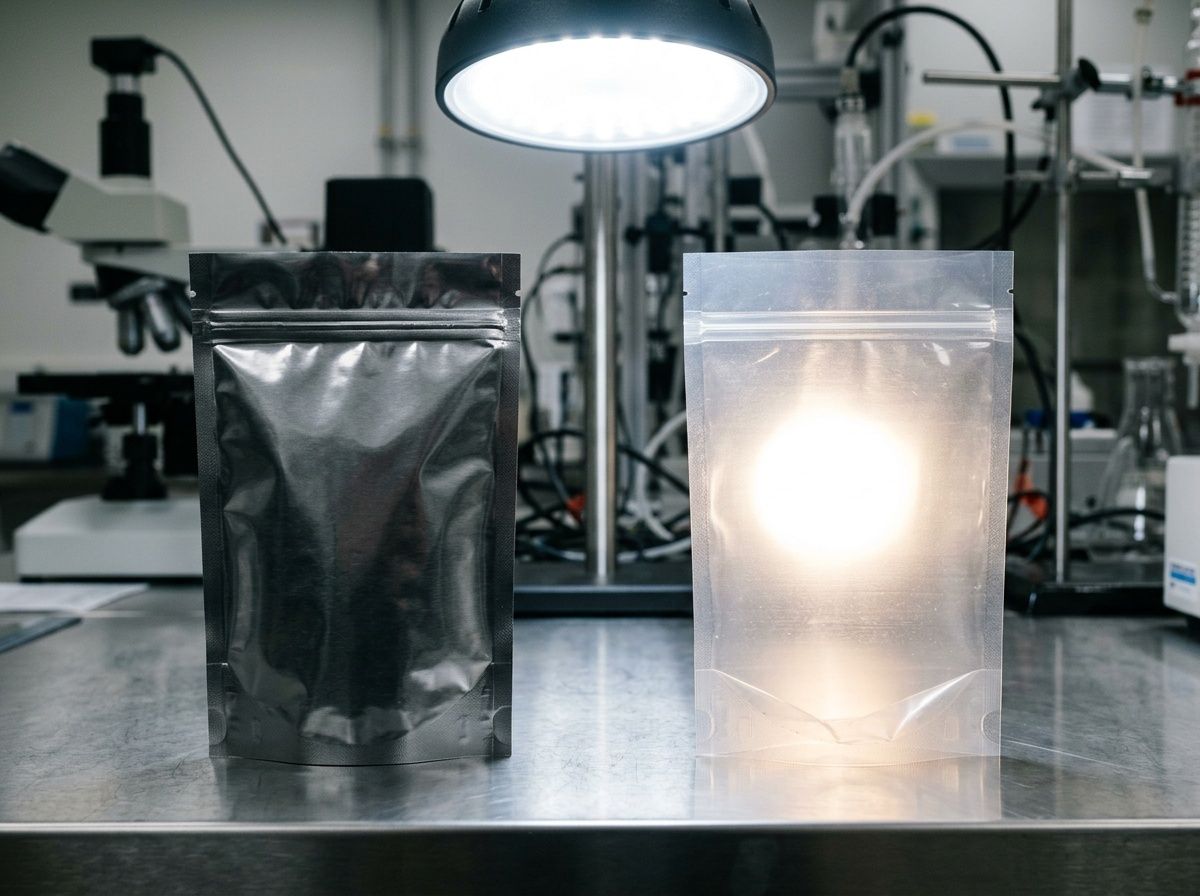
For products that require the highest level of protection against environmental threats, the aluminum foil laminate (typically BOPP/AL/PE) remains the industry standard. Unlike plastic polymers, which have microscopic gaps between molecular chains, aluminum foil provides a continuous metallic lattice that is virtually impermeable to O2, H2O, and UV light.
This absolute shield is essential for products with high fat content, such as nuts, fried snacks, and premium chocolates. In these applications, an aluminum-foil-laminated stand-up pouch serves as a moisture barrier and a total light blockade. Light acts as a catalyst for photo-oxidation, a process that can cause oils to turn rancid. By providing a 100% opaque barrier, aluminum foil prevents the initiation of free radical chains, preserving the flavor profile and nutritional content of the food.
Functional PA/PE Composites for Vacuum and Strength
For applications requiring flexibility, transparency, or deep-draw vacuuming, PA/PE (Nylon/Polyethylene) composites are the preferred choice. Polyamide (PA) provides gas barrier properties and mechanical toughness. When co-extruded or laminated with Polyethylene (PE), the resulting film combines the oxygen-blocking capability of Nylon with the superior moisture-barrier and heat-sealing properties of PE.
These composites are standard in the protein and dairy industries. The PA layer provides the tensile strength and puncture resistance needed to survive the vacuuming process and sharp edges. Simultaneously, the PE layer ensures a hermetic seal. This synergy allows for a thinner overall film that maintains high performance, balancing material costs with the demands of the cold chain.
Synergistic Lamination: The Role of Tie Layers and Adhesives
The performance of a multi-layer barrier film depends on its internal bonds. The process of lamination involves the use of specialized adhesives or tie layers to fuse incompatible materials. For instance, Nylon and Polyethylene require a tie layer to bridge the chemical gap between the polar PA and the non-polar PE.
If the lamination process is flawed due to incorrect adhesive weight or insufficient curing, the film may suffer from delamination during sterilization or high-speed filling. Delamination creates air pockets between layers, which can harbor moisture or gases, creating a short circuit in the barrier path. Engineering high-performance laminates requires precise control over bonding parameters to ensure the composite material behaves as a unified shield.
Preventing Chemical Migration in Food Grade Laminate Films
As global regulations regarding food safety become increasingly stringent, the focus of packaging quality has shifted to the chemical purity of materials. Chemical migration—the transfer of molecules from the packaging material into the food—is a critical concern. This migration can involve residual solvents from inks, heavy metals from low-grade resins, or harmful additives.
Chemical migration is invisible; a package may look perfect and provide an excellent OTR/WVTR barrier yet still leach substances. Ensuring safety compliance requires a commitment to using virgin, food-grade resins and conducting comprehensive migration testing.
The Science of Migration: How Contaminants Enter the Food Chain
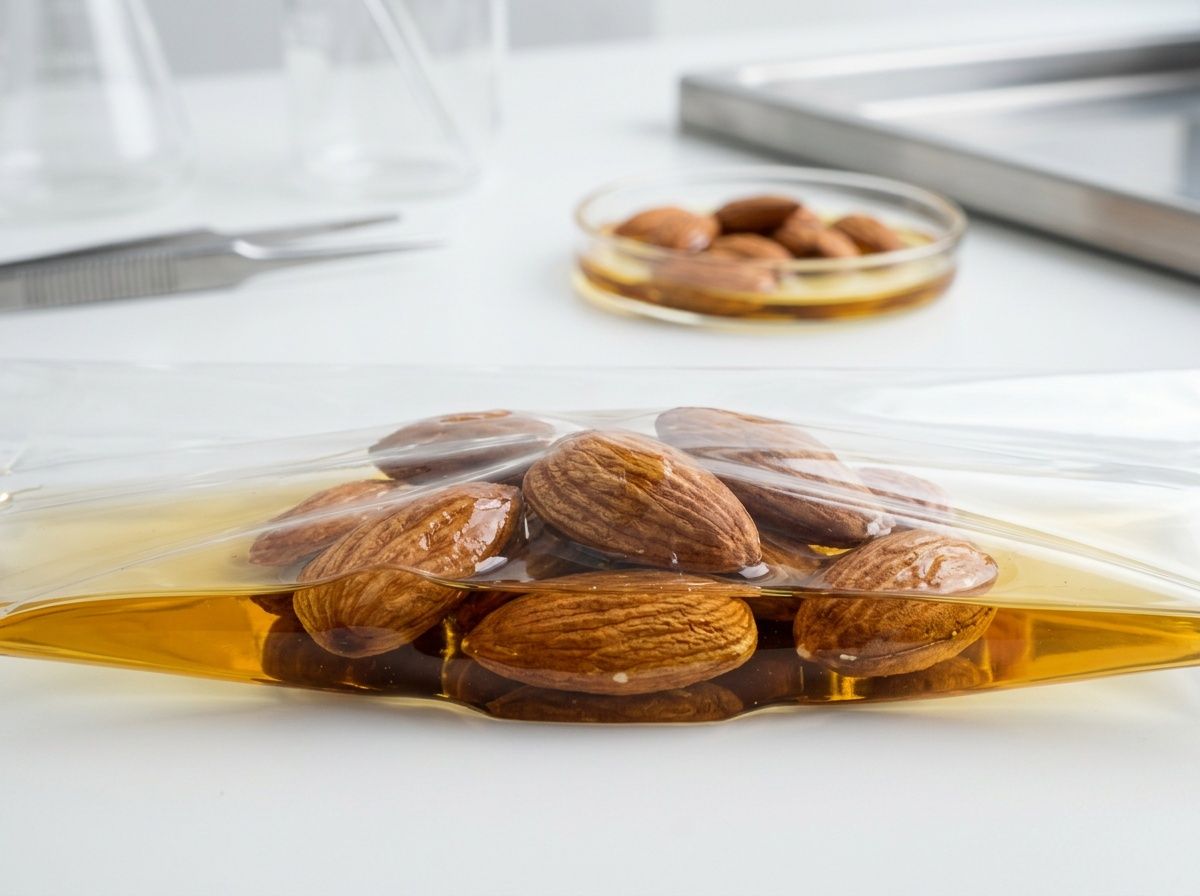
Chemical migration is a diffusion-controlled process where molecules move from the packaging into the food until equilibrium is reached. This process is accelerated by temperature, time, and the nature of the food. Fatty or acidic foods are particularly aggressive, as they can act as solvents that pull plasticizers out of the polymer matrix.
Standard safety protocols distinguish between Global Migration and Specific Migration (restricted substances like certain phthalates). To maintain a high-performance functional bag category status, materials must be tested under worst-case conditions—such as 10 days at 40 degrees Celsius—to simulate long-term storage. Failure to meet these specific migration limits (SML) can result in legal sanctions and product seizures.
Virgin Resins vs. Recycled Content: The Hidden Risk in the Circular Economy
In recent years, the push for sustainability has led some manufacturers to explore post-consumer recycled (PCR) materials. However, in direct-contact food packaging, recycled content introduces risks. Recycled plastics often contain Non-Intentionally Added Substances (NIAS), which are contaminants from the plastic’s first life or the recycling process. These can include heavy metals, printing ink components, or cleaning agents.
For high-barrier food packaging, the use of 100% virgin, FDA-approved resins is a fundamental requirement for risk mitigation. Virgin resins provide a known chemical profile, ensuring that the package acts as a safe, inert barrier rather than a source of contamination.
Managing Regulatory Frameworks: FDA and Global Compliance
Compliance with international standards, such as the FDA in the United States and EU Regulation 10/2011 in Europe, is the minimum baseline for professional packaging. These frameworks define the substances allowed for food-contact materials and set strict limits on migration.
Verifying compliance involves understanding the traceability of raw materials and the manufacturing environment. High-barrier films produced in facilities without strict Good Manufacturing Practices (GMP) are at risk of cross-contamination. By prioritizing suppliers who provide transparent documentation and rigorous chemical migration testing, brands can ensure their safety shield is chemically and physically robust.
Optimizing High Barrier Food Packaging for High-Speed Automated Production
A high-barrier film must be optimized for the factory floor. The transition from a static sheet to a finished package involves mechanical and thermal stress. If the material is not optimized for high-speed automated production, the barrier properties can be compromised during the conversion process, leading to micro-leaks.
In industrial packaging, efficiency and integrity must go hand in hand. The film must withstand the tension of filling machines, the heat of sealing bars, and the friction of transport rollers while maintaining its OTR and WVTR specifications.
Maintaining Barrier Integrity During High-Speed Conversion
During the Form-Fill-Seal (FFS) process, the film is subjected to rapid heating and cooling cycles. Heat seal stability is critical. If the sealing temperature is too low, the bond will be weak, leading to channel leaks. If the temperature is too high, the heat can damage the barrier layer (PA or AL), creating localized points of failure.
Optimizing the relationship between time, temperature, and pressure is essential for maintaining the integrity of a high-barrier laminated film roll. Modern high-speed lines require films with a broad sealing window, allowing for secure seals even if there is slight variability in machine performance.
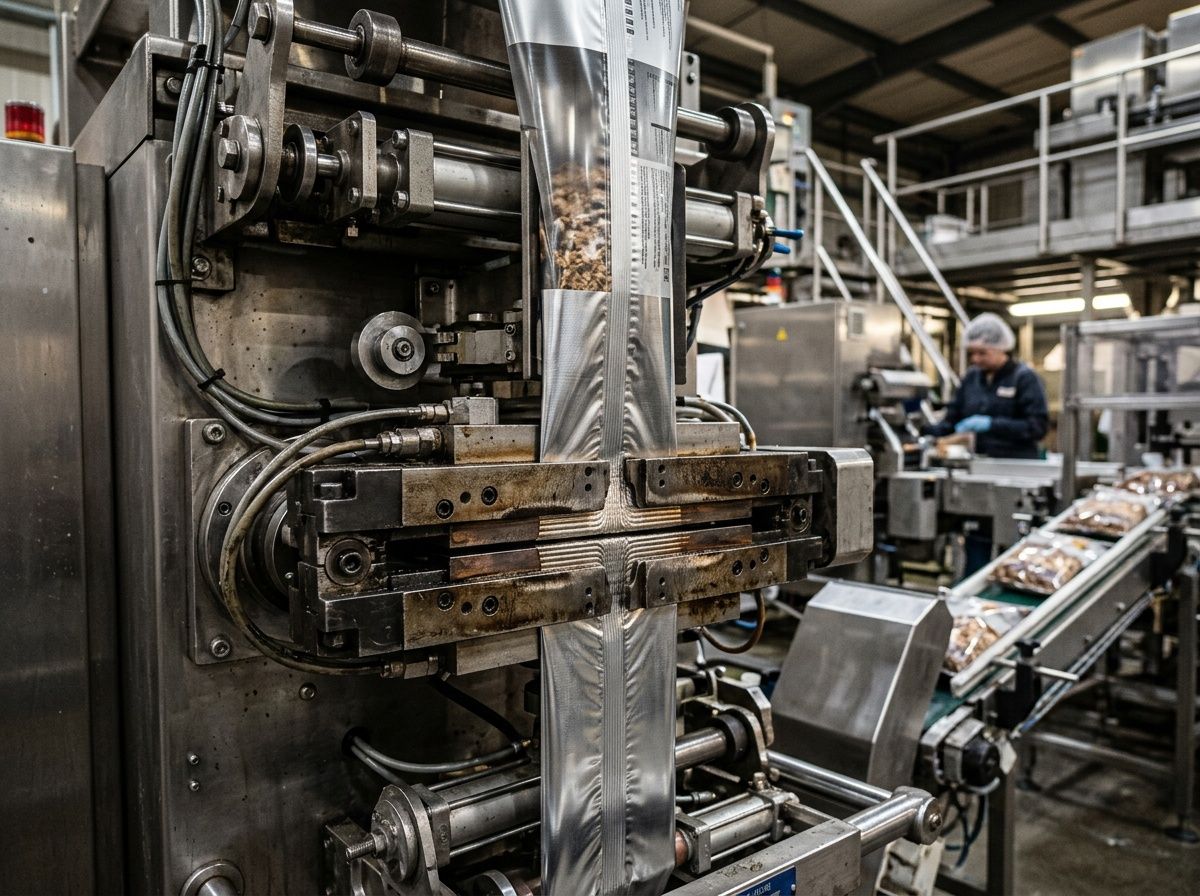
Furthermore, the film must have sufficient hot tack to prevent the weight of the food from pulling the seal apart immediately after formation.
The Role of Film Slip and COF in Production Efficiency
The Coefficient of Friction (COF) dictates how easily the film slides over metal surfaces of packaging machinery. A COF that is too high will cause the film to drag, leading to stretching, misalignment, and potential tearing. Conversely, a COF that is too low can lead to instability during the stacking of finished bags.
To manage COF, manufacturers add slip agents to outer layers. In high-barrier food packaging, these additives must be carefully calibrated. Excessive slip agents can migrate to the surface and interfere with seal strength or ink adhesion. Engineering a film with the correct slip ensures maximum production speed without sacrificing physical or chemical security.
Strategic Procurement: A Decision Matrix for High-Performance Barrier Selection
Sophisticated procurement looks beyond the invoice price to the Total Cost of Ownership (TCO). This includes the cost of material, production efficiency, the risk of returns, and the value of brand protection.
By using a scientific decision matrix, procurement directors can align technical properties with the actual sensitivity of the product. Not every product needs a BOPP/AL/PE structure, but for those that do, substituting a cheaper alternative is a strategic error.
Aligning Barrier Requirements with Product Sensitivity
The first step in the decision matrix is to categorize the food product based on its primary enemy: oxygen, moisture, or light. Once the primary threat is identified, the barrier structure can be selected to address that specific risk without over-specifying.
For example, fresh meat has a high sensitivity to oxygen but low sensitivity to light, making a PA/PE vacuum structure appropriate. Powdered infant formula is sensitive to oxygen, moisture, and light, making an aluminum-based laminate necessary. This targeted approach ensures that the safety shield is optimized for both performance and cost.
| Food Category | Primary Sensitivity | Recommended Structure | Key Protection Goal |
|---|---|---|---|
| Fried Snacks/Nuts | Oxygen & Light | BOPP/AL/PE | Prevent lipid oxidation & rancidity |
| Fresh/Processed Meat | Oxygen & Microbes | PA/PE (Vacuum) | Inhibit aerobic bacterial growth |
| Coffee/Cocoa | Oxygen & Moisture | PET/AL/PE | Preserve volatile aromatics & dryness |
| Dried Grains/Seeds | Moisture & Pests | PET/PE or PA/PE | Maintain hygroscopic stability |
| Frozen Vegetables | Moisture (Sublimation) | PE/PE or PA/PE | Prevent freezer burn & weight loss |
Beyond the Per-Unit Cost: Factoring in Recalls and Brand Equity
The final component of a technical procurement strategy is the quantification of risk. The cost difference between a low-quality film and a high-performance film using 100% virgin resin is often measured in fractions of a cent per package. However, the cost of a single recall due to chemical migration or spoilage can severely damage even a global conglomerate.
Investing in high barrier food packaging is a proactive measure for regulatory compliance and shelf life extension. It is a commitment to the safety shield philosophy—recognizing that the package is the final line of defense between the manufacturer’s reputation and the consumer’s health. By prioritizing technical metrics like OTR/WVTR and chemical purity, procurement professionals ensure that products arrive safe, fresh, and untainted.
Conclusion
High-performance barrier packaging serves as a critical brand safety shield, protecting food products from oxidative stress, moisture ingress, and chemical migration. Technical metrics such as Oxygen Transmission Rate (OTR) and Moisture Vapor Transmission Rate (WVTR) dictate the economic viability of the supply chain by preventing premature spoilage and retail returns. For procurement managers, prioritizing specialized multi-layer structures and virgin resins over commodity-grade alternatives mitigates the systemic risks of product recalls and brand erosion. Optimizing these materials for high-speed automated production further ensures seal integrity and operational efficiency. To discuss barrier requirements for your product line, reach out to our team.


0 Comments