
Key Takeaways
- 300N Puncture Resistance: Utilizing 7-layer co-extrusion technology provides a 300N strength threshold to neutralize threats from 3cm bone spurs, reducing the overall meat product leakage and spillage rate to a controlled 0.5 percent.
- Supermarket Market Access: High-performance packaging serves as a commercial entry ticket; beef processing facilities can significantly increase supermarket shelf presence by resolving bone-induced puncture failures.
- Low-Temperature Sealing Integrity: Specialized sealing mechanisms designed for low-temperature operations prevent blood leakage at the bag seams, maintaining a clean retail appearance and ensuring food safety compliance throughout the cold chain.
- High-Thickness Nylon Structure: The application of heavy-duty nylon materials in vacuum films provides the necessary mechanical barrier to protect against sharp bone-in cuts and hardware, minimizing logistical losses during high-volume distribution.
Introduction
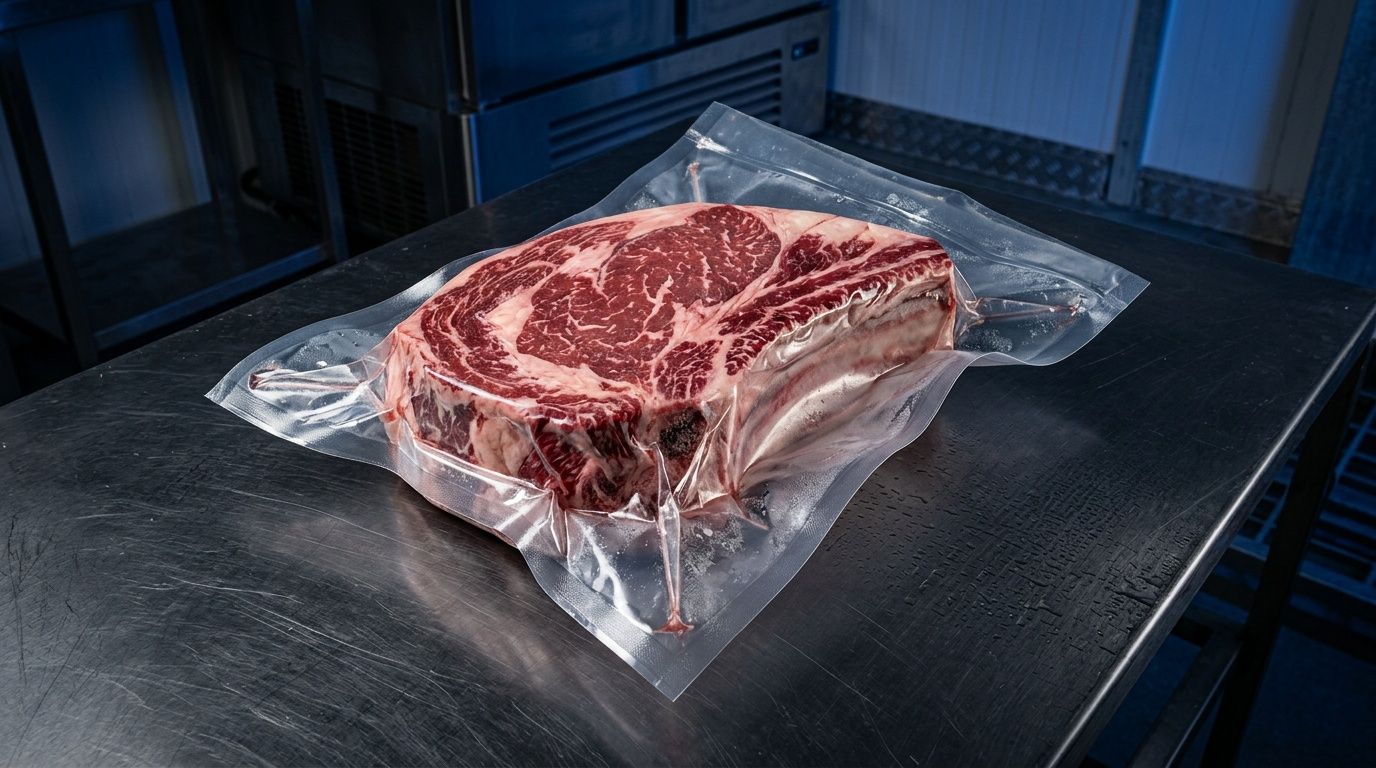
For beef processors and high-volume meat distributors, a single bone spur can compromise an entire shipment and jeopardize critical retail contracts. When bone-in meat vacuum packaging fails at the supermarket shelf, resulting in blood leakage or loss of vacuum, the consequence is often immediate rejection or the loss of supplier status with major retail chains. These failures are frequently a direct result of insufficient mechanical resistance against the sharp protrusions inherent in bone-in products.
Standard films often lack the structural integrity to withstand 3cm bone spurs during high-volume distribution. By utilizing 7-layer co-extrusion technology, specialized puncture resistant vacuum film can achieve a 300N strength threshold, engineered to maintain a product leakage rate of approximately 0.5%. This film incorporates heavy-duty nylon layers to form a robust mechanical barrier, while specialized low-temperature sealing mechanisms ensure that seams remain intact throughout the cold chain.
The transition to high-performance packaging often serves as a mandatory entry ticket for premium retail channels. Resolving bone-induced puncture failures that lead to high rejection rates allows processing facilities to stabilize their supply chain and expand market presence. The physical durability of the film is a decisive factor in maintaining market access and food safety compliance.
The Financial Impact of Bone-Induced Failures in Bone-In Meat Vacuum Packaging
In industrial meat processing, the integrity of a vacuum seal is a critical component of the supply chain’s financial viability. When dealing with bone-in meat products such as beef short ribs, pork loins, or bone-in hams, the primary challenge is the physical structure of the product. The presence of sharp bone protrusions—often reaching lengths of 3cm or more—creates a constant mechanical threat to the packaging film. In the B2B sector, failing to address this threat results in an unacceptable product leakage rate, which translates into bottom-line losses.
The Mechanics of a 3cm Bone Spur and Film Penetration
Understanding film failure requires looking at the localized stress concentrations that occur during the vacuum process. When a bone-in meat product is placed inside a vacuum bag and the air is evacuated, the film is subjected to an atmospheric pressure differential that forces it to conform to the contours of the meat and bone. For a bone spur approximately 3cm in length, this force is concentrated at the specific point of the bone tip.
Standard vacuum films, typically constructed from simple Polyethylene (PE) and Polyamide (PA) blends in three-layer structures, often lack the puncture resistance necessary to withstand this focused energy. As the vacuum pressure reaches its peak, the film is stretched at the contact point. If the film’s puncture resistance is below the threshold required to neutralize a 3cm spur, a structural breach occurs. These breaches are often micro-fractures that compromise the hermetic seal. Under vacuum stress, the film can yield to the bone tip, leading to failure in facilities using standard materials.
Quantifying the Product Leakage/Spillage Rate in High-Volume Distribution
For a meat processing plant, the product leakage rate is a critical Key Performance Indicator (KPI). In an industrial environment processing thousands of units per hour, even small failure percentages represent a logistical challenge. A product leakage rate that exceeds the industry benchmark of 0.5% triggers secondary costs.
First, there is the loss of the product’s premium value. A package that has lost its vacuum must be downgraded or re-processed. Re-processing introduces labor costs, as workers must manually clean and re-package the meat. Second, in a cold chain environment, a single puncture leads to the seepage of fluids, which can contaminate adjacent packages in the same shipping crate. In high-volume distribution, one punctured bag can result in an entire pallet being rejected due to secondary contamination. This leads to batch-level rejections and the cost of disposing of contaminated proteins. By stabilizing the leakage rate at or below 0.5% through high-performance materials, processors can eliminate these costs.
Technical Architecture of 7-Layer Co-Extrusion Puncture Resistant Vacuum Film
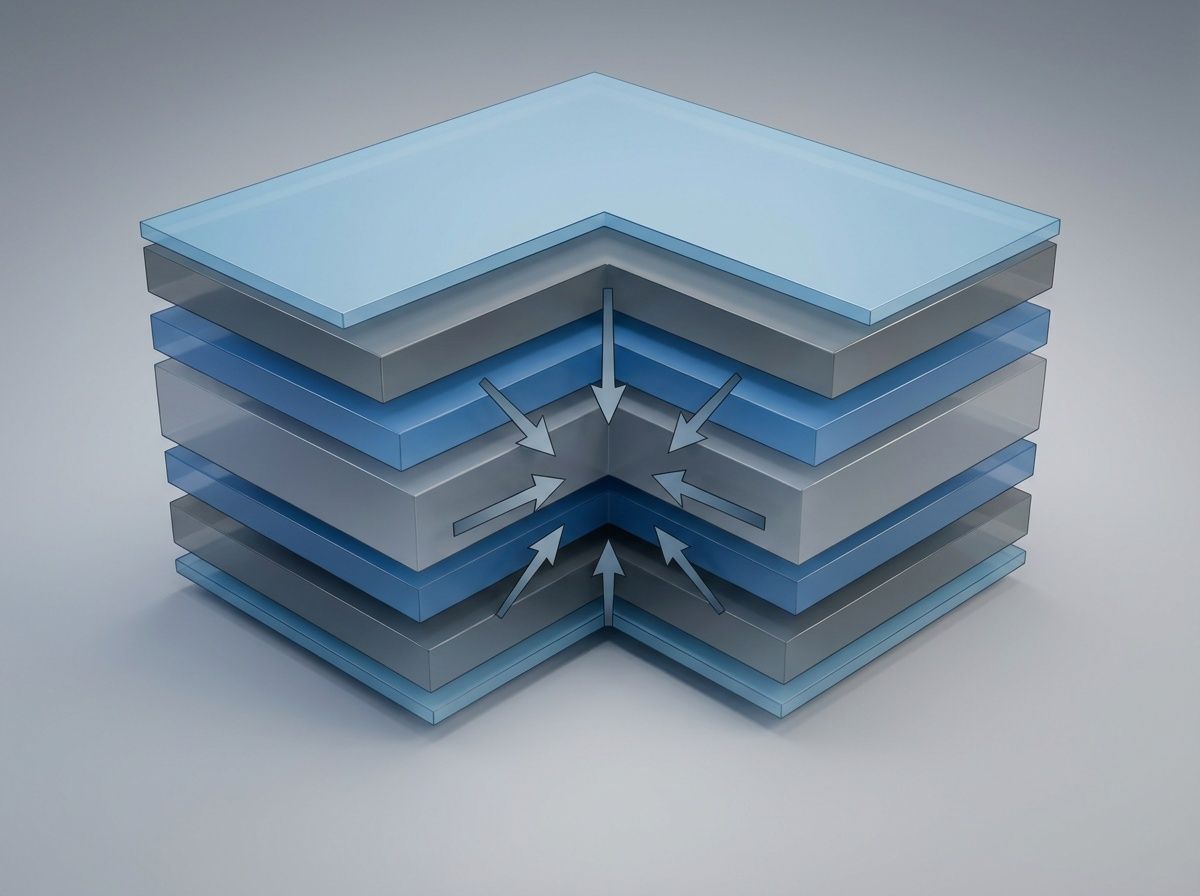
To combat the mechanical challenges of bone-in meat, packaging engineering has shifted to 7-layer co-extrusion technology. This shift focuses on the molecular synergy between different polymer resins that create a shield capable of resisting 300N of force. Traditional lamination involves bonding pre-made films with adhesives, which can create weak points. In contrast, co-extrusion processes all seven layers simultaneously, ensuring superior interlayer adhesion and mechanical uniformity.
Why Multi-Layer Co-Extrusion Outperforms Traditional Lamination
The technical advantage of 7-layer co-extrusion lies in the stack design. In a 7-layer structure, different materials are placed to perform specific functions: barrier, strength, tie, and seal. Traditional laminated films may suffer from delamination when subjected to the tension of a 3cm bone spur. Under high vacuum, the layers of a laminated film may pull apart, leading to a loss of vacuum as air migrates through the delaminated interfaces.
Co-extruded heavy-duty nylon puncture-resistant bag solutions reduce this risk by creating a monolithic structure. The 7-layer architecture allows for the strategic placement of multiple Polyamide (PA) layers. Instead of one thick layer of PA, the 7-layer process allows for alternating layers of PA and specialized Polyethylene (PE) or Tie resins. This creates a reinforced structure where the polymers provide maximum resistance to tearing and puncturing from multiple angles. This structure is essential for resisting the multi-directional stresses encountered during the shrink phase of meat packaging.
The Role of High-Thickness Nylon in Mechanical Protection
Polyamide, or Nylon, provides the structural strength of high-performance vacuum film. Its high tensile strength and gas barrier properties are critical. In a 300N puncture resistant vacuum film, the PA content is balanced to ensure toughness.
High-thickness Nylon layers distribute the force of a 3cm bone spur across a wider surface area, preventing the tip from penetrating the sealant layer. This energy absorption is critical during the logistics phase. When crates are stacked, the bottom layers are subjected to vibration and compression. Without a robust PA backbone, vibration can cause the bone to abrade the film. The 7-layer co-extrusion process ensures the PA remains flexible enough to resist this abrasion while maintaining structural integrity.
Engineering the 300N Strength Threshold to Minimize Leakage
The 300N metric is a calculated engineering threshold for industrial-grade bone-guard solutions. In the packaging industry, 300N represents the force required to penetrate the film using a standardized probe. Achieving this strength requires precise material selection and extrusion thickness.
Understanding the ASTM F1306 Puncture Test for Meat Packaging
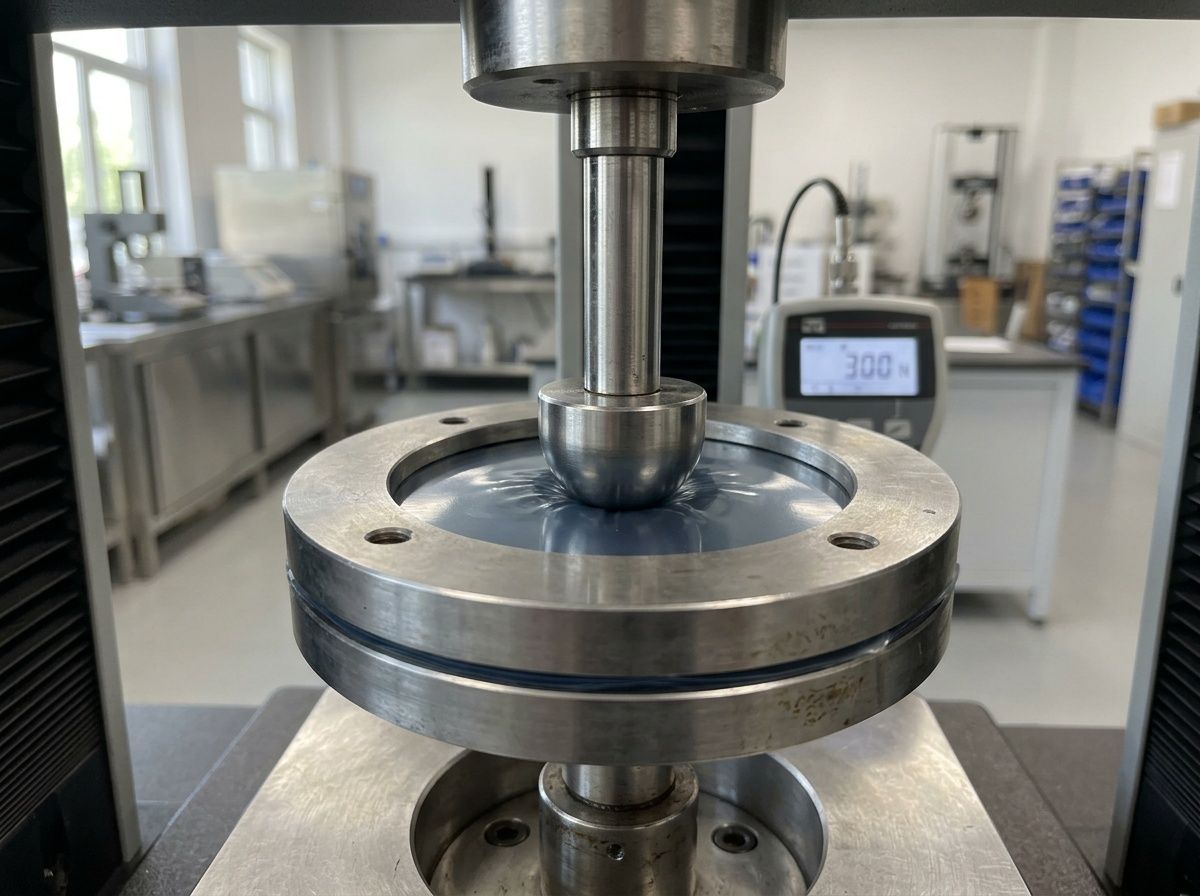
The 300N specification is validated using the ASTM F1306 standard test method for slow rate penetration resistance. In this test, a 3.2mm diameter hemispherical probe is driven into the film until a breach occurs.
A standard 80-120 micron vacuum film usually registers puncture resistance between 120N and 180N. These films are susceptible to failure when faced with a 3cm beef bone spur. The 300N threshold provides a safety margin for industrial environments where the film is subjected to dropping, shaking, and stacking. A 300N film ensures that even under dynamic stress, the film remains intact.
| Performance Metric | Standard 80-120μm Film | 7-Layer 300N Co-Extruded Film |
|---|---|---|
| Puncture Resistance (N) | 120N – 180N | 300N+ |
| Bone Tip Tolerance | < 1cm (Blunt) | 3cm (Sharp/Jagged) |
| Leakage Rate (B2B Average) | 3.0% – 7.0% | 0.5% (Benchmark) |
| Structure | 3-Layer or Laminated | 7-Layer Co-extrusion |
| Primary Failure Mode | Point Puncture / Delamination | Mechanical Overload (Extreme) |
Maintaining Structural Integrity During High-Volume Handling
One significant issue in meat packaging is the slow leaker—a package that loses vacuum during transit. These are often caused by micro-punctures created by bones that allow a slow exchange of gases over time.
A 300N film’s density and molecular orientation are engineered to prevent these micro-fractures. In lower-strength films, polymer chains can slide apart under pressure. In a high-tenacity 7-layer film, the tie layers and structural PA layers are bonded to create a high puncture initiation force. By maintaining this structural integrity, processors ensure that the internal atmosphere of the package remains constant throughout the shelf-life window.
Sealing Integrity in Cold Chain: Low-Temperature Sealing Mechanisms
While the film body must resist the bone, the seal must withstand the environment. In meat processing, the sealing area is often contaminated with moisture, proteins, fats, or blood. If the sealing technology is not designed for these conditions, failure can occur at the seam.
Eliminating Blood Leakage at the Bag Seams
Sealing bone-in meat is challenging because the weight and sharp edges of the product pull against the seal while it is still soft. Furthermore, contaminants at the sealing interface can act as a barrier to fusion. Standard sealing resins require high temperatures, which can degrade the structural layers of the film before a bond is formed.
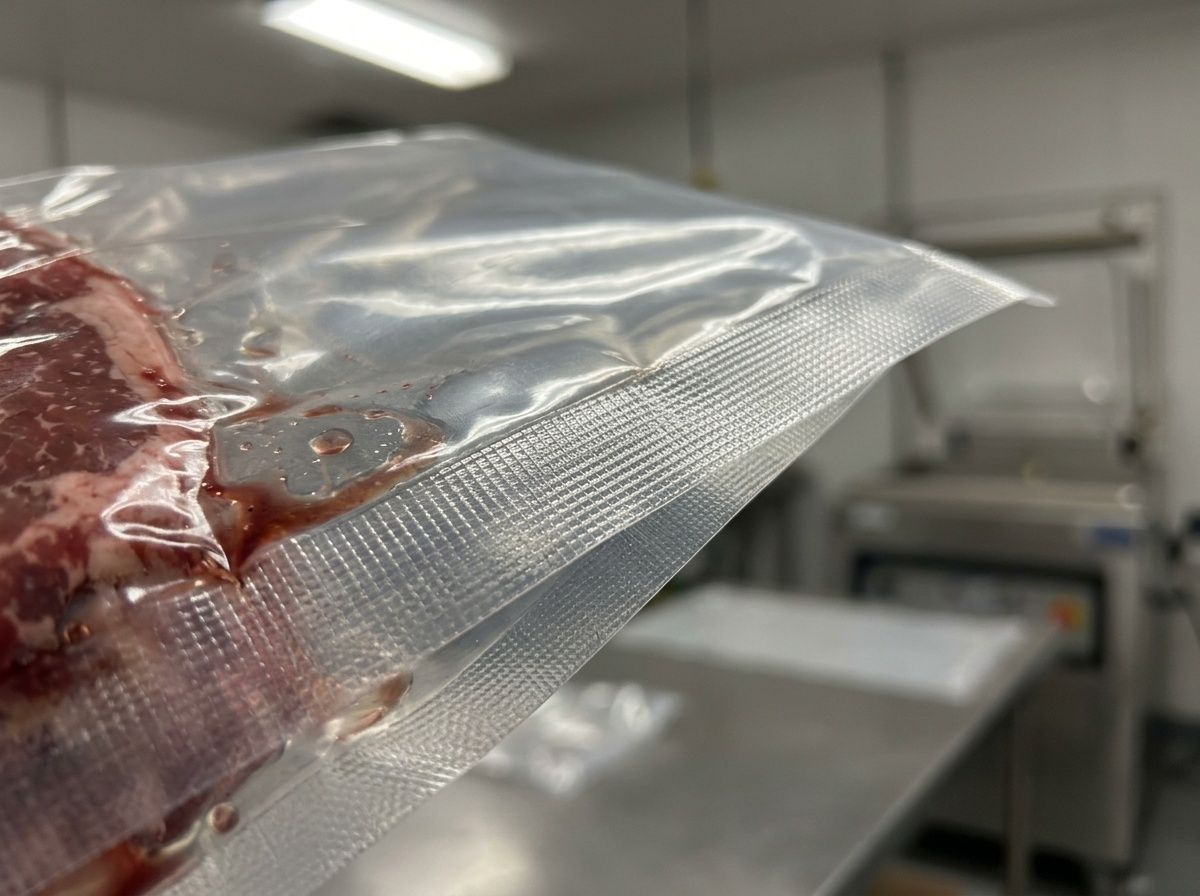
Advanced 300N films utilize a specialized low-temperature sealing inner layer. These resins have a wide sealing window and the ability to flow around contaminants. When the sealing bar closes, the resin melts and displaces blood or grease, creating a fused bond. This prevents capillary leaks where liquid is wicked out of the bag. Using a heavy-duty puncture-resistant vacuum roll allows processors to customize bag length to minimize headspace where blood tends to pool.
Thermal Dynamics of Heavy Duty Vacuum Sealer Bags
The thickness of a 300N film presents a thermal challenge. Heat must travel through the outer PA layers to reach the inner sealing layer. If thermal conductivity is not managed, outer layers can become brittle before the inner layer melts, leading to a weak seal.
Engineering the 7-layer stack involves optimizing layer thickness for efficient heat transfer. Using tie layers with high thermal stability allows heat to move quickly to the sealant layer without compromising the penetration resistance of the Nylon core. This enables high-speed packaging lines to maintain throughput without increasing the leakage rate.
Commercial Validation: Supermarket Shelf Presence
The transition to a 300N high-performance solution is a strategic business decision. In the B2B meat sector, packaging reliability is an entry ticket to the retail market. Major supermarkets maintain strict policies regarding leaking packages. A brand that consistently delivers products with blood leakage or lost vacuum will face reduced shelf space.
Packaging Performance as a Mandatory Entry Ticket for Retail
A single leaking package of bone-in beef on a shelf is a health hazard and a brand detractor. Retailers must sanitize the area and potentially discard adjacent products. Consequently, procurement managers prioritize suppliers who can guarantee a product leakage rate of less than 0.5%.
For bone-in products or high-barrier embossed vacuum bag applications, visual presentation is critical. A film that remains clear and tightly shrunk—even after resisting a 3cm bone spur—indicates quality. High-strength films prevent the relaxed look that occurs when vacuum is lost, ensuring the product remains retail-ready throughout its shelf life.
Solving Bone-Induced Failure: Case Analysis
A major beef processing facility initially used a standard 150-micron laminated film, but the leakage rate remained high. As a result, their shelf presence in Tier 1 supermarkets was limited to 15%. After switching to a 300N 7-layer co-extruded film designed for 3cm bone spurs, the leakage rate dropped to the 0.5% benchmark. Following this improvement in reliability, the facility renegotiated its contracts, and supermarket shelf presence increased to 60% within twelve months. This growth was driven by the packaging’s ability to maintain integrity from the factory to the consumer.
Procurement Strategy: Evaluating Total Cost of Ownership (TCO)
When evaluating vacuum-bags for bone-in applications, procurement managers must consider the total cost of ownership rather than just the unit price. Standard film can often be the most expensive component when considering the cost of failures.
Balancing Material Costs Against Logistical Losses
The TCO of meat packaging includes the cost of film, failed product, labor for re-work, and logistical penalties. A 2.5% difference in failure rate between standard and high-performance film represents a significant financial gap.
For a batch of 10,000 units of bone-in meat, a 3% failure rate results in 300 leakers. If each unit has a wholesale value of 20 USD, the direct product loss is 6,000 USD. Spending slightly more on high-performance film can save thousands in direct product loss, labor, and brand reputation.
| Cost Factor | “Cheap” Standard Film | 300N 7-Layer Co-Extruded Film |
|---|---|---|
| Material Cost (Unit) | Low | Moderate (+10-15%) |
| Product Leakage/Spillage Rate | 3.0% – 5.0% | < 0.5% |
| Re-packing Labor Cost | High | Minimal |
| Retail Rejection Risk | Significant | Very Low |
| Total Cost of Ownership | Higher | Lower |
Selection Criteria for Heavy Duty Vacuum Sealer Bags
- Demand 300N Certification: Require ASTM F1306 test data showing a puncture resistance of 300N or higher.
- Verify Co-Extrusion Layers: Confirm the film is a 7-layer co-extrusion rather than a laminate through cross-section analysis.
- Validate Low-Temp Sealing: Test the film on specific sealing bars under contaminated conditions to ensure zero-leakage seams.
- Evaluate Puncture-to-Thickness Ratio: High-quality film provides 300N strength at a lower thickness, improving heat-sealing efficiency.
- Assess Supplier Consistency: Ensure the supplier has the technical infrastructure to maintain the 0.5% failure rate across high volumes.
Conclusion
The transition to 7-layer co-extruded films with a 300N puncture resistance threshold is necessary for neutralizing the mechanical threat of 3cm bone spurs. This structural architecture provides the molecular synergy and thermal stability required to maintain hermetic seals during intense vacuum pressures and cold chain logistics. Achieving a stabilized product leakage rate of 0.5% is a requirement for expanding shelf presence in high-volume retail environments. Investing in high-tenacity materials reduces the total cost of ownership by eliminating secondary contamination and product re-processing. To discuss barrier requirements for your product line, reach out to our team.


0 Comments