

Key Takeaways
- Risk Mitigation Through Nano-barrier Technology: Implementing nano-barrier technology serves as a critical defense against oxidation, effectively reducing food safety claims and maintaining consumer trust in high-stakes markets.
- Physical Durability Prevents Loss: High-performance puncture resistant film is essential for neutralizing logistics risks, ensuring that vacuum seals remain intact during rigorous long-haul transportation cycles.
- Packaging as Supply Chain Insurance: Investing in advanced functional packaging solutions transforms a variable cost into a strategic asset that safeguards your brand against million-dollar spoilage risks.
- Thermal Stability and Shelf Performance: Selecting materials with high thermal stability packaging properties ensures structural integrity during extreme sterilization processes, preventing catastrophic failures before they reach the shelf.
Read on to discover how to quantify and eliminate your packaging risks.
Introduction
The moment a seal fails or a package leaks in the retail aisle, a brand’s hard-earned reputation begins to erode at an alarming rate. For B2B decision-makers, a single logistics failure is more than just a lost unit; it represents a breakdown in consumer confidence and a potential multi-million dollar liability. In high-stakes industries, the difference between a profitable product launch and a recall nightmare often hinges on the microscopic integrity and reliability of functional packaging solutions.
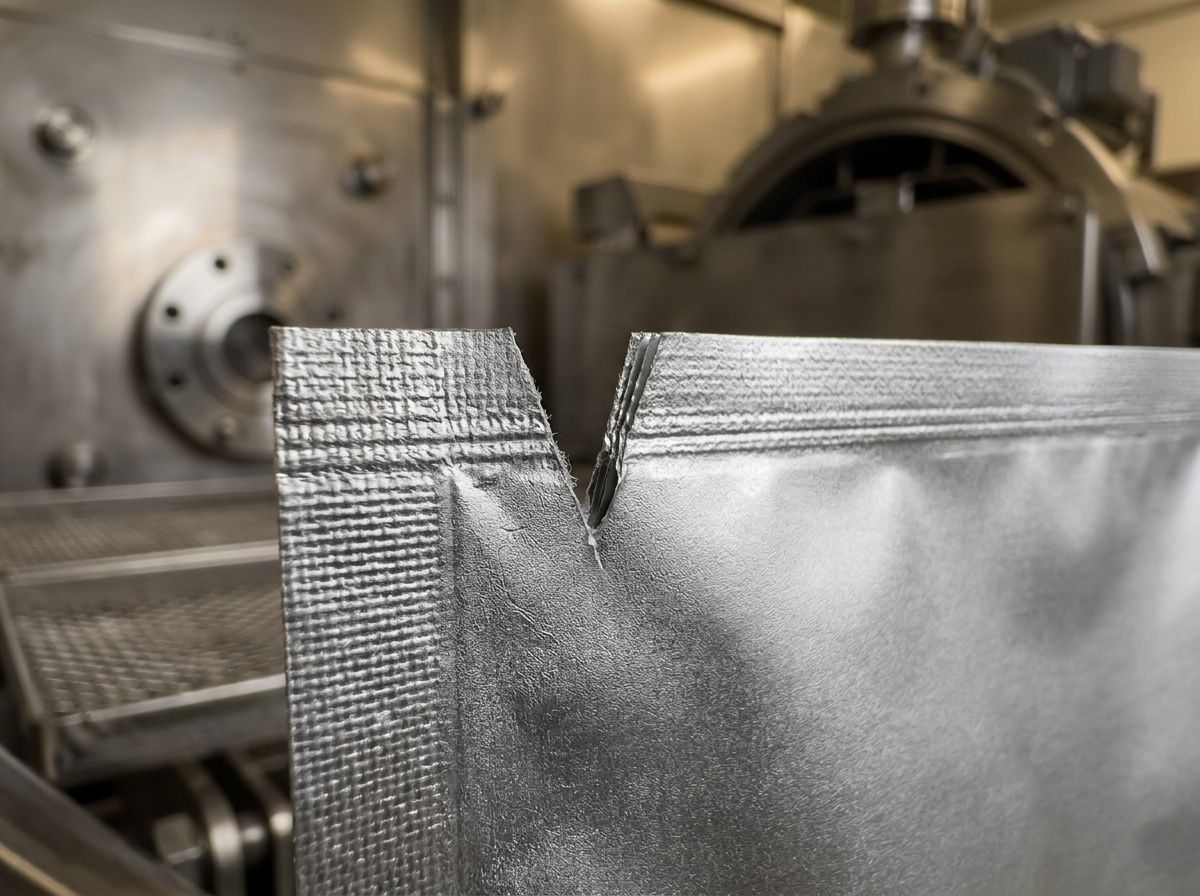
As illustrated in recent performance demonstrations, the visual contrast between failed packaging—leading to burst bags and caked products—and high-performance materials is staggering. Advanced nano-barrier technology acts as a molecular-level shield, far surpassing the capabilities of standard films. By utilizing high barrier film and superior puncture resistant film, manufacturers can effectively neutralize the rigors of long-haul logistics and cold chain packaging reliability issues that typically plague global supply chains.
This technical guide delves into how transitioning to thermal stability packaging and moisture-proof packaging can transform protective requirements into a strategic asset. We will examine the data behind food safety claims mitigation and explain why high-spec materials serve as essential supply chain insurance. By understanding these technical variables, organizations can eliminate the hidden costs of poor packaging and secure brand longevity in volatile markets.
12% Trust Decay Per Second
Research indicates a rapid decay in consumer trust the moment a seal failure is identified. It is not merely a technical issue; it is a psychological rupture. When a buyer detects a lost vacuum or the rancid odor of oxidized fats, brand loyalty is compromised immediately. This reaction translates into significant liability when factoring in the cascading costs of recalls, legal disputes, and the permanent loss of shelf space.
In high-stakes B2B procurement, the focus must remain on molecular integrity. If packaging cannot withstand the harmonic resonance of long-distance transport or the 121°C thermal stress of an autoclave, it represents a significant future liability. A “minimum viable” mindset in flexible film selection is often the most expensive mistake a supply chain director can make.
The reality of global logistics is demanding. Products are subjected to extreme heat, manual handling stress, and atmospheric pressure changes. Functional packaging solutions are engineered barriers designed to maintain integrity against environmental stressors at every step of the journey.
The Anatomy of a Brand Collapse: Why “Good Enough” Packaging is a Liability
The moment of failure usually occurs in silence. For example, when a consumer discovers that a high-end organic product has lost its texture due to moisture ingress, brand perception shifts instantly. For mid-sized brands, localized spoilage can trigger phantom recalls where retailers preemptively pull stock, leading to a loss of market share that requires years to recover.
In a documented case, a European client utilized standard 2-ply PET/PE structures for shipping a hygroscopic chemical powder. While the packaging passed basic laboratory drop tests, the vibration fatigue of sea freight created microscopic stress cracks at the gusset folds. Molecular moisture ingress resulted in the total loss of a $1.8M shipment. The comprehensive cost of replacement, expedited logistics, and reputational damage exceeded $3M.
This “Silent Leaker” syndrome represents a molecular failure where the barrier is technically intact but functionally compromised. Standard flexible films often succumb to atmospheric pressure changes during air freight—an expansion and contraction cycle that stresses seals. Designing with a specific Coefficient of Thermal Expansion (CTE) is a critical requirement for brand protection.
Packaging should be viewed as a component of risk management rather than a marketing expense. When viewed as the final line of defense, high-barrier film serves as a cost-effective insurance policy.
The Molecular Battlefield: Nano-Barrier Physics vs. Gas Permeation
Barrier performance is a microscopic struggle against equilibrium. Oxygen and moisture molecules constantly attempt to penetrate the polymer lattice of packaging. Standard polyethylene (PE) or polyester (PET) often provides insufficient protection at the molecular level. To achieve maximum protection, nano-barrier technology is utilized.
This involves AlOx (Aluminum Oxide) or SiOx (Silicon Oxide) coatings. These nano-coatings are transparent yet provide a “tortuous path” for gas molecules. By creating a dense molecular maze, the distance gas molecules must travel to penetrate the barrier is significantly increased.
| Material Structure | OTR (cc/m²/24h) | WVTR (g/m²/24h) | Technical Application |
|---|---|---|---|
| Standard PET/PE (100mic) | 50.0 – 110.0 | 3.0 – 5.0 | Low-risk dry goods |
| Nano-Coated AlOx PET/PE | 0.5 – 1.5 | 0.5 – 1.0 | High-end snacks, organics |
| Alu-Alu Foil Structure | < 0.001 | < 0.001 | Medical/High-sensitivity |
Technical Note: Datasheets should be evaluated at real-world conditions (e.g., 35°C and 90% RH) rather than standard laboratory settings. OTR in standard films can increase by 300% in humid environments, while nano-barriers remain stable.

For high-sensitivity products, such as Pharmaceutical Cold Form Alu Alu Foil, the barrier provides near-zero porosity. This is critical for preventing lipid oxidation, which causes off-odors and rancidity. Hygroscopic powders—including protein supplements and infant formula—require these barriers to prevent caking, which can lead to operational disasters and production line shutdowns.
Engineering Resilience for Global Logistics
A common misconception in procurement is that passing a standard drop test ensures sufficient strength. A drop test measures a single kinetic event, whereas real-world logistics involve continuous vibration fatigue.
During long-haul transit, pallets are subjected to continuous harmonic resonance (10-50Hz), which weakens polymer chains at the heat-seal interface. Standard PET/PE structures may develop micro-fractures due to the brittle nature of PET. Biaxially Oriented Nylon (BOPA) serves as an energy-absorbing alternative, distributing kinetic energy to prevent structural failure. This engineering approach is why a heavy-duty nylon puncture resistant vacuum bag is required for high-risk transit.
Performance Context: Standard 3-ply films often fail at 3.2kg of localized pressure. A sharp ingredient or industrial grain can compromise the seal under the weight of a stacked pallet.
| Performance Metric | Standard PET/PE | BOPA (Nylon)/PE | Functional Advantage |
|---|---|---|---|
| Puncture Resistance (N) | 12 – 18 N | 35 – 55 N | Prevents “Sharp Content” leaks |
| Impact Strength (g) | 150 – 250 g | 600 – 900 g | Absorbs drops and rough handling |
| Flex-Crack Resistance | Poor | Excellent | Survives 1,000+ miles of vibration |
In B2B shipping, reducing breakage by even 2% can significantly improve net profit margins by eliminating the high cost of processing returns and lost product value.
Thermal Performance: Surmounting the 121°C Sterilization Threshold
Retort packaging requires specialized engineering to withstand 121°C steam sterilization. At these temperatures, internal pressure spikes while polymer layers reach their softening point. The primary failure mode in retort processes is delamination, where the adhesive holding layers together fails, destroying the oxygen barrier.
To maintain integrity, RCPP (Retort Cast Polypropylene) is utilized. RCPP maintains structural integrity up to 135°C, compared to standard PE which softens at much lower temperatures. Furthermore, specialized high-solids adhesives are required to manage internal pressure spikes during the cooling phase.
When utilizing a Microwave Safe Stand-Up Retort Pouch, the structure must also ensure no migration of polymer additives into the food at high temperatures and remain safe for consumer use.
| Property | Standard PE (90mic) | RCPP (Retort Grade) | Impact of Failure |
|---|---|---|---|
| Melting Point | ~110°C | ~165°C | Bag melts in autoclave |
| Tensile Retention @ 121°C | 5% | 65% | Seams burst under pressure |
| Delamination Risk | High | Near Zero | Loss of shelf-life/Safety risk |
Using general-purpose adhesives for retort applications can result in latent micro-leaks that appear weeks after production, leading to total stock loss.
The Financial Impact of Packaging Failures
Invoice price represents only a fraction of the total cost of ownership. The “Iceberg Cost Model” identifies hidden expenses:
- Retailer Fines: Major distributors often levy fines for labor and lost opportunity costs associated with leaking products.
- Collateral Damage: Leakage from a single unit can compromise an entire case.
- Expedited Logistics: Replacing failed shipments via air freight can cost significantly more than the value of the packaging itself.
Cost Comparison (1-Million Unit Run):
- Standard Packaging: $0.10/unit. Failure rate 2%. Total Cost (including product loss and fines): $135,000.
- Functional Packaging: $0.15/unit. Failure rate 0.05%. Total Cost: $150,500.
While the initial investment in Functional Bags & Technical Packaging Solutions appears higher, it mitigates risk and protects brand equity. High-performance solutions allow for expanded market reach into humid climates where standard packaging fails.
Cold Chain Reliability: Insulation as a Strategic Requirement
Global spoilage rates are increasing, often due to thermal bridging in standard packaging. For biologics or temperature-sensitive perishables, radiant heat is a primary threat. Standard corrugated materials provide no reflective barrier, allowing internal temperatures to equalize with external heat rapidly.
Cold Chain Thermal Insulated Shipping Boxes act as thermal shields. Multi-layer foil bubble liners reflect up to 97% of radiant heat, maintaining a stable temperature window (e.g., 2-8°C) for up to 48 hours without active refrigeration.
| Configuration | External Temp | Internal Temp (24h) | Internal Temp (48h) |
|---|---|---|---|
| Standard Cardboard | 35°C | 33°C | 34.5°C |
| Insulated Foil Box | 35°C | 12°C | 18.5°C |
Thermal imaging confirms that built-in thermal buffers are essential for the “last mile” of delivery, where refrigeration is often inconsistent.
Implementing a Technical Barrier Audit
Selecting the correct specification requires a systematic technical audit:
Step 1: Environmental Mapping
Evaluation of “worst-case” scenarios, including extreme humidity at international ports, high-altitude pressure drops, and UV sensitivity of the product.
Step 2: Material Synergy Selection
Designing a laminate structure, such as a 7-layer co-extrusion incorporating BOPA for strength, EVOH for gas barriers, and metallocene-PE for sealing reliability through contamination.
Step 3: Verification and Validation (V&V)
Prototypes undergo accelerated shelf-life studies (ASLT) and burst testing. OTR is measured on finished pouches to ensure that the converting process (folding and sealing) has not degraded barrier properties.
Organizations seeking to optimize packaging for challenging markets can access technical consultation to quantify risk and design high-performance solutions.
Conclusion: Strategic Resilience Through Engineering
Functional packaging is a critical insurance policy against recall liabilities and trust decay. By prioritizing molecular integrity—using nano-barriers to stop gas permeation and BOPA to resist vibration fatigue—organizations transform packaging into a strategic asset. Whether managing the 121°C retort process or global shipping logistics, material science dictates the bottom line.
As a specialized source manufacturer, Yun Sealoong provides engineered technical solutions for high-stakes B2B procurement. We assist in quantifying risk and eliminating “Silent Leakers” before they reach the consumer.
To optimize your packaging line and safeguard brand equity, contact our engineering team today for custom barrier analysis, puncture validation, or to request a high-performance sample kit.


0 Comments