
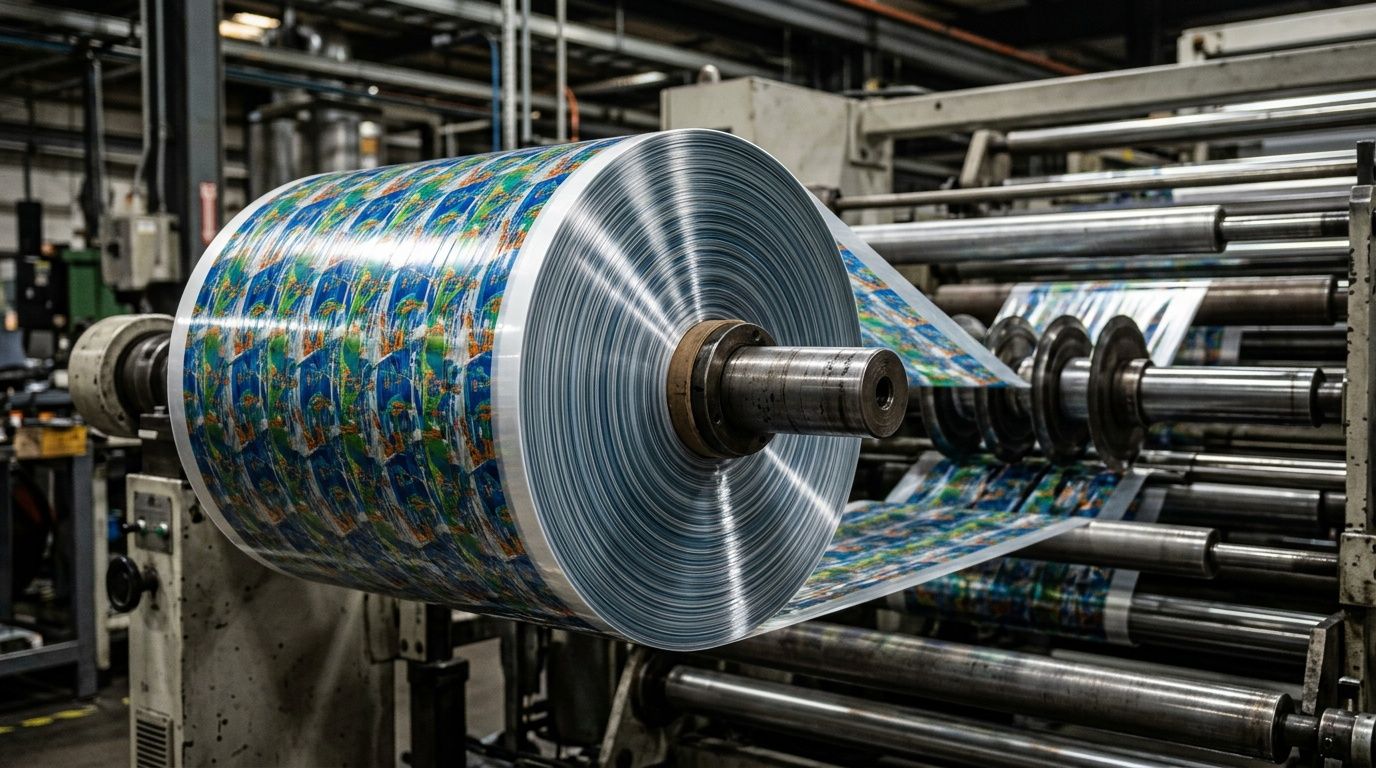
Key Takeaways
- Precision as a Profit Driver: Minimizing roll stock film slitting deviations prevents the catastrophic 15% yield loss often triggered by micro-burrs in high-speed production.
- Advancing Edge Quality: Implementing diamond-coated blades eliminates packaging film burr, ensuring clean edges that prevent film jams and unplanned downtime in automated systems.
- Eliminating Material Distortion: Utilizing magnetic levitation tension control maintains strict film width tolerance, preventing material stretching that compromises seal integrity and overall packaging quality control.
- Optimizing Total Cost of Ownership: Superior slitting rewinding technology enhances automated packaging line efficiency, significantly reducing material waste and improving the financial performance of large-scale runs.
Read on to master these high-speed packaging strategies.
Introduction
In high-speed automated production, the difference between a profitable run and a significant 15% yield crash often comes down to a single millimeter. While many procurement teams focus heavily on the visual fidelity of custom printed roll stock, the hidden technical specifications of the film edges determine whether a production line stays operational or faces constant, costly interruptions. Flexible packaging defects, such as edge curling or inconsistent film width tolerance, are frequently the primary culprits behind sudden drops in automated packaging line efficiency.
As demonstrated in our precision slitting video, even a microscopic packaging film burr can trigger a cascade of mechanical failures, leading to significant material waste and unplanned downtime. Traditional steel blades often lose their edge during long runs, resulting in micro-fractures that snag on rollers and compromise seal integrity. However, by implementing diamond-edge roll stock film slitting and advanced slitting rewinding technology, we can achieve high-level accuracy that protects both your equipment and your margins.
This guide explores how magnetic tension control systems eliminate material distortion and ensure superior packaging quality control across large-scale runs. By partnering with a flexible packaging manufacturer that prioritizes these specific engineering standards, you can stabilize your automated packaging efficiency and significantly reduce the total cost of ownership. Read on to discover how refining your slitting specifications can transform technical precision into a sustainable profit driver.
The production floor of a high-speed food packaging facility is a symphony of mechanical precision—until it isn’t. I have stood next to FFS (Form-Fill-Seal) lines running at 120 cycles per minute where everything seemed perfect, only to hear the sudden, sharp screech of film snagging on a forming tube. Within seconds, the red alarm light bathes the room in a rhythmic strobe. The line stops.
The culprit? Not a motor failure or a software glitch. It is a 1.2mm burr on the edge of the roll stock. That microscopic jagged edge, a remnant of poor slitting, just cost the plant $4,500 in 15 minutes of downtime, wasted product, and purged film. In the high-stakes world of automated packaging, a 0.1mm deviation in roll stock film slitting isn’t just a technical oversight; it is a direct leak in your profit margin. Most procurement teams evaluate the “price per pound” of the film but often overlook the “cost per hour” of the production line. If your film has a 1% defect rate in slitting precision, you aren’t saving money; you are financing your supplier’s lack of engineering.

The Yield Crash Calculus: Quantifying the Financial Impact of “Micro-Errors”
When we talk about the 15% yield crash, we aren’t being hyperbolic. It is a calculated reality of modern high-speed manufacturing. In my time troubleshooting lines across three continents, I’ve seen the same pattern: a company switches to a “value” supplier, and suddenly, their Overall Equipment Effectiveness (OEE) takes a nose dive. They blame the machine operators, but the problem is the physics of the roll itself.
The Hidden Drain of Intermittent Downtime
An intermittent jam is worse than a total breakdown. A total breakdown gets fixed. An intermittent jam—caused by inconsistent film width or “beaded” edges—forces the machine to stop for 2 minutes, every 20 minutes. It seems minor, but in a high-speed Flexible Food Packaging Solutions environment, every stop breaks the thermal equilibrium of the sealing bars.
When the line stops, the film sitting under the heat-seal bar is scorched. It must be purged. The bars cool down slightly. When you restart, the first ten bags might have “cold seals” because the system hasn’t reached its steady-state temperature. You don’t just lose 2 minutes of time; you lose 5 minutes of quality-stable production. If this happens three times an hour, you have effectively slashed your net output by 15-20%.
Scrap Rates vs. Net Profit Margins
Let’s look at the numbers. If you are running a high-value product—say, premium coffee or medical-grade powders—the cost of the film is often dwarfed by the cost of the contents. A slitting error that causes a tracking misalignment leads to a “leaker” (a bag with a compromised seal).
| Metric | Standard Slitting (1.0% Defect) | Yun Sealoong Precision (0.01% Defect) | Impact |
|---|---|---|---|
| Annual Volume (Impressions) | 10,000,000 | 10,000,000 | – |
| Downtime Events (per month) | 45 | 2 | -95% |
| Film Waste (Scrap kg) | 1,200 kg | 15 kg | -98.7% |
| Product Waste (Value) | $85,000 | $850 | Profit Recovery |
| Net OEE (Efficiency) | 78% | 94% | +16% |
Real World Context: These figures aren’t theoretical. I remember a client in Europe who saved $0.05 per roll on a massive contract. They ended up losing $120,000 in a single quarter because their automated FFS machines couldn’t handle the “camber” (the slight curve) in the slit film. The film was literally drifting off the rollers because the tension wasn’t balanced across the web.
Scalability and the Compound Interest of Defects
Scaling up production is where weak slitting is exposed. At 30 bags per minute, a machine can “swallow” a lot of errors. The sensors have time to react. The tension arms can bounce and recover. But at 120 bags per minute, the physics change. The inertia of the roll is higher. The air-resistance of the moving film becomes a factor. A defect that was a “nuisance” at low speed becomes a “catastrophe” at high speed. Precision roll stock film slitting with a ±0.05mm tolerance is the only way to ensure that as you scale, your headaches don’t scale with you.
The Physics of the Edge: How Micro-Burrs Sabotage High-Speed FFS Lines
To understand why your line is stuttering, you have to look at the edge of your film under a 50x microscope. If you see a clean, glass-like shear, you’re in good shape. If you see “hairs” (polymer strands) or a thickened, melted bead, you are looking at a mechanical failure waiting to happen.
Frictional Heat and Polymer Melt-Back
Slitting is essentially a high-speed friction event. When a standard blade—even a sharp tungsten one—cuts through a multi-layer laminate like a Custom PA/PE Smooth Vacuum Film Roll, it generates heat. If the blade is slightly dull or the speed is too high, that heat exceeds the melting point of the PE (polyethylene) sealant layer.
The result is “beaded edges.” The polymer melts slightly and refreezes into a tiny ridge along the edge. This ridge is thicker than the rest of the film. As you wind 2,000 meters of film onto a core, those tiny ridges stack up. This creates a “heavy edge” roll, where the diameter of the roll at the edges is larger than in the center. When you try to unwind this on an FFS machine, the center of the film is loose while the edges are tight. It’s a mess. The film “bags” and “tunnels,” making it impossible to get a flat, wrinkle-free seal.
Roller Accumulation and Tension Spikes
Then there is the “Snowball Effect.” Micro-burrs and “fines” (tiny plastic dust) are shed as the film passes over every idler roller on your packaging line. In a 24/7 operation, this dust accumulates. It coats the rollers, changing their diameter and their coefficient of friction (COF).
Eventually, the film starts to slip or “snag.” I have seen cases where the accumulation of micro-plastic “snow” on a tracking sensor caused the machine to think the film had run out, triggering a “false-empty” shutdown. You can clean the rollers, but you are just treating the symptom. The disease is poor slitting.
Seal Integrity and Interfacial Contamination
Perhaps the most dangerous aspect of a “hairy” slit edge is contamination. If those tiny polymer fibers break off and land in the seal area just as the heat bar descends, they create a capillary channel. The bag looks sealed, it passes a visual check, but it isn’t hermetic.
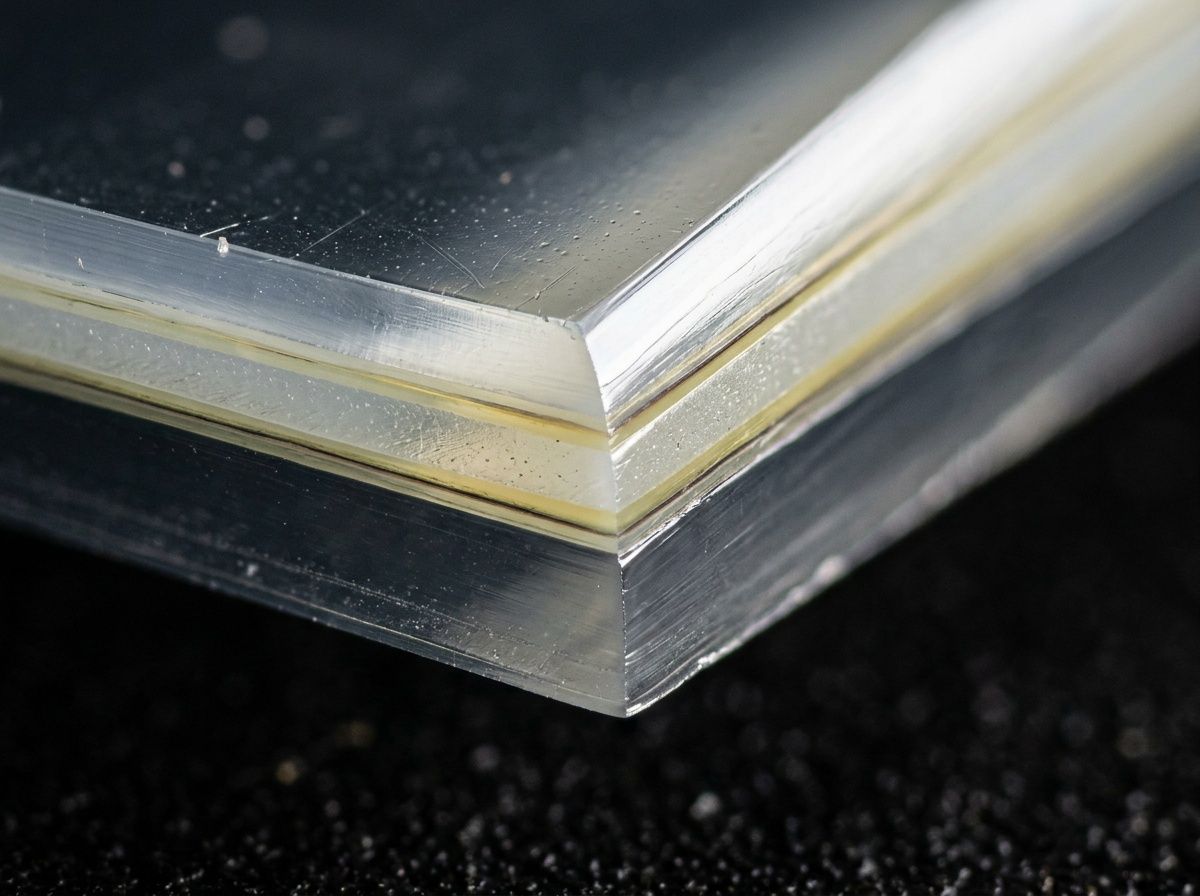
Over the next three weeks in a warehouse, oxygen will seep through that microscopic channel. If you are packing fresh protein or sensitive electronics, the product is ruined. We always emphasize that the edge of the film is the gateway to the seal. If the edge is dirty, the seal is compromised.
The Diamond-Edge Revolution: Engineering a Clean Shear
We realized years ago that traditional metallurgy wasn’t enough for the high-barrier, high-density materials being developed for the market in 2026. Standard tungsten steel blades are fine for paper, but for biaxially oriented films, they require higher performance.
Why Tungsten Steel Fails in Large-Scale Runs
Tungsten steel is hard, but it is also susceptible to heat-induced softening. After about 5,000 to 10,000 meters of abrasive film—especially films with matte coatings or high levels of TiO2 (white pigment)—the “point” of the blade rounds over. This is the “death zone” for slitting. The blade stops cutting and starts cleaving. Instead of a clean shear, it is pushing the material apart. This increases the tension required to pull the film through the slitter, which leads to the “stretching” of the film.
The Molecular Advantage of Diamond-Like Carbon (DLC) Coatings
Our solution was to move to Diamond-Like Carbon (DLC) coated blades. These blades have a surface hardness that approaches that of a natural diamond.
- Low Friction: The COF of a DLC blade is nearly zero. The film slides past the blade with almost no resistance.
- Thermal Stability: Diamond coatings dissipate heat much faster than steel. This prevents the “melt-back” and beaded edges discussed earlier.
- Longevity: While a tungsten blade might need changing every 2 shifts to maintain ±0.1mm tolerance, a diamond-edge blade can run for weeks.
| Feature | Tungsten Steel | Diamond-Coated (DLC) |
|---|---|---|
| Vickers Hardness (HV) | 1,500 – 1,800 | 5,000 – 9,000 |
| Friction Coefficient | 0.3 – 0.5 | 0.05 – 0.15 |
| Edge Retention | 10,000m | 500,000m+ |
| Slitting Precision | ±0.15mm | ±0.05mm |
Pro Tip: Yes, diamond-coated blades are significantly more expensive upfront. But when you calculate the labor cost of machine downtime for blade changes and the reduction in scrap, the ROI is usually achieved within the first 48 hours of a large-scale production run.
Optimizing Blade Angle and Depth for Multi-Layer Laminates
It’s not just the material of the blade; it’s the geometry. When we slit a PET/AL/PE structure, we are cutting three materials with three different shear strengths. We use a precise “Surgical Cut” technique where the blade angle is adjusted based on the specific micrometer-thickness of the aluminum layer. This ensures that the aluminum—the most brittle layer—doesn’t “crack” or “flake” at the edge, which could compromise the moisture barrier.
Magnetic Levitation Tension Control: Eliminating the “Elasticity Paradox”
The greatest challenge in roll stock film slitting isn’t the cut itself—it’s what happens to the film after the cut. This is where most factories fail. They use mechanical clutches or simple friction brakes to control the tension of the film as it is rewound onto the final cores.
The Elastic Limit of Thin-Film Polymers
Every polymer has a “memory.” If you pull a film too hard during the rewinding process, you are stretching it. It might look fine on the roll, but the moment your customer unwinds it on their machine, the film “relaxes.”
This relaxation causes the film to shrink. A roll that was slit to exactly 400mm might shrink to 398mm by the time it reaches the customer’s factory. This ruins the film width tolerance and causes the eye-marks to fall out of alignment with the sensors. Even worse, over-stretching the film can create micro-fractures in the barrier layers, effectively “killing” the shelf-life of the product before it’s even packed.
Resolving “Neck-In” and “Telescoping” Defects
In winter, static electricity can make this even worse. The film clings to the rollers, tension spikes, and you get “neck-in”—where the film narrows like a rubber band. To solve this, we implemented Magnetic Levitation (Mag-Lev) tension control.
Unlike mechanical brakes, which have “stiction” (the jerkiness when a stationary object starts moving), Mag-Lev systems use electromagnetic fields to provide constant, silk-smooth resistance.

It is “Zero-Lag.” If the sensors detect a 1-gram change in tension, the magnetic field adjusts in milliseconds. This allows us to handle sensitive materials, like a Custom Thick Plastic PVA Water Soluble Roll Film, which would deform or snap under traditional mechanical tensioning.
Real-Time Feedback Loops for Micron-Level Adjustment
Our slitters are equipped with ultrasonic sensors that measure the diameter of the take-up roll 100 times per second. As the roll grows larger, the torque required to maintain constant tension changes. Our PLC (Programmable Logic Controller) uses this data to adjust the magnetic brake instantaneously. The result is a roll that has uniform density from the first meter to the 3,000th meter. No “baggy” edges, no “telescoping” (where the inner layers of the roll slide out like a telescope during transport).
The Lidding Film Paradox: Why Width Tolerance is a Seal Quality Gateway
In the world of tray sealing—common in ready-meals and fresh produce—the precision of the roll width is non-negotiable. If you are using an Anti-Fog Lidding Film Roll, the film must align perfectly with the flange of the plastic tray.
Tray Alignment and the Risk of “Total Seal Failure”
Imagine a high-speed line sealing 80 trays per minute. The film is fed over the trays, and a heated die comes down to cut and seal the film to the tray rim. If the roll stock is just 1mm too narrow because of a slitting error, the film won’t cover the entire rim. You get a “partial seal.” The product is exposed to air, and in the case of MAP (Modified Atmosphere Packaging), the gas escapes instantly.
On the other hand, if the film is too wide, the excess “skirt” can get caught in the machine’s discharge conveyor, causing a jam. We treat width tolerance as a “zero-fail” metric. While the industry standard is often ±1.0mm, we push our engineering team to maintain ±0.3mm for lidding applications.
Optical Registration and Anti-Fog Coating Preservation
Lidding films are often highly engineered. They have anti-fog coatings on the inside and high-gloss, heat-resistant coatings on the outside. Poor slitting can “smear” these coatings at the edge. Furthermore, the slitting must be perfectly synchronized with the printed graphics. If the slitter drifts, the “eye-mark” (the little black box used by the packaging machine to know where to cut) moves. This leads to “drift,” where the logo on the package slowly moves higher or lower on every subsequent tray until the machine faults out.
Avoiding Burr Contamination in Sterile Environments
For our medical and high-end food clients, the “cleanliness” of the slit is a safety issue. Standard slitting creates “micro-shards”—tiny slivers of plastic that are almost invisible. In a clean-room environment, these are considered foreign object contaminants. Our diamond-edge, vacuum-extracted slitting process ensures that the roll arrives ready for high-grade environments, with zero loose debris.
Material Science vs. Blade Shear: How Different Polymers React to Slitting
Not all polymers are created equal. A blade that cuts PET like a dream will “gum up” when it hits soft PE. Understanding the viscoelasticity of materials is what separates a specialized converter from a generic provider.
High-Barrier Nylon (PA) and the Resilience Challenge
Nylon is tough and extensible. If the blade isn’t sharp enough, Nylon won’t cut; it will “string.” You get long, spider-web-like filaments of plastic trailing off the edge of the roll. These filaments can wrap around the packaging machine’s rollers, eventually causing a “bird’s nest” jam. We use a higher shear angle and increased blade speed when processing Packaging Materials by Type that involve heavy Nylon layers to ensure the “snap-cut” required.
Soft-PE vs. Brittle-PET: Divergent Slitting Profiles
PET is brittle. If you hit it with too much pressure or a dull blade, it can “shatter” at a microscopic level, creating a jagged edge. Soft PE, conversely, is prone to “cold flow.” If the slitting tension is too high, the PE will actually squeeze out from between the other layers at the edge, creating a sticky residue.
- PET Slitting: Requires high speed and “low-penetration” blade depth to prevent cracking.
- PE Slitting: Requires chilled rollers and DLC blades to prevent “gumming.”
| Material Structure | Sensitivity | Primary Risk | Slitting Strategy |
|---|---|---|---|
| BOPP / PE | High | Stretching / Neck-in | Low-Tension Mag-Lev |
| PET / AL / PE | Medium | Aluminum Flaking | Micro-Depth Control |
| PA / PE (Nylon) | Very High | Edge Stringing | High-Speed Diamond Shear |
| PVA (Water Soluble) | Extreme | Moisture Tearing | Humidity Controlled Slitting |
Real World Context: I once saw a factory trying to slit 150-micron heavy-duty film with the same settings they used for 40-micron snacks. The heat buildup was so intense the edges were fused together—the customer couldn’t even unwind the roll. It was a solid block of plastic.
The Procurement Trap: A Narrative of “Low Price, High Failure”
I’ve had hundreds of conversations with procurement officers under pressure to cut costs. But there is a fundamental “Procurement Trap” in flexible packaging: the cheapest film is almost always the most expensive to run.
The Case of the 5% Discount and the 20% Loss
I remember a coffee startup that switched to a local “budget” converter to save 5% on their film costs. On the production floor, they were in difficulty.
Their new supplier was using old-fashioned mechanical slitting with manual tensioning. The rolls arrived with “high centers”—the middle of the roll was tighter than the edges. When they put these rolls on their high-speed Italian FFS line, the film “wavered.” It couldn’t hold a straight line. The bags were coming out crooked, the seals were wrinkling, and the “yield” (the number of sellable bags per roll) dropped by 22%. They saved 5% on the invoice and lost 22% on the output. It’s an inefficient trade every time.
Vetting a Manufacturer’s QC Protocol
If you are sourcing film, don’t just look at the price. Ask about their slitting department.
- Do they use laser-guided edge tracking?
- What is their blade replacement schedule?
- Do they provide a tension-profile log for every batch?
At Yun Sealoong, we treat the slitting department as the “Final Gate.” Every roll is inspected under 50x magnification. If we see a single burr over 0.1mm, the roll is rejected. We prioritize maintaining the integrity of our customer’s production lines.
Beyond the Roll: Technical Support as a Warranty
A technical partner asks what machine you are running. If you are running a Bosch, a Multivac, or a Matrix FFS, the “optimum” tension profile for that roll is different.
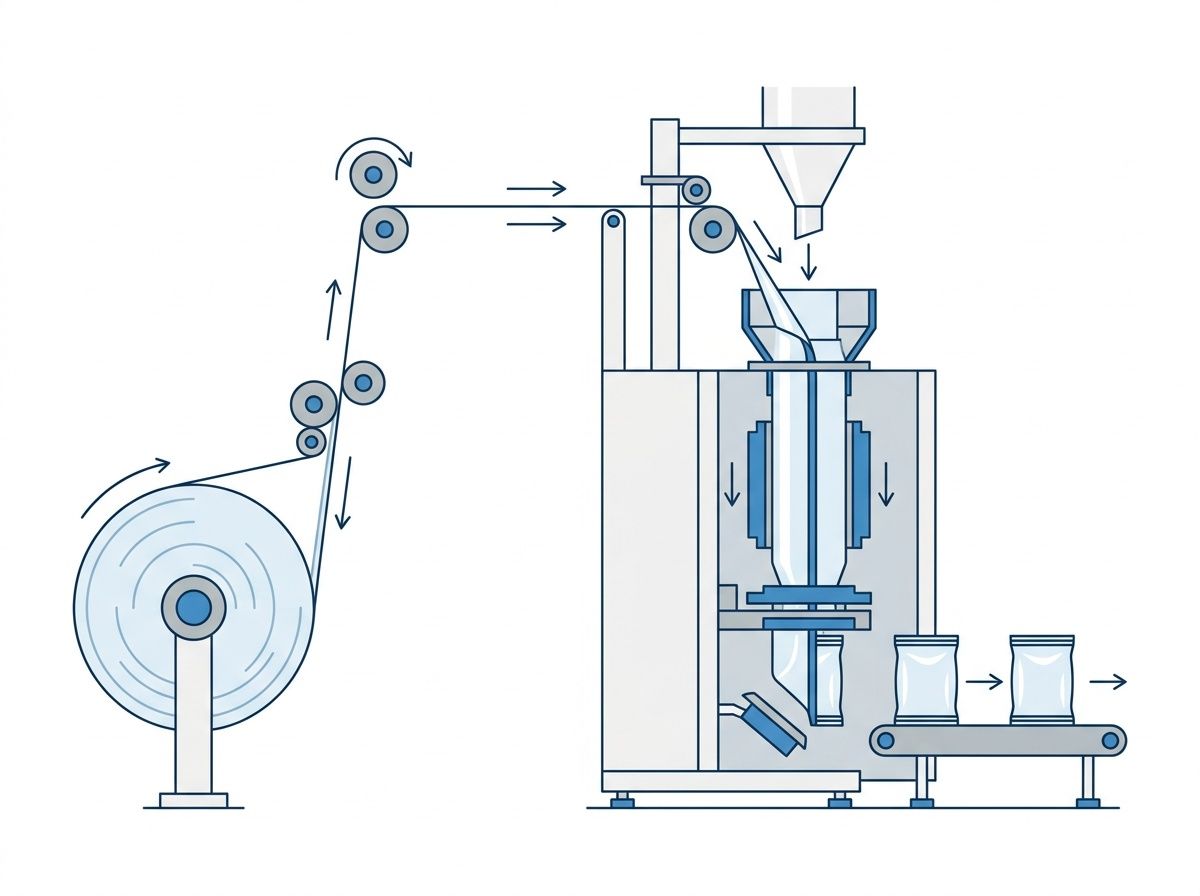
We calibrate our rewinding parameters to match the specific “draw” of our clients’ machines. Understanding the difference between a belt-driven draw and a vacuum-pull draw is critical. You can reach out to our engineering team to discuss the specific mechanical requirements of your line.
Future-Proofing the Production Floor: Advanced Rewinding Strategies
The final stage of the slitting process—rewinding—is where the “shelf-life” of the roll itself is determined. A poorly wound roll will degrade over time, even if it just sits in a warehouse.
Surface-Center Rewinding vs. Differential Shafts
For thin, high-clarity films like a Bubble Tea Cup Sealing Film Roll, we use differential shafts. This allows us to wind multiple small rolls on the same shaft while maintaining independent tension for each one. Without this, the rolls in the center of the shaft would be tighter than the rolls on the ends, leading to inconsistent performance across a single batch.
Eliminating Core Slippage in High-Speed Unwinding
High-speed FFS machines accelerate and decelerate rapidly. If the film isn’t “locked” to the core properly, the entire mass of the film can “slip” on the core. This is called “core slippage,” and it causes an immediate tension crash, usually snapping the film. We use precision-engineered 3-inch and 6-inch cores with high-friction surfaces and “starting-tapes” that ensure the film and the core move as a single unit, even under high-G-force stops.
Data-Driven Quality Logs for Batch Traceability
Quality is defined by data. Our slitters are fully integrated into our ERP system. For every roll, we generate a “Birth Certificate” that includes:
- Average Tension Profile: A graph showing the tension from the core to the outer wrap.
- Width Consistency: Laser-measured width every 10 meters.
- Blade ID: Which specific diamond-blade cut that roll and how many meters it had run.
| Metric Checklist | Standard | Method |
|---|---|---|
| Core ID Accuracy | ±0.1mm | Caliper Verification |
| Edge Burr Height | < 0.05mm | 50x Optical Microscopy |
| Width Tolerance | ±0.3mm | Continuous Laser Tracking |
| Residual Solvent | < 5mg/m² | GC Analysis (Post-Slit) |
Pro Tip: If you are having issues with “baggy rolls,” check the storage temperature. Even a perfectly slit and wound roll can “creep” if stored in a 40°C warehouse. The polymer relaxes, the tension dissipates, and you are left with a roll that loses its structural integrity. Precision starts in the slitter but ends in the warehouse.
Conclusion
In high-speed manufacturing, the difference between a profitable shift and a costly downtime event often comes down to 0.1mm. As we have demonstrated, precision roll stock film slitting is not a commodity service; it is a critical engineering requirement. By utilizing Diamond-Like Carbon (DLC) blades and Magnetic Levitation tension control, Yun Sealoong eliminates the micro-burrs and “neck-in” defects that cause a 15% yield crash on FFS lines.
As a specialized source factory, we bridge the gap between material science and mechanical performance, ensuring every roll maintains a ±0.05mm tolerance from core to tail. Don’t let poor slitting impact your efficiency.
Ready to optimize your OEE? Contact our engineering team today for a custom barrier analysis or to request a precision-slit sample roll for your next production trial.


0 Comments