
Key Takeaways
- Operational Efficiency at Scale: Reaching a 600m/min lamination speed allows manufacturers to maximize throughput while significantly lowering the energy footprint of each production run.
- Eliminating Migration Risks: Adopting the solvent free lamination process is the most effective way to guarantee zero solvent residue and maintain absolute food contact safety.
- Mitigating Regulatory Hazards: Implementing solventless lamination technology ensures full alignment with global packaging compliance standards and eliminates the risk of VOC emission penalties.
- Superior Structural Integrity: Utilizing advanced solventless adhesive applications prevents interlayer delamination in demanding scenarios such as high-temperature retort or heavy-duty industrial packaging.
Read on to master these packaging strategies.
Introduction
For global food brands and manufacturers, the margin for error in packaging has never been thinner. Traditional solvent-based lamination is increasingly becoming a liability, as tightening VOC emission standards and the constant threat of solvent residue testing failures jeopardize both production continuity and consumer trust. When a single batch of contaminated film can lead to a million-dollar recall or a factory shutdown due to environmental non-compliance, the industry is forced to look beyond mere output and prioritize chemical stability and food contact safety.
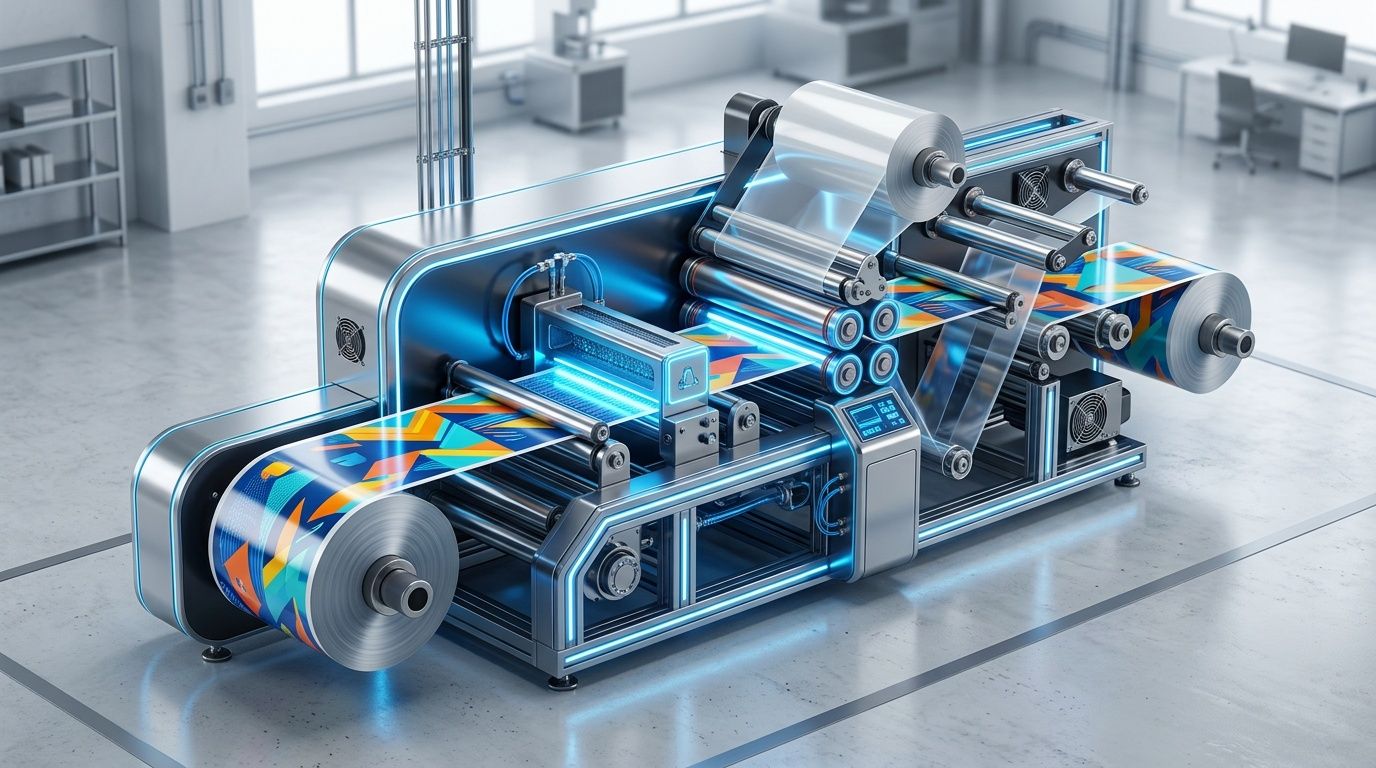
As showcased in our recent operational video, the shift from high-risk solvent environments to a high-speed solvent free lamination process is no longer a compromise on performance. The footage reveals how a modern flexible packaging factory China can achieve a 600m/min lamination speed while maintaining absolute structural integrity, even during rigorous heat-resistance tests. By utilizing a zero VOC emission system and advanced solventless adhesive applications, manufacturers can eliminate the need for energy-intensive drying tunnels, resulting in significant energy saving packaging benefits without the risk of interlayer delamination or material oxidation.
This guide provides a technical deep dive into how solventless lamination technology serves as the foundation for FDA compliant food packaging and B2B sustainable sourcing. We will analyze the transition from traditional methods to a green manufacturing process that ensures your products meet the most stringent packaging compliance standards. Whether you are navigating the complexities of sustainable flexible packaging or seeking to optimize your supply chain as an eco friendly packaging manufacturer, understanding these scaling strategies is essential for maintaining a competitive edge in 2026.
Imagine a brand manager’s office on a Tuesday morning. On the desk sits a lab report from a third-party auditor. The verdict? A wholesale recall of 500,000 snack pouches. The reason isn’t a leak or a puncture; it is “off-flavor” migration. The culprit is residual ethyl acetate—a byproduct of the solvent-based lamination process used by a low-cost supplier. That single report represents a $200,000 legal claim and a decade of brand trust evaporated.
In the sector of flexible-food-packaging, this is a critical risk. For years, the industry accepted solvent-based lamination as a standard requirement for high speeds and strong bonds. However, as global regulations tighten and retailers deploy mass-spectrometry to detect chemical residue, traditional methods have become an existential risk.
At Yun Sealoong, engineering teams have dismantled the myth that high-speed production requires chemical compromise. The shift to a solvent free lamination process is a fundamental mechanical and chemical upgrade that improves the P&L of the entire supply chain. When running at 600m/min, the margin for error is non-existent; success requires a perfect molecular bond.
The Invisible Liability: Why “Legal” Solvent Residue is No Longer Safe
The limitation of traditional lamination is dictated by the physics of evaporation. In a solvent-based system, the adhesive is dissolved in a carrier (usually ethyl acetate). The film is coated and then run through a drying tunnel to remove the solvent before the secondary film is applied.
As machine speeds increase from 200m/min to 400m/min, the “dwell time” in the drying tunnel decreases. To compensate, manufacturers often increase heat. Excessive heat risks melting the PE sealant layer or warping the PET. Insufficient heat traps solvents between layers. This “Safety Ceiling” causes most traditional factories to hit a performance wall at 300m/min because they cannot evaporate chemicals fast enough.
The Risk of Primary Aromatic Amines (PAAs)
Beyond ethyl acetate residue, there is a threat from Primary Aromatic Amines (PAAs). These Non-Intentionally Added Substances (NIAS) can form when isocyanate-based adhesives react with moisture or fail to cure correctly. Modern mass-spectrometry can detect these even if the packaging appears structurally sound. If a supplier fails to control drying or uses low-grade solvents, these chemicals may migrate into the food product.
Transitioning to Zero-Residue: The 2026 Procurement Mandate
B2B buyers are shifting from “Price per MSF” toward “Risk-Adjusted Value.” Adopting a solvent free lamination process is the only way to achieve absolute zero VOC migration.

Without carriers, there is no substance to evaporate or trap.
Table 1.1: Residual Solvent Levels (mg/m²) – The Risk Reality
| Parameter | Solvent-Based (High Speed) | Solvent-Based (Standard) | Solvent-Free (Yun Sealoong) |
|---|---|---|---|
| Typical Residual Solvent | 2.5 – 5.0 mg/m² | 0.5 – 2.0 mg/m² | 0.00 mg/m² |
| Migration Risk (PAAs) | High | Moderate | Negligible |
| Odor Profile | Noticeable | Faint | Neutral |
| Throughput Limit | 250m/min | 350m/min | 600m/min+ |
Real World Context: For high-fat foods like nuts or chocolates, which absorb chemical odors, any residue above 0.5 mg/m² constitutes a risk for consumer complaints.
Molecular Anchoring: The Physics of Bonding at 600m/min
Solventless lamination utilizes 100% solid adhesives. It is a precise chemical reaction between two components: an isocyanate and a polyol. The mixing ratio must be exact; a 1% deviation can prevent the film from fully curing, leaving it permanently tacky.
The Two-Component Polyurethane (PU) Reaction
Unlike solvent-based adhesives that dry, solventless adhesives grow into the substrate, forming a thermoset bond. This exothermic reaction generates its own heat. At 600m/min, the engineering challenge is “misting”—where high-speed rollers fling adhesive droplets into the air. This is prevented using a five-roll application system that steps down the film thickness of the glue to a uniform 1.2 to 1.5 microns.
Overcoming the “Orange Peel” Effect
The “orange peel” effect occurs when adhesive does not wet out properly, causing a dimpled appearance. At high speeds, rheology (liquid flow) is critical. Transfer rollers are maintained at a precise 40°C to 45°C to keep viscosity between 800 and 1000 mPa.s. Temperatures outside this range result in bubbles or streaks.
Table 2.2: Coating Weight vs. Optical Clarity (Haze %)
| Coating Weight (gsm) | Bond Strength (N/15mm) | Haze (%) | Application Result |
|---|---|---|---|
| 1.0 gsm | 1.8 N | 1.2% | Potential Delamination |
| 1.5 gsm | 4.5 N | 1.8% | Industry Sweet Spot |
| 2.0 gsm | 5.2 N | 3.5% | “Orange Peel” Risk |
| 2.5 gsm | 6.0 N | 5.0% | Tunneling/Adhesive Squeeze |
Corona Treatment: Optimizing Surface Energy
For substrates like 7-layer PA/EVOH/PE co-extruded film, surface energy (measured in dynes) must exceed the surface tension of the adhesive. In-line corona discharge creates microscopic anchoring points. If the dyne level drops below 38, the bond is compromised.
The 600m/min Efficiency Frontier: Scaling Without Sacrifice
Solvent free lamination is faster than solvent-based because it is not limited by drying speeds.
Eliminating the Drying Tunnel: The Energy Equation
Traditional lamination lines are approximately 40 meters long, dominated by energy-intensive ovens and Regenerative Thermal Oxidizers (RTO) to burn off VOCs. Solventless units are compact (approx. 15 meters) and eliminate 45% of the energy consumption typically required for drying.
Table 3.1: Energy Consumption (kWh) per 10,000m of Film
| Process Component | Solvent-Based Line | Solvent-Free Line | Energy Savings |
|---|---|---|---|
| Main Drive Motors | 45 kWh | 38 kWh | 15.5% |
| Drying Tunnels (Heat) | 220 kWh | 0 kWh | 100% |
| Exhaust/RTO Systems | 85 kWh | 5 kWh | 94.1% |
| Total Consumption | 350 kWh | 43 kWh | ~87% |
Real World Context: The reduction in plant footprint allows for higher line density, facilitating rapid scaling. For accelerated lead times, consult with our engineering team regarding throughput optimization.
Reducing Material Waste
In solvent-based lines, every machine stop ruins the film inside the 20-meter drying tunnel. Solventless lines have a much shorter web path, reducing setup scrap from over 200 meters to less than 50 meters, protecting profit margins on medium-to-large runs.
Thermal Stability and the Retort Challenge
Advanced chemistry allows solventless adhesives to withstand extreme heat, debunking the myth that they are unsuitable for retort applications.
Surviving the Autoclave: 121°C Under Pressure
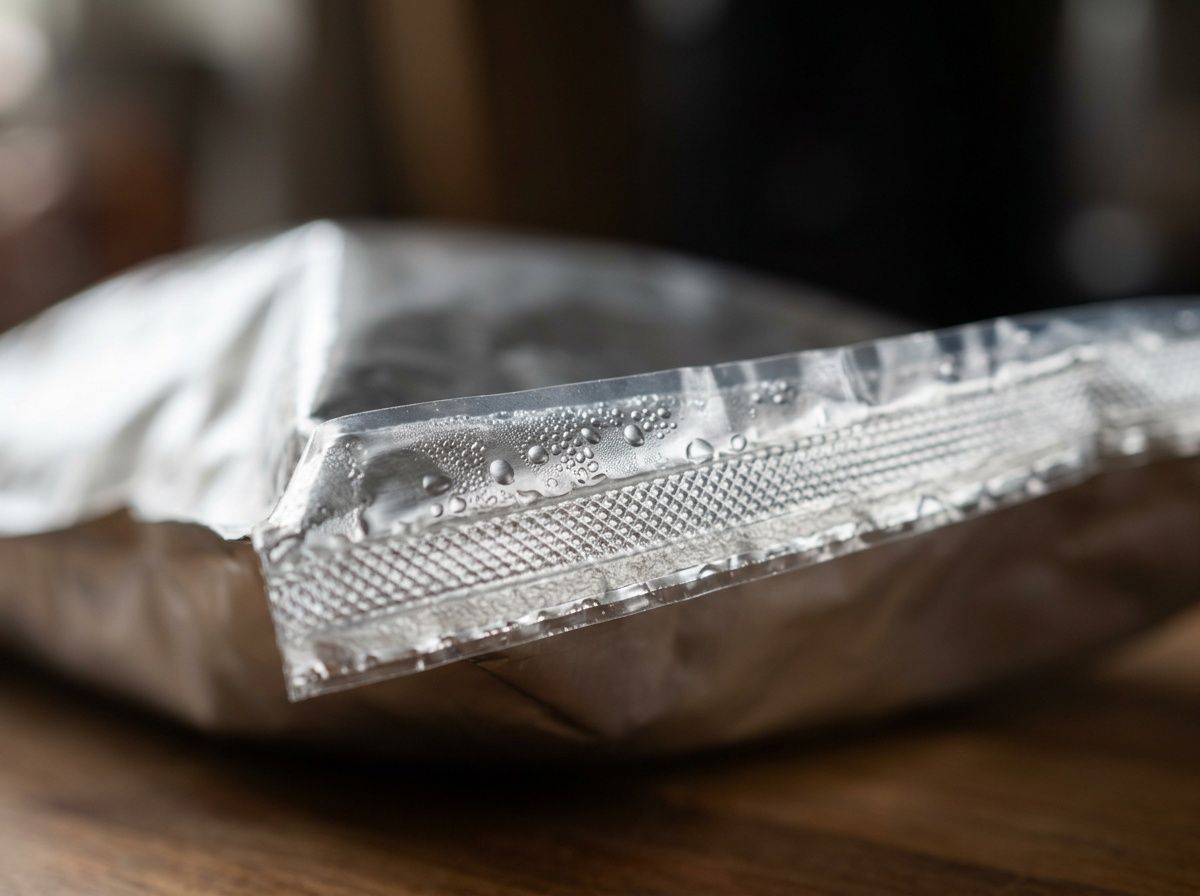
For a high-temperature retort pouch, bond strength is critical. At 121°C, internal steam pressure and softening plastic layers can cause “tunneling” or delamination. Specialized aliphatic isocyanate adhesives create a rigid thermoset structure that remains stable and non-migratory under these conditions.
Aluminum Foil Protection: Avoiding the “Acid Attack”
In an aluminum foil retort pouch, residual acidic components in solvent-based glues can cause “pitting” (microscopic pinholes) in the aluminum. Solventless technology is chemically inert, providing a protective buffer that maintains the Oxygen Transmission Rate (OTR) at zero.
Table 4.3: OTR Stability Pre- and Post-121°C Retort
| Material Structure | Pre-Retort OTR | Post-Retort OTR | Result |
|---|---|---|---|
| PET/Solvent-Glue/ALU/CPP | 0.01 | 0.05 | Marginal (Pitting risk) |
| PET/Solventless/ALU/CPP | 0.01 | 0.01 | Superior Stability |
| PET/Solventless/EVOH/PE | 0.45 | 0.85 | Standard Barrier |
Engineering for Heavy-Duty: Preventing Delamination in 5L+ Formats
Large formats, such as a heavy-duty 5L spout pouch, function as flexible pressure vessels. Shear stress during transport is significant.
Dynamic Tension Management
At 600m/min, film tension must be precisely managed. If tension is too high, the film stretches and then curls upon curing. “Taper Tension” algorithms automatically adjust tension as the rewind roll grows, preventing inter-layer slippage.
The Curing Protocol
Solventless lamination requires a 24 to 48-hour cure in a temperature-controlled room (approx. 40°C) to complete the chemical reaction. Rushing this process risks liquefying the adhesive during heat-sealing, particularly around spouts.
Table 5.3: Peel Strength (N/15mm) – Heavy-Duty vs. Standard
| Structure Type | Adhesive Type | Peel Strength (Initial) | Peel Strength (After 48hr Cure) |
|---|---|---|---|
| PET/PE (Standard) | Solventless | 1.5 N | 4.5 N |
| BOPA/PE (5L Pouch) | Solventless | 2.2 N | 7.5 N |
| PET/ALU/PE (Retort) | Solventless | 2.0 N | 9.0 N |
Navigating Global Compliance: FDA, EFSA, and VOC Regulations
A flexible packaging factory China must adhere to strict VOC emission regulations. By utilizing a solvent free lamination process, facilities maintain compliance without heavy-duty exhaust treatment, ensuring supply chain stability and avoiding government-mandated shutdowns.
Managing NIAS and European Standards
Compliance involves monitoring Non-Intentionally Added Substances (NIAS). Automated “loss-in-weight” mixing systems ensure adhesive ratios remain within 0.5% to prevent the formation of cyclic oligomers, ensuring FDA and EFSA compliance. Additionally, zero-VOC production assists EU partners in meeting Carbon Border Adjustment Mechanism (CBAM) targets by reducing carbon intensity.
The 2026 Sourcing Strategy: Evaluating an Eco-Friendly Packaging Manufacturer
Mechanical Durability in Cold-Chains
Solventless polyurethane adhesives remain flexible at -20°C, whereas some solvent-based adhesives become brittle, leading to pinholes during vibration in transit.
Certifications and Verification
When evaluating a supplier, verify:
- 1. SML (Specific Migration Limits) Reports: Confirming no harmful migration.
- 2. Solvent Residue Tests: Ensuring total absence of solvents.
- 3. Curing Room Logs: Confirming process control over the 48-hour cure cycle.
The 600m/min revolution offers a cleaner, safer, and more efficient manufacturing model. For assistance transitioning to high-speed, zero-residue formats, consult with our engineering team to review the technical requirements of your specific application.
Conclusion
The future of flexible packaging is defined by the elimination of chemical risk. Transitioning to a solvent-free lamination process is a strategic necessity for global compliance and brand protection. By achieving production speeds of 600m/min with zero VOC residue, Yun Sealoong demonstrates that high-throughput manufacturing does not require compromising food safety or structural integrity. Our precision-engineered application and curing protocols ensure that high-stress formats, such as 5L heavy-duty pouches and 121°C retort films, maintain superior performance.
Contact the Yun Sealoong engineering team today for a custom barrier analysis or to request a sample kit of our solventless high-barrier solutions.


0 Comments