
Key Takeaways
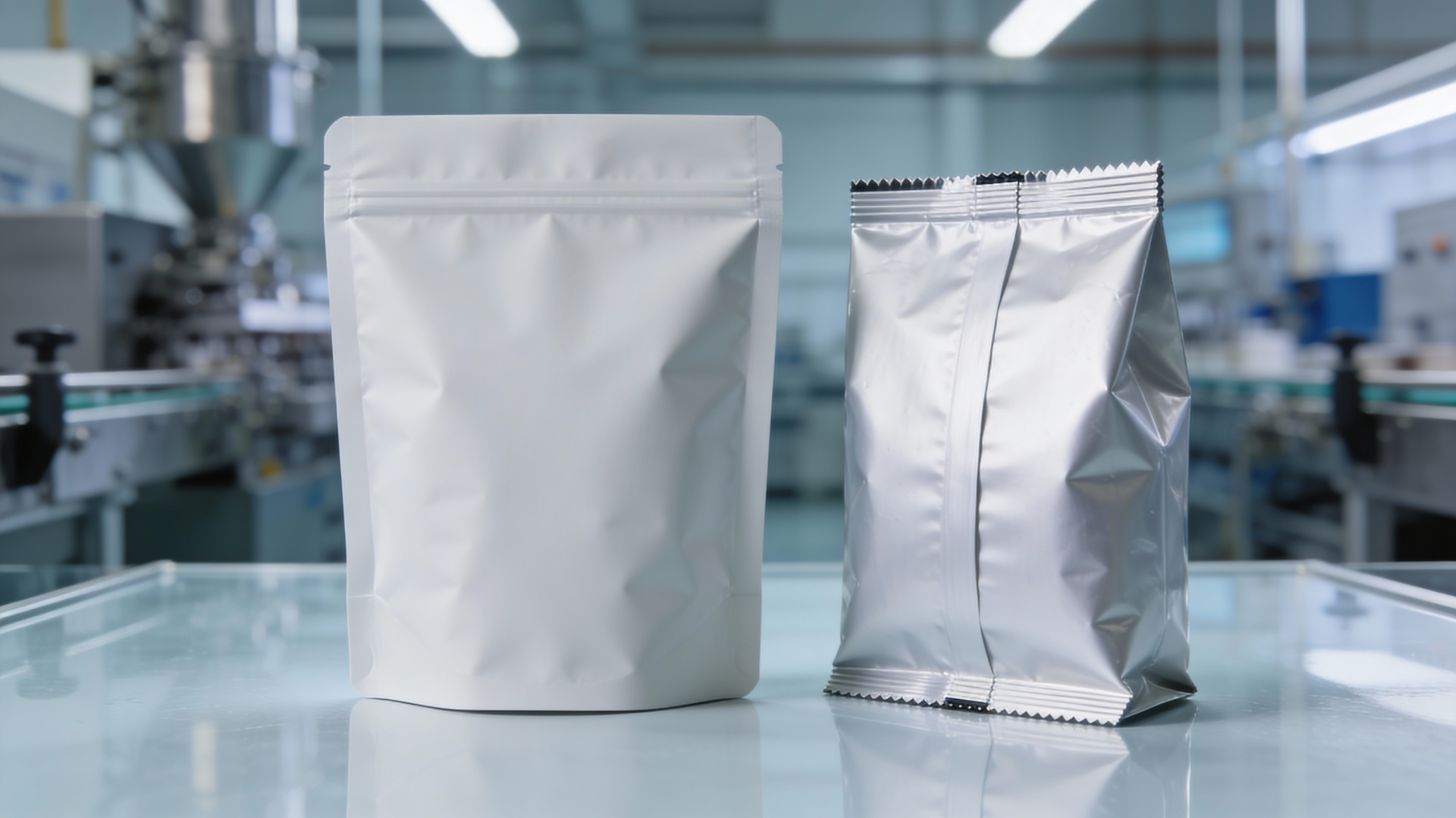
- Production Efficiency and Scale: Selecting a fin seal pouch optimizes high-speed production lines by reducing material waste while maintaining the structural integrity required for high-turnover goods.
- Superior Seal Integrity: Implementing a 4 side seal bag configuration provides a high-performance defense against leakage and powder escape when utilizing advanced low-temperature heat sealing technologies.
- Profit Protection via Failure Reduction: Engineering high-quality plastic packaging bags acts as a structural safeguard by lowering product spoilage rates and minimizing transit damage through superior puncture resistance.
- Versatility Across Verticals: From custom printed poly bags for snacks to small plastic bags for packaging hardware, matching bag structure to product density ensures long-term operational safety.
Read on to discover how these engineering choices directly impact your bottom line.
Introduction
For high-volume manufacturers and procurement managers, the margin between a profitable quarter and a logistical challenge often depends on the physical integrity of their plastic packaging bags. Product loss through powder spills, liquid leaks, or seal failures during high-speed transit is more than just a technical glitch—it is a direct drain on the bottom line. In the demanding landscape of bulk food packaging, the structural choice of a container dictates not only the shelf life of the product but also the efficiency of the entire supply chain.
As highlighted in our latest technical demonstration video, the fin seal pouch and 4 side seal bag formats have become the industry standard for 90% of successful consumer goods. These configurations serve as a robust defense against “packaging escape” by providing superior heat seal strength that withstands extreme pressure. By moving away from over-engineered, decorative designs and focusing on these proven mechanical structures, facilities can achieve a significantly lower damage rate while maximizing production throughput.
This guide explores the engineering logic behind why these specific bag types act as essential profit guardians for your business. We will analyze how everything from small plastic bags for packaging hardware to high-impact custom printed poly bags can be optimized for puncture resistance and seal reliability. By understanding the intersection of material science and production speed, you can select a packaging strategy that minimizes spoilage and secures long-term operational growth.
The CFO Angle: Why Fin Seal and 4-Side Seal Plastic Packaging Bags are Your Ultimate Profit Guardians
In my fifteen years on the factory floor at Yun Sealoong, I have seen procurement managers make the same mistake a thousand times. They look at the unit price of plastic packaging bags as a standalone line item. They see a fraction of a cent saved on a thinner gauge film or a cheaper sealant layer and think they have won. They haven’t. From where I stand, overlooking the hum of the VFFS (Vertical Form Fill Seal) lines, I see the real cost of those “savings.” I see the downtime when a film with a poor coefficient of friction stutters through the rollers. I see the waste when a weak seal fails during transit, contaminating a whole pallet of product.
For a CFO, packaging should not be viewed as a container; it is a profit guardian. If the bag fails, the product value goes to zero, and your shipping costs are doubled by returns. We are talking about the Total Cost of Ownership (TCO). This guide is designed to strip away the marketing jargon and look at the hard physics of why certain bag architectures—specifically the Fin Seal and the 4-Side Seal—are the backbone of high-margin, high-volume operations.
The Hidden Balance Sheet: Why Your Choice of Plastic Packaging Bags Dictates Net Margin
The procurement of plastic packaging bags is often misclassified as a commodity purchase. This is a dangerous oversimplification. In a high-speed production environment, the bag is a component of the machine itself. If you are running a line at 100 bags per minute, a 1% failure rate means you are throwing away 60 products every hour. Over a 24-hour shift, that is nearly 1,500 units of lost revenue, plus the cost of the wasted labor and electricity.
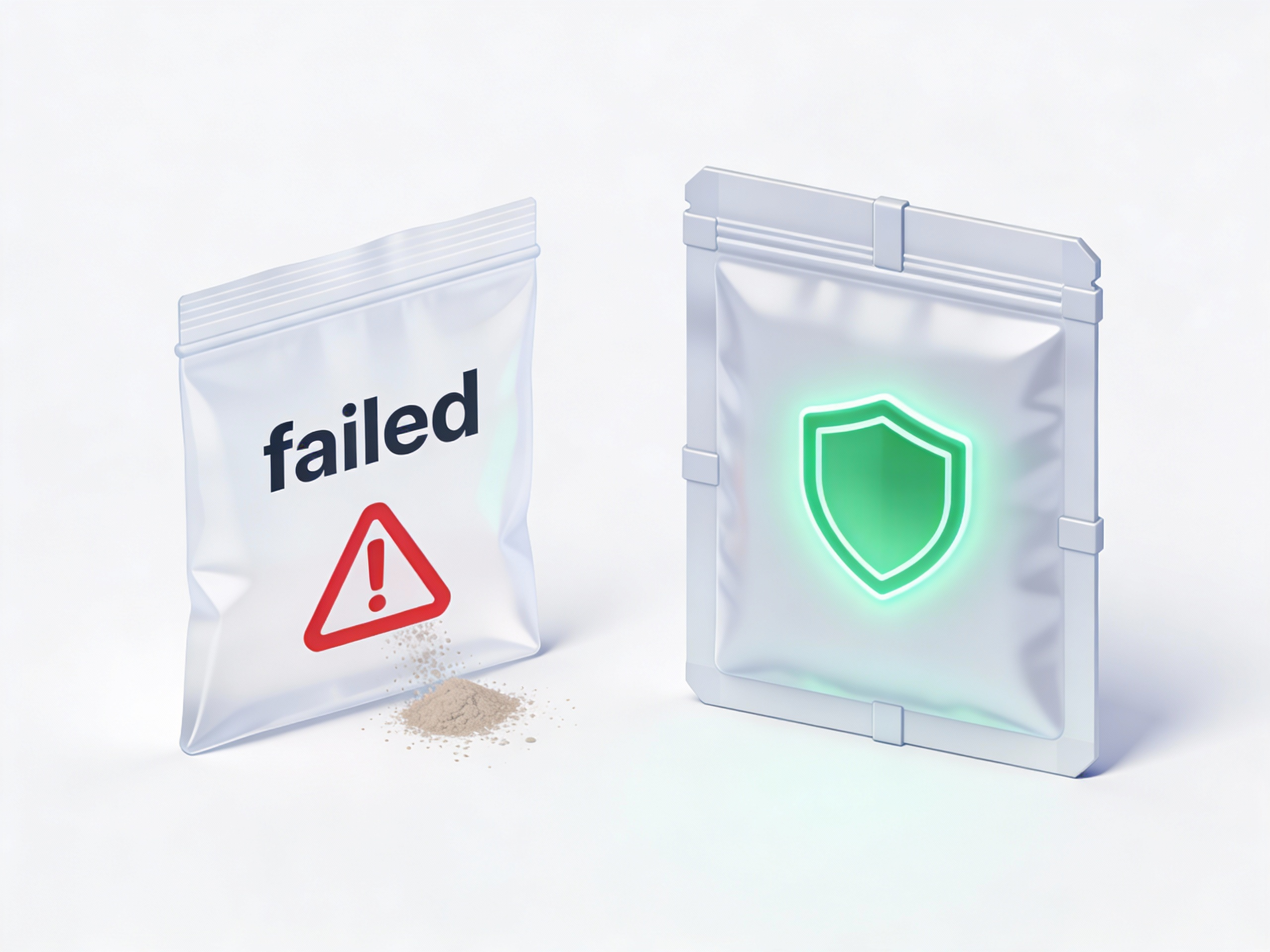
When we talk about “Packaging Escape,” we are describing the physical failure of the barrier or the seal that allows the environment in or the product out. For powders, this looks like a fine dust coating the inside of a shipping carton—a significant issue for food safety and brand perception. For liquids, it is a catastrophic leak that can ruin an entire container of dry goods. I remember a client based in Europe who switched to a budget supplier for their spice blends. Within three months, they were hit with retailer chargebacks that exceeded their annual packaging budget. The reason? The fine powder was migrating into the seal area during the fill, and the low-grade sealant layer couldn’t bite through the contamination.
Logistical fragility is another hidden cost. A bag might look perfect on the pallet in my factory, but how does it behave under the pressure of a 20-high stack in a humid warehouse? Structural integrity is about more than just thickness; it is about the molecular bond between layers. If your material choice ignores the vibration of sea freight or the pressure changes in air cargo, you are gambling with your net margin.
We don’t just sell bags; we engineer solutions that survive the “Last Mile.” If you are seeing unexplained spikes in your damage-in-transit reports, my engineering team can help you identify the root cause. Often, it is not the box; it is the plastic packaging bags themselves. We offer a deep audit of your current failure rates to engineer out these hidden costs. You can learn more about our quality control processes on our About Us page, or if you are facing a crisis right now, use Contact Us to get a technical assessment.
Engineering the Fin Seal Pouch: Optimizing Throughput for High-Turnover Goods
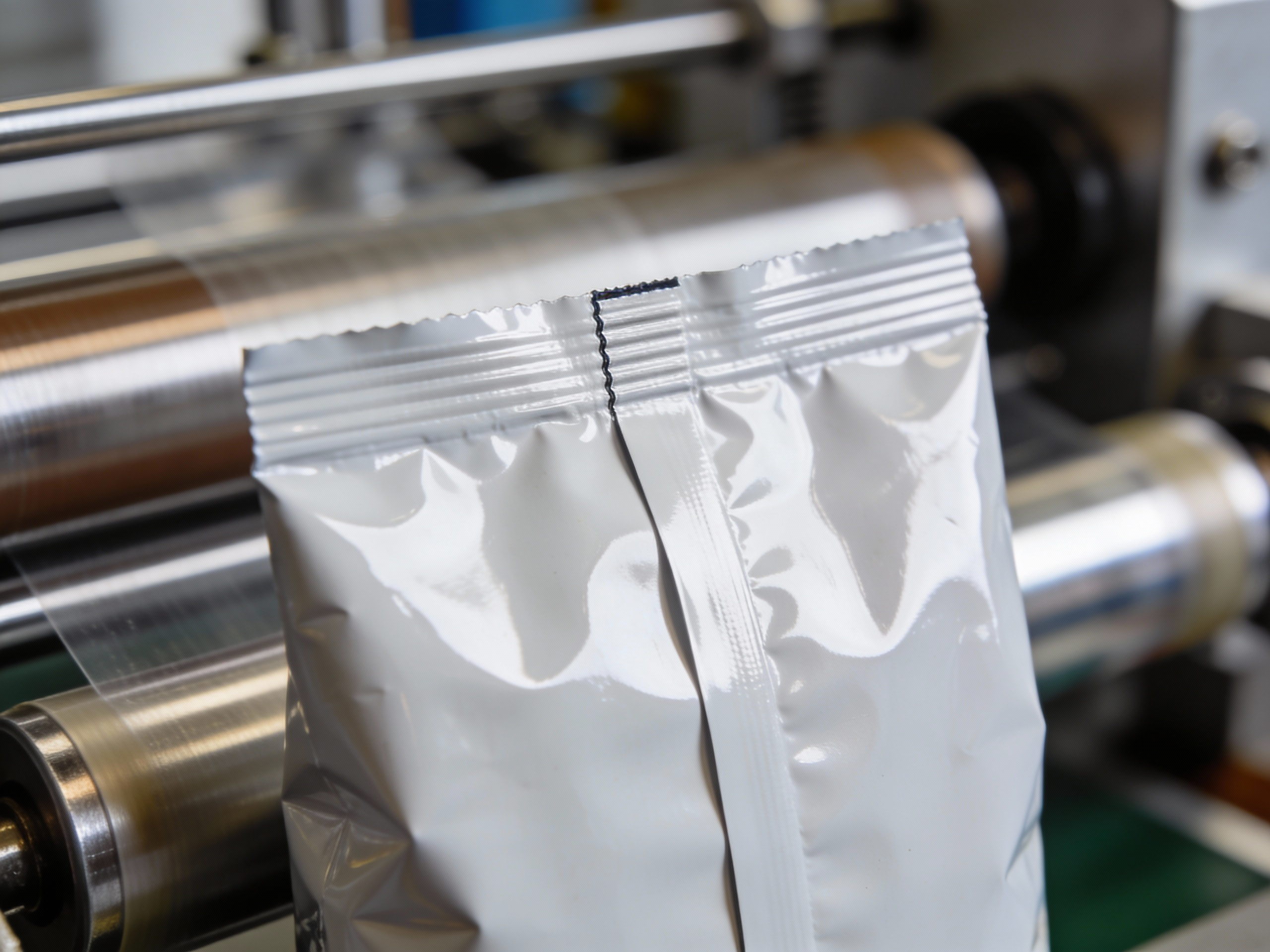
The fin seal pouch, commonly known as the pillow pouch, is the efficiency leader of the packaging world. Its design is deceptively simple: one longitudinal seal down the back (the “fin”) and two horizontal seals at the top and bottom. This architecture is the native language of VFFS machinery. Because the bag is formed from a single continuous roll of film, there is no need for the complex mechanical hand-offs required by premade pouches.
The physics of high-speed friction is where the fin seal shines. On an automated line, the film must slide over a metal forming shoulder. If the film is too “tacky,” it creates drag, leading to uneven bag lengths and seal wrinkles. We focus on the Slip Factor of our High-Barrier PE film. By controlling the additives in the PE layer, we ensure the film moves smoothly through the machine, allowing you to push your BPM (Bags Per Minute) to the limit without risking “tunneling”—those tiny channels in the seal that let air in.
While the fin seal is a cost-effective option, it comes with a trade-off: shelf presence. A pillow pouch cannot stand up on its own; it is designed to be hung on a peg or placed in a bin. If your product relies on premium eye-level shelf positioning, the fin seal might appear less sophisticated compared to a stand-up pouch. However, for high-turnover goods like snacks or industrial components, the material savings are undeniable. We typically see a 15-20% reduction in film waste when switching from premade pouches to a fin seal VFFS setup because you are eliminating the header waste and the premade side-seals.
Let’s look at the efficiency numbers based on a standard 500g fill weight:
| Metric | Fin Seal (VFFS) | Stand-Up Pouch (Premade) |
|---|---|---|
| Line Speed (BPM) | 80 – 120 | 30 – 45 |
| Material Waste % | 0.5% – 1.2% | 3.0% – 5.0% |
| Unit Cost Index | 100 (Baseline) | 165 – 190 |
| Structural Rigidity | Low (Flexible) | High (Self-Standing) |
Pro Tip: While the fin seal is faster, it is highly sensitive to the “cut-and-seal” timing. If your knife is dull or your heater bar has a 5-degree cold spot, you will see “stringing” at the corners. This is a technical flaw that often leads to leaks.
For high-speed lines, we recommend our specialized High-Barrier PE film which is engineered for rapid heat-activation and instant cooling. You can explore other morphologies in our By Bag Shape category to see if a fin seal fits your volume requirements.
The 4 Side Seal Bag: Why Absolute Hermetic Integrity is Non-Negotiable for Powders and Liquids
When the stakes are high—such as volatile liquids, medical-grade powders, or high-value chemicals—the 4-side seal bag is the most reliable choice. Unlike the fin seal, which relies on a fold and a single back-seam, the 4-side seal is constructed from two separate webs of film sealed on all four perimeter points. This creates a uniform tension across the entire bag surface.
“Seal Escape” is the primary enemy of powder packaging. Fine particles like spices or flour can become trapped in the seal area as the jaws close. In a standard bag, this creates a slow leak that may not be detected until the product has reached the consumer. We solve this using Low-Temperature Heat Sealing (LTHS) technology. These are specialized polymer blends in the inner sealant layer that have a high “hot tack” and the ability to flow around contaminants. As seen in our [Video Reference], whether we are packaging food products or industrial hardware, the seal must be absolute.
The 4-side seal geometry is also superior for internal pressure resistance. Because the stress of the contents is distributed across four reinforced edges rather than two, the burst pressure is significantly higher. This is critical for products that might be subjected to the pressure of a 20-high stack or the vacuum of an airplane cargo hold.
| Metric | 4-Side Seal | 3-Side Seal / Fin Seal |
|---|---|---|
| Burst Pressure (PSI) | 45 – 60 | 25 – 35 |
| Seal Contamination Tolerance | High (LTHS Optimized) | Medium |
| Internal Volume Efficiency | Lower (Due to 4 Seals) | Higher |
| Leak Rate (per 10k units) | < 0.01% | 0.05% – 0.1% |
Real World Context: I’ve seen a client try to save costs by putting a liquid detergent into a 3-side seal bag. The “V” at the bottom of the fold is a natural stress point. Under the weight of the liquid, the bags started failing at that fold. We moved them to a 4-side seal, and the failure rate dropped to zero. It cost 5% more in material, but they preserved their brand reputation.
For high-value powders and liquids, we offer the 4-Side Seal Coffee Bags which include one-way degassing valves, or our precision Single-Serving Sachets for pharmaceuticals and nutritional supplements.

Beyond Aesthetics: The Physics of Low-Temperature Heat Sealing and Puncture Resistance
Let’s talk about the “Thermal Window.” This is the temperature range where your packaging machine can create a perfect seal. If you have a narrow window, your operator will spend significant time clearing jams and adjusting heaters. Our engineering focus at Yun Sealoong is to widen that window. We do this by using multi-layer co-extrusion. The outer layer (usually PET or BOPP) stays rigid and heat-resistant, while the inner layer (PE or CPP) melts quickly to form the bond.
Puncture resistance is the second half of the profit protection equation. If you are packaging hardware, as shown in our [Video Reference], or dehydrated snacks with sharp edges, a standard film will fail, resulting in pinholes. These allow air ingress, causing product oxidation. We measure this using the Dart Drop Impact test (ASTM D1709). It’s not just about making the bag thicker; it’s about the toughness of the polymer matrix. A 100-micron bag made of low-grade resin will fail faster than a 60-micron bag made of premium virgin metallocene PE.
We also address static electricity. In dry environments, custom printed poly bags can become statically charged, causing them to stick to machinery or attract dust that compromises the seal. We integrate anti-static agents into our film recipes to prevent this.
| Material Property | Food Grade (Standard) | Industrial Grade (Reinforced) |
|---|---|---|
| Dart Drop Impact (g) | 150 – 250 | 450 – 700+ |
| Puncture Resistance (N/mm) | 8 – 12 | 20 – 35 |
| Thermal Window (°C) | 10 – 15 | 25 – 40 |
| OTR (Oxygen Trans. Rate) | < 1.0 (with Foil) | N/A (usually) |
Real World Context: If you notice wrinkles at the corner of your seals, your “hot tack” is likely too low. The seal is pulling apart while it’s still warm. This is a common flaw in lower-quality films that lack a proper octene or hexene balance in the PE blend. If your supplier cannot discuss the molecular weight distribution of their PE, they are likely a middleman rather than a technical manufacturer.
For products that require extreme durability, look at our Heavy-Duty Bags with Handles. For sensitive items requiring high-level protection, our Functional Bags & Technical Barriers offer the highest OTR/WVTR (Water Vapor Transmission Rate) ratings in the industry.
Strategic Sourcing for Scale: Matching Bag Morphology to Product Density
A one-size-fits-all approach to small plastic bags for packaging is a recipe for operational waste. As a CFO, you need to ask: “Are we paying for air?” If your bag is too large for the product density, you are wasting film and increasing your shipping volume. If it’s too small, the tension on the seals during the fill-and-drop phase will cause bursts.
Take the difference between hardware and bulk food. A 50kg load of plastic resin is dense and shifts during transport. It requires a material with high creep resistance—the ability to hold its shape under constant load. Our 50kg PP Woven Sacks are engineered for this exact tensile distribution. Conversely, 50g of potato chips are light but require nitrogen flushing to prevent crushing. The bag architecture must accommodate the gas pressure without leaking air over time.
Custom printed poly bags should be viewed as an asset. By moving to high-performance films with integrated barriers, many of our clients have been able to eliminate secondary packaging. If the bag itself is puncture-resistant and UV-stable, you can reduce both your carbon footprint and logistics costs.
While premium materials like EVOH or Aluminum foil layers are more expensive upfront, the ROI is clear when calculating shelf-life extension. You are reducing expired stock write-offs and expanding your geographical reach. One coffee roaster was initially hesitant to move to our 4-Side Seal Coffee Bags due to the higher unit cost. They were losing 10% of their product to staleness using a basic poly bag. By switching to a high-barrier structure with a valve, they opened up export markets and significantly increased their revenue.
We provide tailored solutions across various sectors:
- For bulk industrial loads: PP Woven Sacks.
- For high-speed food retail: Flexible Food Packaging.
- For technical or chemical needs: Contact Us for a structural engineering consultation.
Matching the morphology to the density is the final step in securing your margins. If you are unsure about the micron thickness or the layer structure required for your specific product density, let my team run the calculations for you.
Conclusion
Selecting the right plastic packaging bags is a strategic financial decision that directly impacts your Total Cost of Ownership (TCO). While the Fin Seal offers unmatched efficiency for high-speed VFFS lines, the 4-Side Seal provides the critical hermetic integrity required to eliminate packaging failure for volatile powders and liquids. The difference between a profitable quarter and a logistical crisis often comes down to the molecular engineering of the sealant layer and the precision of the thermal window.
As a direct-to-business manufacturer, Yun Sealoong goes beyond supplying materials; we provide custom-engineered solutions designed to survive the rigors of global logistics. We safeguard your net margins through advanced polymer science and factory-floor expertise.
Ready to eliminate downtime and optimize your packaging line? Contact our engineering team today for a technical barrier analysis or a custom quote to secure your profit guardians.


0 Comments