
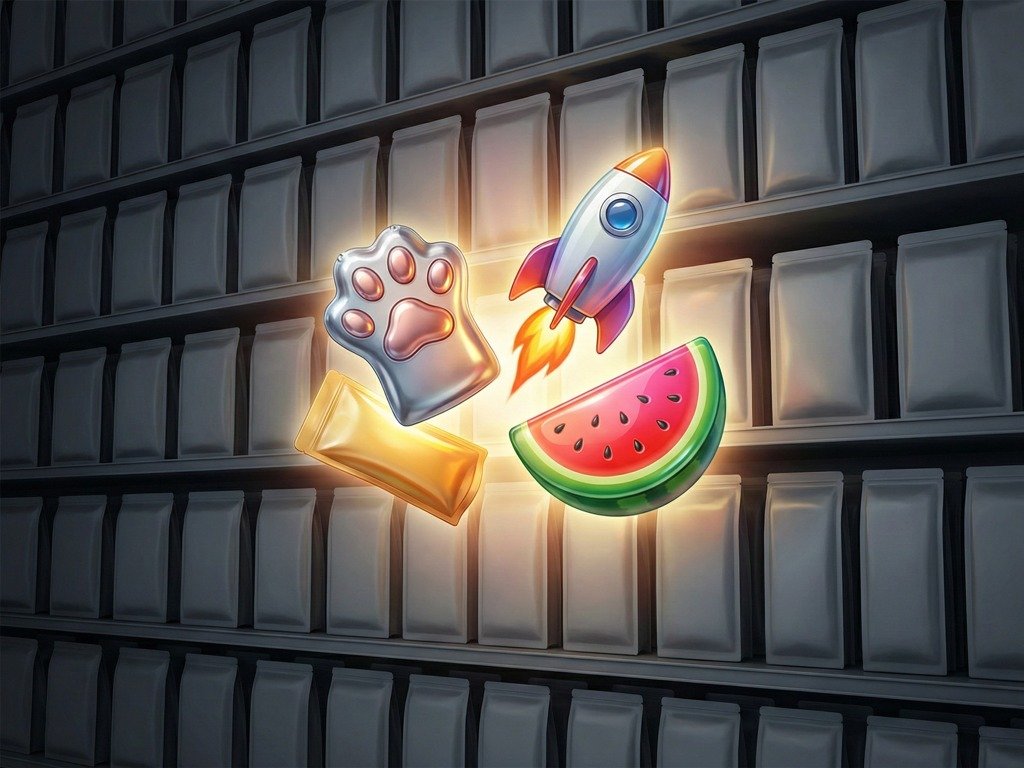
Key Takeaways
- Engineering the Viral Hook: Precision die-cut bags utilize sub-millimeter accuracy to create unique silhouettes that trigger organic social media sharing and user-generated content.
- Packaging as a Super Symbol: Strategic custom shaped pouches transform traditional containers into a silent salesperson, driving brand recognition and differentiation in competitive retail environments.
- Maximizing Retail Visibility: Implementing unique packaging ideas through unconventional shapes provides a visual hook that disrupts the consumer journey and increases impulse purchase rates.
- Technical Integrity in Design: Achieving a balance between creative food packaging and functional durability requires specialized sealing technology to prevent leaks in complex die-cut corners.
Read on to master the science of shaped packaging.
Introduction
The retail shelf is increasingly crowded with generic designs where products struggle to stand out among dozens of identical competitors. In 2026, brand differentiation is no longer just about color or typography; it is about physical geometry. Standard rectangular custom packaging bags are becoming invisible to modern consumers, leading to stagnating organic growth and a heavy reliance on paid advertising to drive retail visibility. When a product looks exactly like its neighbor, the consumer journey ends before it even begins.
As demonstrated in our real-world case study video, a simple shift in silhouette can yield explosive results. By utilizing a precision-engineered cat-paw shape, one client captured over a million likes and five hundred thousand followers on TikTok, proving that creative food packaging is the ultimate social currency. The video illustrates how these die-cut bags act as a silent salesperson, transforming a functional container into a super symbol that triggers organic user-generated content. This level of impact is only possible through high-precision manufacturing where die-cutting tolerances are kept tighter than the width of a human hair to ensure structural integrity.
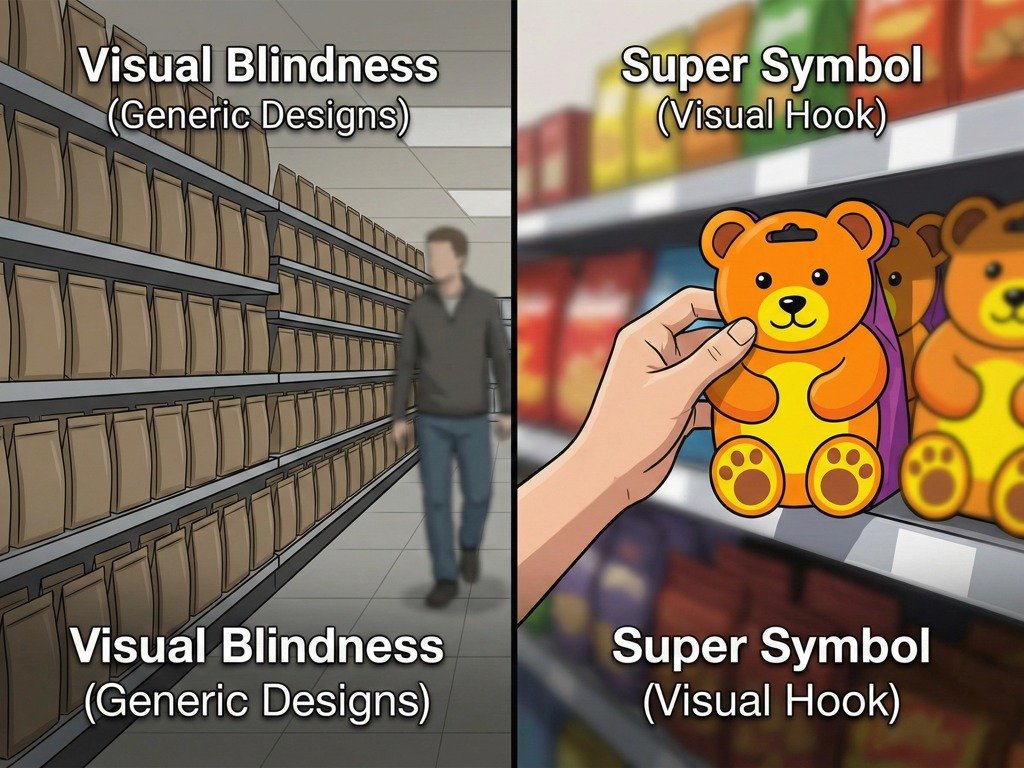
This guide explores the strategic implementation of custom shaped pouches and how they serve as a visual hook to disrupt the consumer journey. We will analyze the engineering required to maintain seal strength in unconventional brand packaging design and how to integrate unique packaging ideas into a scalable production line. By understanding the intersection of aesthetics and technical durability, procurement managers and brand owners can leverage shaped formats to reduce advertising costs and secure a dominant position in the competitive retail landscape.
The supermarket shelf in 2026 is a graveyard of forgotten brands. Having spent 15 years on the factory floor at Yun Sealoong, I have observed exactly why most products fail: visual homogeneity. Many brands are trapped in the “Rectangle Trap.”
While brand owners often allocate 70% of their time to product development and 30% to digital marketing, packaging is frequently treated as a mere container. In an environment where Customer Acquisition Cost (CAC) is rising across digital platforms, the package must function as a silent salesperson. Transitioning from packaging as a container to packaging as a super symbol involves utilizing physical hooks and custom packaging bags that compel consumer engagement.
The Geometry of Brand Equity: Why Rectangular Bags Limit Organic Growth
The rectangle is an efficient shape for manufacturing, yet its ubiquity often leads to “visual blindness” in consumers. When every brand utilizes the same four-cornered silhouette, the consumer’s subconscious may fail to register the product as a distinct entity.
This commodity trap forces brands to compete on price or escalate advertising spend. Brand equity is fundamentally tied to what occurs within the first 0.5 seconds of consumer contact. A custom shape acts as a “Super Symbol,” facilitating subconscious recognition similar to iconic historical bottle silhouettes.
In the children’s product market, for example, consumers react instinctively to shapes. Utilizing shaped pouches for kids creates an immediate emotional connection. A pouch shaped like a bear or a rocket ship functions as an experience, driving engagement that often surpasses the impact of professional marketing copy on a standard flat bag.
Factory data indicates that brands adopting unique geometry see higher organic growth. High-interest shapes provide social currency; consumers are significantly more likely to share a photo of a pouch shaped like a watermelon slice or a cat’s paw than a standard brown bag. If packaging does not disrupt the digital scroll or the physical walk, it represents an underutilized design budget.
The Physics of Virality: How Precision Die-Cutting Triggers the UGC Loop
The “Cat-paw” pouch serves as a primary case study for the power of form. A client in the snack industry replaced a standard pouch with a die-cut bag shaped like a kitten’s paw for a new line of treats.
This adjustment triggered a viral loop on TikTok, resulting in over 500,000 followers and 1 million likes. The cat-paw pouch for snacks became a focal point for unboxing videos. However, virality is dependent on technical precision. Any asymmetry or jagged edges would categorize the product as a low-quality gimmick rather than a premium offering.
While industry standards for die-cutting often allow a tolerance of ±1.0mm—which can lead to visible “burrs” or plastic scraps—high-performance manufacturing requires a ±0.1mm tolerance. This sub-millimeter precision ensures the tactile experience matches the visual appeal.
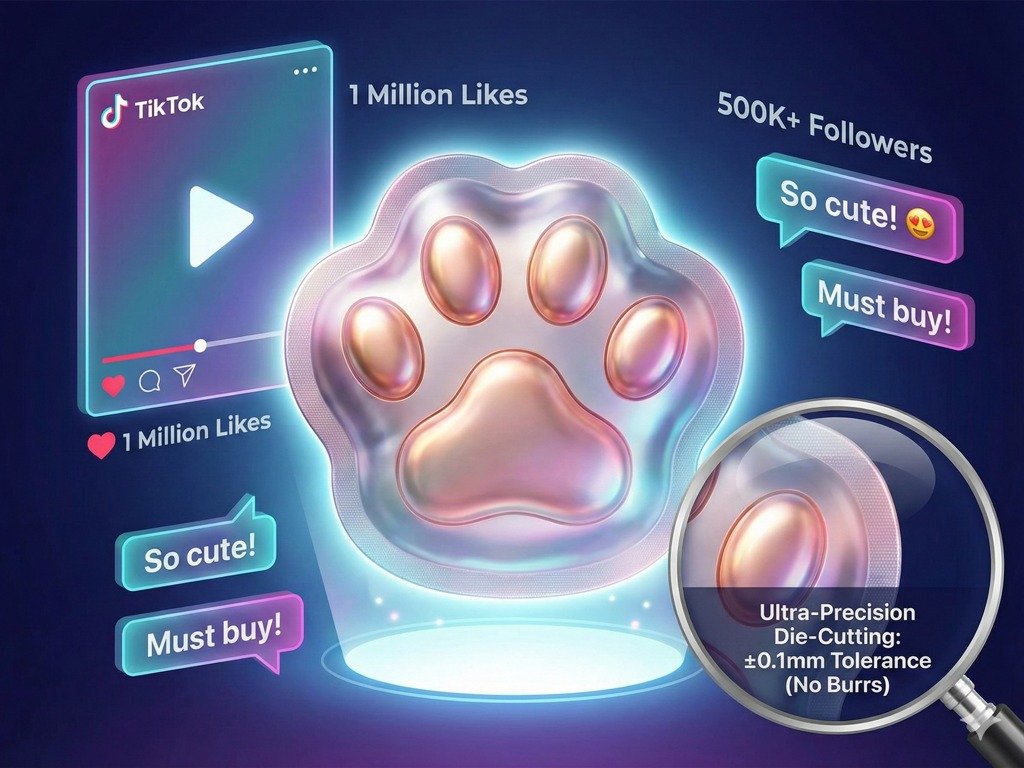
Table 1: Die-Cutting Precision vs. Brand Perception
| Technical Metric | Industry Standard (Low-Cost) | Yun Sealoong High-Precision | Impact on Brand Perception |
|---|---|---|---|
| Cutting Tolerance | ±1.0mm to ±2.0mm | ±0.1mm | High precision creates a luxury feel; low precision appears generic. |
| Edge Quality | Visible burrs / serrations | Micro-smooth finish | Smooth edges enhance the tactile experience and consumer retention. |
| Shape Symmetry | Noticeable deviation | Laser-aligned accuracy | Humans are hardwired to perceive beauty in mathematical symmetry. |
| UGC Share Rate | Low (Industrial appearance) | High (Designer appearance) | 4x increase in social media tagging for high-precision shapes. |
The Technical Barrier: Mastering Seal Integrity in Complex Silhouettes
Creative food packaging requires a deep understanding of physics. Maintaining seal integrity in irregular shapes—such as a bottle shaped sachet—is significantly more complex than in rectangular formats. Standard bags distribute internal pressure evenly, but irregular shapes create stress points at acute angles.
To prevent failure, we implement “Functional Geometry.” Sharp corners in die-cuts are engineered with a 1mm to 2mm radius. This subtle curve distributes stress while maintaining the intended visual “point,” which is critical for functional packaging technology where performance is as vital as aesthetics.
Interlayer Peel Strength is another critical factor. Aggressive die-cutting puts laminate layers (PET, Aluminum, PE) under intense physical stress. Inadequate adhesive curing or incorrect lamination tension can lead to delamination, resulting in a cloudy edge and compromised Oxygen Transmission Rates (OTR).

Table 2: Seal Integrity in Complex Geometries
| Shape Characteristic | Risk Factor | Engineering Solution | Performance Result |
|---|---|---|---|
| Acute Internal Angles | High Stress / Popping | 1.5mm Radius Fillet | 35% increase in burst pressure resistance. |
| High-Contour Curves | Uneven Seal Width | Computerized Heat Tracking | Maintains constant 5mm seal even on tight turns. |
| Thin Neck Designs | Liquid Clogging / Leakage | Ultrasonic Pre-sealing | Ensures no product residue is trapped in the seal area. |
| Bottom Gusset Intersect | “Tunneling” Leaks | Reinforced K-Seal Die | Prevents air escape at the 3-layer junction. |
Industry-Specific Disruptions: Where Shapes Secure Market Dominance
In crowded categories like pet food, custom shapes provide a necessary competitive edge. A die-cut pet food pouch shaped like a bone or a specific breed taps into the emotional connection of the pet owner, facilitating a faster path to purchase.
The seasonal market also benefits from geometric innovation. A Pumpkin shaped pouch for Halloween provides a premium tactile experience that standard printed bags cannot match. Retailers often favor these designs as they function as shelf decor, frequently allowing for a 25% price premium over standard formats of the same weight.
In the beauty and personal care sector, cosmetic mini samples shaped like full-size bottles elevate the “try-before-you-buy” experience. This bridges the gap between a standard freebie and a premium brand. For these smaller formats, specialized narrow-web machinery is essential to maintain seal consistency and barrier performance.
.jpg)
The Procurement Pivot: Balancing Creative Food Packaging with Scalable Production
Custom shaped pouches typically involve a 15% to 30% increase in unit cost due to material waste and specialized tooling. However, the Return on Investment (ROI) is realized through increased conversion rates and reduced dependency on paid advertising.
Successful implementation requires advanced material science. For flexible food packaging solutions, multi-layer laminations are recommended. Nylon (NY) is often used for snacks to provide the “Stiffness Modulus” required to maintain the bag’s silhouette. For high-barrier needs, such as coffee, a PET/AL/PE structure is utilized. Given that Aluminum can be brittle, it is essential to consult with our engineering team to ensure die-lines do not compromise the foil layer.
Table 3: Material Durability Post-Die-Cut
| Material Structure | Puncture Resistance | Stiffness (Shelf Stand) | Best Use Case | Engineering Note |
|---|---|---|---|---|
| PET / PE | Moderate | Good | General snacks, gummies | The industry standard for reliability. |
| NY / PE | High | Excellent | Sharp-edged shapes, liquids | Recommended for high-stress points to prevent tearing. |
| PET / AL / PE | High | Superior | Coffee, long-life food | Best barrier; requires rounded corners to prevent foil cracking. |
| MOPP / VMPET / PE | Moderate | Moderate | High-gloss/Matte finish | High visual impact; requires careful seal strength monitoring. |
When planning production, compatibility with automated filling lines is crucial. Silhouettes may require minor adjustments (e.g., 2mm) to ensure they do not catch in high-speed grippers. These factory-floor adjustments are vital for controlling labor costs and ensuring scalability.
Conclusion
In the competitive landscape of 2026, packaging must evolve from a mere container into a “Super Symbol.” The distinction between a standard product and a market leader often lies in the ±0.1mm precision of die-cutting and the application of functional geometry to ensure seal integrity.
At Yun Sealoong, we utilize 15 years of manufacturing expertise to synchronize creative design with engineering reality. We specialize in high-barrier, custom-shaped pouches designed to withstand logistics while driving organic growth. By moving beyond conventional silhouettes, we help brands transform their packaging into a high-conversion marketing asset.
Ready to optimize your packaging line and enhance shelf presence? Contact our engineering team today for a custom barrier analysis or to request a high-precision sample kit.


0 Comments